

Why "China BESS Manufacturer" Is a Claim, Not a Category
Search for China BESS manufacturers and you get a wall of company names, most of them ranked by someone who has never asked what any of them can actually build. The names are real. The category is not. "Manufacturer" is used in China's battery storage trade to describe at least five different businesses, from a cell giant with plants in Ningde to a two-room export office in Shenzhen that buys finished cabinets from someone else and prints its own logo on the nameplate.
That distinction is not academic. It decides who can change a cell supplier without telling you, who holds the safety certificate your insurer will ask for, who answers when a rack underperforms in year four, and whether the price you were quoted reflects a factory's cost structure or a middleman's margin stacked on top of it. Two quotes can look identical — same capacity, same chemistry, same warranty sentence — and represent completely different risk, because they sit at different points in the same supply chain.
A word on the labels, because they are where most shortlists start. "Tier 1" is not a standard, an accreditation or a certificate, and no standards body issues it: it is a ranking convention used by analysts, banks and the suppliers themselves, generally as shorthand for bankability rather than for manufacturing capability. Two sources can legitimately place the same company in different tiers, and a tier label tells you nothing about the line you will visit, the serial records it keeps or the scope written on its certificates. Treat it as a starting point for inquiry, not as evidence.
This guide does not rank companies. It gives you a procedure: how to classify the supplier in front of you, which documents settle the question, what to look at during an audit, how certification scope actually works, and a scoring model you can run on five shortlisted suppliers in an afternoon. If you are earlier in the process, the OEM and white-label sourcing guides cover the surrounding decisions, and the supplier evaluation checklist gives a shorter pass for first-contact screening.
The Five Types of BESS Manufacturers in China
Almost every company you will meet is one of five types. Their names overlap, their websites look the same, and their sales engineers all describe themselves as manufacturers. Their capabilities do not overlap at all, and in a battery energy storage system the difference between the five shows up in the parts of the build each one actually controls.
Cell manufacturers make the lithium cells themselves, almost all of them LFP (LiFePO4, lithium iron phosphate) for stationary storage. CATL, BYD, EVE Energy, Gotion and CALB are the names you will hear most; their plants cluster in Fujian (Ningde), Guangdong (Shenzhen, Huizhou), Anhui (Hefei) and Jiangsu (Changzhou), with further cell capacity in Sichuan and Qinghai. They sell cells, modules and increasingly full DC blocks. What they rarely do is quote you a 500 kWh AC-coupled cabinet with a locally supported warranty — their commercial models are built around container-scale volume and long-term supply agreements.
Module and pack builders buy cells and assemble modules, packs and racks. Many are the actual production engine behind brands you have seen at trade shows. They are strong on welding, busbar design and thermal interface work, and weak on grid-side electronics.
Cabinet and container integrators, spread across Guangdong, Jiangsu, Zhejiang, Anhui and Shanghai, take modules and build the finished product: enclosure, thermal management, fire suppression, BMS, PCS integration, EMS, and the factory acceptance test. This is where most C&I and utility-scale sourcing actually lands, and where the widest quality spread lives. Some integrators run genuine multi-stage assembly lines; others assemble final cabinets from pre-built DC blocks and call it manufacturing.
PCS and EMS vendors supply the power conversion and control layer. A few of them have moved into full cabinet supply, usually by partnering with an integrator rather than building cells. This is the layer where a Chinese manufacturer's real engineering depth is easiest to judge, because firmware and grid-code behaviour cannot be bought in a container.
Export trading companies and brand owners are the type buyers most often misclassify. They hold a business licence whose scope says trading, not manufacturing, and their value is real — documentation, logistics, multi-supplier flexibility, English-language project management. The problem starts when a trading company presents itself as the factory, because then every downstream answer about cell sourcing, process control and certificate ownership becomes unverifiable.
Type | What it actually builds | Typical scale it quotes | Evidence that settles it |
|---|---|---|---|
Cell manufacturer | Cells, modules, DC blocks | 100 MWh+ supply agreements | Cell datasheet with in-house model number; plant address on certificate |
Module / pack builder | Modules, packs, racks | 1–50 MWh | Welding parameter logs, capacity grading data, cell purchase records |
Cabinet / container integrator | Complete AC or DC systems | 0.5–100 MWh | Assembly line you can walk, FAT report with serials, in-house BMS/EMS firmware |
PCS / EMS vendor | Inverters, controllers, software | Per-unit | Firmware release notes, grid-code certificates in its own name |
Trading company / brand owner | Nothing; it coordinates | Any | Business licence scope = trade; certificate holder is a third party |
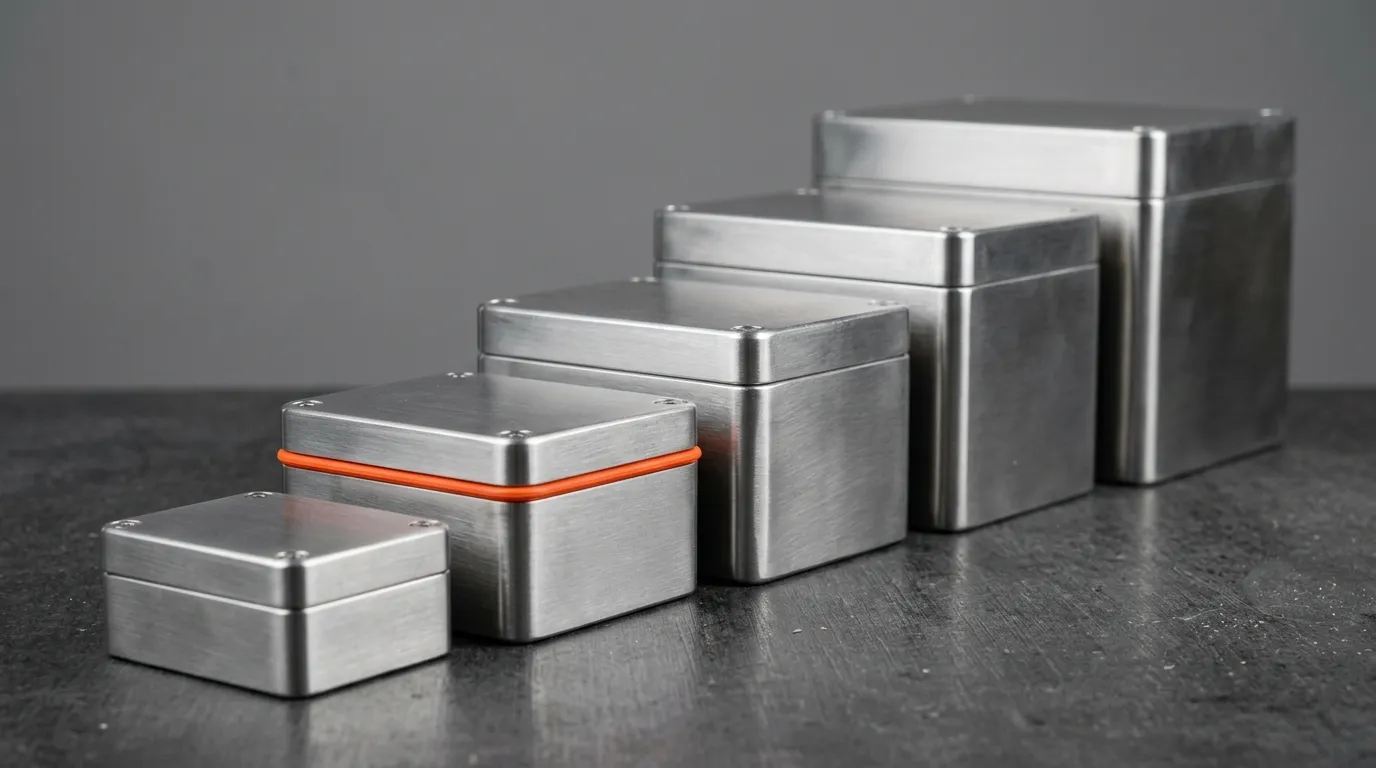
The five supplier types differ by what they physically build, not by what their homepage claims.
The practical consequence: match the type to the purchase, not to the pitch. A 20 MWh utility project with a 20-year performance obligation needs an integrator with a bankable warranty and a cell supply agreement behind it. A 200-unit residential white-label run needs a pack builder who will accept your enclosure design and your label. Asking a cell giant to quote 60 cabinets is a waste of both calendars; asking a trading company to expose its cell batch records is asking for something it does not have. China's storage industry association publishes sector-level market data if you want the context behind these supply tiers (CNESA).
Eight Documents That Make a Quote Credible
A price is an opinion until documents arrive. Ask for the following eight items in one request, and give a deadline. How a supplier handles that request tells you almost as much as the documents themselves.
- Business licence with the scope-of-business page. You are looking for 生产 (manufacture) versus 销售 (sales) in the registered scope, the unified social credit code, and whether the registered address matches the plant you will visit. Cross-check the legal entity name against the name on the quotation.
- Certificates of conformity with full scope pages, not cover pages. The pages that matter name the certificate holder, the manufacturing address, the product family and the standard revision. A certificate whose holder is a different company than your supplier is not automatically disqualifying — but it must be explained in writing.
- Fire test reports at the level your project requires. UL 9540A results are reported at cell, module, unit and installation level, and the level matters: a cell-level pass says nothing about a finished cabinet's behaviour (UL 9540A test method).
- Cell and battery safety test summaries. IEC 62619 for industrial lithium cells and batteries, IEC 63056 for secondary cells in electrical energy storage, and a UN 38.3 test summary for transport. Ask for the report number and the testing laboratory, not a logo.
- Cell supply evidence. Cell datasheet with the maker's own model number, plus a statement of which cell goes into which product. If the cell brand changes between the sample and the production batch, everything downstream — thermal behaviour, cycle life, fire test validity — changes with it.
- Quality and environmental management certificates. ISO 9001 is the floor. ISO 14001 and ISO 45001 tell you whether the plant is run as an export-facing operation. Check the certification body, the scope statement and the expiry date.
- A factory acceptance test procedure and one real report. The procedure should list what is measured at end of line; the report should carry serial numbers, measured capacity, insulation resistance and the date. A procedure without a filled-in report is a template.
- The warranty document, in full. Cycles or throughput, the capacity threshold at end of warranty, how degradation is measured (and by whom), the spares list, response times, and who performs service in your country. A 10-year warranty with no defined measurement method is a marketing sentence.
One missing document is enough to make the whole dossier unverifiable — treat the set as a single deliverable.
Two things to watch while the documents arrive. First, timestamps: certificates expire, test reports get superseded by a standard revision, and ISO certificates lapse quietly. Second, consistency: the product family on the certificate, the model number on the datasheet and the model number on the quotation must describe the same object. When they do not, you are usually looking at a supplier quoting a product it resells rather than builds.
A Factory Audit That Tests Something
Most factory visits are tours. A tour shows you a clean floor, a wall of certificates and a finished cabinet under a spotlight. An audit tests production records you did not choose. The difference is whether you leave with copies of documents that were generated before you arrived.
Before the visit, ask for three things: the line layout with station names, the QC plan for the product you are buying, and the shift structure. What comes back is diagnostic. A plant that cannot produce a QC plan for an AC-coupled cabinet either does not build that cabinet or does not control it.
On site, work backwards from a serial number. Pick a unit shipped last month — ideally one you can name — and trace it: which cell batch went in, what the welding parameters were, which operator station it passed, what the end-of-line capacity result was. A factory with real traceability answers in minutes. A factory without it answers with a manager who needs to check something.
Then look at the process evidence that is hardest to fake:
- Incoming cell handling. Are cells quarantined on arrival, graded, and matched by internal resistance and capacity before assembly? Ask to see the grading file for the batch in production that day.
- Welding records. Laser or ultrasonic welding parameters logged per shift, plus periodic pull-test results. No pull tests means the joint quality is assumed, not measured.
- Insulation and dielectric testing. HiPot records per unit, with the test voltage and pass criteria written down. This is the single most commonly skipped test in low-cost assembly.
- BMS configuration control. Which firmware version, which protection thresholds, and who can change them. If the answer is "the customer can change it in the app", ask what prevents a site engineer from disabling a protection limit.
- Fire suppression hardware. Verify what is installed against what the datasheet claims — aerosol canisters, FK-5-1-12 cylinders, or a dry pipe arrangement — and whether detection is per-pack or per-cabinet.
- End-of-line test. A full charge and discharge with a capacity report, not a voltage check. Ask for the report of the unit you are standing next to.
- A witnessed FAT. The most valuable hour of the visit: watch a unit run a full cycle and sign the report yourself.
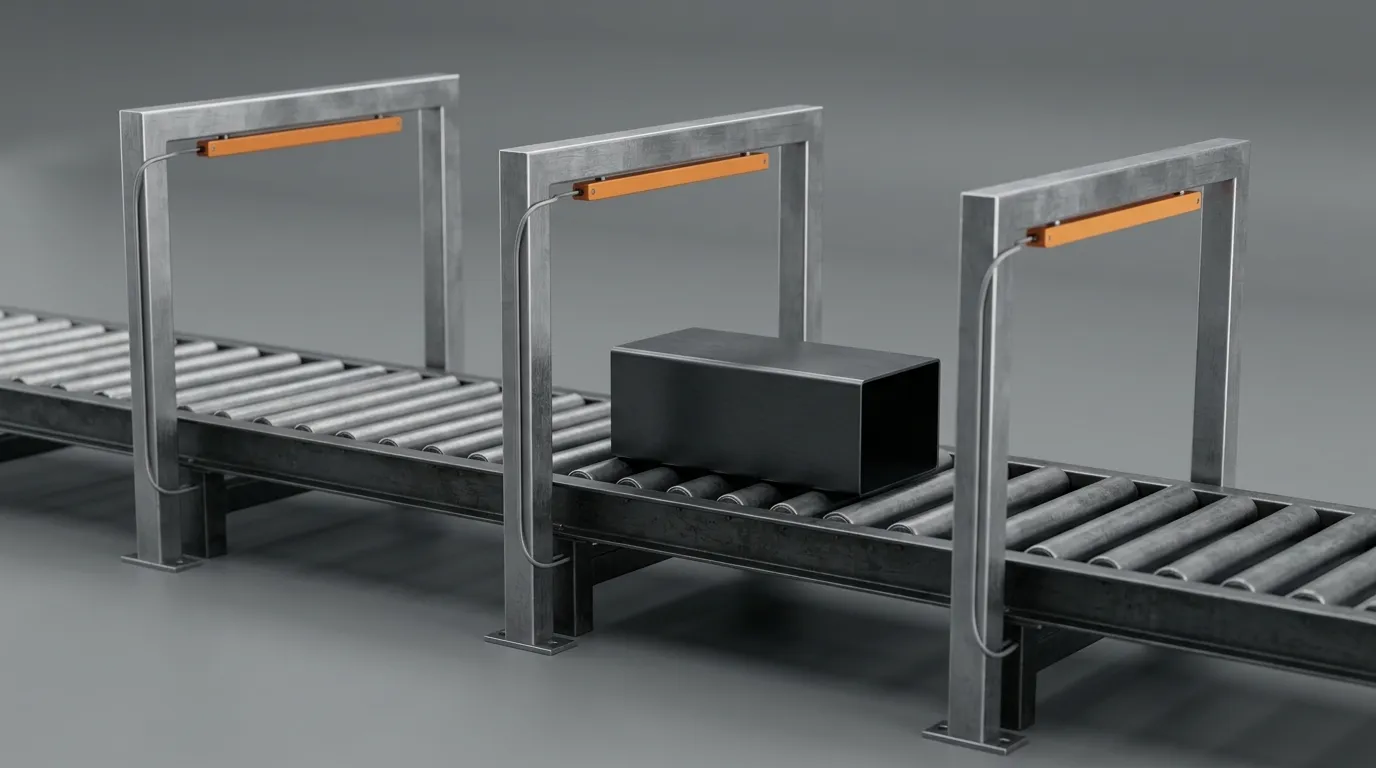
Audit the records a unit accumulates as it moves down the line, not the finished unit on the showroom floor.
Remote audits work if you control the camera. Send a list of stations and serials in advance, ask for continuous video rather than edited clips, and request the documents photographed on the spot with the date visible. What you cannot verify remotely — cleanliness, housekeeping, whether the second shift exists — note as unverified rather than assumed.
Read the Certification Scope, Not the Logo
Certification is where otherwise careful buyers lose the most money, because logos are easy to display and scope is easy to misread.
UL 9540 certifies an energy storage system as a system, meaning the combination of battery, inverter and controls as tested together. UL 9540A is a test method, not a certification: it produces data on fire propagation at cell, module, unit and installation level, and that data feeds spacing and suppression decisions under NFPA 855 (NFPA 855). UL 1973 covers batteries for stationary applications at the pack and module level. On the IEC side, IEC 62619 addresses safety of industrial lithium cells and batteries, IEC 62933-5-2 addresses safety of grid-integrated electrical energy storage systems, and IEC 63056 addresses secondary cells for use in electrical energy storage (IEC 62619:2022, IEC 62933-5-2:2025).
None of that paperwork covers the installation itself. In the United States the requirements for a storage installation sit in NEC Article 706, with Article 705 governing interconnected power production sources — the installation-code layer that sits above the certificate. A UL 9540 listing says the assembly was tested as a system; it says nothing about whether the site wiring, disconnects, signage and separation are compliant, and that is the gap where an authority having jurisdiction stops a commissioning.
Four questions turn a certificate into usable information:
- Who is the certificate holder? If it is not your supplier's legal entity, who is it, and does the relationship survive a change of supplier?
- What product family and what revisions? A 2021 report against an older standard revision may still be valid in one market and not in another.
- Which market does it unlock? CE marking is a self-declaration supported by test reports — it tells you the manufacturer claims conformity, not that a notified body certified the product. Grid-code conformity is a separate family entirely: EN 50549-1/-2/-10 in much of Europe, VDE-AR-N 4105 and 4110/4120 in Germany, G99 in the UK, CEI 0-21 in Italy, AS 4777 in Australia. A supplier quoting "all European certificates" without naming them has usually not read its own scope.
- Does the scope match your configuration? A certificate for a 100 kW cabinet does not cover the 250 kW version built on the same platform, and a certificate for a 400 V unit does not cover the 800 V model.
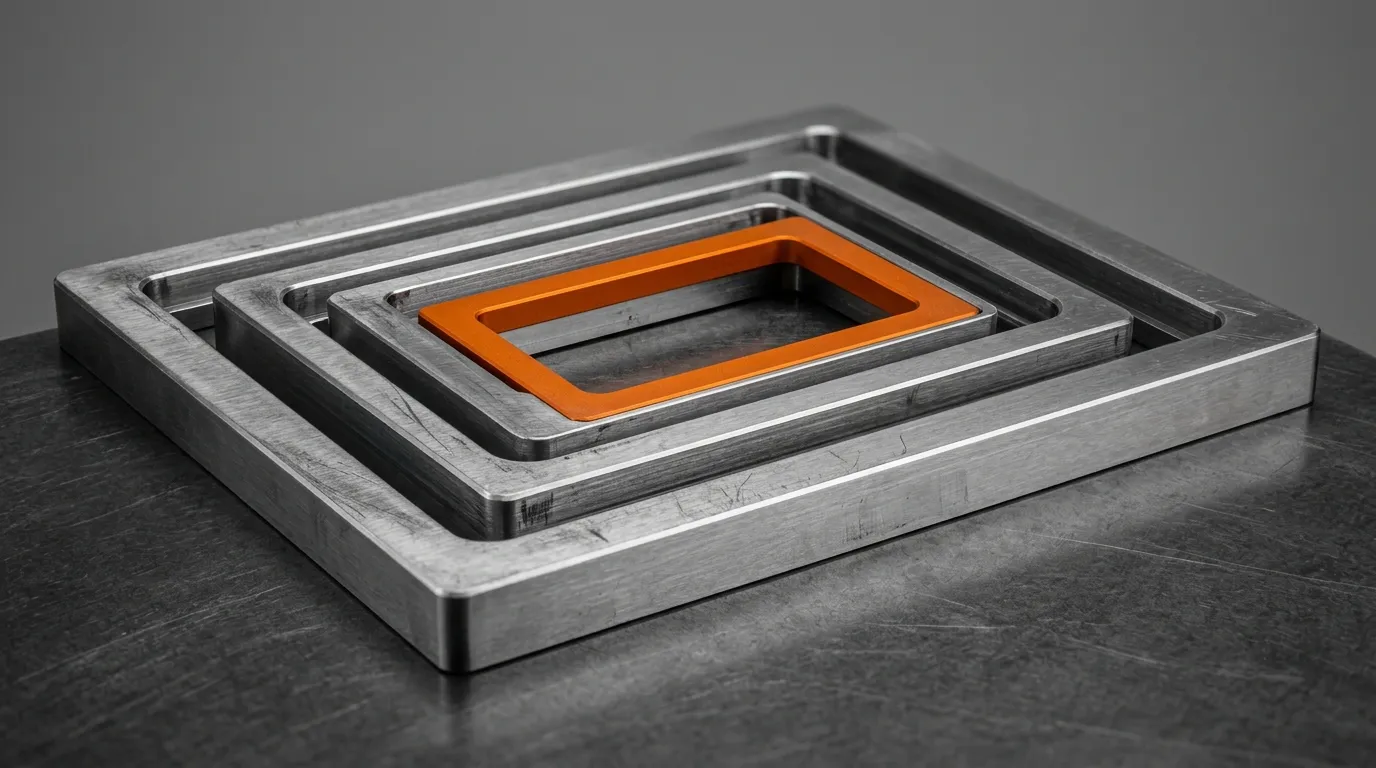
Cell, module, unit and system scopes nest; a pass at one level does not certify the level above it.
Two related checks are worth doing at the same time. Ask for the fire test summary at the exact level your authority having jurisdiction will want — the UL 9540A test data behind a battery cabinet is a good worked example of what that package looks like. And ask what the battery management system actually protects, because a BMS that meets a standard on paper can still be configured in a way that voids the assumption behind the test.
The Commercial Mechanics Nobody Puts in the Deck
Technical diligence gets you a shortlist. Commercial terms decide whether the relationship survives year two. Five items deserve explicit answers before you sign.
MOQ, per SKU rather than per project. A cabinet integrator with a 20-unit MOQ per capacity variant will happily take a 60-unit order split three ways, then discover that the third variant needs its own busbar tooling. Ask for MOQ by model and by configuration, and ask what happens to MOQ if the cell format changes.
Tooling and non-recurring engineering. Custom enclosure width, your busbar layout, your label, your packaging. Get these as a separate line item with an ownership statement: who owns the tooling, and does it transfer if you move?
Label and firmware ownership. For white-label programmes this is the whole game. The nameplate must show a manufacturer of record, and that name appears on customs documents and warranty claims. Equally, if the EMS portal runs on the supplier's cloud, ask who owns the data, what happens if you leave, and whether local Modbus or API access is available without the portal. The white-label BESS guide for Europe goes deeper on the regulatory side of putting your own brand on a Chinese-built system, including what the EU Battery Regulation now expects of the entity that places a unit on the market. Whether you buy OEM, ODM or fully white-label, that entity is you.
Incoterms and dangerous goods. FOB versus CIF versus DDP changes who owns the battery-specific transport documentation, who books the vessel, and who absorbs demurrage when a port rejects a shipment. Whichever you choose, confirm that UN 38.3 documentation travels with the goods and that the supplier has shipped that exact configuration before.
Warranty mechanics and spares. Cycles are only half the story; the other half is the measurement method, the reserve policy behind the claim, and the lead time on a replacement module. Ask for the spares list with part numbers and the last date the supplier guarantees availability. Ask, too, who performs the repair — a warranty that requires shipping a 40-tonne container back to China is a discount, not a warranty. Levelised cost of storage is a useful sanity check here: a cheap cabinet with a weak service chain rarely wins on LCOS once downtime is priced in.
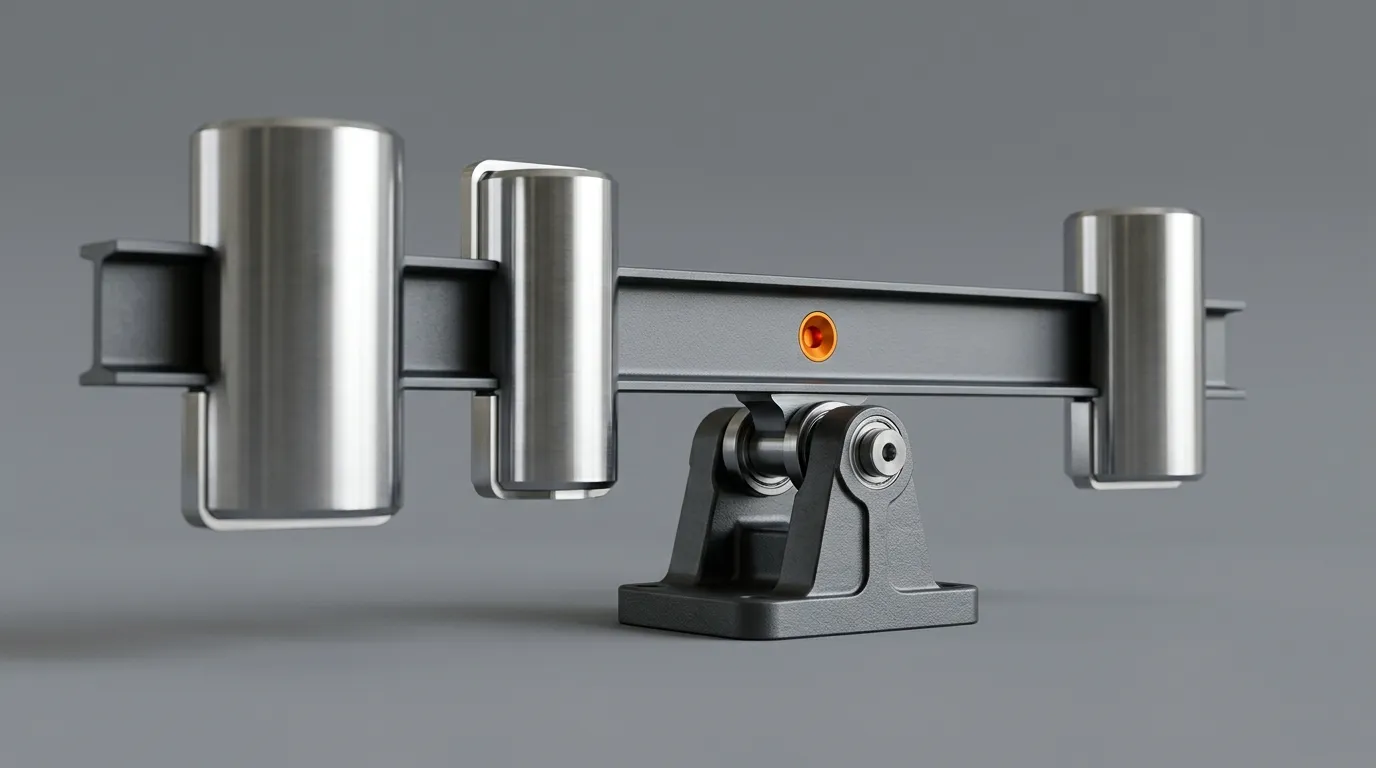
MOQ, tooling and label control are one balance: moving one changes the price of the other two.
If your purchase is C&I rather than container-scale, the C&I ESS OEM guide covers how these mechanics shift when the unit count is small and the site conditions are varied.
A One-Day Scoring Model
Score each shortlisted supplier from 1 to 5 against the criteria below, multiply by the weight, and add. It is deliberately simple: the value is not the number, it is that you score the same six things for every supplier in the same afternoon, before anyone's slide deck has had a second chance to impress you.
Criterion | Weight | A 5 looks like | A 1 looks like |
|---|---|---|---|
Supply type fit | 20% | Builds the exact product class you are buying, on its own line | Coordinates the build; you cannot name who welds it |
Document dossier | 20% | All eight documents complete, current, holder matches | Cover pages only, or documents arrive in fragments |
Process evidence | 20% | Serial traceability, HiPot and pull-test records on request | Records exist "but not here"; tests are described, not shown |
Certification scope | 15% | Scope matches your configuration and target market, in its own name | Logos without scope; holder is a third party, unexplained |
Commercial transparency | 15% | MOQ, tooling, label and firmware terms in writing | Terms appear only after you commit to a volume |
Service and spares | 10% | Named service partner in your region, spares list with dates | Warranty honoured only at the factory gate |
Weighted totals above 3.8 mean the supplier is worth a sample order. Between 2.8 and 3.8, the weaknesses are specific enough to negotiate — usually document completeness or service coverage. Below 2.8, the gap is structural: you are not looking at a manufacturing relationship, and no discount compensates for that.
Run the model twice, a week apart, with the same evidence. Scores that move by more than half a point between sittings are telling you the evidence was thin the first time.
Nine Red Flags That Survive a Good Video Call
Video calls filter for English fluency and slide quality, which are weakly correlated with manufacturing capability. These nine signals are worth more than any presentation.
- The certificate holder is a company you have never heard of, and the explanation changes between calls.
- Capacity is quoted in amp-hours or "kWh" without a voltage, which usually means nobody has modelled the actual DC configuration.
- Capacity varies without an explanation. If a supplier quotes 215, 261, 372 and 418 kWh off one enclosure, ask what physically changes between them — cell format, series/parallel count, rack count, cooling — and ask for a separate test report and a certificate scope that names each variant. One platform carrying several capacities is normal engineering; a supplier that can say in writing what changes between them is configuring that platform, and a supplier that cannot, and prices every variant the same per kWh, is moving boxes.
- No serial-level traceability. If a unit cannot be traced to a cell batch, the warranty is unenforceable in practice.
- The PCS brand is unnamed. Third-party inverters are normal; hiding which one is not.
- FAT is refused or "not standard". Watching a unit run a full cycle is the cheapest assurance in the entire purchase.
- Third-party inspection is discouraged, or accepted only with notice periods long enough to tidy the floor.
- The BOM is confidential but the price is fixed. One of those two statements is doing a lot of work.
- The legal entity, the brand and the factory address are three different things, and nobody offers a document that connects them.
None of these is automatically fatal. Together, they describe a supplier whose answers are assembled per question rather than drawn from a production system — and that is the failure mode this whole procedure exists to catch.
Run the Procedure on a Real Platform
The test of a factory is not whether it will show you a cabinet, it is whether it will hand over the dossier, let you pick the serial, and quote MOQ by model before you commit to a volume. Container-scale programmes make the difference visible fastest, and they are also where the Hua Power range is easiest to check: the 5 MWh-class HC-UPSB5010L we build is a DC block with no PCS, while the 1 MW / 2.089 MWh HC-UPSA2089L ships as an integrated 20 ft container with liquid cooling. Suppliers who build both can usually tell you which line each one comes off; suppliers who build neither will quote both at the same price per kWh.
If you are at the stage of comparing landed cost rather than capability, the cost advantage analysis for Chinese BESS suppliers covers the economics, and the container-scale product range shows how the DC-block and integrated-system split looks in a real catalogue.
FAQ
Are Chinese BESS manufacturers reliable? The manufacturing capability is not the variable — the selection is. Chinese plants build a large share of the world's lithium storage hardware, and the same industrial base contains both tightly controlled export operations and assembly shops that buy finished cabinets. The dossier, audit and scoring procedure above separates them faster than any country-level judgement.
How much does a BESS cost from China? Price per kWh is quoted across a wide band for nominally similar products, driven by cell grade, thermal management, PCS inclusion, fire suppression hardware and certification scope. Any quote without those five attributes specified is not comparable to another quote, which is why this guide puts documents before price.
Which certifications do I actually need? For the United States, UL 9540 at system level plus UL 9540A data at the level your authority having jurisdiction requires, and compliance with NFPA 855 for installation. For Europe, CE marking supported by IEC 62619 and IEC 62933-5-2 test evidence, plus the grid-code certificate for the destination country. For transport, a UN 38.3 test summary in all cases.
Can I white-label a Chinese BESS? Yes, and it is common. What varies is how much of the product you control: label and enclosure are straightforward, firmware and EMS access are negotiable, and the manufacturer of record on the nameplate is a decision with customs and warranty consequences that should be settled in writing before tooling starts.
How long does a first order take? Typical structure is cell allocation, cabinet assembly, factory acceptance test, then freight. Suppliers with cells in stock quote shorter; suppliers waiting on a cell allocation quote the allocation, not the assembly. Ask for the lead time broken into those stages — a single number hides which stage is the constraint.
Do I need to visit the factory? Not necessarily, but you need to audit the records. A remote audit with pre-agreed serials, continuous video and on-the-spot document photographs recovers most of the value. What it cannot recover is housekeeping and shift reality, so treat those as unverified rather than assume the best.
If you want the shortlist procedure compressed into a single page, the supplier evaluation checklist linked at the top of this guide is the place to start, then come back here for the audit and scoring detail. And if you would rather test the procedure against a supplier that expects to be asked for all eight documents, our engineering team will walk you through the dossier for any platform you are evaluating — talk to us.