

Europe's energy storage market just crossed a milestone that changes the math for companies that sell energy, but do not build hardware. Storage capacity in Europe passed 100 GW during 2025, overtook the continent's nuclear fleet in 2026, and industry trackers now expect another 153 GW to be added before 2030. Distributors, installers, energy retailers and municipal utilities are watching that wave — and a growing share of them want to ride it under their own brand rather than reselling someone else's. White-label BESS is how they do it: you take a proven battery energy storage system, put your name on it, and sell it as yours. It is faster than building a factory, cheaper than licensing a full design, and — done properly, with the European compliance chain understood from day one — it is a genuine product line, not a rebadge.
This guide is part of our OEM and white-label BESS sourcing guides for buyers, and it answers the questions those buyers ask us most when the target is white-label BESS in Europe: which engagement model fits, what a partner can actually change, which EU regulations bite at which date, what documentation you must hold, and how long the whole programme realistically takes.
White-label BESS is a battery energy storage system manufactured to an existing design and sold by another company under its own brand. In the European context that phrase covers everything from a 10 kWh home battery to a megawatt-scale container — but it also collides with a completely different use of the word "white-label" in energy trading software, which is why half of what ranks for this term is irrelevant to hardware buyers. Everything below is about the hardware.
Why European companies are branding their own BESS now
The demand side is easy to see. Behind-the-meter storage in Europe reached 30.2 GW by the end of 2025, led by Germany, Italy, the Netherlands, Austria and Great Britain, front-of-the-meter batteries reached 18.5 GW, and a record 13.5 GW of new electrochemical storage was deployed across both segments in that single year, according to the EMMES 10.0 market monitor from LCP Delta and Energy Storage Europe. With Germany, Italy and the UK each hosting more than 10 GW already, and the 2030 outlook revised up by a quarter, storage has overtaken nuclear capacity in Europe and shows no sign of slowing.
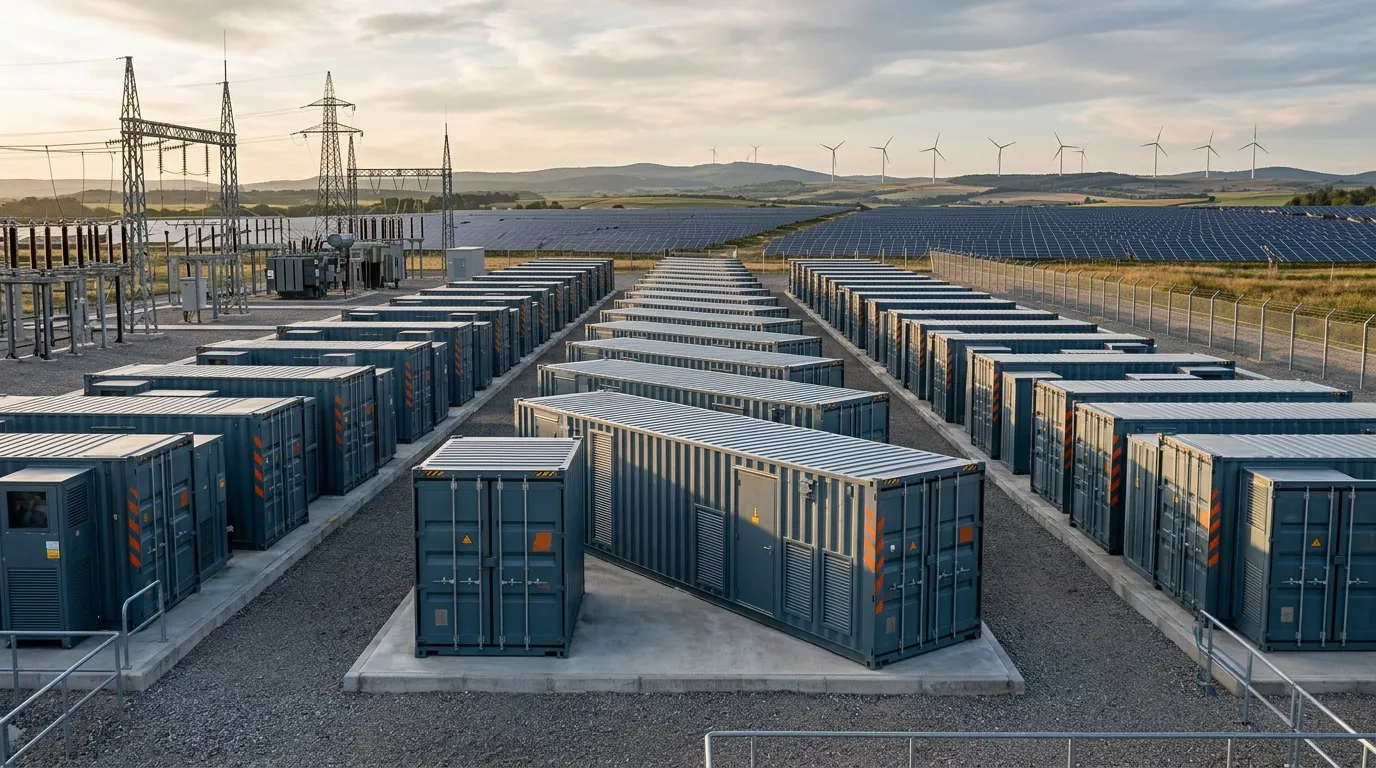
The supply side is the part white-label buyers care about: none of that hardware needs to be designed by the company selling it. Solar-plus-storage adoption, dynamic electricity tariffs and flexibility markets are pushing utilities and installers to offer storage as a standard product line, and the European Commission's energy storage policy work is explicitly trying to accelerate exactly that deployment. A regional energy retailer can add a branded battery to its product sheet in one sales season instead of two engineering years — provided it picks the right manufacturing model, which is where most programmes go wrong.
White-label, OEM or ODM: which model fits your route to market
Three words get used interchangeably on supplier websites, and they describe three very different levels of control and commitment:
Model | What the factory provides | What you provide | Typical fit |
|---|---|---|---|
White-label | Existing, certified product with your brand applied | Brand, distribution, sales, local support | Fast market entry, commodity positioning |
OEM | Existing platform adapted to your spec (colour, software splash, labels, BMS parameters) | Specification, your certification and test involvement | Differentiated product, medium volume |
ODM | Clean-sheet design to your requirements | Requirements, market access, funding | Proprietary product, high volume |
For most European entrants, white-label is the entry ticket: the design is already certified, the lead time is shortest, and the risk sits mostly in compliance and logistics rather than engineering. Before you pick a model, ask for the supplier's minimum order quantity (MOQ) in writing — white-label lines usually start at a single container or a pallet of cabinets, while OEM runs assume annual volumes. Think of white-label energy storage as the fast, proven lane, and private-label battery storage at distributor volume as its bulk cousin — same supplier, same certificates, your brand on the enclosure. The trade-off is differentiation — every other distributor can sell the same box. The moment you need your own performance envelope, enclosure or software, you are moving into OEM territory; the full mechanics of OEM and ODM sourcing — evaluation checklists, realistic budgets and timelines — are covered in depth in our C&I OEM manufacturing sourcing guide.
What the model table does not tell you is what sits inside a typical European white-label programme: distributed C&I cabinets for commercial peak shaving and backup, PV-coupled hybrid cabinets for the self-consumption market, and containerised systems for larger sites. All of these are actively white-labelled across Europe today, and each has its own certification footprint — which is the subject of the next two sections.
What a white-label partner can (and cannot) change
Before you talk compliance, you need to know what you are actually allowed to touch. A competent white-label supplier will give you a change list up front, and it will be honest about the line between cosmetic and safety-relevant:
- You can usually change: enclosure colour and finish, front-panel design, brand plate and logo placement, packaging and labels, user-facing software splash screens and app theming, serial number formats, and the printed user manual language.
- You should never change casually: cell chemistry and sourcing, BMS safety parameters and thresholds, thermal management architecture, inverter/PCS ratings and grid response settings, and anything that appears on the type-test certificate. Change those and you invalidate the certification — the very thing that lets you sell in Europe at all.
- What changes with documentation: your brand name flows into the Declaration of Conformity, the user manual, the labelling and the product registration records. That is not cosmetic — it is the legal trace that connects the hardware to the party responsible for it.
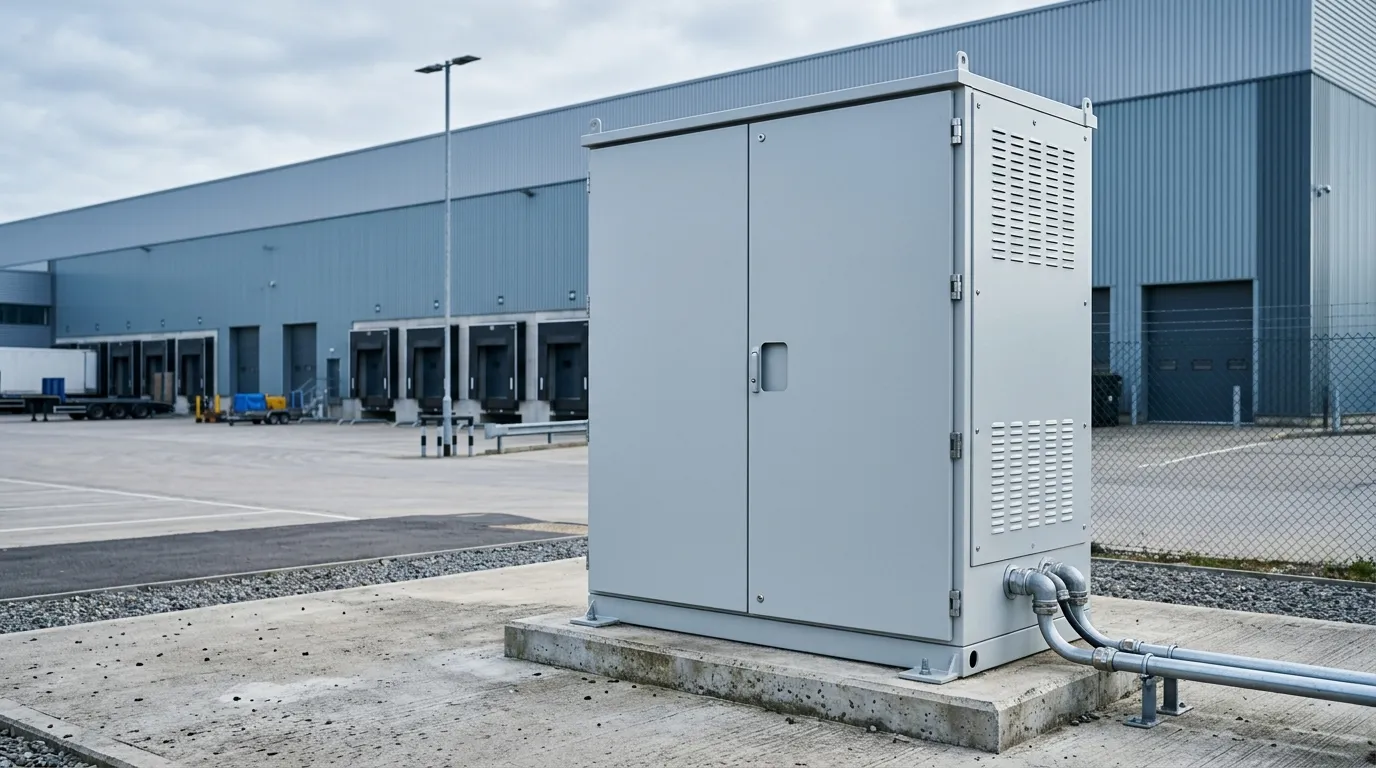
For a solar distributor eyeing the self-consumption segment, the practical sweet spot is usually a PV-coupled cabinet: one enclosure containing battery, inverter and control, already CE-assessed as a unit. Our guide to 50 kW hybrid storage cabinets with OEM options walks through that product class in detail.
The EU compliance pack: Battery Regulation, CE and the 2027 passport
This is the section most white-label marketing pages skip, and the one that decides whether your branded product actually reaches a customer. Since 2023, batteries are no longer regulated in the EU as generic electrical goods — they have their own product law.
The legal frame. Regulation (EU) 2023/1542 on batteries and waste batteries entered into force on 17 August 2023 and has applied since 18 February 2024, progressively replacing the old Batteries Directive. It brings nearly every stationary battery above 2 kWh — which is to say, virtually every BESS — into a dedicated framework covering conformity assessment, CE marking, labelling, performance and durability documentation, and waste-management (extended producer responsibility) obligations in the member states where you sell. The European Commission's CE marking guidance is the correct starting point for how CE works across directives; for a BESS, CE marking typically stacks the Battery Regulation's own rules with the EMC Directive, the Low Voltage Directive where the system's electrical range falls within scope, and the Radio Equipment Directive where a communications module is fitted.
The dates that matter for a white-label programme starting now:
- Now (already in force): conformity assessment, CE marking and labelling obligations under the Battery Regulation; performance and durability documentation; producer/waste registration in each member state of sale.
- 18 February 2027: the digital battery passport becomes mandatory for electric vehicle, light means of transport and industrial batteries above 2 kWh — including stationary storage. Every battery model placed on the EU market must carry a QR-linked passport with data on composition, carbon footprint, performance and durability. If your programme's first container ships after that date, the passport is not optional polish; it is part of the product.
- Carbon footprint, staged: declaration obligations for rechargeable industrial batteries above 2 kWh are scheduled from 18 February 2026 — or 18 months after the Commission's methodology delegated and implementing acts enter into force, whichever is later. Those acts are still landing, so the fixed dates read as earliest-start markers, not gospel; the direction of travel is what matters for supplier selection. A manufacturer that cannot already report cell-level carbon data today will be a bottleneck tomorrow.
The European Commission's batteries page tracks the implementation timeline as acts are adopted.
Who is responsible. When the system carries your brand, market-surveillance authorities will treat you — or your named EU-based economic operator — as the party to contact. In practice that means you must hold, even if the factory drafted them: the technical file, the Declaration of Conformity issued for the product as sold under your brand, the test reports behind the CE mark, and the EU address attached to the declaration (your own, or an authorised representative's, when the factory is outside the EU). Negotiate the documentation pack as a deliverable of the first order, not an afterthought — a supplier that hesitates to issue a DoC in your name is telling you something about its other programmes.
Transport, standards and grid codes: the rest of the compliance map
The Battery Regulation is the headline, but three more layers decide whether a container actually arrives and connects:
Transport. Lithium batteries ship under UN 38.3 (Section 38.3 of the UN Manual of Tests and Criteria) plus the modal rules — ADR for road, IMDG for sea, IATA for air. A white-label supplier should provide the UN 38.3 test summary for the exact battery model you are buying, not a generic "our batteries are certified" line. Your freight forwarder will ask for it before the first booking.
Product standards. European and international buyers increasingly ask for IEC 62619 (safety of secondary lithium cells and packs) and, for US-facing SKUs, UL 1973 / UL 9540A. These are not EU legal requirements in themselves — CE is the legal mark — but they are the technical evidence behind the declaration, and insurers and large customers increasingly demand them.
Grid connection. A storage system that exports to the grid must comply with the EU Network Code on Requirements for Generators (NC RfG) as implemented nationally, plus country-specific connection rules such as Germany's VDE-AR-N series or Italy's CEI 0-21. Because national implementation differs, a "European-certified" claim means little: ask which countries the certificate actually covers and whether the partner has passed real grid prequalification there — frequency-regulation experience (FCR/aFRR/mFRR) is a strong signal that the system has been through actual TSO compliance processes, not just paperwork.
One market note: Great Britain is not in the EU. CE marking continues to be accepted for most goods placed on the GB market, with UKCA available as an alternative — the UK government's guidance on placing manufactured goods on the market in Great Britain explains the current position. If the UK is part of your sales territory, plan the labelling and documentation for both regimes from the start.
Verifying a white-label manufacturing partner for Europe
With the compliance chain clear, partner verification becomes concrete: you are not just checking that a factory can build a cabinet, you are checking that it can hand you a compliant product under your name for the countries you sell in. Five checks matter most:
- Certificates against public records, not PDFs. Ask for certificate numbers (CE DoC, IEC 62619 CB reports, UN 38.3 summaries) and verify them with the issuing body or database where possible. A supplier's marketing page listing "CE, UL, IEC" tells you nothing about which models are covered.
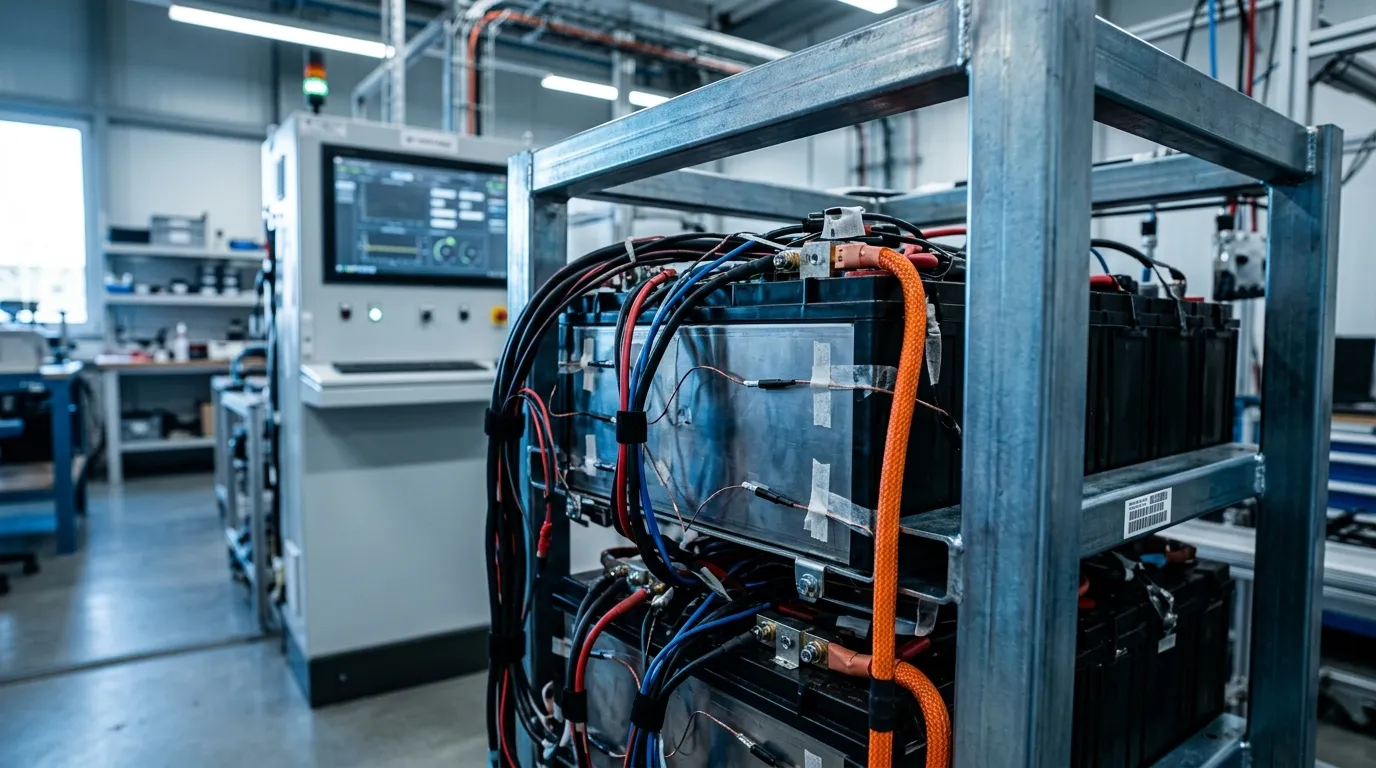
- Production-line evidence. Photographs with timestamps, batch test reports from real runs, and ideally a live video walkthrough — the gap between a website and a production floor is where trade companies hide.
- The documentation pack in your name. As above: DoC drafted for your brand, technical file access, user manual source files in your languages. Ask to see a sample pack from an existing white-label customer before you commit.
- EU-side substance. Warehouses, service partners or offices inside the EU shorten spare-parts lead times and make after-sales credible to your customers. Manufacturers serving Europe seriously tend to staff local teams — Hua Power, for example, operates EU-facing offices in the Czech Republic, the Netherlands and Poland alongside its Shenzhen headquarters and Jinhua factory.
- Reference calls with similar buyers. Talk to another distributor or energy company that white-labelled the same product family, and ask about the two things no website discloses: how warranty claims actually get handled across borders, and whether the supplier's documentation kept pace with new EU requirements.
Real-world delivery evidence matters too: a partner that has commissioned systems in Europe has already absorbed the grid-code, transport and commissioning surprises that will otherwise land on your programme. Our C&I ESS project in Águeda, Portugal is one example of the deployment profile behind that kind of experience.
From first call to first container: a realistic white-label timeline
A white-label programme is not a procurement order; it is a small product launch. Plan for roughly this sequence:
Phase | What happens | Typical duration |
|---|---|---|
1. Scoping | Product family selection, target countries, volume estimate, compliance mapping | 2–4 weeks |
2. Sample & brand | Branded samples, change list approval, documentation pack review | 3–6 weeks |
3. Compliance lock | DoC in your name, labelling and passport data readiness, transport paperwork | overlaps phases 2–4 |
4. Production & FAT | Pilot batch production, factory acceptance tests against your checklist | 4–8 weeks |
5. Shipping | Sea freight, customs, EU warehouse or direct delivery | 4–8 weeks |
6. Launch support | Commissioning docs, spare parts stock, warranty channel, after-sales training | ongoing |
The honest estimate for a first branded container, from signed agreement to stock in the EU, is five to eight months — longer if you start ODM-style changes, shorter if the design is already certified for your markets. Two schedule risks dominate: certification documentation that was never drafted for your brand, and labelling/passport work treated as a launch-week task instead of a design task. Both are fixed by making the compliance pack a contractual deliverable of phase one.
The bottom line for European buyers
White-label BESS is a real route to market for European distributors, installers and energy companies — but only if you treat it as a compliance programme with a branding exercise attached, rather than the other way around. The market timing is favourable, the models are clear, and the regulatory calendar (passport in February 2027, carbon data requirements building behind it) rewards partners who can already document their products properly. Verify the factory like a bank would, put the documentation pack in your name from order one, and the five-to-eight-month timeline is achievable.
If you are evaluating a white-label or OEM programme for the European market, the engineering team at Hua Power works with distributors and energy companies on C&I energy storage cabinets and container systems built for EU compliance — get in touch through the contact page and we will walk through the scoping with you.