

What a "UL 9540A Battery Cabinet" Actually Means
What is UL 9540A? In short, it is the standard test method for evaluating thermal runaway fire propagation in battery energy storage systems — and a UL 9540A battery cabinet is an energy storage enclosure whose battery system has been tested under it. Passing that test means a fire starting in one battery module is contained — it does not propagate to neighboring modules, cabinets, or the surrounding structure. That single result drives siting, spacing, and permitting decisions on projects across the United States, which is why "UL 9540A tested" is now the first line on any serious BESS spec sheet.
The label gets misused constantly in marketing decks, so the boundary is worth drawing once. These four standards are not interchangeable:
- UL 9540A is a test method, not a certification. It produces data — gas generation rates, peak temperatures, propagation timing — during a simulated thermal runaway event.
- UL 9540 is the system-level safety listing for a complete energy storage system. It is built on UL 9540A test data plus component testing under UL 1973.
- UL 1973 covers the component layer: battery modules and packs.
- NFPA 855 is the fire code that governs where an ESS can be installed, how much separation it needs, and what fire protection it requires. UL 9540A results are the evidence authorities use to grant the spacing reductions NFPA 855 permits.
If you carry only one distinction into procurement, make it the difference between UL 9540 vs 9540A: the listing certifies the complete system, while the test method produces the evidence the listing is built on.
Add UN 38.3 for transport and you have the standard compliance stack for any lithium battery cabinet. The same method applies from data-center UPS cabinets to utility-scale containers — the scale of the installation-level fire test is what changes, not the underlying logic. A buyer comparing a small indoor cabinet against a 5 MWh container is comparing two configurations of the same test method, not two different safety regimes.
Standard | What it is | What it covers | Where you'll see it |
|---|---|---|---|
UL 9540A | Test method | Thermal runaway fire propagation at cell, module, unit, and installation level | Test reports, AHJ spacing decisions |
UL 9540 | System safety listing | The complete ESS as installed | Certification labels on the system |
UL 1973 | Component standard | Battery modules and packs | Module-level datasheets |
NFPA 855 | Fire code | ESS siting, separation, fire protection | Building permits, fire marshal review |
UN 38.3 | Transport regulation | Safe shipment of lithium batteries | Shipping documentation, freight |
What UL 9540A Testing Actually Proves
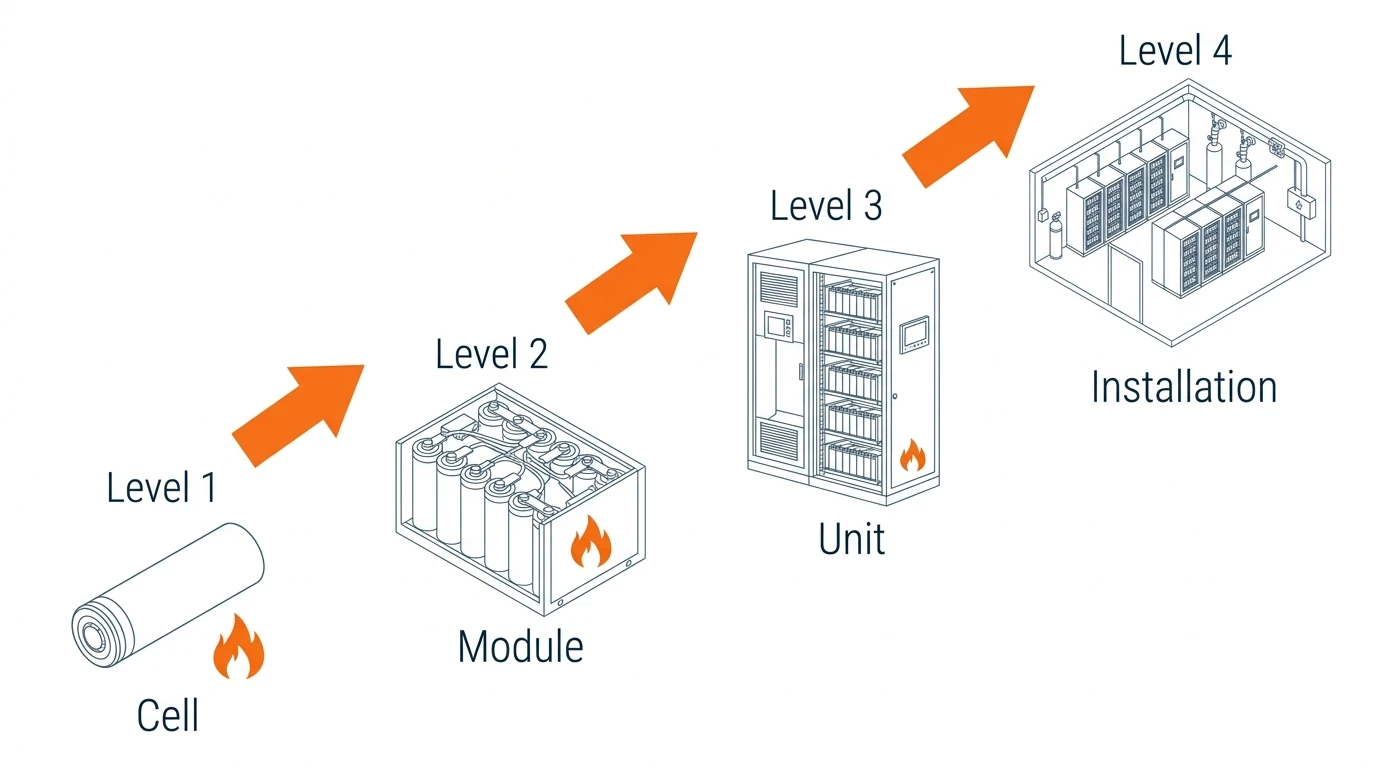
UL 9540A testing escalates in four stages, each one answering a different question about how a battery fire behaves.
Cell level. The test forces a thermal runaway in a single cell — typically by nail penetration or controlled heating — and measures gas composition, temperature rise, and whether neighboring cells in the same module are pulled into the event. This stage establishes the abuse behavior of the cell chemistry itself, which is why cell selection is the first safety decision a manufacturer makes.
Module level. A cell inside a module is driven into thermal runaway to see whether the fire propagates to adjacent cells and how the module's own design — barriers, spacing, potting — slows or stops it.
Unit level. The fire starts inside a complete cabinet: battery racks, BMS, fire suppression, and venting all present. This is the stage that proves the cabinet contains the event and prevents propagation to adjacent units and to the building around it.
Installation level. The final stage is a large-scale fire test of the full configuration as installed, measuring flame spread, gas accumulation, and whether the building's fire protection responds as designed. This is also the stage that most directly feeds NFPA 855 spacing decisions.
The output is data, not a pass/fail sticker. That distinction is the entire point: a fire official cannot approve a spacing waiver on a certificate alone, but they can act on a report that quantifies gas generation and propagation distance. A complete report carries gas composition and generation rates, cell and module temperature curves, the time from initiation to propagation (or the proof that propagation never happened), and the measured response of the cabinet's own suppression and venting. The purpose of UL 9540A is exactly this — giving UL 9540A test method reviewers and authorities the numbers they need to apply NFPA 855 with confidence rather than fear.
One thing has changed recently, and it matters at procurement time. UL 9540A was updated to Edition 6, active since March 2025, and the move from the 5th edition tightened how installation-level large-scale fire testing is scoped and reported. If a vendor hands you a report from 2018, ask which edition it was run under and whether the configuration tested matches what they are quoting today. Standards and codes move in lockstep — NFPA 855 references the test method directly — so an outdated report can be the difference between a smooth permit and a redesign.
What's Inside a UL 9540A-Tested Cabinet
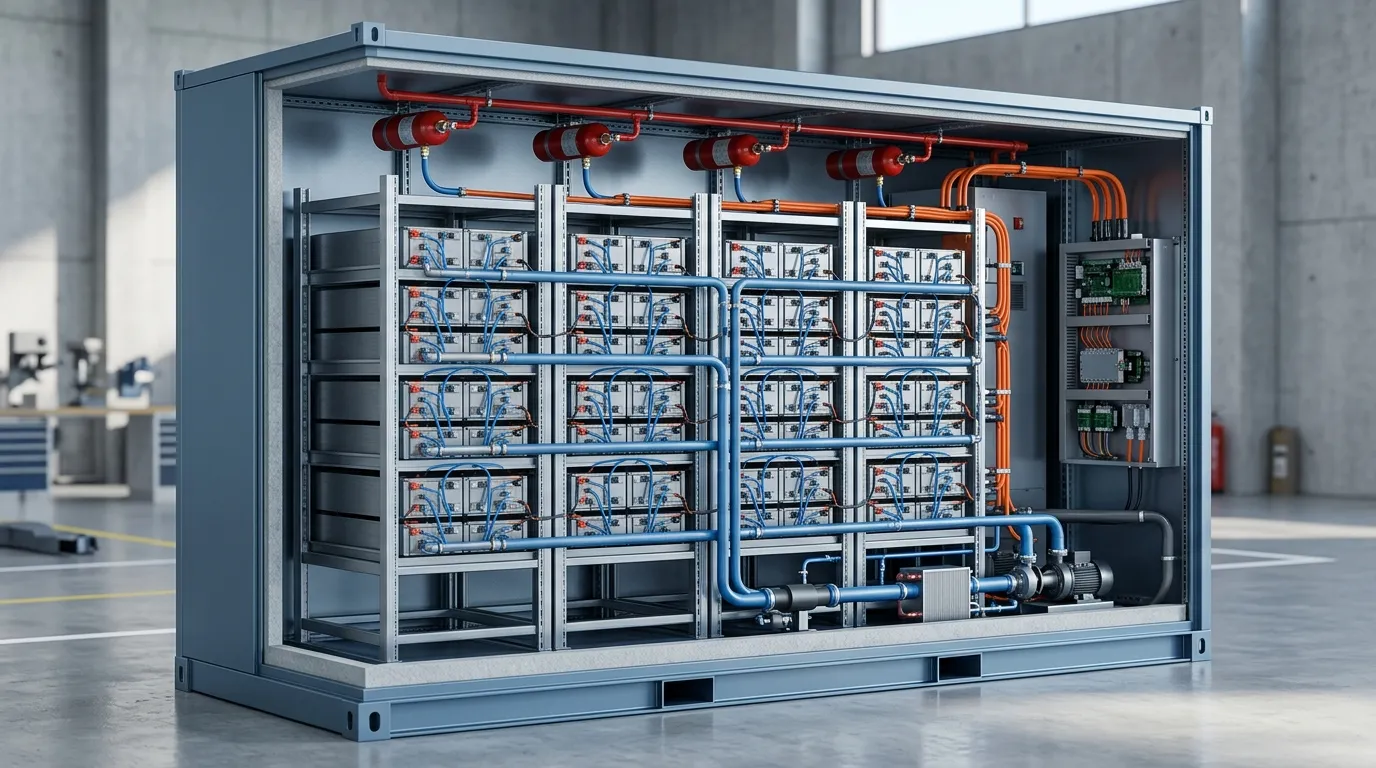
A cabinet that passes unit-level testing is engineered for containment from the cell up. The architecture repeats across manufacturers, and knowing it helps you read a spec sheet without getting lost in acronyms:
- Cell chemistry. Lithium iron phosphate (LiFePO4) is the default for large BESS because it releases less energy and has a higher thermal runaway onset temperature than NMC. It is more forgiving at the cell level, which is where every test starts. For the fundamentals, see our LiFePO4 battery explainer.
- Packs and modules. Cells are grouped into packs with individual voltage and temperature monitoring, so the BMS can see a hot cell before it becomes a problem.
- BMS with runaway detection. The battery management system watches temperature, voltage, and gas sensors. Detection speed matters more than most buyers assume — a few seconds of warning is what lets suppression engage before propagation begins.
- Thermal management. Liquid cooling keeps cell temperatures uniform, typically within ±2°C. Local overheating is the seed of thermal runaway, so uniform temperature is a safety feature, not just an efficiency one.
- Fire suppression and venting. Aerosol or clean-agent suppression, pressure relief, and explosive venting give the runaway event nowhere to go but out, in a controlled direction.
- The enclosure. An IP54 or better outdoor rating, anti-corrosion treatment, and door interlocks complete the containment story. The cabinet is the last line of defense, and it is tested as such at unit level.
This is the anatomy of every serious commercial energy storage cabinet on the market today. The differences between vendors show up in how well each layer is executed — and in how honestly each layer is documented.
HC-UPSB5010L: The 5.01 MWh Liquid-Cooled Cabinet in Detail
Hua Power's HC-UPSB5010L is the flagship of the range: a 5,015.96 kWh liquid-cooled BESS unit in a 20-foot-class enclosure, aimed at utility-scale and large C&I deployments. It is the largest unit Hua Power builds, and it is the practical answer to the question this article started with: what does a real UL 9540A-tested cabinet look like on paper?
Parameter | Specification |
|---|---|
Rated capacity | 5,015.96 kWh (5.01 MWh) |
Cell | 3.2 V / 314 Ah LiFePO4, 1P104S packs, 12 clusters |
Cooling | Liquid, ±2°C temperature uniformity |
Operating range | −30 °C to +50 °C |
Protection | IP54, C4 anti-corrosion, ≤44 t, 6,058 × 2,438 × 2,896 mm |
Fire protection | Dry-pipe sprinkler interface, optional aerosol suppression |
Depth of discharge | 90% |
Cycle life | ≥8,000 cycles at 80% SOH (standard conditions) |
Charge/discharge rate | 0.5C / 0.25C |
In practical terms, 5.01 MWh at 0.5C means roughly 2.5 MW of dispatchable power for two hours — enough to shave a large industrial demand peak, provide frequency regulation, or shift a full day of a commercial facility's solar surplus into the evening. The liquid cooling holds cells within ±2°C across the operating range, which is the thermal-management layer the previous section described, working at utility scale.
Per the manufacturer's datasheet (verified August 2026), the HC-UPSB5010L carries UL 1973, UL 9540A, and UL 9540, ships under UN 38.3, and is designed for compliance with NFPA 855, NEC 2023, and NFPA 70E. Read that sentence the way the previous section taught you: the datasheet is the claim, and the test report is the evidence. When you request the report, verify that the configuration matches — same cell, same pack count, same cooling and suppression system as the unit on your quote. The full HC-UPSB5010L specifications are on the product page, including the downloadable datasheet.
How to Verify a UL 9540A Claim Before You Buy
This is the section that saves you from buying a sticker. Before you accept a UL 9540A test report, run it through this checklist and keep the evidence in the same folder you would hand to a fire marshal:
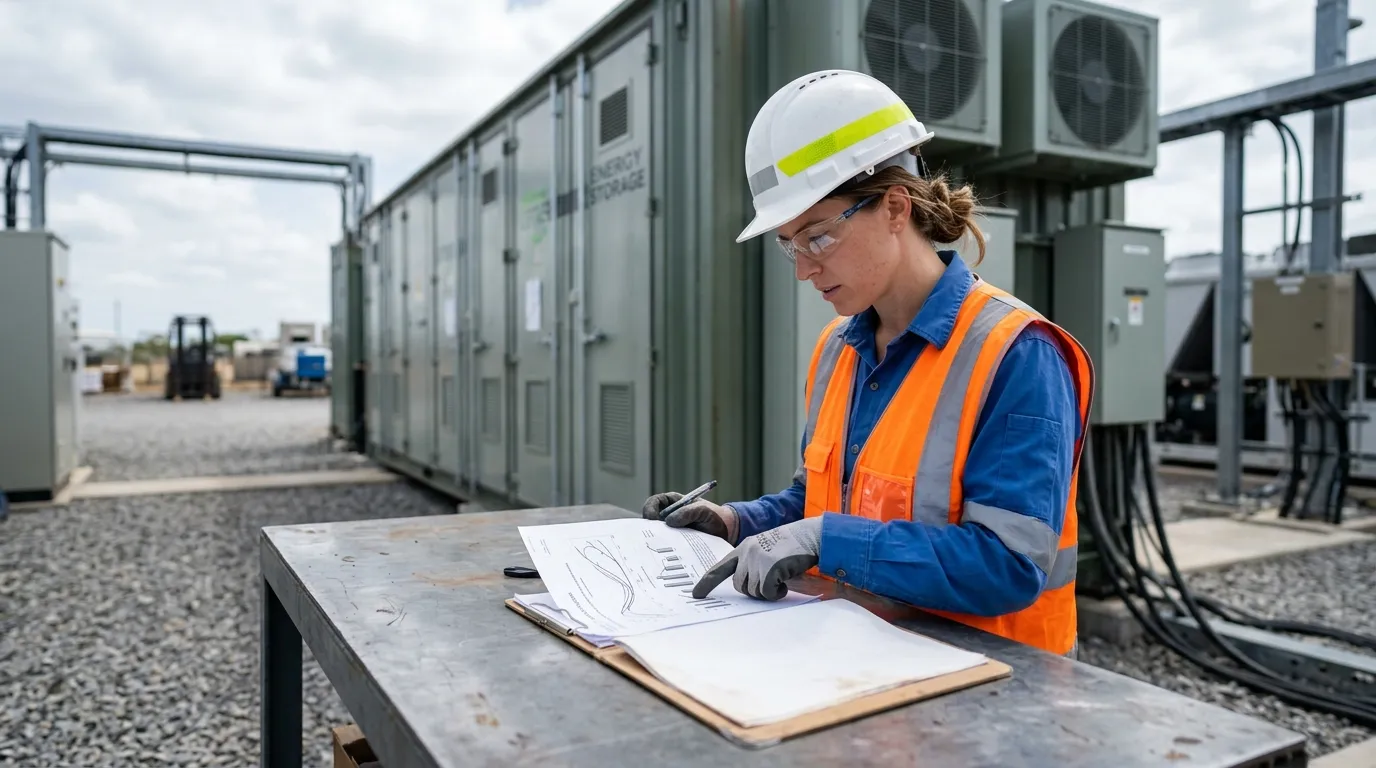
- Ask for the test report, not the marketing sheet. A UL 9540A claim without a report number, issuing laboratory, and date is an unfinished claim. Independent labs such as Southwest Research Institute publish the scope of their UL 9540A testing openly, which gives you a concrete picture of what a complete report covers.
- Confirm level coverage. Does the report cover module, unit, and installation levels? A cell-level-only study tells you nothing about whether the cabinet contains a fire.
- Check the edition. Edition 6 (2025) or earlier? Note it in your vendor comparison table.
- Match the configuration. The report must describe the same cell, pack, BMS, cooling, and suppression as the quoted unit. Reports do not transfer across configurations — a tested battery from one supplier does not certify another supplier's cabinet around it.
- Trace it to the UL 9540 listing. The system-level listing is the certification; UL 9540A is the underlying test data. Ask to see both.
- Take it to your AHJ early. Present the report to the fire marshal or building official before finalizing the layout. NFPA 855's separation tables are the baseline, and the report is what justifies deviating from them.
Two supporting documents belong in the same folder. UN 38.3 test certificates cover transport of the batteries to site — without them the freight stops at the border, so make them part of the shipping paperwork review under the UN Manual of Tests and Criteria. A serious test program starts from a failure-mode analysis that identifies the worst-case cell and module before the fire tests begin.
If a vendor cannot produce a test report with a report number, an issuing laboratory, and an edition date, the UL 9540A claim is unfinished business. Everything else is marketing.
If you are assembling a full evaluation rather than a single cabinet, our C&I BESS procurement guide walks through the RFQ, vendor scorecard, and contract side of the same process.
How UL 9540A Fits U.S. C&I and Utility Projects
In the U.S. market, UL 9540A is not a box to tick at the end of procurement — it is threaded through the whole project lifecycle. The building permit references NFPA 855, which leans on UL 9540A data. The utility interconnection agreement asks about listing status. The electrical contractor's work is governed by NEC 2023 and NFPA 70E. Every one of those layers traces back to the same test report, which is why the verification checklist above belongs at the start of a project, not the end.
The practical payoff is siting flexibility. A well-documented UL 9540A report is what lets a project place cabinets side by side and closer to structures than the default NFPA 855 tables allow — which changes real estate requirements for rooftop, container, and outdoor vs. indoor cabinet decisions. On a multi-megawatt site, spacing waivers can be the difference between a viable layout and a project that does not fit the parcel at all.
Market context matters too. The U.S. Department of Energy treats energy storage safety as a core grid-policy issue, and state-level incentive programs increasingly condition funding on code-compliant, tested equipment. Between the federal push and tightening local codes, the direction of travel is one-way: more documentation, earlier in the process. For the full picture — market conditions, compliance, and procurement in the U.S. — start at our Battery Storage in the USA hub; the application-side guides under commercial and industrial energy storage cover project-by-project considerations such as peak shaving, backup, and grid services.
How to Evaluate a UL 9540A Cabinet Manufacturer
The report is the floor, not the ceiling. What separates a reliable supplier from a paper-compliant one shows up in five places:
- Documentation discipline. Complete, current, configuration-matched reports on request — without a sales call first. Slow or incomplete documentation is the first warning sign, and it predicts every other process problem downstream.
- Cell sourcing transparency. Ask which cell manufacturer and which cell revision are in the quoted unit. Cell chemistry changes silently between revisions, and a changed cell invalidates an old report.
- BMS ownership. In-house BMS development generally means faster response to field findings; third-party BMS is workable, but ask who owns the firmware and the thermal runaway detection algorithm.
- Production line consistency. The test was run on one unit. The factory's job is to reproduce that unit every time — batch records, cell traceability, and inspection reports are how you confirm it. This matters more for a 5 MWh unit than for a rack battery, because the blast radius of a defect is larger.
- Commercial terms tied to engineering. Depth of discharge, cycle life, and the warranty should be specified at a stated DoD and temperature. The HC-UPSB5010L's 90% DoD and 8,000-cycle spec at 80% SOH is the shape of a serious commitment — a degradation guarantee that cannot be pinned to operating conditions is not a guarantee.
A UL 9540A cabinet is a safety-engineered product, not a commodity. The manufacturer that treats the test report as a sales asset rather than a compliance checkbox is the one worth a factory audit. When you are ready to evaluate the HC-UPSB5010L against your site conditions, brief our engineering team with your application, capacity, and certification requirements — the answers come back with the test documentation attached.