

If you're reading this, you've probably already decided that buying off-the-shelf BESS hardware isn't quite right for your business — and building it from cells is even less right. You want a third option: a partner who can manufacture under your specs, in your colors, with the documentation your customers expect, and on a timeline that doesn't kill your launch. This guide is written for that buyer.
What "OEM" actually means in battery storage
The word "OEM" in a BESS conversation means at least three different things, depending on who's saying it. Worth getting them straight before you sign anything.
White-label (or private-label). You take an existing product off our shelf — same hardware, same firmware — and put your name on it. Lead time is short (typically 30–45 days for our standard SKUs), MOQ is low, and the upfront engineering cost is near zero. You're buying a product; you're branding the wrapper.
OEM (Original Equipment Manufacturer). We manufacture to your specifications. The cabinet color, the logo, the connector layout, the firmware splash screen, the labels, the documentation — all under your brand. The underlying cells, BMS and EMS are usually ours. Lead time is longer (60–90 days for the first run), MOQ is meaningful (typically 50–100 units for cabinet-class products), and there's a one-time engineering charge for tooling and firmware work.
ODM (Original Design Manufacturer). You bring the requirements, we co-design the product. New form factors, custom thermal management, integration with hardware we don't normally ship with. Lead time is months (4–6 is typical), MOQ runs into the hundreds or thousands of units, and the upfront investment is substantial. This is where you should expect serious IP discussions on both sides.
The mistake we see most often is buyers asking for "OEM" when they actually want white-label — or asking for white-label when their commercial proposition would only work with real OEM customization. Knowing which one you're really after saves both sides a month of back-and-forth before the first quote.
When OEM is the right move
OEM is the right move in roughly three situations.
You sell to a market that demands your brand, not ours. If you're a regional energy services company in Australia or an EPC in Texas, your end customer signs a contract with you — not with a Chinese supplier they've never heard of. The hardware needs your name on it. The certification needs your name on it. The warranty needs your name on it. White-label is the minimum; OEM lets you go further and make the product genuinely feel like yours.
You have specific market or compliance needs we don't address out of the box. The US market needs UL 9540A certification, NEC 2023 wiring practices, and a battery enclosure that passes NFPA 855 large-scale fire testing. We have one SKU (the HC-UPSB5010L) that already holds all of those. If you need the same compliance package on a different form factor — say, a 2 MWh cabinet for a microgrid project — that's an OEM conversation, and it has a real cost behind it.
You have volume but not capital. Building a battery factory costs upwards of $50 million for the smallest practical setup. If you have customers ready to buy 50–200 units a year but no investment thesis for a fab, an OEM relationship gives you the brand and the IP control of a manufacturer without the capital expense.
If none of these are true — if you're a single integrator with a handful of projects a year — white-label or even standard purchasing is probably the right answer. OEM only pays for itself when there's a volume that justifies the engineering work.
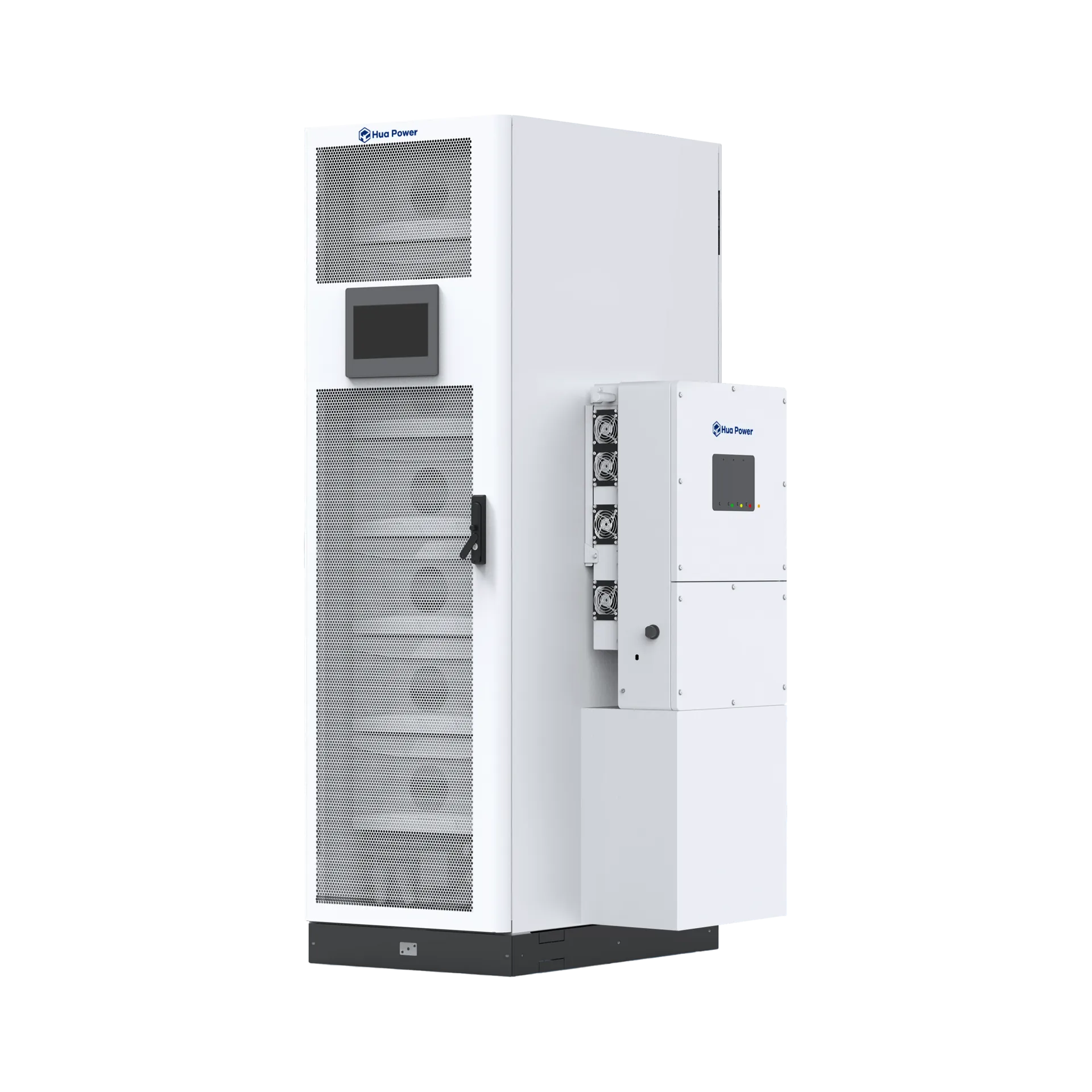
A slice of the 17-SKU C&I range — from the standard HC-UPSAP241 (left) to the AC-coupled HC-UPSA241 retrofit unit (right). Same cell, same BMS, same EMS — a deliberate platform choice that lets us hold a 30–45 day lead time.
Five questions worth asking your supplier
After 400+ projects, here are the five questions we'd want a buyer to ask us. We've ordered them by how hard they are to fake.
- Is your core IP in-house, or are you reselling someone else's? The honest test is to ask which of these are designed by the supplier themselves: the cells, the BMS, the EMS, the PCS, the thermal management. Few suppliers design all five. We design the BMS and the EMS in-house — the Visual EMS platform, in particular, is something we license out to other manufacturers as a white-label product. We use third-party LFP cells (CATL- and EVE-grade) but we standardize on a single 3.2V / 314Ah large-format cell across the entire product line, which gives us supply security and lets the BMS team reuse code. We use third-party PCS but we own the protocol integration. If a supplier is reselling everything, they have nothing differentiated to offer you, and you're paying a margin for box assembly.
- Show me your production line, not your sales deck. We run a 50,000 m² facility in Zhejiang Province with 2.4 GWh of annual capacity, and we're happy to host pre-shipment inspections by your team or by a third-party QC firm. Any serious OEM partner should be willing to do the same — and willing to walk you through cell sorting, pack assembly and end-of-line testing in person or on video. Suppliers who only show you finished products and won't open the door to the line are usually assembling other people's hardware and calling it manufacturing. End-of-line testing in our Zhejiang facility — multiple C&I cabinets in parallel validation before they ship. We host inspections on this floor, by appointment.
- Have you made the same kind of SKU for someone else, under their brand? This is the proof-of-customization question. The first time a supplier does an OEM run, both sides learn expensive lessons. The fifth time, the engineering team knows what questions to ask up front. We've been on the OEM side for several customers now (we won't name them in a public guide for obvious reasons, but we'll bring case references to a serious commercial conversation). Ask your candidate supplier for at least one comparable project — same scale, same level of customization — and ask the buyer of that project for a reference.
- What are the certification gaps, and who pays to close them? A supplier whose product is CE-marked is fine for Europe but useless for the US. UL 9540A testing for a single cabinet form factor costs $500,000 to $2,000,000 and takes 12–18 months. If you need UL on a custom SKU that the supplier doesn't have certified yet, that cost has to go somewhere. The honest conversation is: who pays for the cert, who owns the cert document afterwards, and what happens if it fails the first round (UL re-tests aren't cheap either). Get this in the contract before you sign.
- What does the contract say about IP, exclusivity and end-customer support? Three commercial terms get fought over after the first launch:
IP ownership of custom firmware or hardware modifications. We recommend it stays with the manufacturer but you get a perpetual royalty-free licence — this protects you commercially without forcing us into a corner where we can't reuse our own R&D.
Exclusivity. Per region, per channel, per vertical — be specific. "Global exclusivity" rarely makes sense for either side.
End-customer support escalation. Who answers the support call at 2am when a critical site goes down. A good OEM relationship has a defined escalation path with your team in the loop, not a black-box handoff.
A practical vendor evaluation checklist
Before the second meeting with any OEM candidate, run them through this checklist.
Manufacturing
- Owned factory (not contract assembly)
- Annual capacity at least 4× your expected order volume, so you don't slow them down
- ISO 9001 + ISO 14001 + IATF (if you'll sell into automotive-adjacent markets)
- Willing to host a pre-shipment inspection by you or a third party
Engineering
- In-house BMS and EMS team you can actually meet
- A single standardized cell across the product line (lower supply risk)
- Documented FAT and SAT procedures you can review in advance
- Firmware version control with a real release process — not "we'll send you the latest build"
Certifications
- Their current SKUs hold the certs you need (CE / UL / IEC / UN 38.3 / NFPA 855 as appropriate)
- A documented process for adding your brand to certification labels
- Clarity on who pays for any new cert work — and on what happens if a test fails
Commercial
- MOQ matches your launch volume — neither side is taking on commitments bigger than they need to
- Sample lead time stated in writing (we say 30–45 days for standard SKUs, 60–90 for OEM customization)
- Warranty terms that match what you can offer end customers (we ship 5–10 year warranties depending on cycle profile)
- A clear escalation path for service issues, with named contacts on both sides
After-sales
- Local stocking partner, or a clear warehouse arrangement on your side
- OTA firmware update capability (mandatory for any system you're going to sell for 10+ years)
- Remote diagnostics access — the manufacturer should be able to look at a system without sending someone to site
- A spare-parts SLA in writing, with stocking commitments measured in years not promises
Any candidate who scores well on most of these is worth a deeper conversation. Anyone who scores poorly on three or more is probably not the right partner for an OEM relationship — even if their list price looks attractive.
The Hua Power approach
We do all three tiers — white-label, OEM and ODM. Here's how we think about each.
For white-label
We have 17 standardized SKUs across the C&I range — from HC-UPSAP64 (64 kWh / 30 kW) up to HC-UPSSP1205 (1.2 MWh / 500 kW) — plus residential lines from 5 kWh to 256 kWh. The hardware is what we ship every day. We add your brand to the cabinet, the documentation, and the firmware splash screen. MOQ is one container's worth of product (the exact unit count varies by SKU). Lead time is 30–45 days, the same as any standard order. The new HC-UPSAP261L and HC-UPSAP522L liquid-cooled cabinets are good white-label candidates if you want a more premium product line without the engineering work.
For OEM
We modify the cabinet, the connector layout, the user-facing firmware, the certification labels — but the core platform (BMS, EMS, cells) stays ours. MOQ is typically 50 units for cabinet-class products. The engineering NRE charge for first-article customization is in the $20–80K range depending on scope. Lead time is 60–90 days for the first run, then 30–45 days for repeats. The HC-UPSA241 AC-coupled platform is a popular OEM base because it's purpose-built for solar retrofits and the install economics already work in most markets.
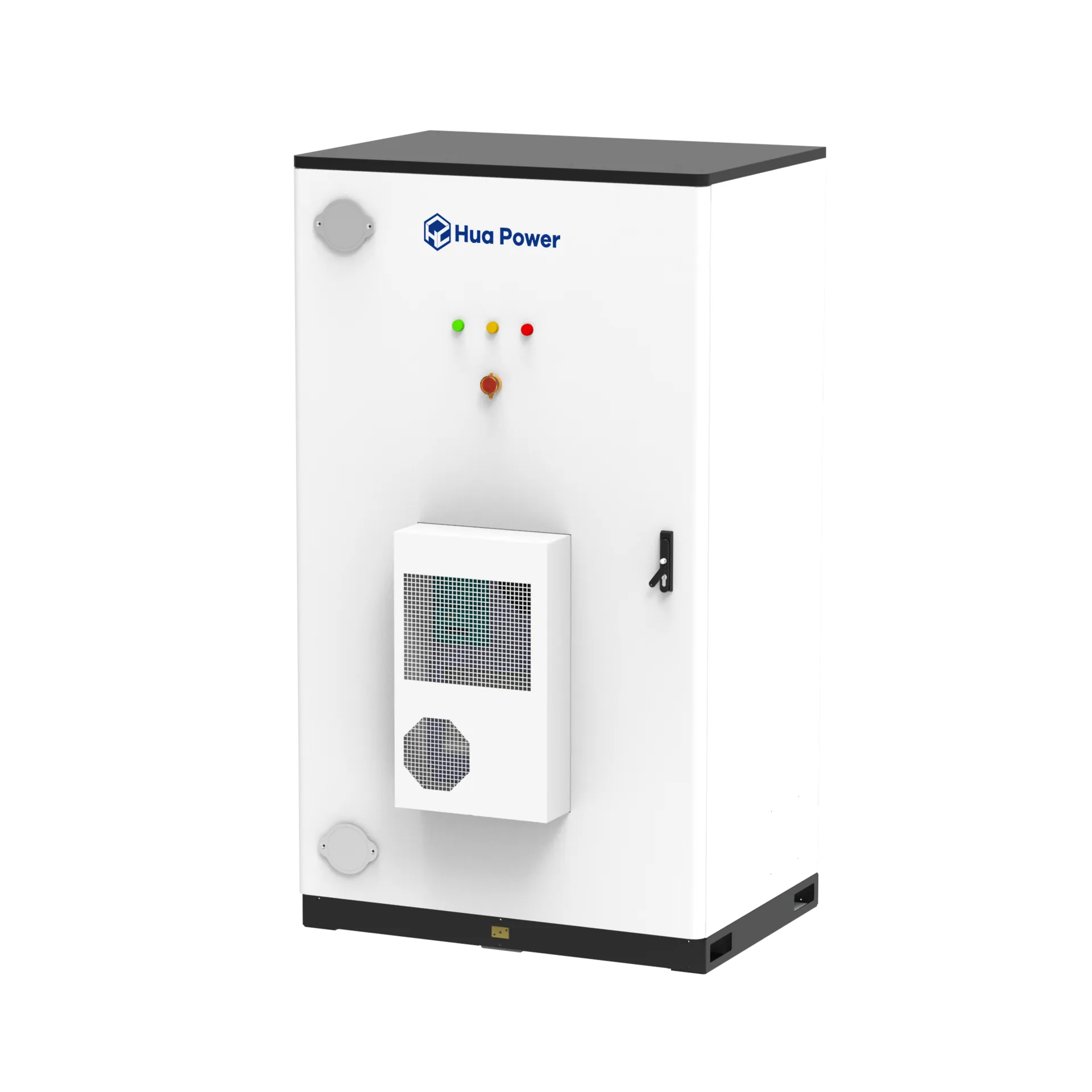
The HC-UPSAP241 is a common base for OEM customization — the cabinet, label, splash screen and cert documentation get reworked under your brand; the cell, BMS and EMS underneath stay ours.
For ODM
We co-design with you. Different form factors, different thermal architecture, different EMS feature sets. You should expect months of design work and MOQs in the low hundreds. This is also where the IP conversation matters most — we'll work with you on it, but we'll also be honest about which parts of our platform we won't fork because we need to keep upgrading them for everyone.
One thing worth saying out loud: we won't do OEM for direct competitors in the same channel. If you're selling C&I systems in Italy and another customer of ours is also selling C&I systems in Italy, we'll be transparent about the conflict and we'll talk to both sides before agreeing to terms. We've found this is the only way to build long-term OEM relationships that don't end in lawsuits.
What you'll actually pay and how long it'll take
Real numbers, not bands.
White-label cabinet (e.g. HC-UPSAP241), one container
- Sample lead time: 30–45 days from purchase order
- Per-unit cost: in the same range as our list price, minus a small volume discount for repeat orders
- NRE charge: typically zero for cosmetic-only changes (logo, colour)
- First sample for testing: one unit at sample cost, refundable against the production order if you proceed
OEM cabinet (custom form factor, your firmware splash, your cert labels), 50 units
- First-article lead time: 60–90 days
- NRE charge: $20–50K depending on scope
- Per-unit cost: comparable to our list, with the NRE recoverable through volume
- First sample: usually two units — one for your QC, one for cert/testing
ODM (clean-sheet design), 200+ units
- Design phase: 4–6 months
- NRE: $80–300K depending on the scope of design work
- Per-unit cost: depends entirely on the design — discussed at design freeze
- This is also where we'll discuss IP ownership, exclusivity by region, and a multi-year volume commitment
These are real ranges from real projects. Anyone who quotes you firm numbers without a design review is either underestimating or padding — neither is good for the relationship.
How to start the conversation
If you've gotten this far, the next step is concrete.
- Send us a one-page brief with: target market(s), target volume per year, the certifications you need, and whether you have an existing product spec we should match.
- We'll come back within one business day with a first-pass quote — rough order of magnitude on cost and lead time, plus an honest read on whether what you're asking for fits our model.
- If both sides want to continue, we schedule a 60-minute call with one of our application engineers — not a salesperson. This is where the hard questions actually get answered.
We don't ship NDAs at the first email and we don't ask for proprietary information up front. The early conversation should let you assess us as much as it lets us assess your project.
OEM relationships in BESS work when both sides go in honestly about what they need and what they can deliver. We've made enough of these work — and seen enough of them fail — to know that customers who do their homework on the supplier, and suppliers who are transparent about their own limits, end up in partnerships that last past the first product launch.
If you're thinking through an OEM decision for a commercial & industrial battery system, we'd rather have a 30-minute call where we figure out together whether we're the right partner than a 6-month email thread that ends in a no. The contact form below goes straight to engineering — not to a sales queue.