

Almost every US battery storage datasheet now carries the same three words: "UL 9540A tested." Over the last three years that line has moved from a differentiator to table stakes, which is exactly when it stops carrying information. The sentence is true of a 2019 module-level test on a chemistry the supplier no longer ships, and it is true of a current installation-level fire test on the exact build quoted to you. Both sales teams will say it without blinking.
This UL 9540A BESS manufacturers checklist exists to close that gap. It is written for the buyer who has to hand a submittal package to a fire marshal, an insurer or an interconnection reviewer — and who has one shot at getting the documentation right before the schedule slips. Below are the ten gates worth running a manufacturer through, the documents each gate depends on, and the questions that separate a compliance program from a PDF.
Read it as a manufacturer screen, not a standards explainer: whether this supplier's paperwork — and the process behind it — holds when your AHJ reads it.
Why "UL 9540A tested" on a datasheet is not yet a finding
The phrase names no edition, no completed test levels and no build — and those three variables decide whether the paper in your inbox describes the unit on your quote. The measurements a report carries (heat release, gas composition and volume, whether thermal runaway propagated) are only as good as the procedure and the sample behind them.
That is not a technicality. The report's value to an authority having jurisdiction (AHJ) is that it describes one configuration under stated conditions; change the cell, pack count, cooling architecture or suppression agent and the tested configuration no longer exists. You are then holding a document about a product you are not buying.

So the useful question is never "are you UL 9540A tested?" It is: which report, which edition, which levels, and does its build match my bill of materials?
Four documents hide behind one acronym
Buyers routinely ask for the wrong paper and then wonder why plan review stalls. Four documents matter, and they come from four different owners.
Document | What it is | Who issues it | What it proves |
|---|---|---|---|
UL 9540A test report | A test method result under ANSI/CAN/UL 9540A | An accredited test laboratory | How the tested build behaved in a thermal runaway event |
UL 9540 listing | System-level product safety certification | A nationally recognized testing laboratory (NRTL) | The complete system — battery, PCS, controls — meets a product safety standard |
UL 1973 report | Battery subsystem safety (cells, modules, racks) | An NRTL | The battery portion is safe under electrical, mechanical and thermal abuse |
NFPA 855 hazard mitigation analysis | Installation-level risk assessment | The project's designer, for the AHJ | This specific site layout is acceptable under the adopted code |
Taxonomy is not where submittals fail; ownership is. One of these four comes from an accredited lab, one from a certifier, one from the battery maker, one only from your own designer — so ask which you may demand, and which you must write.
UL 9540A is the only consensus standard explicitly cited in NFPA 855 for large-scale fire testing, and it is the only national fire-test-method standard for battery energy storage in the US and Canada, per UL Solutions' test-method documentation. That is why the report, not the certificate, drives spacing and fire-protection decisions.
The listing is a separate thing, and UL Standards & Engagement catalogues its third edition with a 2023 publication listing (UL 9540 catalogue entry). A supplier who sends a UL 9540A report and calls it "UL certified" has either mixed up the documents or hopes you will; our glossary entry on UL 9540 certification covers what the listing does and does not cover.
The edition gate: Ed. 5 versus Ed. 6, and why January 1, 2027 matters now
This is the part of the market conversation that changed most recently, and the part most supplier decks have not caught up with.
The fifth edition of ANSI/CAN/UL 9540A carries a March 2025 publication listing in UL Standards & Engagement's catalogue (UL 9540A 5th edition entry). Under Ed. 5, each test level carried performance criteria that decided whether the next one was required, so manufacturers engineered systems to clear the unit-level bar and many reports stopped there. Meeting those criteria became the de facto design target for a generation of cabinets and containers.
Ed. 6 keeps the cell- and module-level tests and their criteria but removes the early exit. The protocol continues to an installation-level large-scale fire test with its own pass-fail criteria, and that test intentionally ignites the vented gases from a thermal runaway event to establish a developed fire condition. UL's own engineering write-up on how UL 9540A and NFPA 855 fit together describes three consequences that matter to a buyer:
- The installation-level test now evaluates enclosure design, separation distances and, for indoor systems, the effectiveness of building-based fire suppression.
- The unit-level test is retained for residential systems, and to evaluate whether an active thermal runaway propagation prevention system stays active during the large-scale test.
- A post-deflagration starting condition is established either through NFPA 68 vent-area design or through explosion testing of the enclosure.
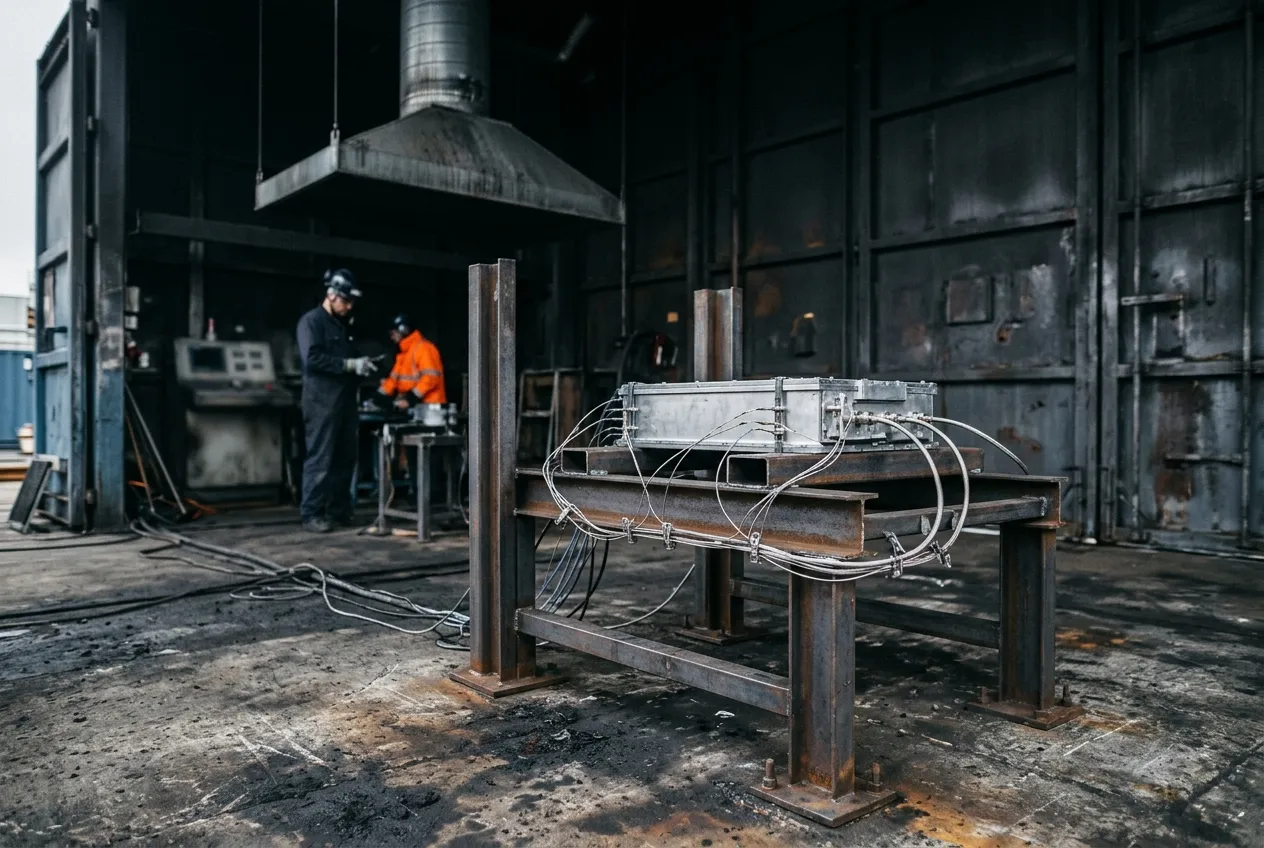
The rig above is what the difference looks like physically: an instrumented module on a test stand, with gas sampling lines attached, inside a facility built to let a fire develop rather than be extinguished in the first minute. A unit-level test on a finished cabinet does not produce this class of evidence.
UL states that an effective date of January 1, 2027 will be established for UL 9540A, Ed. 6, and that a proposal has been made to require the UL 9540A edition on the UL 9540 marking plate and instructions. That last item is the one to watch: if it lands, the edition stops being a document you have to ask for and becomes a label an inspector reads off the enclosure.
What this means procedurally: a project energising in 2028 that presents an Ed. 5 unit-level report is presenting evidence against a superseded protocol, on a code cycle — NFPA 855's 2026 edition, with its new Annex G.11 expectations for large-scale fire testing — that the report was not written for. Our guide to NFPA 855 siting and hazard mitigation walks through how that code cycle reaches a permit.
Two honest caveats. Adoption is jurisdictional: what your AHJ applies is a local decision, and no supplier — or article — can tell you otherwise. And Ed. 6 testing is new enough that the supply base is uneven; a manufacturer who says "Ed. 6 in progress, Ed. 5 complete" is being more useful than one who says "we're covered."
One scope note. This is a procurement guide, not a code determination, an engineering opinion or legal advice: what your project must demonstrate follows from the adopted code, and the authority having jurisdiction makes the final call. Bring these questions to it.
Level coverage: match the tested levels to how the system will be installed
Each level stops at a boundary, so the question is not what a level demonstrates but how far up the ladder your evidence goes, and what the top of it lets you claim.
Level | What the report lets you claim | Where the claim stops |
|---|---|---|
Cell | How this chemistry behaves in runaway, and what gas it releases | Nothing about a module, a cabinet or a layout |
Module | Runaway did not spread cell-to-cell inside the module as tested | Nothing about a complete unit, its suppression or its venting |
Unit | The unit contained its own event without propagating to an adjacent unit | Nothing about a multi-unit arrangement, separation distance or building protection |
Installation (large-scale fire test) | How the installed arrangement behaved — separation, enclosure, suppression | Nothing outside the geometry, the spacing and the code edition that were tested |
Unit-level evidence still matters in two places: residential systems, where it is the reserved level, and designs with an active propagation-prevention system, where the unit test is how that system's performance gets judged.
The classic mismatch is a supplier presenting a unit-level report for an outdoor site where four containers will stand 3 metres apart. Unit-level evidence speaks to one unit containing its own event. It does not tell a fire marshal what happens when the second unit is exposed, which is precisely what spacing and suppression decisions rest on. If your layout has more than one unit — and a C&I project almost always does — the installation-level evidence is the evidence.
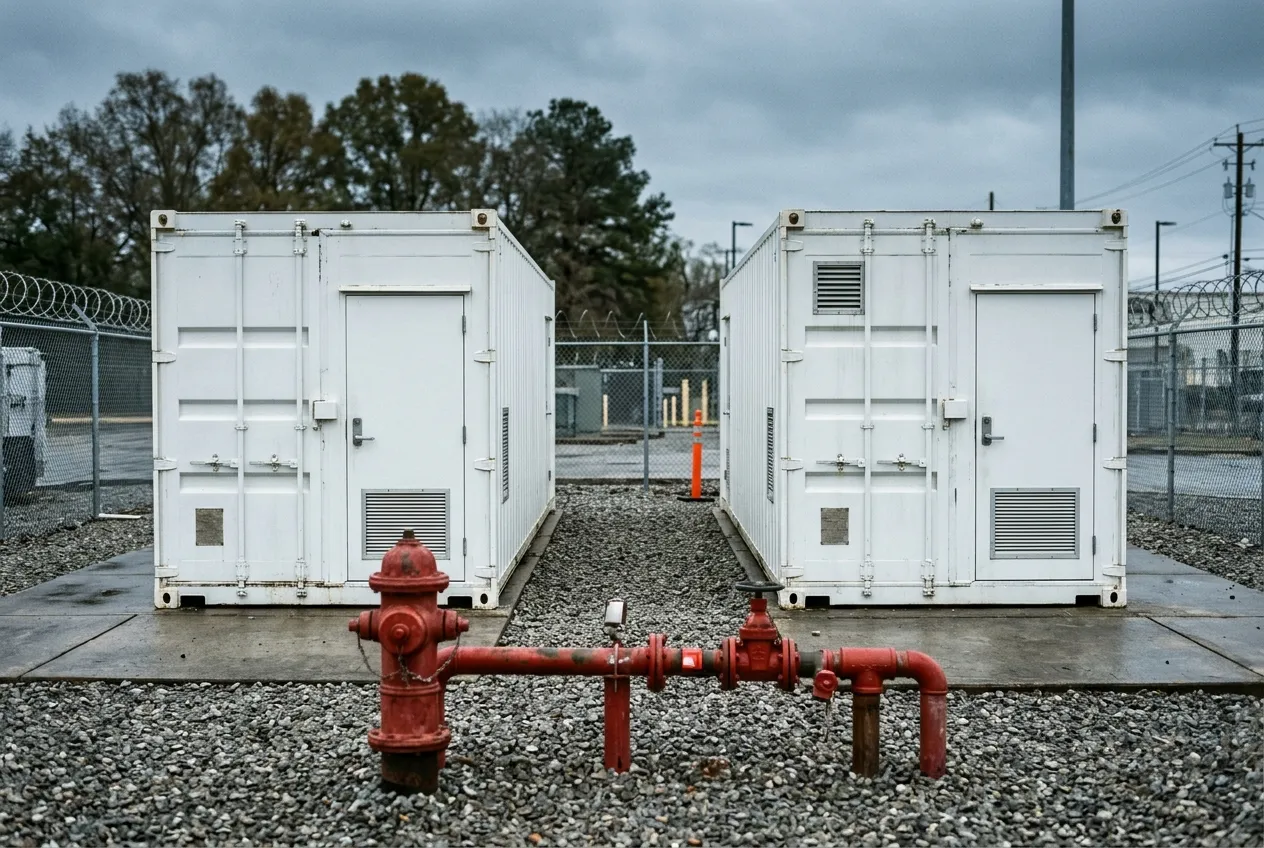
For what a passing unit-level test actually demonstrates inside a cabinet, our companion article on the UL 9540A battery cabinet goes deeper into the containment architecture; this page stays on the sourcing decision.
Configuration match: a report is valid for exactly one build
"Configuration match" is the phrase every procurement guide uses and almost none operationalise. Here is the operational version. Take the quotation's bill of materials and the report's test-article description and compare them field by field:
- Cell — manufacturer, model, capacity and revision. A cell revision change is a new test article.
- Module and pack count — series/parallel arrangement and the number of modules per rack.
- BMS — supplier, firmware generation, and who owns the propagation-detection logic.
- Cooling — air or liquid, and for liquid, the coolant and manifold arrangement.
- Fire suppression — agent, cylinder size, detection type and release logic.
- Enclosure and venting — dimensions, deflagration vent area and location.
- Ratings — IP class, corrosion class, and the operating temperature range the test assumed.
Any single mismatch is enough to make the report describe a different product, and the fix is not argument — it is a statement from the manufacturer identifying which report covers the quoted configuration, or a new test. Put that requirement in the supply agreement as a condition of acceptance, not as a request in an email chain. Suppliers who test properly do not mind; suppliers who reuse a report from a sibling product cannot sign it.
What an AHJ reviewer actually ticks in the report
UL publishes the checklist its code-authority audience uses, and reading it is the fastest way to know what your submittal will be judged against. The unit-level AHJ checklist targets the fourth edition, so treat edition-specific details as historical — but the review logic is unchanged, and it tells you what "a complete report" means.
- The lab is ISO/IEC 17025 accredited. Accreditation is the first line of the checklist, and it is the one buyers skip. Ask for the accreditation certificate and the scope, not just a laboratory name.
- The initiation method is identical across levels. A cell test run by one method and a module test by another is not a sequence.
- The failure was comparable to the module level. Same number and location of failed cells.
- No foreign mitigation devices. Barriers or suppression hardware that are not part of the product were not added for the test.
- The test layout matched the intended installation. Separation distances from walls and adjacent units in the test room mirror the real layout.
- The unit was at maximum operating state of charge when the test started.
- The outcome did not depend on integral electrical devices such as the BMS, fans or coolant pumps continuing to operate.
- Wall temperature rise stayed within 97 °C, and heat flux at the egress path stayed at or below 1.3 kW/m² for non-residential applications.
- Gas data is reported properly — total hydrocarbons by flame ionization detection, CO and CO₂ by non-dispersive infrared, hydrogen by solid-state sensor, plus smoke release rate.
- The report states whether the performance criteria were met, and whether explosions, flying debris or reignition occurred.
A report missing half of these is not necessarily fraudulent. It may be a partial submission, or a test run for a different purpose. Either way it is not the document your AHJ needs, and finding that out in month nine of a project is expensive.
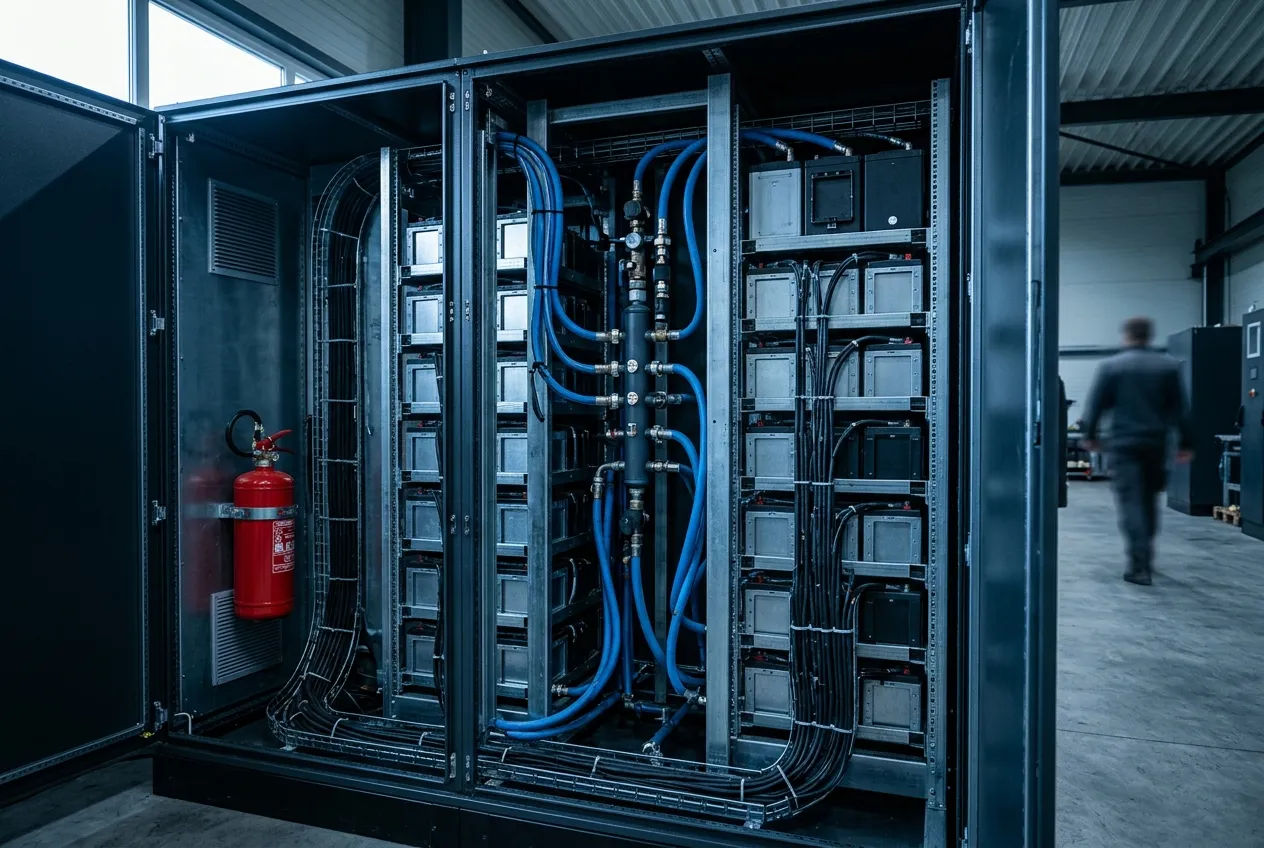
The UL 9540A BESS manufacturer checklist: ten gates
Score each gate pass, partial or fail. Two or more fails is not a negotiation problem; it is a shortlist problem.
Four of the ten depend on documents that sit outside the report itself: the accreditation certificate and scope behind gate 2, the battery documents behind it (8), the HMA data package (9) and factory consistency (10). The report can name the laboratory; only the certificate can tell you what it is accredited to test — which is where a manufacturer with a program separates from one with a PDF.
# | Gate | Evidence to request | Fails when |
|---|---|---|---|
1 | Report identity | Report number, issuing lab, date, standard edition | No number, no lab, no edition |
2 | Lab accreditation | ISO/IEC 17025 certificate and scope covering the test | Lab unnamed or out of scope |
3 | Edition and timing | Which edition; Ed. 6 status if the project energises after 2027 | Only Ed. 5, no Ed. 6 plan, project is post-2027 |
4 | Level coverage | Cell, module and the levels relevant to your layout | Module-level only, or unit-only for a multi-unit site |
5 | Configuration match | Report test-article description against your BOM | Any mismatch on cell, pack, cooling or suppression |
6 | Report internals | The ten checklist items above, answered in the document | Missing gas data, no stated performance outcome |
7 | Listing linkage | UL 9540 listing file for the same configuration | Listing for a different model or unavailable |
8 | Transport and battery safety | UL 1973 report, UN 38.3 test summary | Either missing |
9 | HMA support package | Gas volumes, heat release, vent assumptions supplied to your designer | Supplier "can't share" the data the HMA needs |
10 | Factory consistency | Follow-up inspection records; change-notification commitment | No production audit, no change control |
Gate 3 is the one that will look unreasonable to a supplier this year and obvious in 2028. Gate 9 is where projects actually stall: an HMA cannot be written without gas and heat data, and a supplier who treats the report as confidential is quietly transferring that risk to you.
Red flags that should end the conversation
Some signals are not worth a second meeting.
- A marketing claim with no report number. A UL 9540A claim without a report number, issuing laboratory and edition is an unfinished sentence.
- "Our battery is UL 9540A tested" — followed, when pressed, by evidence for the cells or modules only. The battery is not the system.
- A report whose test article has a different enclosure size from the quoted unit, offered with the explanation that "it's the same platform."
- Refusal to name the lab, or a lab name that does not appear in OSHA's list of recognized testing laboratories under the NRTL program when certification — rather than testing — is being claimed.
- No answer on cell revision control. If nobody at the factory can tell you which cell revision is shipping, nobody can tell you whether the report still applies.
Two of these together is enough. For the broader commercial screen — warranty structure, factory audit, references, commercial terms — our BESS supplier evaluation checklist is the companion process; this article is the single-standard gate you run inside it.
What to send the manufacturer instead of a question
A question gets a sentence. A document request gets a file. Send a short list and ask for the files rather than assurances:
- UL 9540A report cover sheet, table of contents and the test-article description.
- The edition statement and, if Ed. 6 is incomplete, the test plan and target date.
- The lab's ISO/IEC 17025 certificate and scope.
- The UL 9540 listing file number and the model(s) it covers.
- UL 1973 report and UN 38.3 test summary for the battery.
- The gas and heat-release data package your HMA author will need.
- A signed statement that the quoted configuration is the tested configuration, or a list of the differences.
Seven items, one email, no sales call required. How a supplier responds to that request — with a zip file or with a request to "set up a call with engineering" — is itself the first gate result.
At Hua Power, the shape of that package is concrete: the HC-UPSB5010L in our 20-ft container range is a 5,015.96 kWh liquid-cooled battery unit carrying UL 1973, UL 9540A and UN 38.3 — and once paired with its external PCS the assembled container system carries the UL 9540 listing and is designed for compliance with NFPA 855, NEC 2023 and NFPA 70E. That is the start of your request, not the end: the report number, the edition and the tested configuration are still what you ask for — and what you score against gates 1 to 6.
Where this sits in the US compliance stack
Run this checklist once per manufacturer, then reuse the artefacts for every project. The report, the listing and the data package do not change between sites; the installation-level analysis does, because it depends on your layout, your adopted code edition and your AHJ.
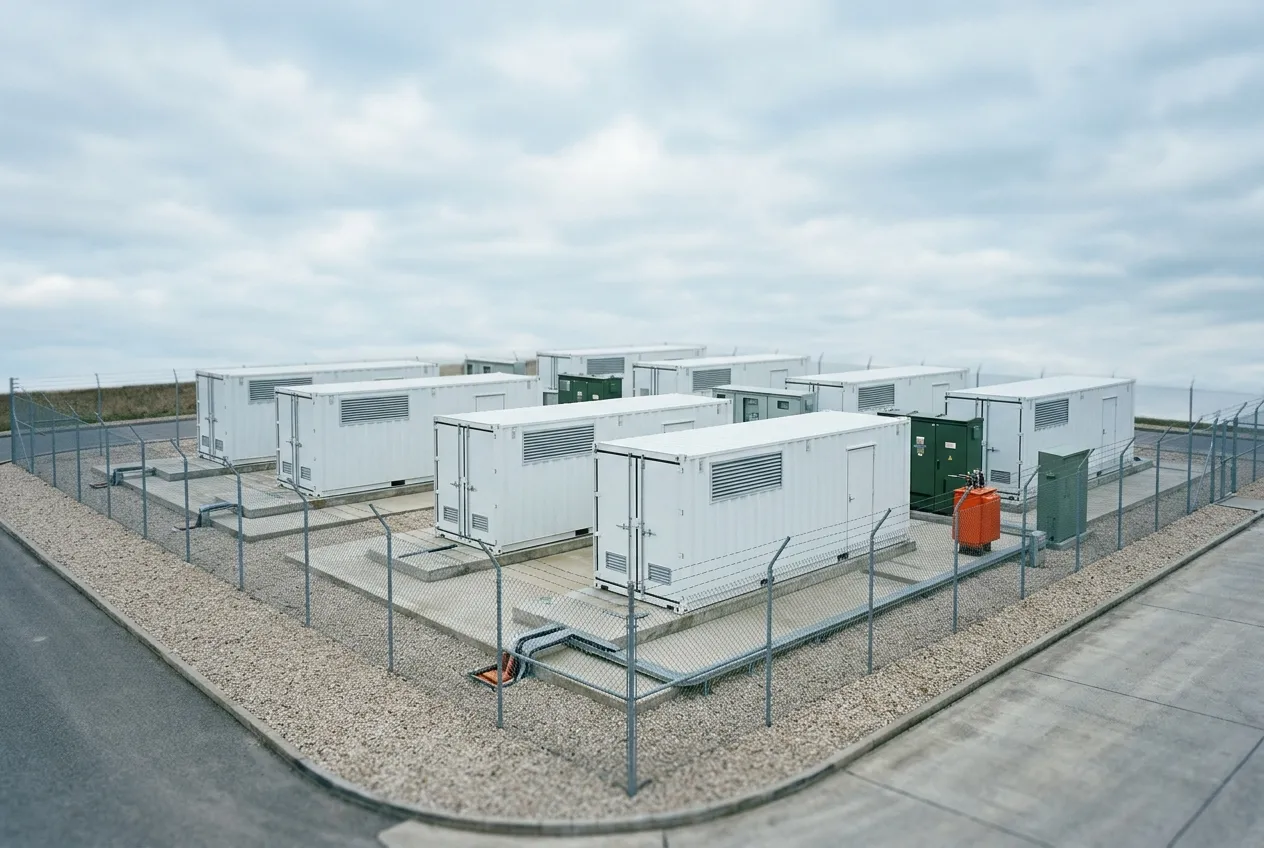
Three practical consequences. First, buy documentation the way you buy equipment: make it a deliverable with a due date, not a favour. Second, protect the configuration: a change-control clause costs nothing at signature and everything after a cell substitution. Third, keep the whole file — report, listing, battery data, HMA inputs, correspondence — in one place, because the same evidence will be asked for at permitting, at commissioning and at insurance renewal.
The market is moving toward more documentation, earlier. Projects that treat the UL 9540A package as a procurement item rather than a marketing line will be the ones that get through plan review without a redesign. For the wider picture — market conditions, code cycles and how individual US projects actually clear them — start with our US battery storage compliance hub, and if you want the documentation package for a specific site reviewed against these ten gates, send your project details and an application engineer will answer with the evidence attached.