

If you are looking for the IRA tax credit for battery storage in 2026, the first thing to fix is which credit you are actually asking about. The one most pages still describe — the 30% Residential Clean Energy Credit for a home battery — closed to new installations on December 31, 2025. The one that is still open is the commercial and grid-scale route: the clean electricity investment credit under Internal Revenue Code section 48E, which covers energy storage placed in service after that date. This article is about the second one, because that is the credit a project developer, an EPC, or a behind-the-meter industrial buyer can still claim.
The awkward part is not qualification. Section 48E reaches storage on a standalone basis, at any scale, and the base rate is straightforward. The hard part is the paper behind it: wages paid on site, the origin of what was installed, who supplied it, and how the project is registered with the IRS before anyone tries to transfer the credit to a buyer. Get those wrong and the difference between a 6% credit and a 30% credit is decided by a payroll record, not by the equipment.
This article explains rules and cites the primary sources for them. It is not tax advice, and it does not tell you what your project qualifies for. Eligibility depends on your tax position, your contracts, and your dates — take the decision to a qualified tax professional or a CPA.
What the IRA Changed for Battery Storage — and What Still Holds in 2026
Before the Inflation Reduction Act, a battery had to be bolted onto a solar project to share in the federal investment tax credit. Charging from the grid, or pairing with an existing array under a separate contract, could put the credit out of reach. The IRA ended that link: it created a technology-neutral pair of credits, section 48E for investment and section 45Y for production, and wrote energy storage into the investment credit as a category of its own — section 48E(c)(2) applies the energy storage technology definition in section 48(c)(6). It did not write storage into the production credit, where a qualified facility under section 45Y(b)(1)(A) is one used for the generation of electricity. The predecessor energy credit, section 48, still governs storage whose construction began before January 1, 2025 — the cutoff in section 48(c)(6)(D) turns on when construction begins, not on the in-service date, so those projects keep that route even if they are placed in service later — which is why both section numbers turn up side by side in older project models and in storage contracts drafted during 2023 and 2024.
The market response is measurable. By the end of 2025 the United States had 43.6 GW of utility-scale battery storage in operation, and operators added another 8.3 GW in the first half of 2026 to reach nearly 52 GW of nameplate capacity, according to the U.S. Energy Information Administration. That build-out did not happen because storage was cheap to install. It happened because a standalone battery can carry an investment credit on its own balance sheet.
Two date rules organize everything that follows. Storage must be placed in service after December 31, 2024 to fall under section 48E at all, and the credit's phase-out — which the IRS describes as starting for the later of 2032 or the year U.S. electricity-sector greenhouse gas emissions fall to 25% of their 2022 level — is the outer edge of the runway. The IRS page for the clean electricity investment credit is the page to re-check before you model anything, because the timetable that applies to storage is not the one that reshaped solar and wind economics. This cluster's US market and compliance hub tracks the wider regulatory picture, including the state-level rules that sit underneath the federal credit.
Who Actually Qualifies: §48E, the 48E ITC, and the 5 kWh Definition
The 48E ITC is claimed on the qualified investment in a qualified facility or in energy storage technology. The statute's definition of energy storage technology is where most first-pass eligibility questions get settled, and it is narrower than the word "battery" suggests. Per the instructions for Form 3468, it means property that receives, stores, and delivers energy for conversion to electricity — or, in the case of hydrogen, stores energy — with a nameplate capacity of at least 5 kilowatt hours. Thermal energy storage property is included under its own rules. Property used mainly to move goods or people rather than to produce electricity is not.
Three practical consequences follow.
Modifications can qualify. If a modification adds at least 5 kWh of nameplate capacity, or lifts a pre-August 2022 property from under 5 kWh to at least 5 kWh, the modified property is treated as energy storage technology. That rule matters for retrofits and re-powering work, where the question is often whether an added rack is an eligible investment or a repair.
Capacity sets which rate you are aiming at. For energy storage technology, the increased credit amount applies if the technology has a capacity of less than 1 MW, or if construction began before January 29, 2023, or if the project meets the prevailing wage and apprenticeship requirements. A single small cabinet can therefore fall into the simplified lane, while a multi-container site cannot — and the site's own paperwork is what decides the rate.
The residential threshold is not this threshold. The 3 kWh capacity figure people quote belongs to the residential credit, not to section 48E. Mixing the two is the most common error in the pages currently ranking for this topic.
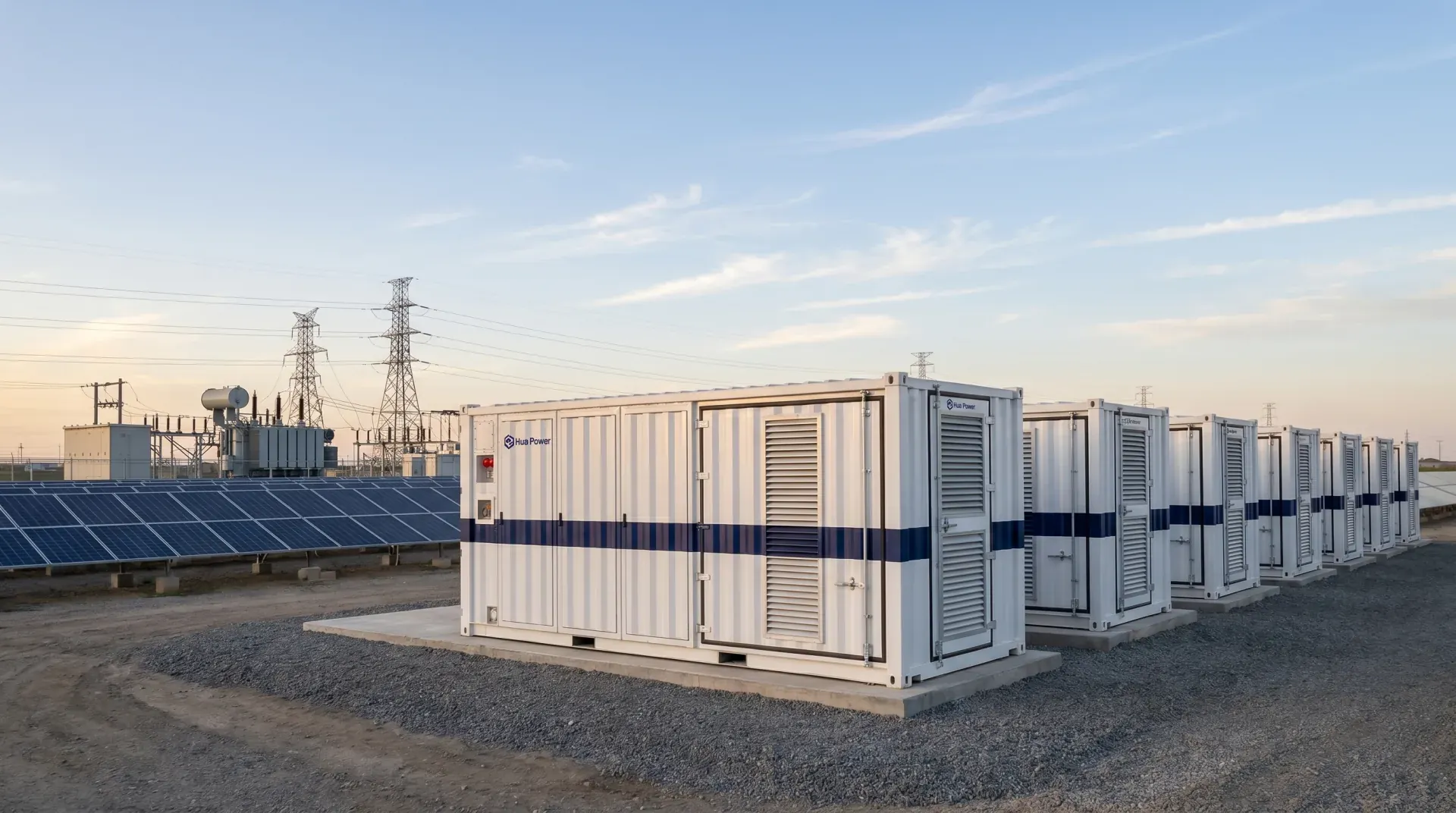
Containerized storage units beside a ground-mounted solar array and a substation. Section 48E reaches both a block like this and a single commercial cabinet — what changes is the rate and the record-keeping.
The Battery Storage Tax Credit Stack: 6%, 30%, and Two Adders
The battery storage tax credit is built as a base rate plus optional increments, and each increment has its own evidence requirement. The IRS clean electricity investment credit page states the base amount as 6% of the qualified investment, with increases of up to 5 times (30%) for prevailing wage and registered apprenticeship compliance, 10 percentage points for domestic content, and 10 percentage points for an energy community location.
Layer | Rate | What it takes to claim it |
|---|---|---|
Base investment credit | 6% of qualified investment | Property placed in service after Dec. 31, 2024, meeting the section 48E storage definition |
Prevailing wage and apprenticeship | up to 30% (5× the base) | Payroll records and apprentice hours meeting the PWA rules — or the under-1 MW / pre-2023 construction exceptions |
Domestic content bonus | +2 points, or +10 points with the increased-credit conditions | A signed certification that the steel, iron and manufactured products were produced in the United States |
Energy community bonus | +2 points, or +10 points with the increased-credit conditions | The project is placed in service within a qualifying energy community |
Two details in that table are easy to lose. First, the adders are not simply "add 10 each": the IRS domestic content bonus page states the smaller increment for domestic content unless the project also meets the increased-credit conditions (under 1 MW of output, construction before January 29, 2023, or the PWA requirements), and the instructions for Form 3468 publish the same 2-or-10 structure for the energy community bonus, whose qualifying areas are defined in the energy community FAQ. Second, the lower-income bonus under section 48E(h) sits in a different category from the two adders above: it requires an allocation awarded through a separate application window before the facility is placed in service, and the IRS program page is where the current-year capacity and dates are published. Modeling the credit without checking whether that allocation was actually won is a common overstatement in project pro formas.
Cost, not rate, is the other half of the answer. The credit is calculated on basis, so anything that reduces the purchase price reduces the credit with it. Rebates, utility subsidies and similar price adjustments generally come off the qualified cost before the percentage is applied. That is a modeling instruction as much as a tax one: a project with a large local incentive and a small tax credit base is a different project from one with the reverse.
Residential vs Commercial: Why the 25D Answer Changed
Most of what the search results describe is the residential credit, so it is worth closing that door explicitly. The IRS Residential Clean Energy Credit page states that the credit equals 30% of the cost of qualified property installed from 2022 through December 31, 2025, and that it is not available for any property placed in service after December 31, 2025. Battery storage technology had to have a capacity of at least 3 kWh, and the credit was nonrefundable, with unused amounts carried forward.
If you are a homeowner who installed and placed a qualifying battery in service by that date, the credit still applies to the year of installation, and Form 5695 is the route. If you are reading this before specifying a system, that route is closed. Landlords and property owners who do not live in the home were never within it.
For a commercial buyer, none of that changes the section 48E analysis — but it does change what the keyword means. The residential storage guides cluster is the right place for home systems; the rest of this article stays on the commercial and grid-scale side.
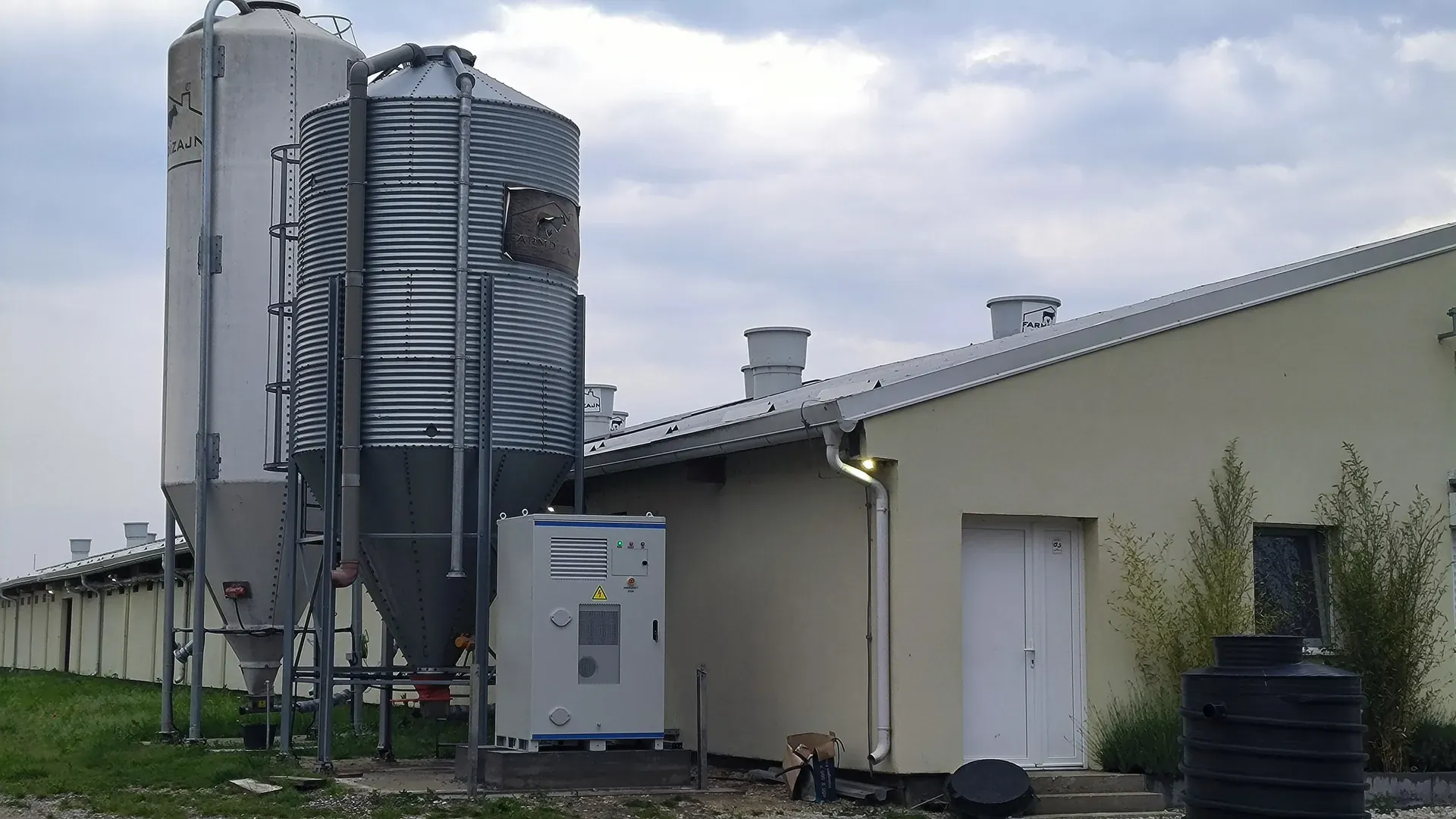
A small outdoor storage and power conversion cabinet at a working farm site: behind-the-meter projects at this scale are where the under-1 MW exception most often matters. The credit sits with the taxpayer who owns the property, so the owner, lessor or financier structure decides who claims it.
What Changed in 2026: The One Big Beautiful Bill Act
The rules did not stand still. The One Big Beautiful Bill Act, signed on July 4, 2025 as H.R. 1, amended the technology-neutral credits in a way that is widely misreported as "the IRA storage credit was cut". Read the text on Congress.gov and the shape is different.
The termination provisions added to sections 45Y and 48E apply to an applicable wind facility or an applicable solar facility placed in service after December 31, 2027, with a beginning-of-construction deadline of July 4, 2026 for projects that want to avoid the later cut-off. Congress wrote a carve-out directly into the same subsection: the placed-in-service deadline does not apply to energy storage technology placed in service at any applicable facility. In other words, the accelerated timetable that reshaped solar and wind economics in 2026 did not reach the battery.
OBBBA change | Does it reach storage? |
|---|---|
Placed-in-service cut-off after December 31, 2027 | No — the termination provisions name applicable wind and solar facilities only |
Beginning-of-construction deadline of July 4, 2026 for the full credit | No — the same subsection carves out energy storage technology |
Phase-out timetable | Yes, but on section 48E's own schedule rather than the accelerated wind-and-solar one |
Material assistance from a prohibited foreign entity | Yes — for property whose construction begins after December 31, 2025 |
Domestic content percentage set by start date | Yes — the adder's threshold depends on when construction began |
Two other OBBBA changes do reach storage, and both are timing-sensitive.
Prohibited foreign entity restrictions. Energy storage technology no longer includes property whose construction begins after December 31, 2025 if that construction includes material assistance from a prohibited foreign entity. The IRS notice on material assistance sets out how a taxpayer calculates the material assistance cost ratio, and states that it may be relied on for section 48E energy storage technology whose construction begins after December 31, 2025 until 60 days after the forthcoming safe harbor tables are published. For a project starting construction now, supplier provenance stops being a procurement preference and becomes an eligibility input.
Domestic content thresholds that step up by start date. The required share of U.S.-produced content is not a single number. The Form 3468 instructions publish the schedule by beginning-of-construction date: 40% for construction begun on or before June 15, 2025, 45% for projects starting between June 16 and December 31, 2025, and 50% for projects that begin construction during 2026. Later start dates step up again. A project's own calendar is therefore part of its adder math.
Compliance Layer 1: Prevailing Wage and Apprenticeship Records
Section 48E pays 6% by default and roughly five times that if the prevailing wage and registered apprenticeship requirements are met. The IRS prevailing wage and apprenticeship page frames the requirement as two obligations running in parallel: pay laborers and mechanics no less than the applicable prevailing wage, and employ apprentices from registered programs for a set share of labor hours. The IRS FAQ on the requirements sets out the apprenticeship components — a labor hours requirement of 10% to 15% depending on when construction began, a ratio requirement against journeyworkers each day, and a participation requirement that any employer of four or more individuals hires at least one qualified apprentice.
What this means in practice is that the difference between 6% and 30% is generated on site, by contractors and subcontractors, and collected on paper. Three things are worth building into the contract before mobilization.
Records are the deliverable. Certified payroll, apprenticeship registration and hours by classification are what a claim rests on. The classifications come from the Davis-Bacon wage determinations, so the payroll coding has to match the work actually performed.
Failures are curable, at a price. The FAQ explains the correction route: make up the wage difference with interest and pay a penalty tied to the number of affected workers, or, for apprenticeship shortfalls, pay a per-labor-hour penalty. Smaller failures inside defined tolerance bands can avoid the penalty entirely if correction payments are made by the deadline following the quarter. The remedy exists, which is exactly why sloppy records are a false economy — you pay twice.
The obligation outlives commissioning. For projects claiming the increased amount, the prevailing wage requirement also applies to alteration and repair during the five years after the property is placed in service, and failing it can recapture the increased amount. This is the single most under-planned exposure in the whole credit: a service contract signed in year three without wage discipline can reach back into year one's credit. Form 7220 is where the verification is reported, and its instructions include the penalty computation for failures.
Compliance Layer 2: Domestic Content and Foreign-Entity Screening
The domestic content adder is a certification, not an estimate. Form 3468 requires a domestic content certification statement for each applicable project, and the statement has to be signed under penalties of perjury. The underlying test looks at steel, iron and manufactured products, which means the paperwork runs back into the supply chain: bills of materials, country-of-origin declarations and component cost data, not a letter from the integrator.
For a containerized storage project this is where cell sourcing becomes a tax question. The IRS elective safe harbor assigns cost percentages to each type of applicable project component, and the cell and module carry the largest single share of a storage system's materials cost. A project assembled with imported cells therefore struggles to clear the percentage, and the imported-content share is exactly what the certification covers.
The prohibited foreign entity rules add a second screen with a different logic. Where domestic content asks "was this made here", the PFE restriction asks "who supplied it, and how much". A project that begins construction after December 31, 2025 has to be able to compute a material assistance cost ratio and show it below the statutory bar, or the property falls outside energy storage technology altogether. That calculation needs supplier ownership and effective-control information that most equipment buyers do not ask for by default, and it needs to exist before the equipment is committed. Where the request lands on your supplier, the documents are the ones described in this cluster's guide to a UL 9540A test report for a battery cabinet: traceable, report-sourced evidence rather than a marketing claim.
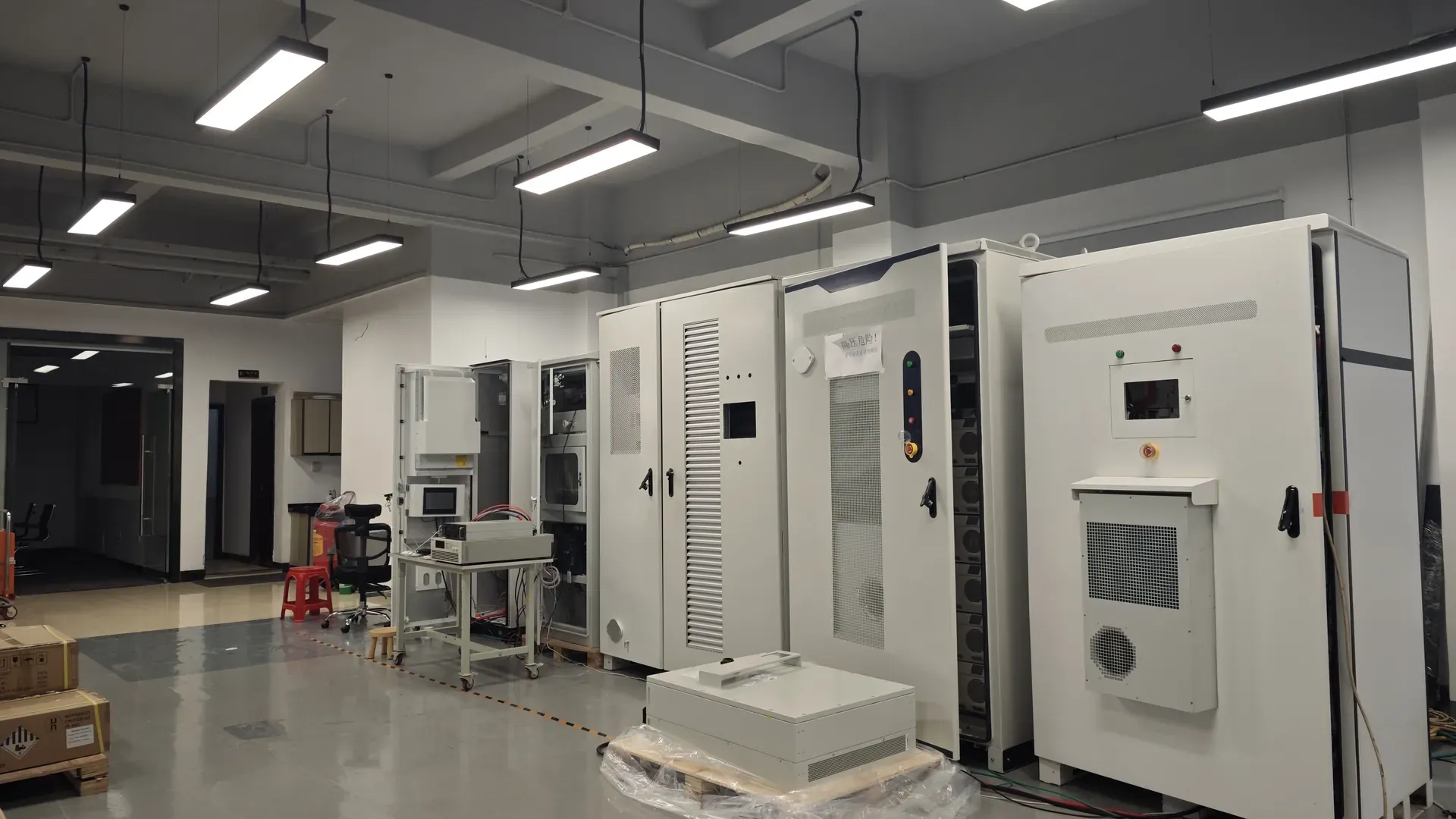
Cabinets staged in a testing hall before shipment. Test records, nameplate ratings and origin declarations produced at this stage become the evidence base for both the domestic content certification and the foreign-entity screening.
Compliance Layer 3: Claiming, Transferring, and Getting Audited
The mechanics of the claim are less exotic than the compliance layers above. The credit is reported on Form 3468, and the IRS credit page links the registration process that has to be completed before an elective payment or a transfer. That pre-filing registration step is the one most often discovered too late: a project that intends to sell its credit needs a registration number before the election, and the number is not retrofitted onto a transaction after the fact.
On transferability, the IRS elective pay and transferability FAQ is the operative reference. Credits may generally be transferred to unrelated buyers for cash, and a transfer does not change the underlying rules — the buyer takes the credit with the project's compliance history attached. That is why the certification file assembled in layers one and two is not administrative debt: it is the asset. Two further constraints matter for structuring: the prohibition on transfers to specified foreign entities, and the recapture period, during which a disposal, a change in use, or a failed prevailing wage obligation during alteration or repair can pull part of the credit back.
Obligation | What it requires | What failure costs |
|---|---|---|
Pre-filing registration | A registration number obtained before the elective payment or transfer election | The election cannot be made for the project |
Basis and placed-in-service evidence | Records tying the claimed amount to the property and its in-service date | The basis, and with it the credit, is unsupported on examination |
Transfer compliance | A transfer to an unrelated buyer, and never to a specified foreign entity | The transfer is invalid |
A retained compliance file | Wage records, certifications and test data held for the recapture period | Recapture of part or all of the credit |
For a mid-sized commercial site, the practical implication is unglamorous. The project needs its basis documented, its placed-in-service date evidenced, its wage records retained, its certifications signed, and its registration live — and the same file has to survive examination by a tax credit buyer's diligence team, not just by the IRS.
The Procurement Checklist: What to Collect From Your Supplier
Compliance work is mostly a document set, and the supplier is where a large part of it originates. Asking for these seven items at the RFQ stage, rather than after commissioning, moves the credit question out of year-end reconciliation and into the project schedule.
What to request | Why the credit depends on it |
|---|---|
Nameplate capacity per unit and per system, in kWh | Section 48E's 5 kWh definition and the under-1 MW exception both turn on capacity |
Country of origin and assigned cost data per applicable component | The domestic content certification is signed under penalty of perjury |
Supplier ownership and effective-control declarations | The prohibited foreign entity screen and material assistance cost ratio |
Factory acceptance test records and as-built configuration | Evidence that the delivered system matches the certified basis |
UL 9540A test report and UL 9540 listing documents | Establishes the system as delivered, and is what insurers and authorities ask for |
UN 38.3 transport summaries and management-system certificates | Supports the equipment file and the customs record |
Documented change log for substitutions | Substitutions after certification are where certifications usually fail |
Two of those items are about the past rather than the product, and they are the ones buyers skip: the origin data and the ownership declarations. Both are cheap to obtain before an order and expensive to reconstruct afterwards.
The equipment itself is the other half of the file. A container platform at the smaller end of the utility range is often where a project's capacity and its credit rate interact, as in the case of a 1 MWh container platform, while a behind-the-meter installation usually starts with the procurement sequence set out in the C&I storage procurement guide. Whichever size applies, the documents travel with the equipment, and the project that starts collecting them at specification stage is the one that is not arguing about basis in March. Modeling help on how the credit changes project economics is in the guide to levelized cost of storage, and container-based platforms at this scale are covered on the energy storage container range.
If you want that document set assembled against your own project parameters, send the site and capacity requirements to our engineering team and they will return a configuration with the compliance file list for it.
Rules in this area move. The dates and thresholds above are drawn from the IRS guidance pages and statutory text cited in this article as of late September 2026, and the residential credit change and the prohibited foreign entity rules are both recent enough that further guidance is expected. Re-check the primary sources, and have a qualified tax professional review the position before you claim, transfer, or price a credit.