

Most people reach this page through a search like scalable high voltage battery 20kwh 40kwh, and the question underneath it is simpler than the keyword: do I order the 20, the 30 or the 40? The short answer is that the capacity label is the last thing you decide, not the first. Start with how much energy you actually need to move, then check how many modules your inverter's battery input can accept, and you will usually find that only one of the three fits.
As working rules of thumb: a 20 kWh high-voltage stack suits a home that wants to cover evening and overnight loads plus a partial backup panel — roughly 18 kWh of usable energy. A 30 kWh stack is the middle answer for a house running a heat pump or a well pump that wants around a day of whole-home backup. A 40 kWh stack is for high-demand houses with a heat pump plus EV charging, or for sites where a long outage matters more than the extra hardware cost — roughly 25 hours at a 1.5 kW average draw, which is two days only if your average draw stays under 0.8 kW.
We are the engineering team at Hua Power, a battery manufacturer that builds residential high-voltage storage in exactly these three sizes. This article is not a product page — it is the sizing method our own engineers use when a customer sends us a load profile, and it is written so you can run it yourself before you talk to any supplier. If you have not yet settled the voltage class, read high voltage vs low voltage home battery first; everything below assumes you have already chosen high voltage.
You are choosing a module count, not a scalable high voltage battery box
A high-voltage home battery is not built as one big box. It is built as identical battery modules wired in series, and the capacity you buy is just how many modules are in that series string.
The module in this product class is almost always the same unit: 51.2 V nominal, 100 Ah, 5.12 kWh. GSL Energy's HV51100 module is specified at 5.12 kWh each and its system capacities run from 20.48 kWh to 61.44 kWh in module steps, which is how it can be sold as a "20kWh battery, 40kWh system or 60kWh battery" without any redesign.
That step size explains the three headline numbers:
Capacity label | Modules in series | Nameplate energy | Nominal string voltage |
|---|---|---|---|
"20 kWh" | 4 | 20.48 kWh | 204.8 V |
"30 kWh" | 6 | 30.72 kWh | 307.2 V |
"40 kWh" | 8 | 40.96 kWh | 409.6 V |
The 0.48 and 0.72 are not marketing noise. 5.12 kWh multiplied by 4, 6 and 8 gives 20.48, 30.72 and 40.96 — the labels are rounded down for convenience, and every supplier in this class quotes the same rounded numbers. Sol-Ark's L3-HV system, for example, is described as a 40 kWh battery made of eight 5.12 kWh modules, and the actual system energy is listed as 40.96 kWh.
Two things follow from this that a spec sheet will not tell you:
- Every size step costs the same amount of string voltage. One more module adds 5.12 kWh of energy and 51.2 V of nominal voltage at the same time. You cannot add capacity without changing the electrical characteristics of the string, and that is the constraint we come back to in step 3.
- "Scalable" is a promise about the rack, not about your order. The footprint, wiring and inverter stay the same as you add modules — that part is real. What changes is weight, string voltage and cost. Whether you can actually expand later depends on the inverter you buy now, which is why buying the smallest stack and planning to grow is often the more expensive path.
If you want the architecture behind that module-and-string design first, our guide to how a modular high-voltage battery system is built walks through the rack, the BMS and the series wiring in detail.
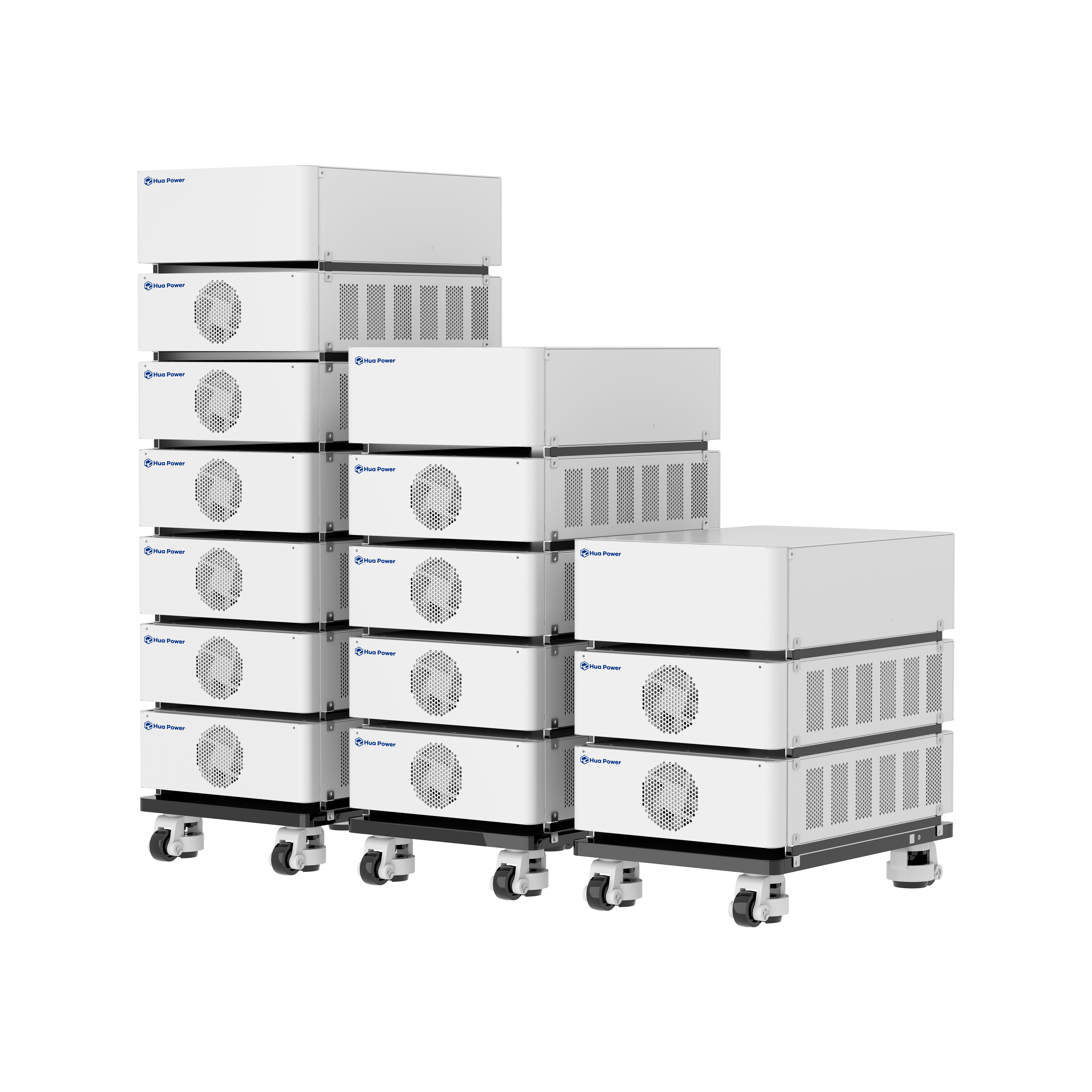
Above: capacity in this class is a count of identical modules in one series column — four modules is a "20 kWh" stack.
Step 1 — Convert your load into usable kWh, not into a feeling
Sizing by house size or by bedroom count is the most common mistake we see in incoming inquiries, and it is the reason people either run out of battery at 9 pm or pay for 15 kWh they never touch. The number that decides the answer is usable energy, and it has to come out of your own consumption data.
Here is the arithmetic, in order.
1. Get your daily consumption. Your utility bill or monitoring app gives you monthly kWh. Divide by 30 for a rough daily figure — for scale, the US average is about 10,800 kWh a year, or roughly 30 kWh a day. Then split it. In the load profiles we see, the great majority of daily energy falls between 4 pm and 8 am — exactly the window a battery serves — but the share moves with heating type, occupancy and EV schedule, so use your own interval data if your utility exposes it.
2. Decide the share you want the battery to cover. Covering 100% of a whole day is rarely the economic target. Covering the evening and overnight peak, plus a defined backup circuit, is what most residential high-voltage systems are bought for.
3. Turn that into hours of backup at your real load, not at zero load. Backup duration is usable capacity divided by the average power you are actually drawing. At a 1.5 kW average household load, 18.4 kWh of usable energy lasts about 12 hours; at 5 kW — a heat pump, a well pump or an EV charger running — it lasts under 4 hours. That is the whole reason the same battery "lasts 24 hours" in one house and "lasts 4 hours" in the next.
Load you want to keep running | Typical running power | Hours from ~18 kWh usable | Hours from ~37 kWh usable |
|---|---|---|---|
Fridge, lights, internet, TV, phone charging | 0.5 kW | ~37 h | ~74 h |
The above plus well pump and furnace blower | 1.5 kW | ~12 h | ~25 h |
The above plus heat pump (shoulder season) | 3 kW | ~6 h | ~12 h |
The above plus EV charging at 7 kW | 7 kW+ | ~2.5 h | ~5 h |
Read that table twice, because it answers two of the most common questions about this product class directly. A 20 kWh stack is not "one day of backup" in a house with electric heat — it is most of an evening. A 40 kWh stack is not "two days" for a household charging a car every night either. The capacity number only becomes meaningful once you put a load next to it.

Above: the evening peak is the load a home battery is bought for — and the moment when the difference between 18 kWh and 37 kWh of usable energy shows up.
If you would rather not do the arithmetic by hand, run your own consumption figures through our battery sizing calculator and bring the result to your installer — the input discipline is the same. Our whole-home backup sizing guide covers the circuit-by-circuit version of this step if you are working out which loads belong on the backup panel.
Step 2 — Turn usable kWh into a module count
Now the part that changes the answer by up to 10%, and which four out of five product pages skip entirely: nameplate energy is not usable energy.
Battery cells are not cycled from completely full to completely empty — the pack reserves a band at each end of the state-of-charge window, and that reserve is the whole difference between the two numbers. The published difference is easy to check on a system that discloses both figures. Sol-Ark's L3-HV-40 is a 40.96 kWh battery, and the same page lists 36.86 kWh of usable energy — about 90% of nameplate (the retail listing that publishes both figures is more useful than the manufacturer page for exactly this reason). That matches the 90% depth of discharge rating typical of high-voltage home modules in this class, and it is close to the industry norm for LiFePO4 home storage.
Two conversions sit between the number on your bill and the nameplate you buy. The first is round-trip efficiency: energy drawn at the meter has to come back out of the cells through an inverter, and the share that survives the round trip — normally in the low-to-mid 90s per cent on a home system, and a figure the inverter and battery datasheets should both quote — never reaches the load. So divide the energy your loads need at the meter by that efficiency, and only then divide by your target depth of discharge. Depth of discharge on its own under-sizes the stack: a 15 kWh overnight load ÷ 0.94 ≈ 16 kWh that has to leave the cells, ÷ 0.9 ≈ 17.7 kWh of nameplate, which lands on four modules with only about 3 kWh of headroom for a cold week or a degraded year. The same loss runs through the duration table above — the 20 kWh stack's ~12 hours at 1.5 kW is about 11.5 hours measured at the meter rather than at the battery terminals.
So the sizing arithmetic from step 1 has to run on the usable column:
Order | Nameplate | Usable at 90% DoD | What that buys at a 1.5 kW average load |
|---|---|---|---|
4 modules | 20.48 kWh | ~18.4 kWh | ~12 h |
6 modules | 30.72 kWh | ~27.6 kWh | ~18 h |
8 modules | 40.96 kWh | ~36.9 kWh | ~25 h |
Two practical consequences:
- Do not size to the nameplate number. If your target is "18 kWh usable for the overnight peak," a 20 kWh stack is exactly at the line, with no margin for a cold week or a degraded year. Sizing to 30 kWh gives you that target plus headroom.
- Ask for the number, every time. If a supplier quotes capacity in kWh and cannot tell you the depth of discharge and the usable figure, you are comparing a marketing number to an engineering number. What the reserve is, why it buys cycle life, and how deep you should cycle are depth of discharge and how it sets usable capacity — this article only needs the arithmetic it feeds.
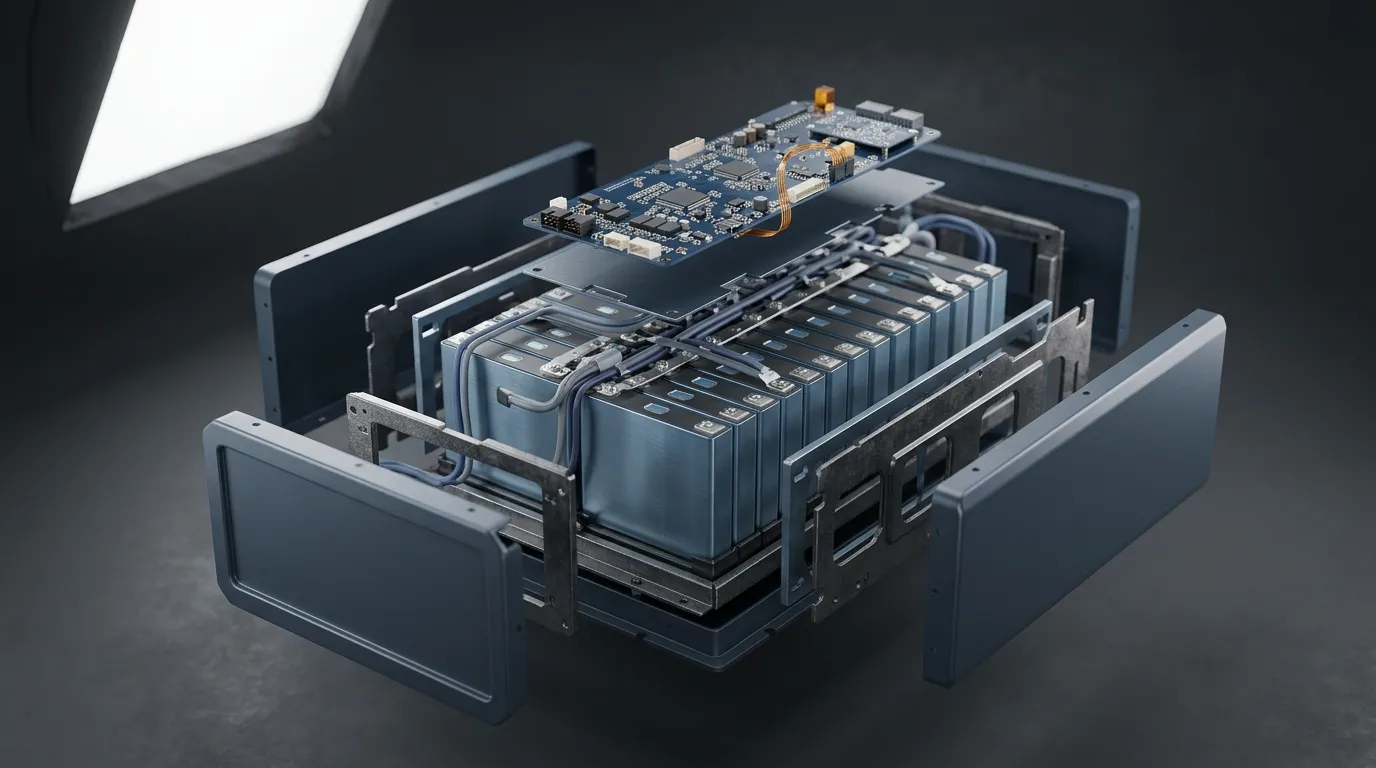
Above: the reserved band at the top and bottom of that cell assembly's state-of-charge window is what separates a 40.96 kWh nameplate from 36.86 kWh you can spend.
Step 3 — Check the inverter's voltage window before you buy
This is the step that decides the order, and it is the one no product listing performs for you.
Modules in series add their voltages. With 51.2 V modules, the string's nominal voltage is 204.8 V at four modules, 307.2 V at six and 409.6 V at eight. But your inverter does not see nominal voltage — it sees the operating range from empty to full. Our 30 kWh high-voltage stack, for instance, is specified from 259.2 V to 345.6 V across its state-of-charge window, and our 40 kWh model runs from 345.6 V to 460.8 V. Sol-Ark publishes the same shape of number for its eight-module 40 kWh system: 409.6 V nominal, 332.8 V to 467.2 V operating.
Now compare that to competing hardware with different module counts. Higon's RACK HV series lists three configurations in one specification table:
Modules in series | System energy | Nominal voltage | Operating voltage range |
|---|---|---|---|
8 | 40.96 kWh | 409.6 V | 358.4 – 460.8 V |
9 | 46.08 kWh | 460.8 V | 403.2 – 518.4 V |
10 | 51.20 kWh | 512.0 V | 448 – 576 V |
The module counts are derived rather than printed: the source table states nine modules explicitly, and 8 and 10 follow from its nominal voltages (409.6 V ÷ 51.2 V and 512.0 V ÷ 51.2 V).
The pattern is the point: capacity, nominal voltage and operating range move together, always in the same direction. So the question is not "how much capacity do I want" but "how much capacity does my inverter's battery input window allow."
Four checks, in this order:
- The full operating range must sit inside the inverter's battery voltage window — not just the nominal figure. A string that tops out at 460.8 V needs an inverter whose maximum battery input is comfortably above that, with margin for cold-weather voltage rise.
- The lowest operating voltage must stay above the inverter's minimum battery input. This is the constraint that silently kills expansion plans: if four modules are fine today but eight would push the string past the inverter's ceiling, you have bought an inverter that caps your system at 20 kWh.
- Check the current and C-rate limits as well as voltage. A 100 Ah module stack charged and discharged at 0.5C moves about 50 A; inverters that can pull peak surges well above that will need a stack whose cells and BMS are rated for it.
- Check the protocol, not just the numbers. The BMS talks to the inverter over a CAN bus or an RS485 link, and a stack whose protocol the inverter does not recognise will sit inert even when its voltage range and capacity both look correct. Ask for the list of inverters the supplier has actually commissioned that stack with.
The most expensive sizing error in this product class is not picking the wrong capacity. It is picking the right capacity on an inverter that cannot accept the next two modules — because the expansion you are counting on is not an add-on at that point, it is a replacement.
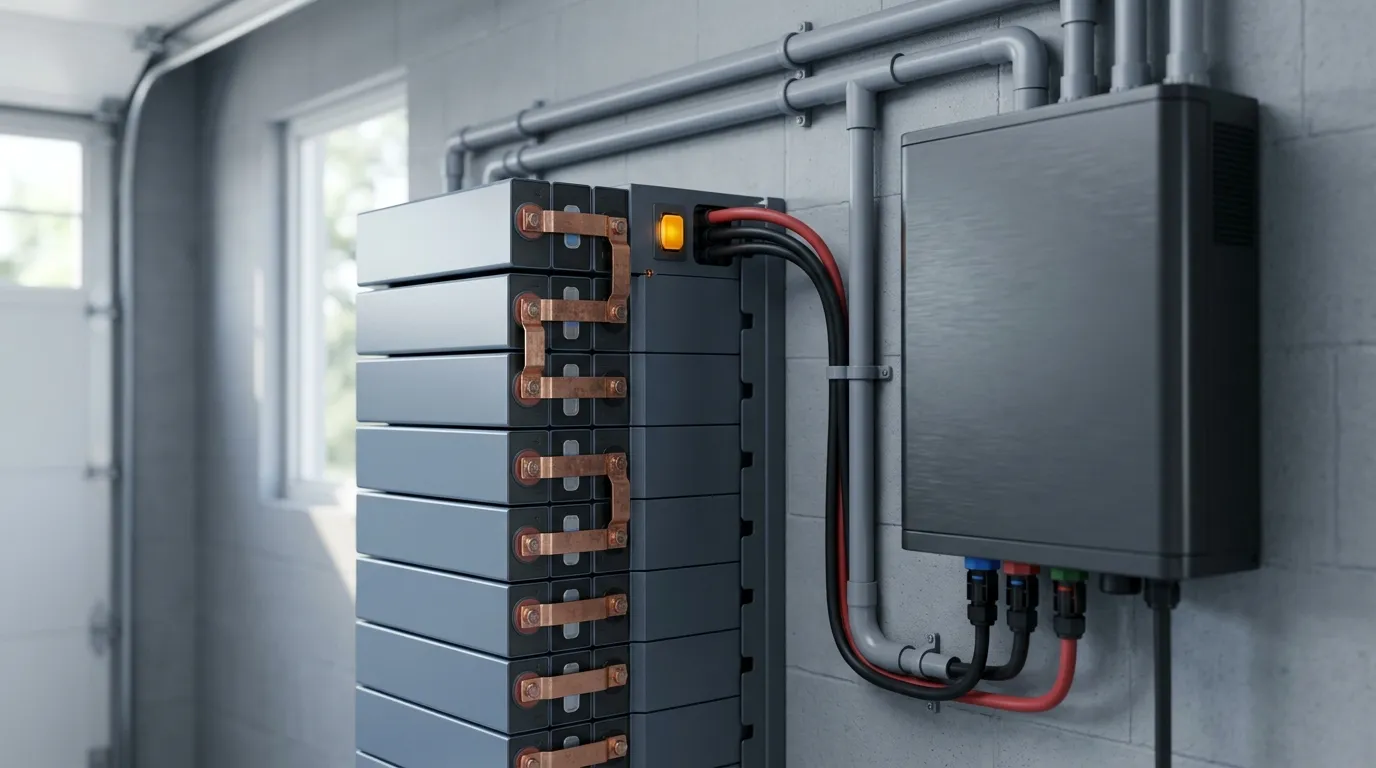
Above: the series string lands directly on the inverter's battery input — no DC-DC stage between them, which is why the operating range has to match.
What 20, 30 and 40 kWh look like in a real house
With the arithmetic done, the three options stop being marketing tiers and become three recognisable situations.
The 20 kWh order (4 modules, ~18.4 kWh usable). A two-to-three-person house with an efficient heat source that wants the evening and overnight load covered, plus a defined backup circuit — fridge, lights, internet, a few outlets. It is also the right size for a small commercial site (a shop, a rural clinic, a telecom cabinet) where the job is peak shaving and short outages. This is the cheapest entry into high-voltage storage and the most common first order we see — for a house of this shape, a 20 kWh home battery is usually the whole answer. If your annual consumption is under about 4,000 kWh — roughly a third of the US average — and you are not electrifying heat or transport, the 20 kWh stack is usually where you land. Note what sets that floor, though: a pure evening-peak calculation for a 4,000 kWh house comes to about 7 kWh, so the floor is set by the backup duration you asked for in step 1, and by the fact that four modules is the smallest series string this architecture is built in — not by the peak.
The 30 kWh order (6 modules, ~27.6 kWh usable). This is the middle of the range and, for most owner-occupied houses with a heat pump, the correct answer. It gives roughly a day of whole-home backup at a moderate average load, keeps the string inside the input window of most mainstream three-phase hybrid inverters, and leaves real headroom as the battery ages. If you are choosing between the 20 and the 30 and you cannot decide, the deciding question is usually this: do you want the heat pump to keep running through an outage? If yes, go to six modules.
The 40 kWh order (8 modules, ~36.9 kWh usable). High-demand houses: heat pump plus EV charging, or an all-electric house where a two-day outage is a real possibility. It also fits small commercial sites needing longer autonomy. Of the three, the 40 kWh home battery is the configuration with the most published data behind it — the eight-module layout is the one most manufacturers document in full — which tells you something about where the volume in this market sits.
Notice what does not appear in that list: floor area of the house, number of bedrooms, or the size of the solar array. Those are proxies people use when they have no consumption data. You have consumption data.
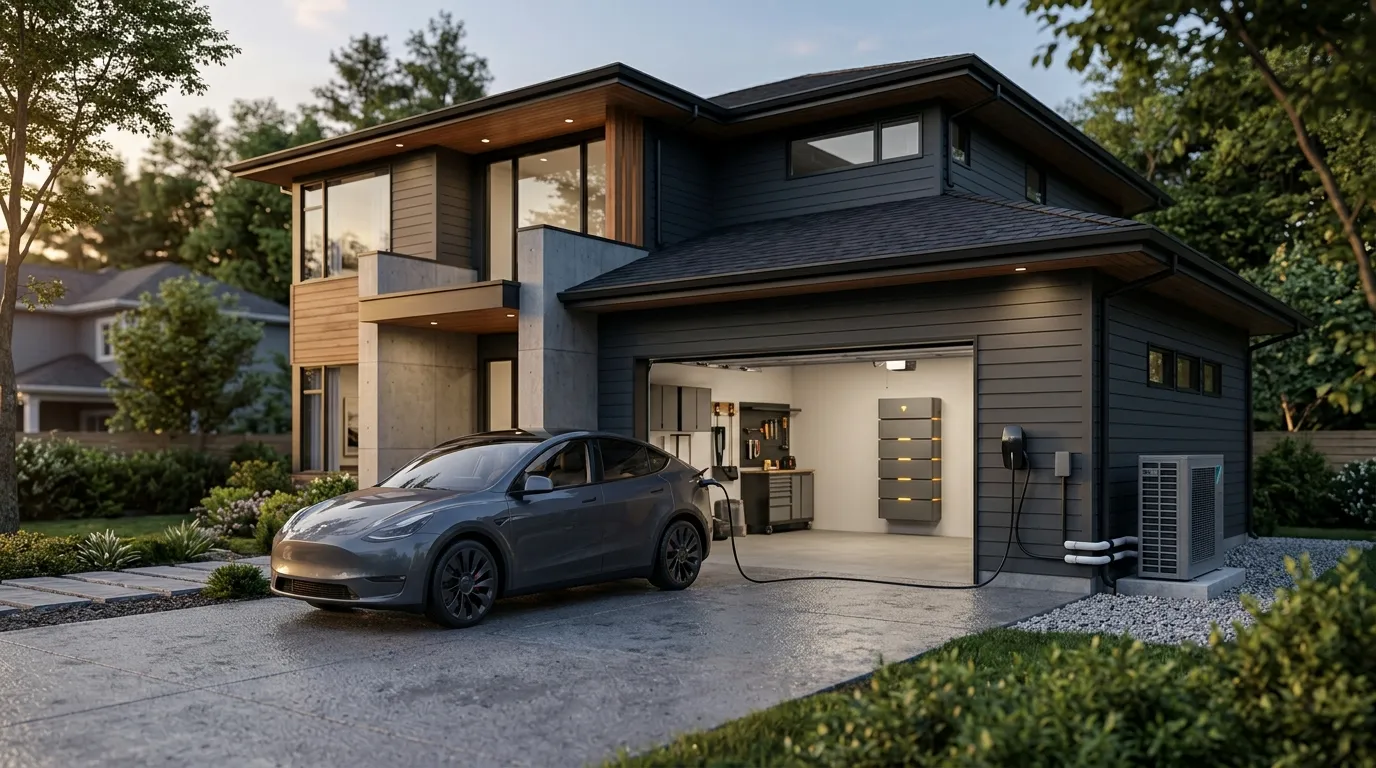
Above: the loads on the right decide the answer — an EV charger and a heat pump move a household up two capacity steps.
The costs nobody quotes you: expansion, weight and floor space
Almost every comparison of this product class stops at the hardware price. The numbers that decide whether your chosen size was right usually are not on the quote at all.
Cost per kWh falls with size, and the honest anchor is thin. Public pricing in this category is scarce — most suppliers quote per project, so there is almost nothing to check a 20 kWh battery price or a 40 kWh battery price against. One published figure from a US retailer puts the eight-module, 40.96 kWh Sol-Ark L3-HV-40 indoor bank at $21,380, which works out to roughly $522 per kWh of nameplate capacity and about $580 per kWh of usable energy. Treat that as an order-of-magnitude anchor from a single listing, not a market rate: it excludes installation, permits and any utility or inspection costs, and regional pricing varies widely. Scaled to the other two sizes at the same rate, a 20.48 kWh stack implies roughly $10,700 and a 30.72 kWh stack roughly $16,000 before installation — the per-kWh rate at the bottom of the range is usually less favourable, because the inverter, enclosure and installation labour do not scale down with the module count.
Phased expansion is rarely free. The promise of this architecture is that you add modules later. In practice the cost of expanding shows up in three places: modules must match the existing string in model and, ideally, in age and batch, because a series string is limited by its weakest member; the inverter has to have headroom left in its voltage window, which is decided at purchase; and you pay a second round of labour and commissioning for work that would have been included in one install.
Two lines to check on any quote. Ask what the warranty actually guarantees — a 10-year term is the norm in this product class, but it is normally tied to a cycle count or a throughput limit rather than calendar time, so two "10-year" warranties can be worth very different amounts. And ask whether the platform supports parallel strings. At least one supplier in this class documents banks of up to 32 battery units in parallel, while the compatible inverters in that same specification accept only 10 — so "scalable" can mean two different ceilings depending on which half of the system is the limit.
Life rating and cooling sit in the same decision. Stacks in this class are commonly rated from 6,000 cycles at 80% state of health, with some suppliers quoting 8,000 or more — at one cycle a day that outlasts any realistic payback period, so the real question is not "will it last" but "will it still be the right size in ten years". Cooling is the other half: the indoor cabinets we compared are fan-cooled and list output de-rating above 45 °C, which means a stack in a hot garage or a south-facing room can quietly deliver less than its nameplate on the days you need it most.
The 40 kWh stack is a structural decision. Our 40.96 kWh high-voltage unit weighs about 440 kg across a cabinet footprint of 422 × 640 × 1656 mm; the six-module version is 340 kg and the four-module version 240 kg. That is a concentrated load on one patch of floor, delivered as modules that are a two-person lift — about 50 kg each on our four-module unit — up a stairwell. Three questions settle it: will the floor take the point load, is there a route that does not involve stairs or tight turns, and does the chosen position have the clearance the manufacturer requires? If the answer to any of those is no, the practical ceiling may be 30 kWh regardless of what the load calculation asked for.
Indoor ratings have requirements attached. IP20 enclosures — which is what most residential high-voltage stacks carry — are indoor products, and installation codes in most jurisdictions treat a high-voltage DC battery as a hazard that needs specific placement, ventilation or detection. The regulatory floor is worth knowing before you choose a location: UL 9540 is the system-level safety standard for energy storage equipment (UL's energy storage certification programme), NFPA 855 sets installation requirements including separation and capacity limits (NFPA 855), and the NEC's energy storage article covers wiring and disconnects. When you compare quotes, ask for certificate numbers rather than adjectives. Local rules, not this article, decide what you may install — confirm the specifics with your jurisdiction and a licensed electrician.
Where you put the stack is a separate decision from how big it is, and the mounting choice deserves its own comparison.
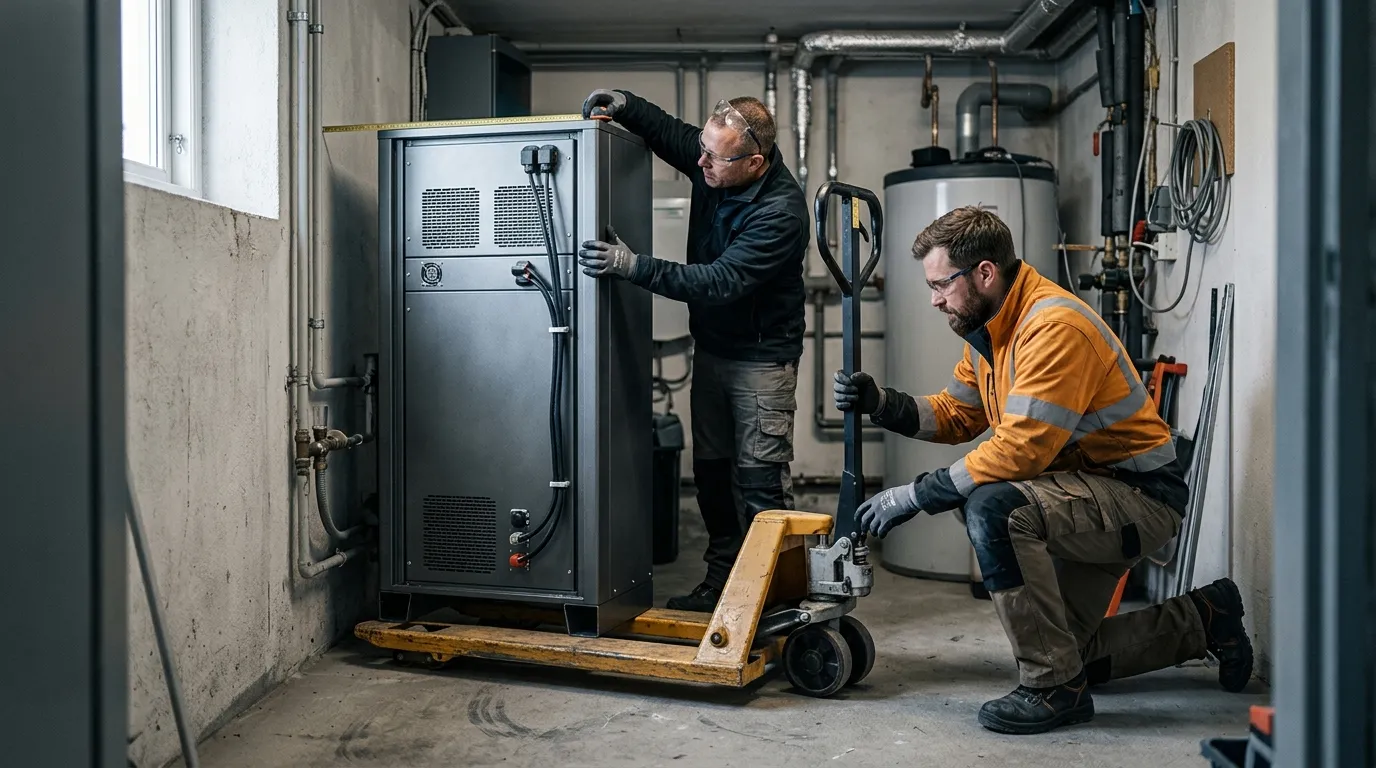
Above: by the time you reach 40 kWh the limiting factor is often weight and access, not the load calculation.
A sizing checklist you can hand to your installer
Run these eight lines, in order, and you will arrive at one of the three capacities rather than a range.
- Daily consumption in kWh, from a bill or monitoring app: __
- Share of that consumption you want the battery to serve: __
- Backup loads you want to keep running, with their running watts: __
- Target backup duration in hours, at that load: __
- Usable energy required at the meter = (average backup load in kW) × (hours): __
- Nameplate energy required = usable ÷ round-trip efficiency (≈0.94) ÷ 0.9 depth of discharge: __
- Modules required = nameplate ÷ 5.12 kWh, rounded to a whole module: __
- Inverter check: the string's full operating voltage range must sit inside the inverter's battery input window, at every module count you might want later.
Line 8 is the one to do before you sign, not after. It is also the line most quotes do not show. If you want to see what those three module counts look like as hardware, the high-voltage energy storage system range lists the three configurations side by side — capacity, module count, cell type, depth of discharge and cycle life — and each model page carries its own weight, dimensions and voltage range, and the rest of our residential energy storage guides cover the parts of the decision that sit around this one.
For the chemistry underneath all of it, LiFePO4 is the standard cell for stationary storage, and Battery University's lithium-ion overview explains why its voltage and thermal behaviour suits this application. If you want the neutral fundamentals of battery-plus-power-electronics systems first, the Environmental and Energy Study Institute's energy storage primer and the US Department of Energy's energy storage office are both good starting points.
Bottom line
The "how many kWh of battery do I need" question has a definite answer, and in this voltage class it lands on 20, 30 or 40 kWh. You can reach it in one sitting with a utility bill and your inverter's datasheet: work out the energy your loads need at the meter, divide by round-trip efficiency (0.94 if your datasheet does not quote one), divide by 0.9 for the depth-of-discharge margin, then divide by 5.12 kWh to get a module count, and confirm the resulting voltage range fits your inverter's battery input — at the size you want today and the size you might want in five years. If those two numbers disagree, the inverter is the thing to change, not the battery.
If you would like that arithmetic checked against real hardware, send us your load figures and inverter model. Our engineering team will come back with a module count, the string voltage it produces, and the constraints to plan around — talk to our engineering team and we will work from your numbers rather than from a catalogue.