

A microgrid black start is the ability to bring a de-energized power system back to life using only the resources inside its own boundary — no utility feed, no external cranking power. Something on site has to create a voltage and a frequency reference from nothing, then hold them steady while the rest of the network is rebuilt on top. Most storage projects are bought on capacity, power rating, and cycle life; black start capability is often not in the conversation at all, and the gap only becomes visible the first time the site has to restart itself. This guide covers what the sequence actually does, why it is harder than the brochure suggests, and what belongs in the specification.
What Microgrid Black Start Actually Means
A microgrid black start is the process of restoring a de-energized microgrid to normal operation using only the generation and storage inside its own electrical boundary. No utility feed is available to set the reference, and no external power is available to start anything. One asset becomes the source, and every load, transformer, and feeder is reconnected behind it.
The definition matters because three different capabilities get sold under similar words, and they are not interchangeable:
- Backup power keeps selected loads alive while the grid is down. A UPS or a standby generator can hold its own voltage, but it serves only the loads wired to it and does not re-establish a network-wide voltage and frequency reference or coordinate a staged restoration.
- Islanding is a mode, not a capability. A microgrid that can island keeps running after the utility trips — but only because a source inside it is already energized and holding voltage. Anti-islanding protection is the inverse: it deliberately disconnects a generator that would otherwise feed an isolated utility line.
- Black start begins at zero. Every breaker is open, no reference waveform exists anywhere, and the first step is manufacturing one.
Utilities have performed black starts for decades with black-start diesel generators: small units cranked from a local battery, which then bring much larger generating units online and gradually rebuild the transmission network, as the standard description of black start sets out. A microgrid carrying a campus, a mine, or a remote community runs that logic in a different order. The battery energy storage system (BESS) is no longer the cranking device — it is the anchor, and the diesel generator becomes the thing that gets started later.
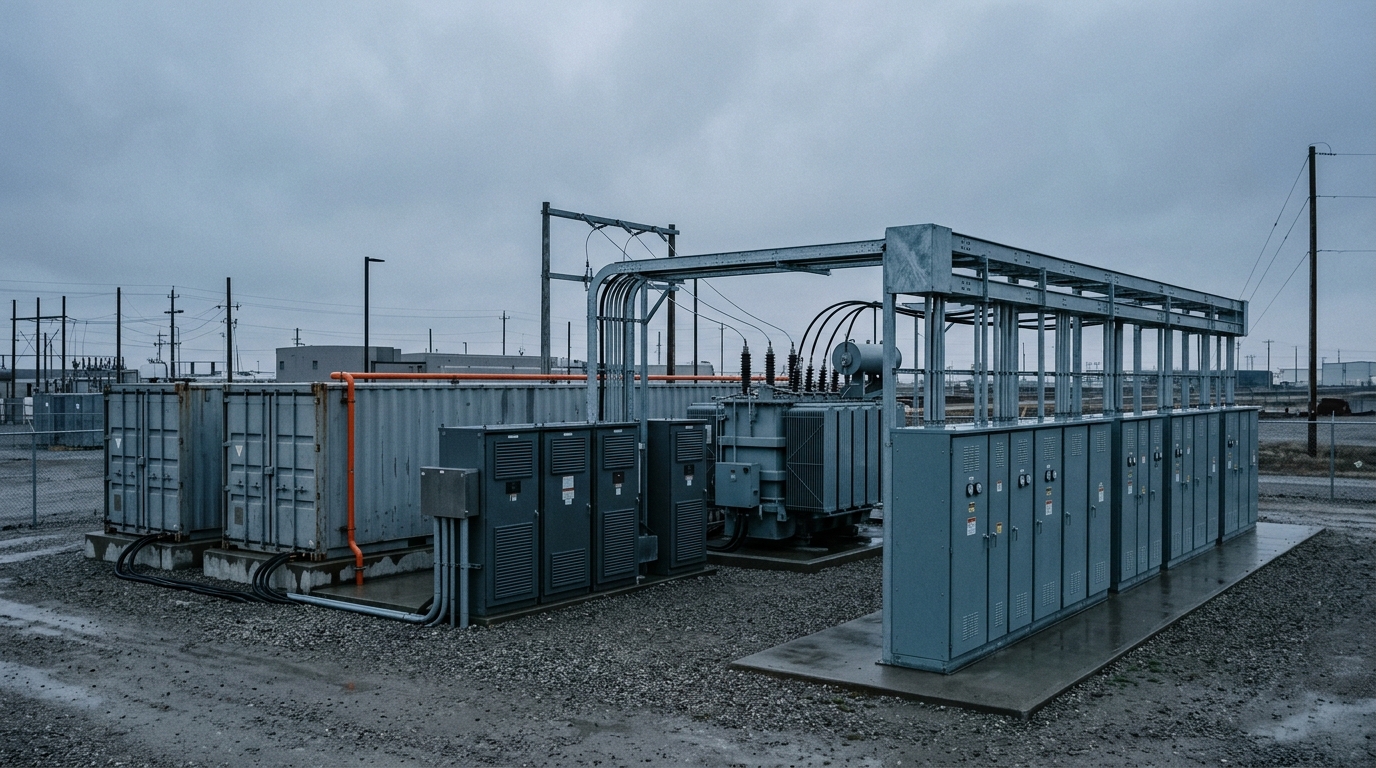
These systems sit inside the wider family of microgrid energy storage solutions, which covers everything from single-building resilience to island-scale grids. Black start is the capability that decides what happens at the very end of that range: the state where the site is completely dark.
Why Black Start Moved From a Grid Problem to a Microgrid Requirement
For most of the last century, black start was a transmission system operator's problem. Restoration plans named specific power stations — usually hydro or open-cycle gas — that could be cranked without outside help. Three things changed that, and they reinforce each other.
Storage proved it can start something much bigger than itself. In 2017, a utility in Southern California used a lithium-ion battery system to black-start a combined-cycle gas turbine from an idle state — a demonstration recorded alongside the long-standing diesel and hydro paths in the same standard description. Once a battery can bring a utility-scale machine back, using one to bring back a distribution network is an engineering step rather than a conceptual one.
Grid operators are rebuilding the whole approach around distributed resources. Britain has never suffered a nationwide blackout, and its system operator intends to keep it that way — but its existing restoration plan leans on thermal plants that are being retired. The answer is to start from the bottom up instead:
"Black start uses smaller generators to kick-start bigger ones … creating 'islands' of power which connect together on the main transmission network to gradually restore the grid." — NESO, the UK's National Energy System Operator
The Ofgem-funded Distributed ReStart project behind that shift set out to begin restoration from distributed energy resources on regional networks rather than from named power stations. That news update dates from June 2020, when the project was still in its design stage; the project itself ran from January 2019 to October 2023 and has since concluded, as its project record shows. The direction it set still holds: restoration is being planned around the same assets that make up microgrids.
The buyers changed. Microgrids are no longer bought only by utilities and military bases. The US Department of Energy's own microgrid program now frames the technology around the local loads it has to keep alive — "residential, communal, commercial, industrial, and/or defense loads" — and runs a dedicated Community Microgrid Assistance Partnership for historically underserved and Indigenous communities in remote areas, as its microgrid program strategy sets out. In practice, that means remote communities, campuses, industrial plants, and other commercial sites are the ones writing the requirement — and every one of them has a load that cannot wait for a utility crew. The same program treats microgrids as resilience infrastructure in its distributed energy resources and microgrids primer, and reports annually to Congress through the FY 2024 program report.
Put those together and black start stops being a curiosity. For a site whose entire operating model depends on power, the ability to restart without calling anyone is the difference between an outage and a shutdown.
How a Microgrid Black Start Sequence Runs
The real sequence is a control problem, not a hardware one. It is executed by the microgrid controller and the power conversion equipment together, and it runs roughly as follows.
1. Trip to island mode and open everything. The controller detects the loss of the utility source, opens the point of common coupling, and trips every non-critical feeder. Nothing is connected except the assets that will do the starting. If this step is skipped, the first source that energizes the bus will be loaded instantly by whatever is still connected.
2. Establish the reference with the anchor source. A grid-forming inverter or a black-start-capable generator energizes the main bus and creates the voltage and frequency that everything else will synchronize to. This is the capability the whole sequence cannot work without, and it is the one that cannot be improvised — a source that cannot set a reference cannot start a dead system.
3. Energize the backbone, transformers first. With the reference stable, the controller closes the feeders that carry transformers. This is where the first hard limit appears: a transformer connected to a cold bus draws a magnetizing inrush current that can reach many times its rated current for the first cycles, and the source has to ride through it without tripping. Research on restoration with renewables, such as this review of black start from renewable energy resources, treats restoration control as the central question rather than an edge case.
4. Pick up load in blocks, not in one step. Once the backbone is live, the controller closes feeders in sequence, watching frequency, voltage, and source headroom between each step. Motor-driven loads — pumps, compressors, mills — pull several times their rated current while accelerating, so the order in which they are restored matters as much as their total rating. Where diesel generation is part of the site, it joins here, synchronized to the reference the storage has already established; a PV-battery-diesel hybrid system is the common architecture in which that handover happens.
5. Resynchronize with the utility when it returns. The controller monitors the incoming utility supply, matches voltage, frequency, and phase angle, closes the point of common coupling, and returns the site to grid-tied operation. Without automatic resynchronization, that step becomes a manual procedure that requires an engineer on site — which is precisely the situation a remote microgrid cannot guarantee.
A system that only performs steps one and two is a backup power product. Steps three through five are what separate black start capability from islanding, and they are where most of the engineering effort actually goes. The same distinction shows up in island energy storage systems, where the grid may never come back at all and restoration is a routine event rather than an emergency one.

The Three Constraints That Decide Whether It Works
Sequence diagrams look clean. What decides the outcome is whether the design handles three constraints that are easy to leave out of a specification.
Grid-forming versus grid-following control. This is the first question to ask about any inverter-based source. A grid-following inverter regulates its current output and needs an existing voltage and frequency to lock onto; on a dead network it has nothing to follow and stays off. A grid-forming inverter regulates voltage and frequency itself, which is what a de-energized microgrid requires. The two behave differently enough that a project specified with the wrong control mode can look fully compliant on paper and never complete a restart.
Grid-following inverter | Grid-forming inverter | |
|---|---|---|
What it regulates | Current injected, synchronized to an existing reference | Voltage and frequency, as a source |
Behavior on a dead bus | Cannot start; no reference to lock onto | Creates the reference and energizes the bus |
Role in black start | None at the start; can join once the bus is live | Anchor source for the whole sequence |
Typical use on site | Standard PV and storage coupling to an energized grid | Microgrid anchor, island operation, restoration |
Inrush and cold load pickup. Energizing a distribution network is not the same as serving it. Transformers and induction motors draw currents that can reach ten to fifteen times their nameplate rating when rated voltage is applied, and the inrush lasts for several cycles before it decays, as this technical explanation of black start for microgrid energy storage sets out. Storage inverters are typically rated for only a modest overload — on the order of ten to fifty percent above nominal for short durations — so a design that tries to absorb a full cold start through inverter overload alone ends up oversized or tripped. The alternatives are staged load pickup, voltage and frequency ramping during energization, or both. The load a system must handle may also be larger than its steady-state average: a community that heats electrically will pull substantially more on a cold restart than it does on a normal winter afternoon, which is why conservative, non-coincident peak sizing shows up in real restoration projects.
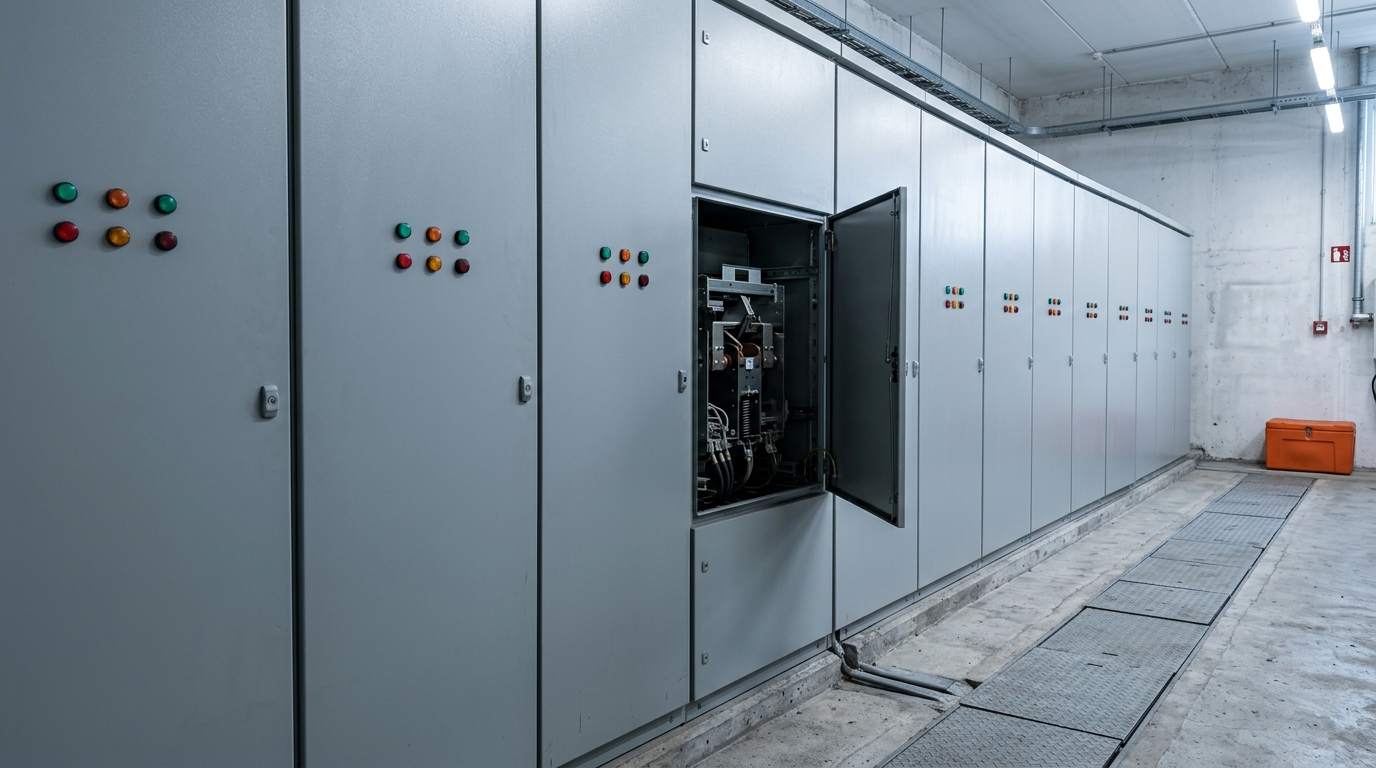
Protection coordination and energy reserve. In islanded mode, fault current comes mostly from inverters, and inverters limit current by design. Protection settings developed for a utility-fed system can therefore misoperate — or fail to operate — when the same network is fed from storage. The controller has to be configured with a protection scheme that works in both states, and the BESS has to hold enough energy in reserve to cover the entire sequence. A system that has discharged to its normal depth-of-discharge floor has no black start left in it, so the reserve belongs in the operating policy, not in a footnote. Energy management platforms are where that policy actually lives: the definition of an energy management system covers the basic functions, while a site-level EMS architecture for storage sites shows how dispatch, protection, and reserve limits are coordinated in practice.
What Project Reports and Research Show
The constraint that surprises people most keeps surfacing in project accounts and research: the load is not the one in the design file.
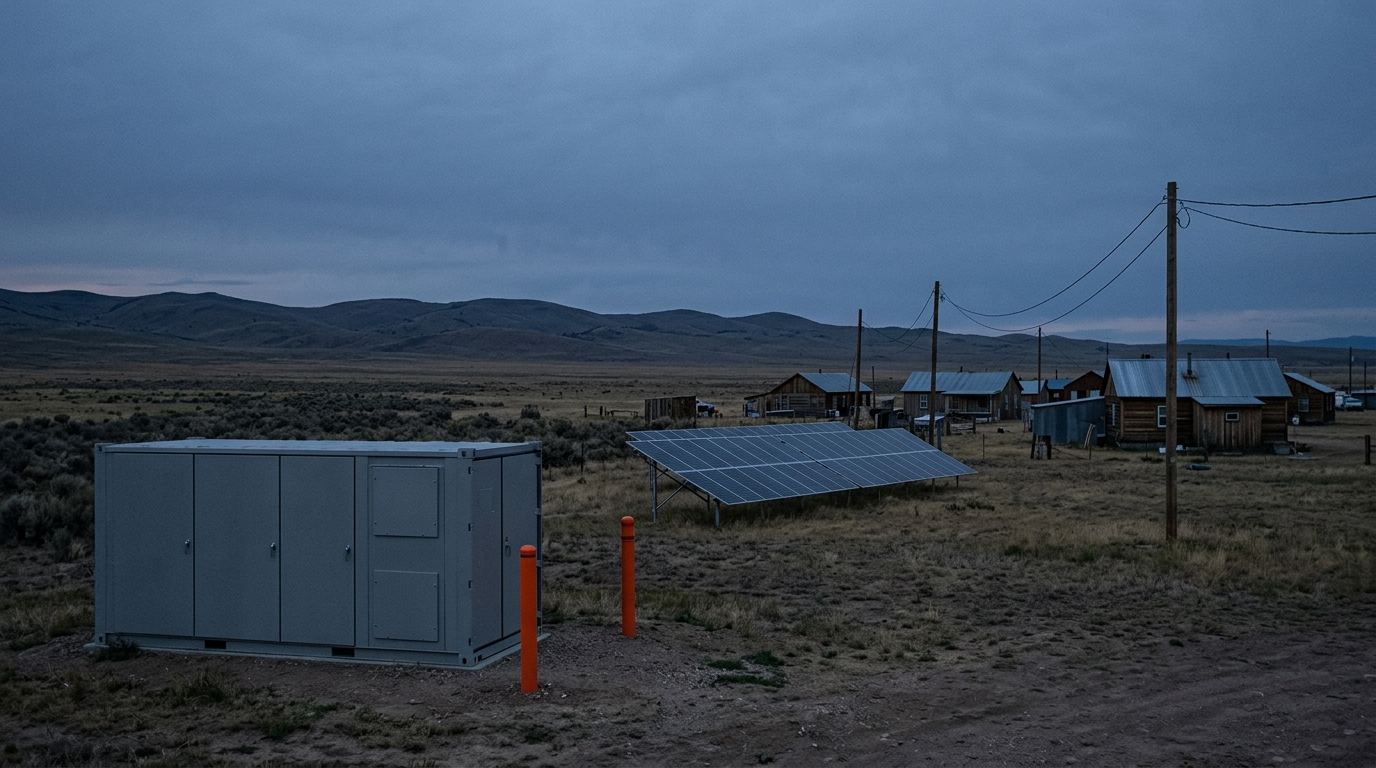
A recent project in a remote Indigenous community in North America illustrates it — in the vendor's own published account of the design, not in an independent field report. The battery microgrid was sized to carry the community's entire load rather than a subset of critical circuits, so that about a hundred homes and roughly 450 residents, along with the school, health center, and water treatment plant, could all come back from a single battery-led restart. Three problems in the design phase had no clean answer: the community heats electrically with no gas backup, so a cold restart pulls far more power than a normal one; air-conditioning penetration was not fully known; and the water treatment plant, the largest dynamic load on the system, had no motor nameplate data available. The utility directed sizing to a deliberately conservative non-coincident peak, and the controller was configured for automatic black start and resynchronization, as the vendor's project write-up describes. That write-up also states the project was still in hardware-in-the-loop testing ahead of commissioning when it was published, so it documents the design work and the controller validation — not a completed community restart.
The same theme runs through research on smaller systems. EPRI's project on multiple small grid-forming resources points out that multi-customer microgrids typically depend on one large grid-forming unit — which makes the whole microgrid unusable if that unit is unavailable — and that starting such a microgrid collectively, from several resources each rated below the steady-state load and without a recloser to stagger pickup, is a control case the industry has not fully worked out; the two approaches it compares were developed and demonstrated through electromagnetic transient (EMT) simulation, so those results come from modeling rather than from a site (EPRI's project record). For sites with heavy, recurring load steps, the engineering looks less like backup power and more like the design work behind mining microgrid projects.
Two patterns hold across both sources. First, restoration success is decided during design, by how the load is sequenced and what reserve is held — not by the nameplate capacity of the battery. Second, commissioning is where the claims are settled: a sequence that works in simulation has to be proven against real loads, real transformer inrush, and real weather.
How to Specify and Test Black Start in Your Project
Black start capability has to be written into a specification or it will not be delivered. These are the items worth putting in front of every supplier.
- Control mode. Require grid-forming capability explicitly, with the evidence being a demonstrated black start — not a datasheet line. Ask which control mode the product uses during restoration and how it behaves when the first transformer is energized.
- Demonstrated sequence, not a feature list. Ask for the restoration sequence as it would run on your single-line diagram: which breakers close, in what order, with what interlocks, and what the controller does when a step fails.
- Inrush and load-pickup strategy. Require a stated approach to transformer magnetizing inrush and motor starting, plus the load blocks the controller will restore and the maximum step it can accept. This is where undersized designs surface.
- Protection design for islanded operation. Require the protection settings for both grid-tied and islanded states, and confirmation that fault clearing has been studied for inverter-limited fault current.
- Reserve policy. Require the state of charge floor that the black start BESS must hold for restoration duty, and how the EMS enforces it during normal operation. A reserve that can be consumed by routine peak shaving is not a reserve.
- Resynchronization. Require automatic resynchronization and return to grid-tied operation without a site visit, including behavior if the utility supply is unstable.
- Commissioning test. Require a witnessed black start from a fully de-energized state with the site's real loads, and put the acceptance criteria in the contract: time to energize the bus, time to restore critical load blocks, and maximum frequency and voltage deviation during each step. Black start commissioning is a scheduled, documented test — not a demonstration.
The commercial side matters too. Restoration capability is a system cost: extra reserve, sometimes a larger anchor converter, and the engineering hours behind the sequence. The right way to judge whether it is worth buying is against the cost of downtime and the energy it displaces over the project's life, using the same levelized cost of storage method that applies to the rest of the system. A black start that never has to be used is insurance; one that is used once a year is infrastructure.
One caution worth stating plainly: black start performance depends on the actual configuration of the site. Ratings, sequence timing, and reserve limits must be verified against the equipment supplied and the site's own load list, with test evidence from the vendor rather than a generic claim. Ask the supplier to run your case rather than quote a container — at Hua Power, containerized storage and energy management work is sized against the site's load profile, and the restoration case is part of that design review instead of something added after delivery.
If you are scoping a hybrid microgrid solution for a site that cannot afford a long outage, start with the load list and the definitions that matter: which loads are critical, which can wait, and how long the site can survive without any of them. The black start sequence follows from those answers — and so does the storage you actually need.