

Microgrid project case studies are the closest thing this industry has to field evidence, and they are also a biased sample. The projects that get written up are the ones that worked, published by the vendor who built them or the host who wants the savings on record. That is not a reason to skip them. It is a reason to read them for the decisions they encode rather than for the headline numbers — because the same handful of decisions show up in a 320 kW nonprofit campus in California and at a remote mine in Western Australia with a 13 MW battery.
This page works through ten publicly documented deployments, sorted by the situation they had to solve, plus the aggregate datasets behind them. Every capacity, cost and outcome figure below traces to a named public source, and where a number could not be corroborated it was left out. That constraint is worth stating at the top. There is no public register that would let anyone verify a claim of "50+ deployments" for a given vendor, or even count one country's microgrids reliably; the most complete open directory, Microgrid Projects, catalogues 197 sourced systems worldwide. Ten well-documented projects teach more than fifty unverifiable ones.
What Counts as a Microgrid Project — and What These Case Studies Cover
A microgrid is a bounded power system with its own control layer that can run connected to the utility or isolated from it. The boundary is what matters. Everything inside it shares one voltage and frequency reference, and when the utility feed disappears, something inside that boundary has to keep holding both.
The US Department of Energy describes the technology around exactly that function rather than around any particular generation mix — its microgrid program strategy frames the work as serving "residential, communal, commercial, industrial, and/or defense loads". The general definition of a microgrid makes the same point from the engineering side: it is the islanding capability, not the equipment list, that separates a microgrid from a backup generator.
That definition spans a very wide band. The California Energy Commission's survey of 26 case studies covers systems from 78 kW to 112.5 MW; 93% of them use solar PV plus energy storage as part of the generation mix, with diesel and biogas filling the rest, and fewer than half of them rely on government money for a majority of project cost. "Microgrid project" is therefore not a size class. It is an operating model — and the projects here sit inside the wider family of microgrid energy storage solutions that runs from a single building's resilience system to an island grid.
One caveat about the sample. Vendors publish aggregates, and Hua Power is no exception: its own case study hub reports 400+ energy storage projects across 30+ countries, of which five are documented individually. This page treats the aggregate as the manufacturer's own record, and works from the individually documented projects — theirs and other companies'.
The Four Building Blocks Every Documented Project Shares
Before the projects, the vocabulary. Almost every microgrid in the public record is assembled from the same four blocks, and nearly every cost overrun or performance gap comes from how one of them was specified.
Solar PV and its inverters generate during daylight hours. Output follows irradiance, which means it follows weather and season, not the load.
Battery energy storage — the storage block in any modern build — is a stack: cells into modules into racks, plus a power conversion system (PCS) that turns DC into AC, and a battery management system (BMS) that keeps cells inside their safe operating window. This is the block that makes an island possible, because it can both absorb surplus generation and inject power in milliseconds.
A diesel genset stays in most designs, but its role changes. In a well-designed project it is no longer the primary supply; it is the thing that runs when the battery is empty and the weather is bad.
A microgrid controller and energy management system dispatches the other three and executes the switch between grid-connected and islanded operation. On a mature platform this layer is where the cost savings are found, because it decides when to charge, when to discharge and when to start the genset.
Two distinctions inside those blocks decide more outcomes than any equipment choice, and both are consistently missing from marketing material. The first is power versus energy: kW rating sets what the system can carry at any instant, including motor starting transients, while kWh capacity sets how long it can carry it once the utility is gone. A project can be perfectly sized on one axis and badly wrong on the other. The second is grid-forming versus grid-following: a grid-following inverter can only match a voltage and frequency that already exists, so it cannot start or hold an island by itself. Something in the system has to be able to create that reference.
Campus and Commercial Projects: Small Systems, Big Resilience Returns
The smallest deployments in the public record are the ones closest to an ordinary commercial buyer's scale, and they are also the ones with the clearest published economics.
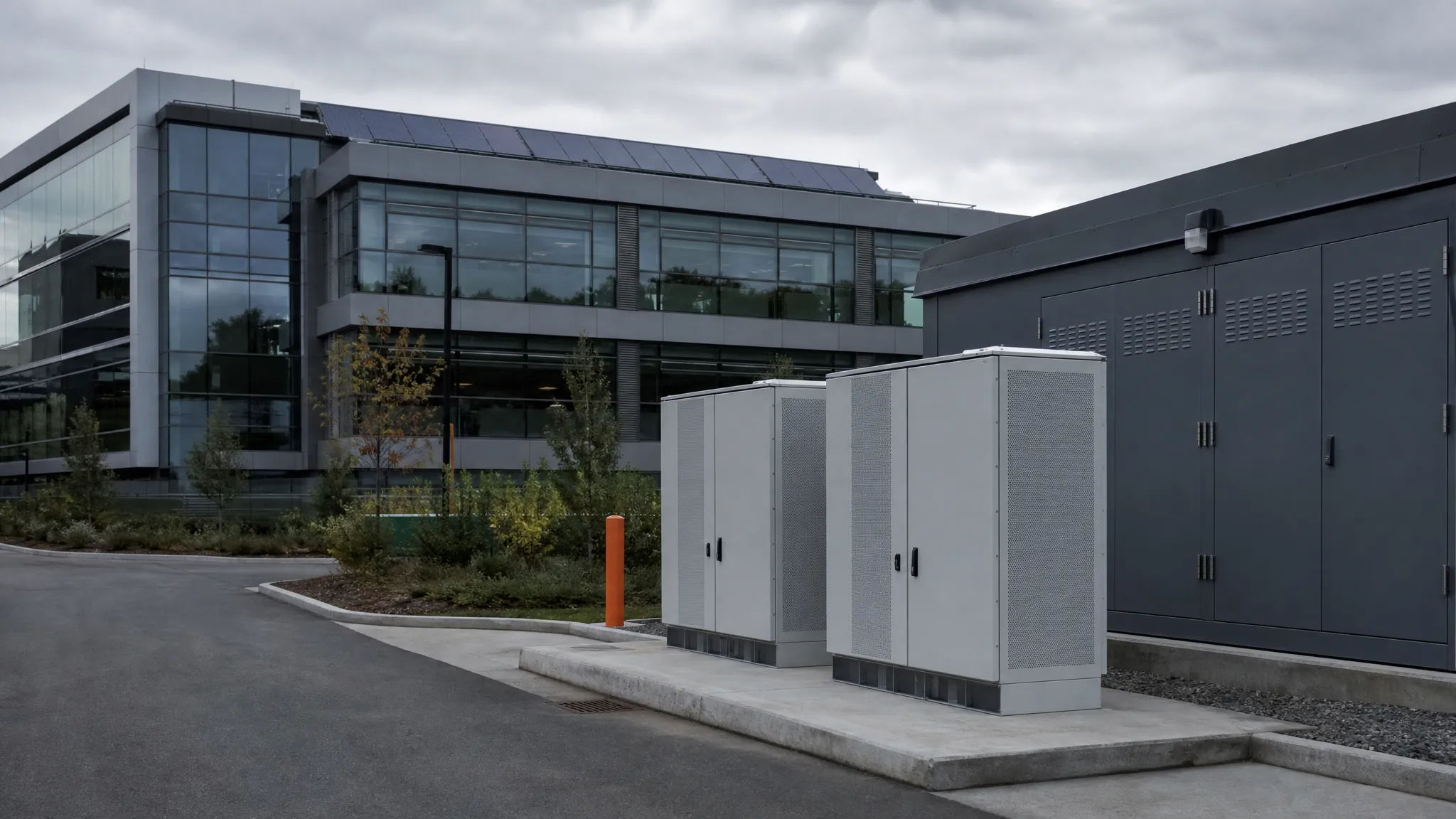
Direct Relief's headquarters microgrid in California pairs a 320 kW rooftop PV array with 676 kWh of lithium-ion storage and a 600 kW diesel genset that the operator describes as backup to the backup. The facility owner does not own it: a third-party provider installed and operates the system, and the nonprofit pays only for delivered solar energy under a power purchase agreement. The system was sized to support critical loads indefinitely during a prolonged outage, with the battery carrying the site overnight and the sun recharging it each morning. The Clean Coalition's case study documents both the configuration and the constraints — a commercial customer consuming more than its design estimate, and interconnection limits that cap the solar array well below what the built environment could host.
Blue Lake Rancheria, a tribal government campus in Humboldt County, California, runs a 420 kW PV array with a battery system and a controller that lets the campus operate in tandem with or islanded from the local grid. The microgrid pays for itself in operations, generating roughly $150,000 in annual electricity savings, and it disconnects and reconnects automatically at the point of common coupling during utility outages. The Schatz Energy Research Center was the project's prime contractor, and its final report to the California Energy Commission records one lesson that recurs across every case study below: legacy electrical infrastructure and IT systems are the real integration cost, not the batteries.
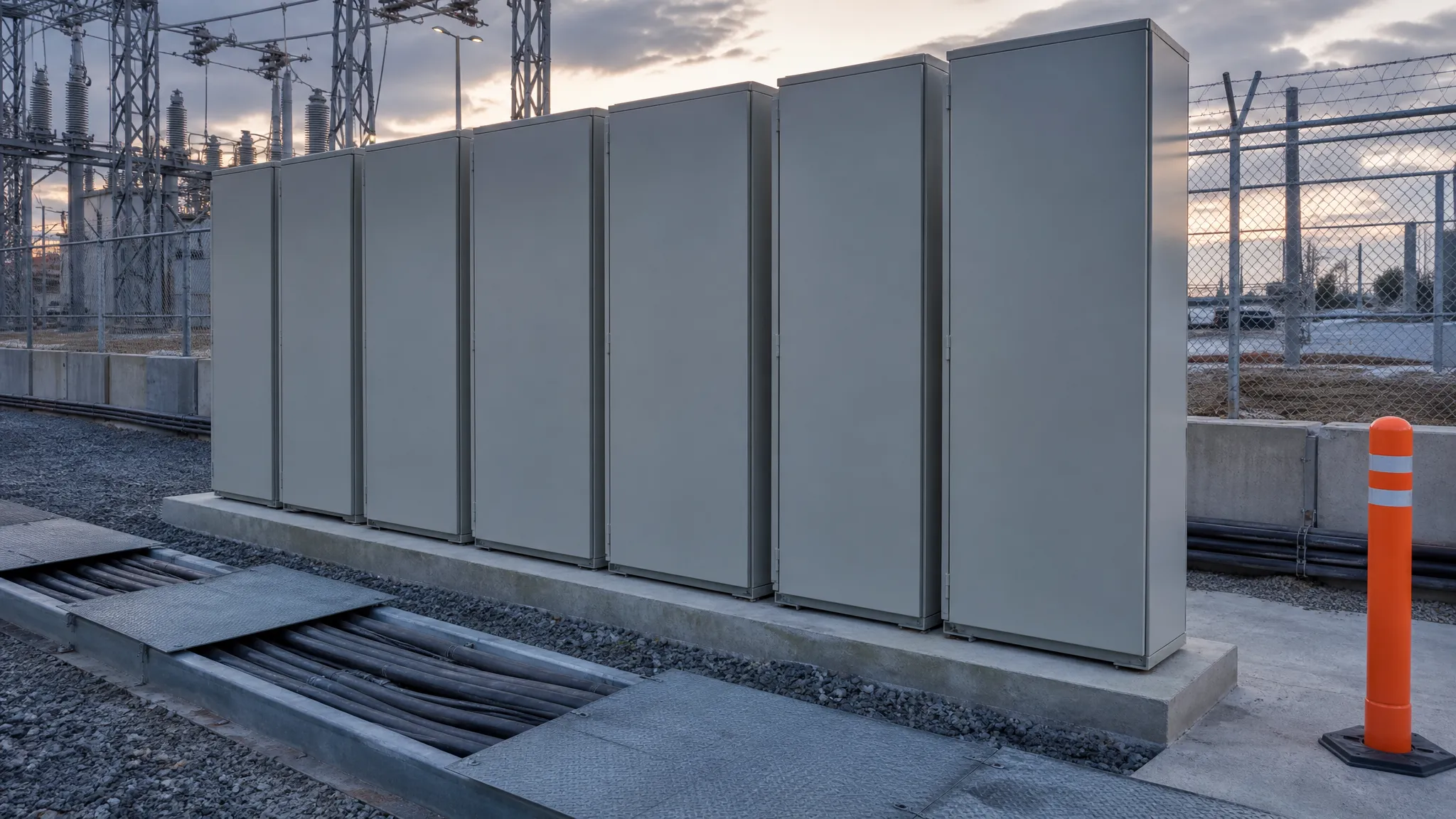
At the upper end of this scenario sit two documented commercial sites from Hua Power's own record. The Portugal Águeda project is a 500 kW / 1.075 MWh on/off-grid system paired with 600 kW of AC-coupled PV at a 24-hour manufacturing facility with 300 employees — a load profile that leaves no idle window for a battery to recharge unless the PV does it during the day (capacity follows the project page; other company material lists a different figure). The Lanxi cement plant project is a 0.7 MW / 1.505 MWh installation built from seven 100 kW / 215 kWh liquid-cooled cabinets, running peak shaving and valley filling for a cement products manufacturer.
Island and Remote-Community Projects: Where Storage Becomes the Grid
Take the utility away entirely and the battery stops being an accessory. These three projects show what that changes.
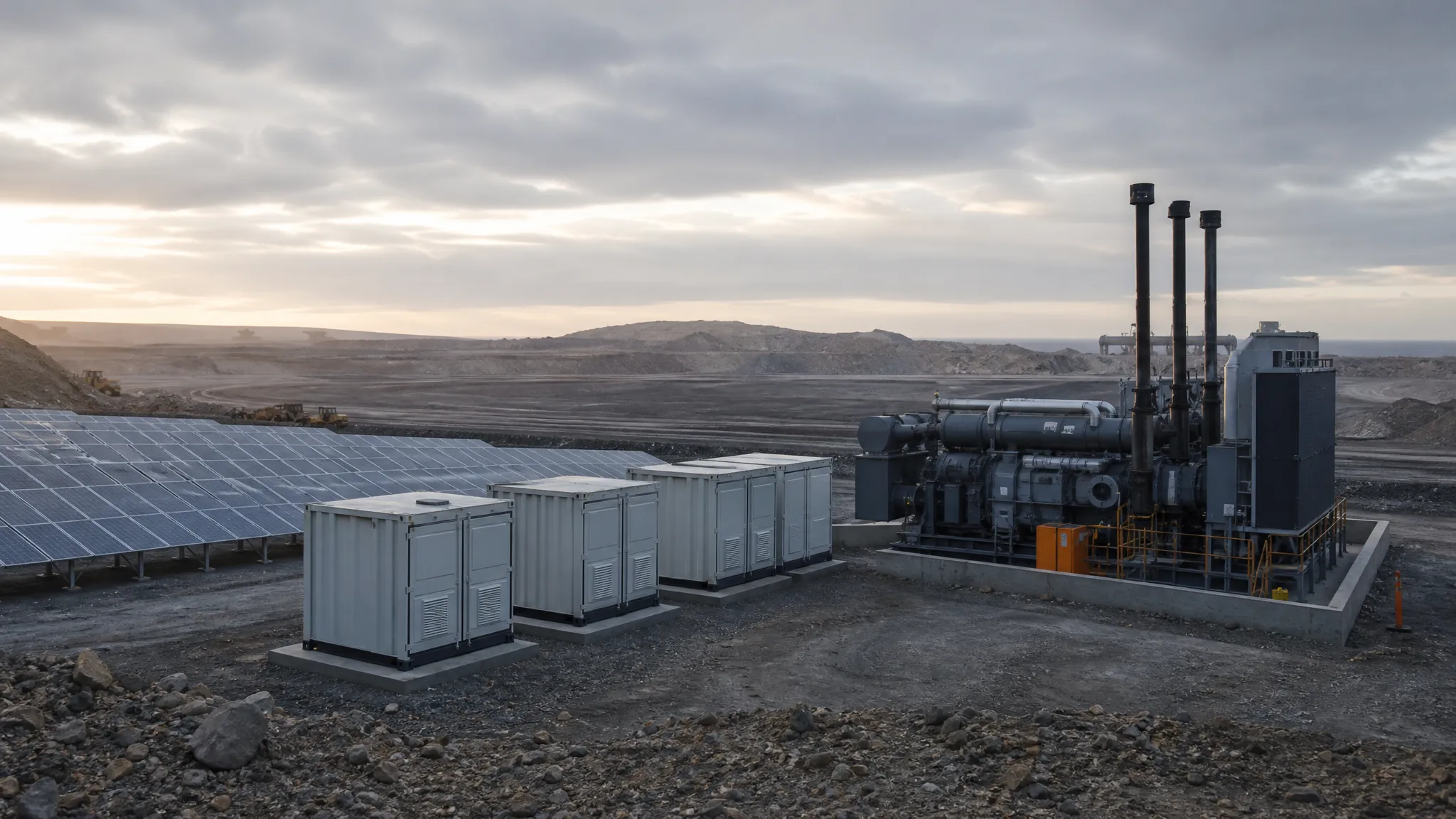
Graciosa, in the Portuguese Azores, is the clearest example of storage-as-infrastructure. The island grid combines 4.5 MW of wind, 1 MW of solar and 6 MW / 3.2 MWh of energy storage that Wärtsilä's platform dispatches alongside the existing diesel plant. Renewables went from 15% to 65% of the island's consumption, and in 2024 the system ran 139 days on 100% renewable energy. The project reference from Wärtsilä frames the storage's job precisely: it manages frequency and power quality, absorbs the intermittency of wind and solar, and keeps the diesel engines off rather than merely displacing their fuel.
Cordova, Alaska never had a grid to lean on. The town's cooperative supplies a run-of-river hydro fleet of 7.25 MW — 6 MW at Power Creek and 1.25 MW at Humpback Creek — which meets up to 78% of annual demand, with a 10.8 MW diesel plant filling the gaps, a figure Saft's project case study records. The problem was the transition: run-of-river hydro is a use-it-or-lose-it resource, and whenever the operators held back around 500 kW of capacity as spinning reserve, that water went down the river while diesel ran at its 400 kW minimum. A 1 MW / 1 MWh lithium-ion system replaced that reserve. The cooperative's own account records the control philosophy — the battery cycling between 30% and 70% state of charge as the genset starts and stops — and diesel savings projected at 35,000 gallons a year, which Saft's case study reports as trending towards 70,000.
Ocracoke Island, North Carolina answers the question buyers actually ask about island mode: does it hold up in a real event? It did. The island's microgrid restored power within three days after Hurricane Dorian in 2019, according to the Smart Electric Power Alliance's case study collection, which documents six utility resilience programs built around the same operating model.
If your site is an island or a remote community rather than a campus, the design constraints shift enough to deserve their own treatment — the island energy storage systems guide covers autonomy sizing, fuel logistics and the maintenance model that a location without a road network forces.
Mining and Industrial Projects: When the Load Sets the Design
Industrial sites are where the load profile stops being a planning input and becomes the dominant design constraint. Crushers, mills and compressors draw multiples of their rated current at start-up, and the storage system has to carry that transient without losing the reference.
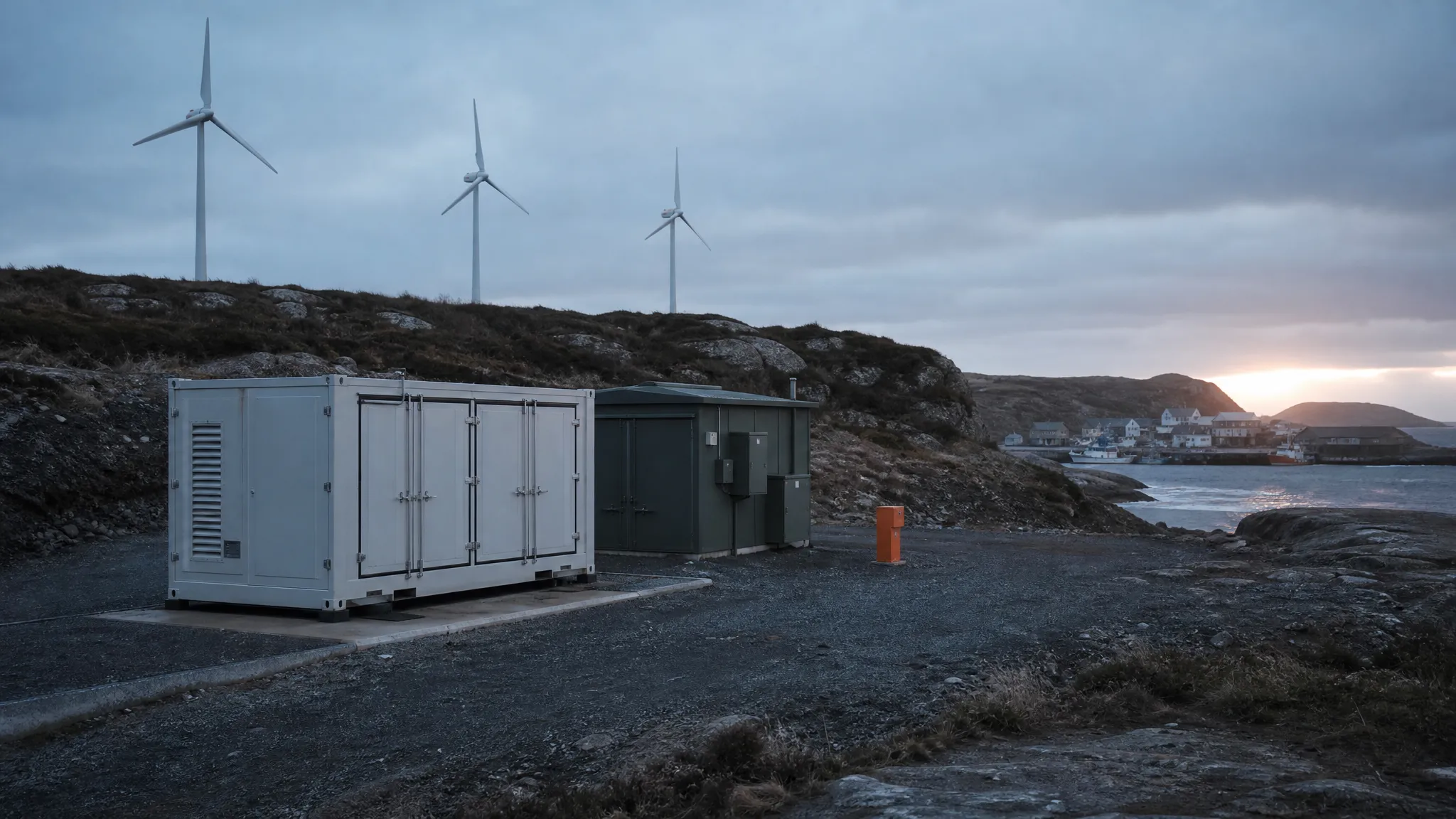
The Agnew gold mine in Western Australia was the first Australian mine to run on a wind, solar, battery and gas microgrid. It took A$13.5 million of funding inside a A$111.6 million total project cost, and it was completed on 30 January 2023, per ARENA's project record. The finding that matters most to buyers is not the capacity but the economics of curtailment: designing a microgrid with a deliberate curtailment factor is currently the lowest-cost route to a mid-to-high renewable fraction, and only above that level does adding storage — charged from otherwise-curtailed renewable energy at zero marginal cost — start to make business sense.
Ruida, in Zambia, runs a 13 MWp PV plant with 39 MWh of storage and diesel backup; trade coverage describes it as Africa's largest single-unit hybrid microgrid project for mining, delivered from power purchase agreement to commissioning in about four months.
The Diavik diamond mine in Canada's Northwest Territories shows the same logic on a different resource. Four wind turbines totalling 9.2 MW meet 11% of the mine's annual electricity and remove roughly 75 truckloads of diesel from the seasonal ice road each year, as RMI's review of island and remote transitions documents. The fuel logistics, not the generation cost, is the binding constraint at that latitude.
The site-side detail — motor inrush, dust and altitude, peak versus continuous load — is covered in depth in the mining microgrid projects guide; what the case studies add is that the design is set by a two-minute transient, not by the daily average.
What These Microgrid Project Case Studies Have in Common
Project | Scenario | Documented system | Documented outcome |
|---|---|---|---|
Direct Relief HQ, California | Commercial resilience | 320 kW PV, 676 kWh battery, 600 kW diesel | Critical loads supported indefinitely in an outage; third-party owned under a PPA |
Blue Lake Rancheria, California | Tribal campus | 420 kW PV plus battery and controller | About $150,000 a year in electricity savings; automatic island and reconnect |
Portugal Águeda | 24/7 manufacturing | 500 kW / 1.075 MWh on/off-grid, 600 kW AC-coupled PV | On- and off-grid operation for a 300-employee facility |
Lanxi cement plant, China | C&I peak shaving | 0.7 MW / 1.505 MWh, seven 100 kW / 215 kWh cabinets | Peak shaving and valley filling |
Graciosa, Azores | Island grid | 4.5 MW wind, 1 MW solar, 6 MW / 3.2 MWh storage | Renewables 15% to 65%; 139 days on 100% renewables in 2024 |
Cordova, Alaska | Off-grid community | 7.25 MW hydro, 1 MW / 1 MWh battery, diesel | Hydro share up to 78%; diesel savings projected 35,000 gal/yr, now about 70,000 |
Ocracoke Island, North Carolina | Storm resilience | Islanded microgrid | Power restored within three days after Hurricane Dorian (2019) |
Agnew gold mine, Western Australia | Remote mine | Wind, solar, battery and gas hybrid | A$111.6m total cost, A$13.5m from ARENA; completed January 2023 |
Ruida, Zambia | Mine, weak grid | 13 MWp PV, 39 MWh storage, diesel backup | PPA to commissioning in about four months |
Diavik diamond mine, Canada | Remote mine | 9.2 MW wind across four turbines | 11% of annual electricity; about 75 fewer diesel truckloads a year |
Four patterns hold across all ten.
First, the battery is the anchor and the genset is the reserve — but almost nobody removes the genset. The projects that perform best are the ones optimizing the diesel's runtime and fuel burn, not pretending it is gone. Cordova's entire redesign exists to stop spilling water while a diesel set idles at minimum load.
Second, capacity ratios follow the job, not a template. The systems above range from a 320 kW campus array to a 7.25 MW hydro fleet, and the storage-to-generation ratio swings just as widely. What is consistent is the method: size the power rating to the worst transient, then size the energy rating to the longest credible gap between generation and load.
Third, documented outcomes are measured in fuel, outage hours and renewables share — rarely in dollars per kWh. Vendors quote cost per kWh in proposals; project records quote litres of diesel avoided and days of autonomous operation. When you compare two suppliers, compare the second set, because those are the numbers someone else can audit.
Fourth, the hard part is the integration, not the hardware. Blue Lake Rancheria's own contractor names legacy infrastructure and IT systems as the real challenge; Agnew's value came from deciding how much renewable output to throw away; Cordova's came from setpoints in a control philosophy. None of that is a battery specification.
The Design Decisions These Projects Actually Turn On
Strip away the site details and six engineering decisions recur.
Who creates the reference when the grid is gone. This is the grid-forming question, and it is the single most consequential line item. Graciosa's storage provides voltage and frequency control and can form the grid itself; Cordova's system supplies spinning reserve so the hydro deflectors can stay fully open. A microgrid built exclusively from grid-following inverters has no way to start an island, which is why black start capability belongs in the specification rather than in a brochure footnote.
Curtailment versus storage. ARENA's conclusion from Agnew is directly usable as a purchasing rule:
"Due to the variable nature of renewable energy and the synchronous stability requirements of microgrids, designing a microgrid with a factor of curtailment is currently the lowest cost method of achieving a mid to high level (50% – 80%) of renewable fraction."
Below that band, deliberately wasting some renewable output is cheaper than storing it. Above it, storage charged from curtailed energy becomes the better buy.
Protection, switchgear and fault current. Inverter-based resources deliver far less fault current than rotating machines. That does not make protection easier; it makes coordination harder, and it is why community-scale projects routinely need switchgear and relay upgrades at the interconnection point. It is the least glamorous line in the budget and one of the most common sources of delay.
Cold load pickup and inrush. A transformer energized onto a cold bus draws a magnetizing inrush current many times its rating, and a motor starting at full load draws its own multiple. Raising the load in stages, and letting the storage ride through the start sequence, is the standard answer. A system sized to the average load will trip on the first cold start.
The controller's maturity. The controller decides when to charge, when to discharge and when to start the genset. It is also the layer that determines how much on-site engineering staff a project needs, because a capable platform lets an operations center supervise several sites remotely. Blue Lake Rancheria's final report names the same requirement: the control system has to account for network latency and control cycle times, which is an IT problem before it is a power problem.
The environment. Heat, cold, dust, altitude and salt all move battery performance. Graciosa's storage had to absorb rapidly changing wind and solar output; Diavik's equipment has to survive being trucked over an ice road. Specify for the site's real range, and get the thermal and protection ratings in writing.
A feasibility study that simulates only the average day answers none of these. The useful simulation is the one that models your heaviest start, your worst weather week, and the hour when the battery is lowest.
Where Microgrid Projects Go Wrong
The public record is thin on failures, which is exactly why it is worth naming them. Six show up repeatedly in commissioning reports and operator accounts.
Sizing to the average. A battery chosen from the daily load curve rather than from the largest transient will disconnect the site on its first cold start. Check the PCS overload rating and its duration, not just its continuous rating.
Assuming island mode works because the hardware supports it. Islanding is an operating mode that has to be tested, documented and exercised. A system that has never run islanded in commissioning will discover its control gaps during the first real outage.
Underestimating protection and interconnection work. Grid defense, islanding detection, relay settings and utility approvals sit outside the equipment package and routinely take longer to resolve than delivery.
Treating the genset as an afterthought. Diesel units run badly at low load, and a generator cycling on and off all day costs more in maintenance than the fuel it burns. The storage system's job includes keeping the genset in its efficient band or off entirely.
Budgeting the hardware and not the commissioning. The projects that hit their dates had factory testing, hardware-in-the-loop simulation or staged load pickup rehearsed before the site visit. Thermal management, dust ingress and altitude derating also surface here rather than in the proposal.
Planning operations with no local technical staff. Remote sites cannot absorb a three-week lead time on a spare module. Remote monitoring, spare stocking and response commitments belong in the contract alongside the capacity figures.
Sizing the Storage: Reading the Numbers Like a Project Engineer
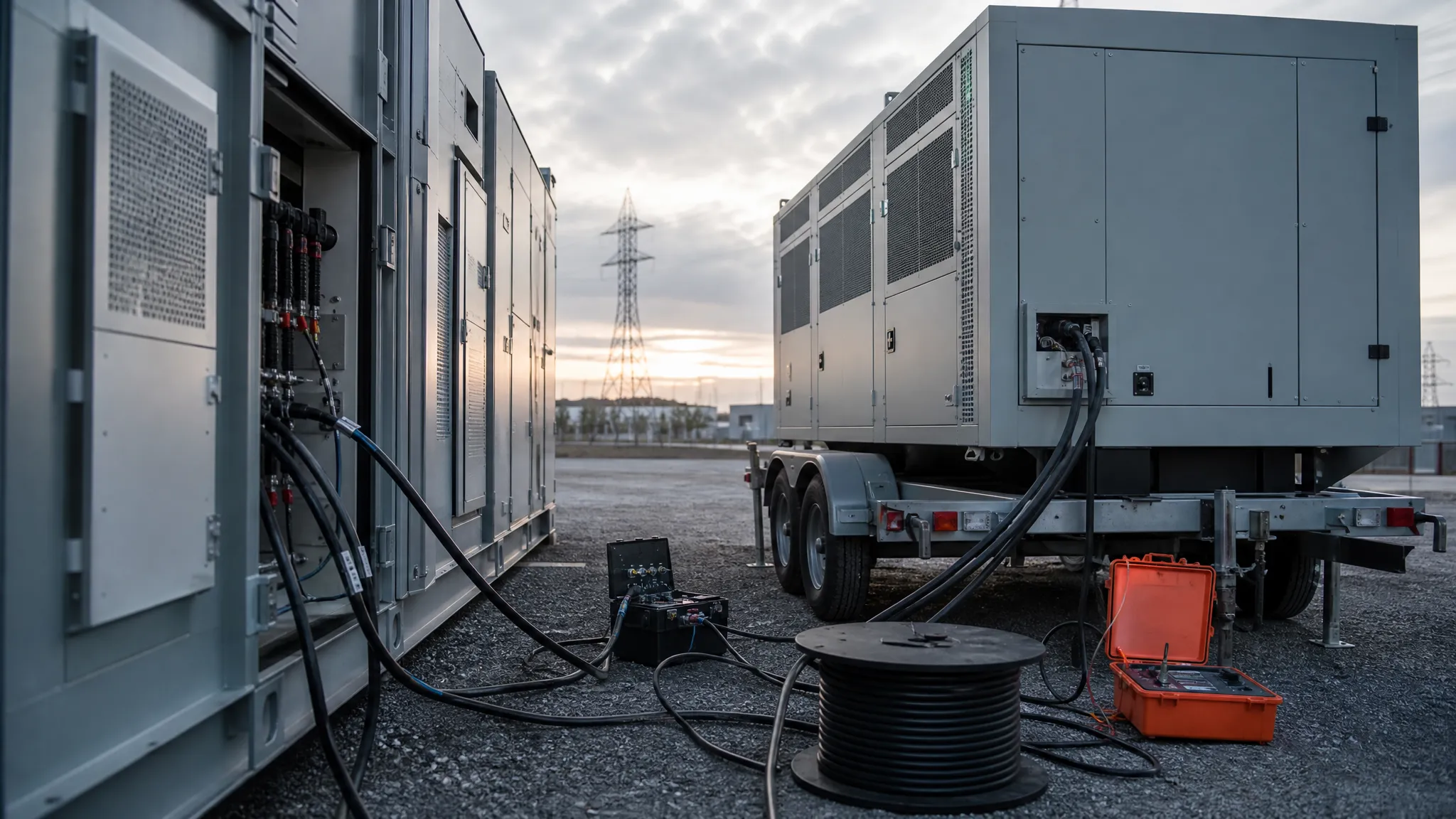
Put the two axes side by side and the sizing problem becomes tractable. Take a site with a 300 kW critical load that needs four hours of autonomy, and a single 250 kW compressor motor that starts under load. The energy rating has to cover roughly 1,200 kWh of autonomy. The power rating has to cover the compressor start on top of that load, so it is set by the transient, not by the 300 kW average. A system sized at 300 kW / 1,200 kWh fails the second test; one sized at 500 kW / 1,200 kWh may pass both.
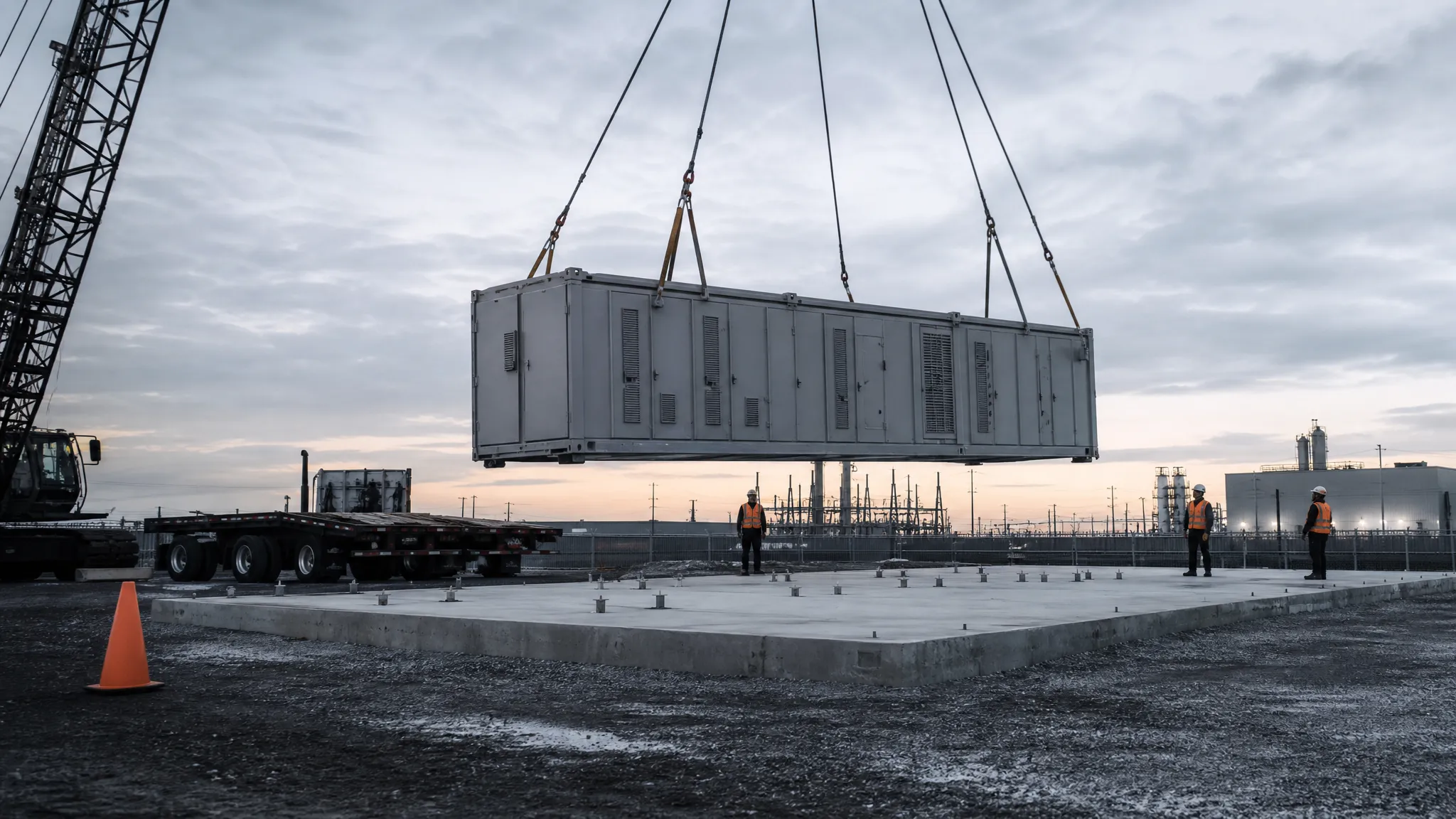
That is where cabinet and container formats diverge. Cabinet-scale systems fit inside an existing electrical room or an outdoor pad and parallel up as the site grows; this is the band Hua Power's liquid-cooled HC-UPSAP261L covers at 125 kW / 261.248 kWh per unit. At project scale, factory-built containers arrive pre-integrated with their own thermal management, fire suppression and controls, which is what makes short commissioning windows possible on remote sites — the 1 MW / 2.089 MWh HC-UPSA2089L is a 20-foot class unit of that type with an off-grid transfer time under 20 ms, which is the specification line that decides whether your critical loads ride through the switch. Cells in this class are lithium iron phosphate as a rule, chosen for cycle life and thermal stability; ask a supplier to justify any other chemistry for a stationary application. Full electrical detail sits on the 1 MW containerized battery storage product page.
A Procurement Checklist Drawn From These Projects
Every one of the ten projects above can be reduced to the same short audit. Run it against any supplier, including us.
- Grid-forming capability, in writing. Ask which equipment creates the voltage and frequency reference during island operation, and under what control mode.
- Power rating at the transient. Give the supplier your heaviest motor start and ask for the PCS overload rating and its duration. The continuous rating is the less interesting number.
- Energy rating at your worst week, not your average day. State the autonomy hours you need at what load, and at what state of charge the system will start a genset.
- Commissioning plan. Factory testing, site acceptance tests, and a rehearsed island-and-reconnect sequence with your real loads.
- Protection scope. Who owns the switchgear, the relay settings and the utility approval, and what has that cost on comparable sites.
- Control platform and remote access. Data ownership, alarm routing, who can change setpoints, and how the system behaves when the network link drops.
- O&M and spares. Response time, stocked parts, warranty throughput terms and who is certified to work on the system locally.
- Safety documentation at cell, module, rack and system level — not a single certificate quoted out of context.
A structured version of this audit, with the procurement sequencing behind it, is in the BESS procurement guide.
Frequently Asked Questions
How many microgrid projects are publicly documented? In the hundreds, but only a minority are written up in enough engineering detail to learn from. The California Energy Commission's survey alone covers 26 systems across California, North America and further afield, and open directories like Microgrid Projects catalogue around 197. Treat any round "N deployments" figure as a claim rather than a count.
What does a microgrid project cost? The Agnew gold mine's total project cost of A$111.6 million for a wind-solar-battery-gas hybrid is a useful upper anchor for industrial scale, but cost scales with the grid connection you are avoiding, the autonomy hours you specify and the protection work the utility requires. Ask for the number per kWh delivered, not the number per kW installed.
Does a microgrid need diesel? Most of the projects here keep it. The change is in the role: from primary supply to reserve that starts when storage is depleted and generation is unavailable. Designing diesel out entirely is possible on strong-resource sites, but it raises the storage requirement substantially.
How long does a microgrid project take? Longer than the equipment lead time. The Zambia mining project went from power purchase agreement to commissioning in about four months; community-scale projects with utility interconnection and public approvals routinely run into years.
Microgrid project case studies are useful in the same way accident reports are useful: not as templates to copy, but as a list of the things that decide the outcome. The sites that perform are the ones where somebody specified the transient, the reference source and the control philosophy before the equipment was ordered.
If your site has a load that cannot wait — a mine, an island, a plant running three shifts — the hybrid microgrid solution architecture starts from your load profile, and the sizing, protection scope and commercial model follow from there.