

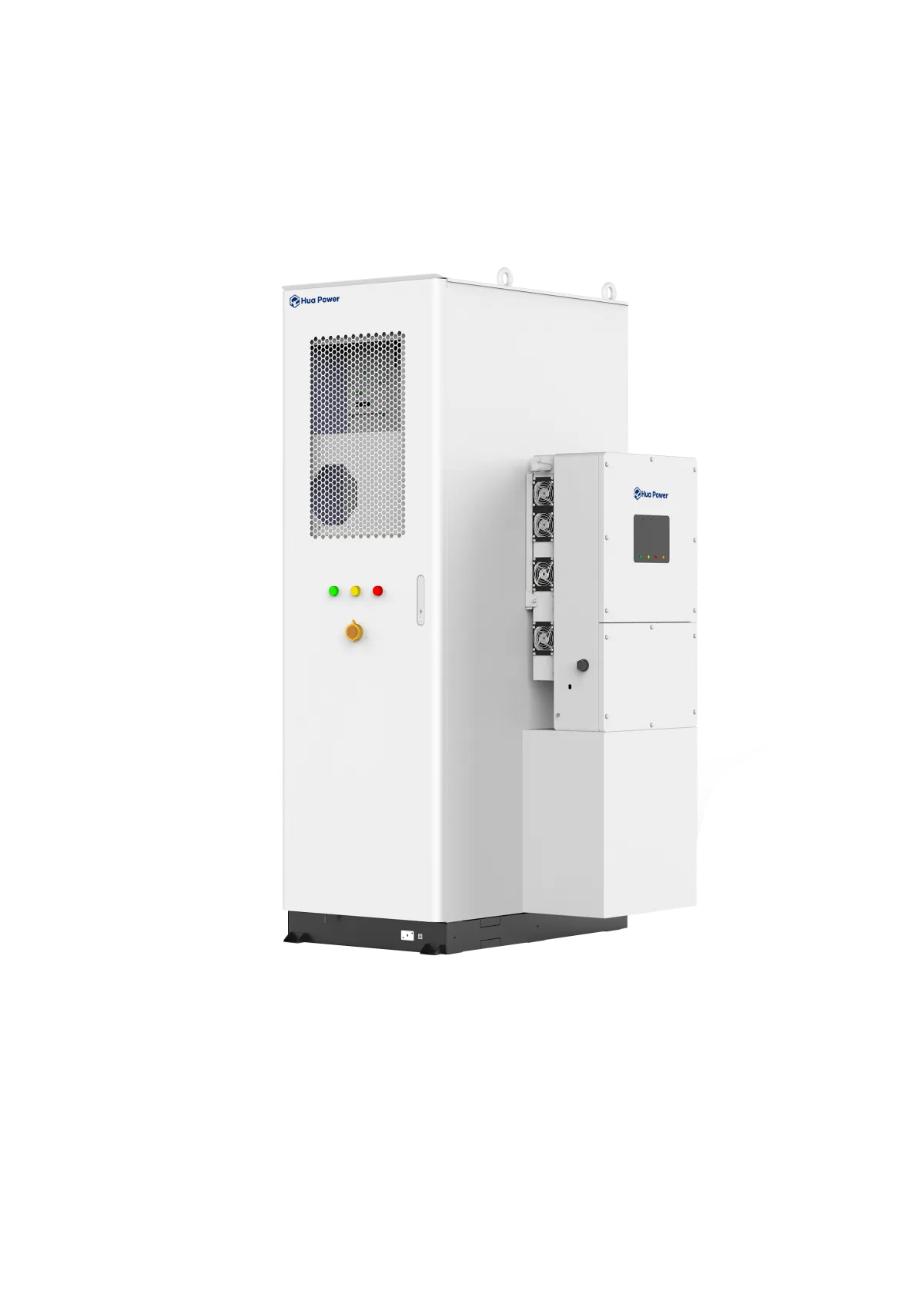
The battery stores the energy. The PCS decides how much of it you actually get to use — and how fast.
Most C&I battery buying guides treat the inverter as a spec-sheet checkbox: confirm it meets the required interconnection certifications, move on. That's how projects end up with a power conversion system (PCS) that technically works but quietly costs the site money for the next 15 years — through conversion losses, a certification gap that delays interconnection, or a topology that can't scale when the site adds a second building.
Power Conversion System (PCS), colloquially "the inverter" — is the component that converts your battery's DC power to the AC power your site and the grid actually use, in both directions. Get the battery capacity right and the PCS wrong, and you've bought a system that can't deliver what you paid for.
This guide is for the people who have to make that call: energy and facility managers, EPCs, and procurement engineers who already know they need a battery and now have to spec the PCS that goes with it. It covers the decisions that actually change system performance and project timeline — power matching, AC vs DC coupling, string vs central topology, grid certification, phase configuration, and efficiency — with a worked example showing what an efficiency gap actually costs.
The short version: Match the PCS to your power (kW), not your battery's energy (kWh) — that's a separate sizing question covered elsewhere. Choose DC-coupling for new-build PV+storage (higher round-trip efficiency) or AC-coupling for retrofits and grid-only systems (simpler, more flexible). Confirm UL 1741 SB + IEEE 1547-2018 + UL 9540 certification for US interconnection (or the IEC equivalents for international projects) before you buy, not after. A 2–3 percentage-point efficiency gap between PCS options sounds small — on a 250 kW system cycling daily, it's real money over the system's life.
PCS vs. "inverter" — same conversation, more precise term
In casual use, "inverter" and "PCS" get used interchangeably for battery systems, but the term matters slightly. A traditional solar inverter only converts DC to AC, one direction. A battery system needs to charge as well as discharge, so what you're actually buying is a bidirectional power conversion system (PCS) — it converts AC to DC to charge the battery and DC to AC to discharge it, with the intelligence to manage both directions safely. Every "battery inverter" in a serious C&I quote is a PCS. This guide uses the terms interchangeably, as most vendors and this article's own title keyword does, but "PCS" is the more accurate term if you're reading a datasheet.
Step 1: match power (kW), not capacity (kWh)
The single most common spec-sheet mistake is sizing the PCS off the battery's kWh rating instead of the power you actually need to deliver. They're different numbers answering different questions:
- Battery capacity (kWh) — how much energy you can store and discharge in total. This is a sizing question with its own methodology (covered in 100/200/500 kWh capacity selection).
- PCS power rating (kW) — how fast you can push that energy in or out at any given moment. This is what the inverter is actually rated for, and it's the number this article is about.
A 500 kWh battery paired with a 100 kW PCS discharges over roughly 5 hours; the same battery paired with a 250 kW PCS discharges in about 2 hours. Same energy, completely different power profile — and if your application (peak shaving, backup, demand response) needs a specific discharge rate, the PCS's kW rating is what determines whether you can hit it, not the battery's kWh. Confirm your required power draw first, from your own load or application data, before you look at a spec sheet.
AC-coupled vs. DC-coupled: the decision that shapes everything else
This is the single highest-leverage decision in PCS selection, and it's the one most buyer's guides skip or treat as a footnote.
AC-coupled systems use a separate inverter for the battery and (if present) the solar array; each connects to the AC bus independently. Charging the battery from solar means converting DC (from the panels) to AC (through the solar inverter) to DC (through the battery's PCS) — two conversion stages.
DC-coupled systems connect the battery directly to the solar array's DC bus, ahead of a single shared inverter. Charging from solar stays in the DC domain the whole way — one conversion stage instead of two.
That extra conversion stage is the whole story: DC-coupled architectures generally achieve higher overall system efficiency by eliminating one power-conversion stage, although actual round-trip efficiency depends on the battery, PCS, and overall system design — a gap driven directly by how many times the energy gets converted between AC and DC on its way into the battery.
AC-coupled | DC-coupled | |
|---|---|---|
Round-trip efficiency | ~90–94% | ~98% |
Best fit | Retrofitting storage onto an existing site, grid-only systems (no solar), sites where PV and storage will be added at different times | New-build PV + storage, sites where maximizing self-consumption from solar matters most |
Flexibility | High — battery and solar inverter are independent, easy to size, replace, or add incrementally | Lower — battery and solar share sizing and physical proximity constraints |
Install complexity | Simpler for retrofits — no need to touch the existing solar inverter | More engineering upfront, but a cleaner single-conversion design for new builds |
Where it costs you | Extra conversion loss on every kWh cycled through solar → battery | Less flexible reconfiguration later |
The honest framing: if you're retrofitting battery storage onto a site that already has solar and its own inverter, AC-coupling is usually the pragmatic choice — you're not tearing out working equipment to save a few efficiency points. If you're specifying a new PV+storage system from scratch, DC-coupling's efficiency advantage is worth the extra upfront design coordination. Neither is universally "better" — the right answer depends on whether you're building new or adding on, which is exactly the buyer-context question most generic guides skip.
Topology: string vs. central PCS
Once you've settled AC vs. DC coupling, the next architecture decision is how many PCS units you deploy and how they're wired — and this is one of the most under-explained parts of C&I inverter selection, even in vendor content.
Central topology uses one large PCS to handle the entire system's power conversion. It's simple to spec and typically has a lower per-kW cost at scale, but it's a single point of failure — if the central unit goes down, the whole system stops, not just a fraction of it.
String (distributed) topology splits the same total power across multiple smaller PCS units, each paired with dedicated battery strings or battery clusters. If one unit fails, you lose only that string's capacity — the rest of the system keeps running. String topology also scales more naturally: adding capacity later means adding another string, not re-engineering a central unit sized for the wrong total.
The trade-off is upfront cost and complexity — more units to install, commission, and maintain — against resilience and serviceability. For a single facility running one continuous process, central topology's simplicity is often the right call. For a site where downtime is expensive, or one you expect to expand, string topology's partial-failure tolerance is worth the added complexity.
Grid certification: what actually needs to be verified
Every PCS spec sheet claims to be "certified." The certification stack that actually determines whether your utility approves interconnection is more specific than that, and most competitor content treats it as a single checkbox rather than the layered requirement it is.
For US installations, three standards work together:
Standard | What it actually covers |
|---|---|
The technical requirements for how a distributed energy resource (like your PCS) interconnects and interoperates with the utility grid — abnormal-condition response, power quality, anti-islanding, and more. This is the underlying performance standard. | |
The test procedure that verifies a specific PCS product actually meets IEEE 1547-2018's requirements, including standardized interoperability communication (SunSpec Modbus, IEEE 2030.5, or DNP3). A PCS is "UL 1741 SB listed" when it has passed these tests — this is the certification your utility will actually ask to see. | |
Covers the energy storage system and equipment as a whole (not just the PCS) — safety of the integrated battery, PCS, and enclosure together. Often paired with UL 9540A, a fire-testing protocol utilities and AHJs increasingly require for permitting. |
The practical takeaway: UL 1741 SB verifies IEEE 1547-2018 compliance — they're not two separate hoops, one is the test for the other — and UL 9540 is a separate, system-level requirement that a UL 1741-listed PCS alone doesn't satisfy. Confirm both before you assume a quote is interconnection-ready. Missing either one is a common cause of permitting delays that show up only after equipment has already shipped.
Going beyond the US: international grid codes
If you're sourcing equipment for a project outside North America, the UL/IEEE stack isn't the relevant certification — most markets reference IEC standards and regional grid codes instead, such as IEC 62109 (Safety of power converters for use in photovoltaic power systems, commonly referenced for hybrid PV+ESS applications) alongside country- or region-specific interconnection codes (e.g., EN 50549-1 in the EU, or national grid-code equivalents elsewhere). This is where a manufacturer that ships internationally has a structural advantage over a US-only content library: Hua Power's C&I systems are deployed across 30+ countries and are engineered to the certification stack each destination market actually requires, not just a single home-market standard retrofitted for export.
Single-phase vs. three-phase: not really a choice at C&I scale
Residential and very small commercial systems sometimes run single-phase. At the power levels this guide covers — 50 kW and up — three-phase is effectively mandatory, for a simple reason: single-phase service can't efficiently carry that much power without impractically high current, and most C&I utility services are three-phase to begin with. Common C&I three-phase voltages are 208V, 400V/415V, or 480V depending on region and utility service class — confirm which your site actually has before finalizing a PCS's AC output rating, since a mismatch here is a straightforward but easy-to-miss interconnection blocker.
Efficiency that actually matters: peak vs. partial load
Every PCS spec sheet leads with a peak efficiency number — 97%, 98%, 98.6%. What most don't show is efficiency at partial load, which is where a PCS spends most of its operating life. A battery rarely discharges at exactly its rated maximum power for the full cycle; it ramps up, holds, and ramps down, spending real time at 30–70% of rated output. A PCS optimized only for its peak-efficiency point can lose meaningfully more at those partial-load ranges than the headline number suggests. When comparing quotes, including both peak efficiency and European/weighted efficiency where available, not just the single best-case figure on the datasheet.
Does MPPT matter here?
Maximum Power Point Tracking (MPPT) — the algorithm that keeps a solar array operating at its optimal voltage/current point — matters if your PV+ESS architecture incorporates MPPT at the DC stage, since it directly affects how much of the array's output actually reaches the battery. It's irrelevant to a grid-only battery system with no PV. If your system is battery-only, you can ignore MPPT channel-count marketing entirely; if it's PV-hybrid and DC-coupled, multi-channel MPPT (letting different strings track independently) is worth asking about, especially on sites with mixed panel orientations or partial shading.
A worked example: what an efficiency gap actually costs
No competitor in this space shows the math, so here it is — swap in your own numbers.
The system: an HC-UPSAP522L (250 kW / 522 kWh) cycling once a day, delivering roughly 470 kWh of usable output per cycle (at ~90% depth-of-discharge) across 350 operating days a year — about 164,500 kWh delivered annually.
Step 1 — The efficiency range. This isn't the HC-UPSAP522L's own spec — it's the spread you'll see shopping this power class: published peak conversion efficiencies for commercial PCS products typically range from approximately 96% to over 98.5%, depending on topology, operating conditions, and test methodology. That gap looks small on a datasheet.
Step 2 — What it costs in grid energy purchased. To deliver the same 164,500 kWh of output:
- At 98.6% efficiency: 164,500 ÷ 0.986 ≈ 166,845 kWh of energy has to go in.
- At 96% efficiency: 164,500 ÷ 0.96 ≈ 171,354 kWh has to go in.
- Difference: roughly 4,500 kWh of additional input energy required each year to deliver identical output.
Step 3 — Put a dollar figure on it. At an illustrative $0.12/kWh commercial rate, that's about $540/year — not dramatic on its own.
Step 4 — Compound it over the system's life. Over a 15-year service life at a flat rate (ignoring electricity price inflation, which would make this larger), that gap is roughly $8,100 in extra energy cost for otherwise-identical delivered output — before accounting for any efficiency degradation over time on the lower-spec unit.
What changes the answer: your actual electricity rate, your real cycling frequency (a system that cycles multiple times a day multiplies this gap accordingly), and whether the lower-efficiency figure was measured at peak load or is representative of your real partial-load operating profile. A 2–3 point efficiency gap won't make or break a project's ROI on its own — but it's not nothing, and it's a legitimate tiebreaker between two otherwise-comparable quotes.
Matching PCS power to a Hua Power cabinet
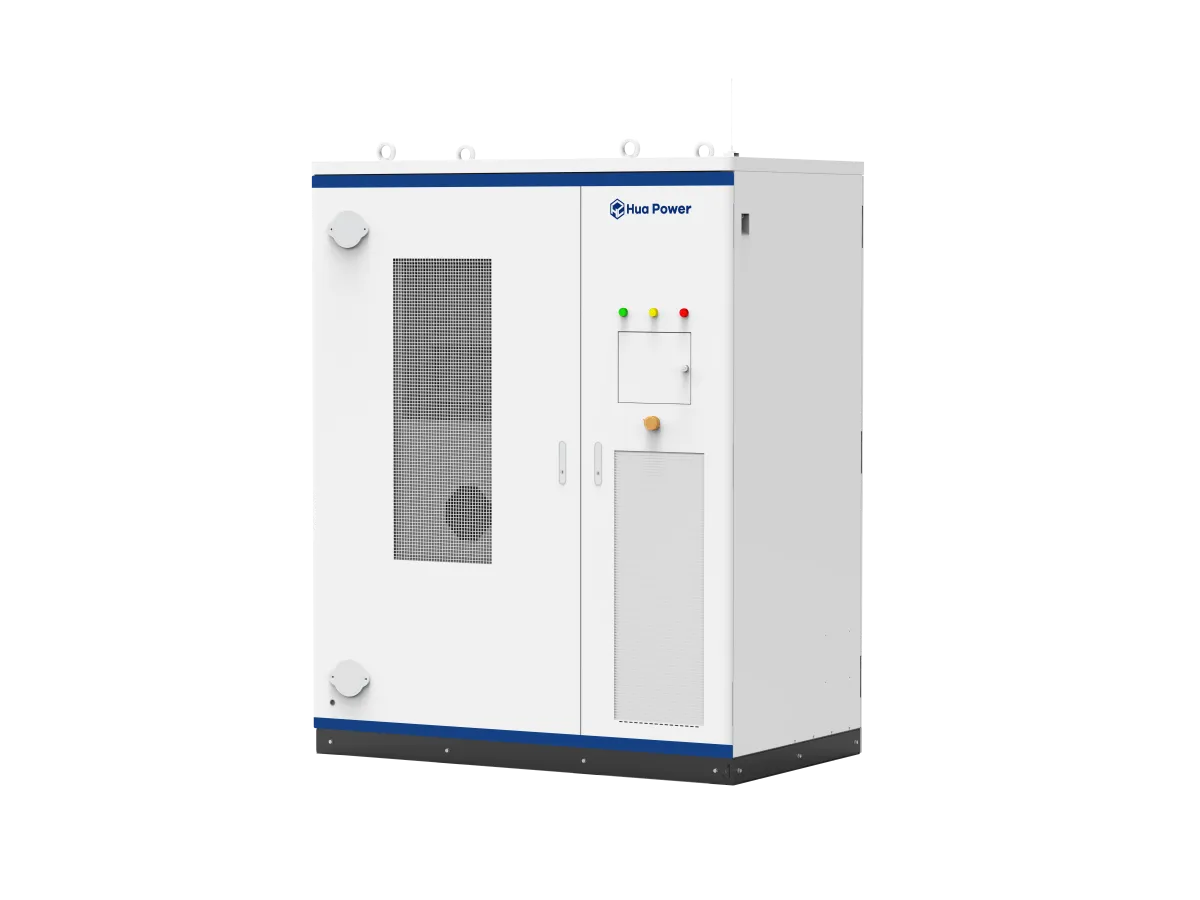
An all-in-one C&I cabinet — battery, PCS, and controls in a single enclosure, sized to the power range this guide covers.
Once you know your required power draw, here's how it maps to Hua Power's C&I cabinet lineup:
Model | Rated PCS Power (kW) | Battery capacity (kWh) | Cooling | Typical fit |
|---|---|---|---|---|
HC-UPSAP112 | 50 | 112 | Air | Small commercial site, single building |
HC-UPSAP241 | 125 | 241 | Air | Mid-size C&I load |
HC-UPSAP261L | 125 | 261 | Dense footprint, hard-cycling duty | |
HC-UPSAP522L | 250 | 522 | Liquid | Larger C&I facility or combined-application system |
HC-UPSSP723 – HC-UPSSP1205 | 300–500 | 723–1,205 | Air | Heavy industrial load, multi-string/distributed deployments |
All models run on Hua Power's Visual Energy Management Platform, support both AC- and DC-coupled configurations depending on project design, and — for sites needing string-topology resilience — can be paralleled to scale power without re-engineering a single central unit. For the outdoor vs. indoor enclosure decision that pairs with this choice, see outdoor vs indoor energy storage cabinet.
Notes for EPCs and procurement
- Ask for the certification list by document number, not by claim. "UL certified" isn't specific enough — ask which of UL 1741 SB, IEEE 1547-2018 compliance, and UL 9540/9540A the unit actually holds, and get the listing numbers.
- Request an efficiency curve, not just a peak number. A vendor unwilling to share partial-load efficiency data is a signal worth noting.
- Confirm AC output voltage and phase against your actual utility service before finalizing — this is a simple check that's easy to skip and expensive to discover late.
- If the project might expand, weigh string topology's scalability against central topology's lower upfront cost now, not after the site has grown past what a central unit can handle.
- For international projects, confirm the destination market's actual certification requirement (IEC 62109 plus the relevant regional grid code) rather than assuming a US UL listing transfers.
For the rest of what to confirm before purchase — interconnection process, warranty terms, and total cost of ownership — see the C&I BESS procurement framework, and for how PCS selection fits into the bigger system picture, the C&I energy storage overview puts it in context.
How to get a site-specific recommendation
The frameworks above get you to a coupling architecture, a topology, and a certification checklist. Turning that into an exact PCS model and configuration depends on your load profile, your utility's interconnection requirements, and whether solar is part of the project.
Hua Power has deployed 400+ ESS projects across 30+ countries — including a 500 kW / 1 MWh PV+ESS site in Portugal and a 500 kW / 1.044 MWh on-grid system in Guangzhou — with PCS platforms engineered for both US and international certification paths. Send your load profile and target market and the recommendation will be grounded in what's actually certifiable and available where you're building — talk to our team to start.
Frequently asked questions
What is a PCS in battery storage? PCS stands for power conversion system — the bidirectional component that converts a battery's DC power to AC to discharge it, and AC back to DC to charge it. It's what most people mean when they say "battery inverter," though "PCS" is the more accurate term since it works in both directions, unlike a traditional one-way solar inverter.
How do I size an inverter for a commercial battery? Size it to your required power output (kW), not your battery's energy capacity (kWh) — they answer different questions. A given battery paired with a smaller PCS discharges more slowly over a longer window; the same battery with a larger PCS discharges faster. Confirm the power draw your application actually needs before selecting a kW rating.
Should I choose AC-coupled or DC-coupled for a C&I battery? DC-coupling gives higher round-trip efficiency (~98% vs. ~90–94% for AC-coupling) because it avoids an extra AC/DC conversion stage, making it the stronger choice for new-build PV+storage systems. AC-coupling is usually more practical for retrofitting storage onto an existing site with its own solar inverter already installed, since it doesn't require touching that equipment.
What's the difference between string and central inverter topology? Central topology uses one large PCS for the whole system — simpler and often cheaper upfront, but a single point of failure. String topology splits power across multiple smaller PCS units; if one fails, the rest keep running, and capacity can be added incrementally without re-engineering a central unit. String topology costs more upfront but offers better resilience and scalability.
What certifications does a commercial battery inverter need? For US installations: IEEE 1547-2018 sets the technical interconnection requirements, UL 1741 SB is the test procedure that verifies a PCS meets them, and UL 9540 (often paired with UL 9540A) certifies the energy storage system as a whole, not just the PCS. For international projects, IEC 62109 and the destination market's regional grid code are the relevant equivalents.
Is single-phase or three-phase better for commercial battery systems? At C&I power levels (50 kW and up), three-phase is effectively required — single-phase service can't practically carry that much power, and most commercial utility services are already three-phase. The real decision is confirming which three-phase voltage class (208V, 400V/415V, or 480V) matches your actual utility service.
Does PCS efficiency really make a meaningful difference? A 2–3 percentage-point efficiency gap between PCS options is small on any single cycle, but it compounds. On a 250 kW system cycling daily, that gap can add up to several thousand extra kWh purchased per year to deliver the same output — worth several thousand dollars over the system's service life. It's rarely the deciding factor on its own, but it's a legitimate tiebreaker between comparable quotes.
What's the difference between MPPT and the PCS's own power conversion? MPPT (Maximum Power Point Tracking) is specific to solar: it keeps a PV array operating at its optimal voltage/current point. It only matters if your PV+ESS architecture incorporates MPPT at the DC stage — a grid-only battery system with no PV doesn't need to evaluate MPPT specs at all.