

100, 200 or 500 kWh? How to Choose the Right C&I Battery Energy Storage System
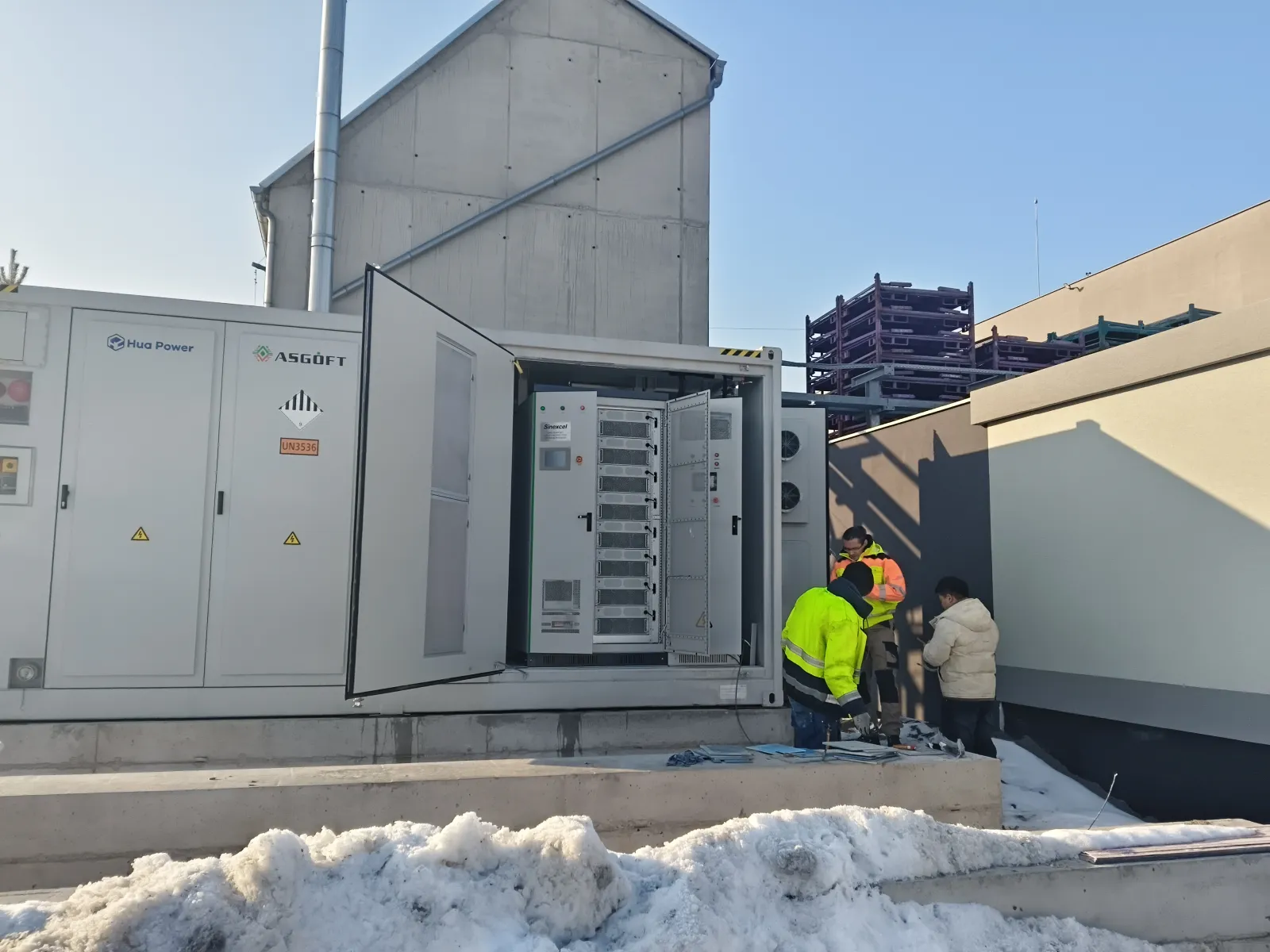
A Hua Power C&I battery storage system on-site — the right capacity starts with your load profile, not a round number.
If you've started pricing commercial battery storage, you've probably noticed that quotes cluster around a few capacities — roughly 100 kWh, 200 kWh, and 500 kWh. They look like three points on the same line, just bigger and more expensive as you go up. They aren't. Each tier maps to a different operating pattern, a different power rating, and in most cases a different thermal management system.
Pick the tier that matches your load and your revenue stack, and a commercial system typically ranges from 5–10 years depending on electricity tariffs, operating strategy, and project economics, and keeps earning for 15–20. Pick by gut — "let's get the big one to be safe," or "the cheap one will do" — and you either over-invest 20–30% in capacity you never cycle, or you cap your own savings the first time demand spikes past what the battery can cover.
This guide gives you the sizing method first, then walks through what 100, 200, and 500 kWh actually buy you, so you can shortlist a tier before you ever ask for a quote.
The short version: Size for the power you need to shave (kW) and the hours you need to hold it (h) — not for a round capacity number. 100 kWh suits a single load or short peak window; 200 kWh covers a full peak block or longer backup; 500 kWh anchors a large site or a microgrid. Cooling (air vs liquid) becomes a key design consideration at the 200 and 500 kWh tiers.
First, the two numbers that actually decide your system
Almost every sizing mistake traces back to confusing energy with power.
- Energy (kWh) is the size of the tank — how much you can store and discharge in total. It decides how long the system runs.
- Power (kW) is the size of the pipe — how fast you can pull energy out. It decides how much load you can cover at any instant.
The ratio between them is the C-rate. A 200 kWh battery rated at 100 kW is a 0.5C system: it empties in two hours at full power. The same 200 kWh at 50 kW (0.25C) takes four hours but only covers half the instantaneous load.
This is why "100 kWh" alone tells you almost nothing. A 100 kWh system at 0.5C delivers 50 kW for two hours; the same energy at 1C delivers 100 kW for one hour. Two facilities with identical kWh can have completely different jobs. So before you compare capacities, you need both numbers.
Application | What it needs more of | Typical C-rate |
|---|---|---|
Demand-charge / peak shaving | Power (kW) in short bursts | 0.5C – 1C |
Self-consumption (store solar, use at night) | Energy (kWh) over hours | 0.25C – 0.5C |
Backup / UPS for critical loads | Power and duration | 0.5C |
Energy arbitrage (buy cheap, sell/use peak) | Energy (kWh), long duration | 0.25C |
Get the application right and the rest of the sizing falls out of it.
A four-step method to size before you shop
You can get to a confident capacity range in about fifteen minutes with your last 12 months of utility bills and an interval-data export (most commercial meters can provide 15-minute load data).
Step 1 — Read your load profile
Find your peak demand (kW) and look at when it happens and how long it lasts. A factory with a sharp 30-minute start-up spike has a very different need from a cold-storage warehouse that runs near-peak all afternoon. Your demand charge — the $/kW your utility bills on your highest 15-minute interval — is usually the single biggest number storage can attack.
Step 2 — Decide the job
Pick the primary application from the table above. Most C&I projects start with peak shaving / demand-charge management because the savings are predictable and don't depend on volatile energy prices. Layer self-consumption or backup on top if they apply. (For a deep dive on the economics, see our commercial peak shaving guide.)
Step 3 — Set power, then duration
- Power (kW) = how much of your peak you want to shave. If you're billed on a 180 kW peak and want to hold it to 120 kW, you need a system that can deliver 60 kW.
- Duration (h) = how long that peak lasts. If your peak window runs ~2 hours, you need 60 kW × 2 h = 120 kWh of usable energy.
Step 4 — Convert usable energy to nameplate capacity
You never use 100% of a battery, so size up from usable to nameplate:
Nameplate kWh = Usable kWh ÷ (Depth of Discharge × Round-trip efficiency × Future-headroom factor)
For a modern LFP system, depth of discharge is ~0.90–0.95 and round-trip efficiency ~0.90. Add ~10–15% headroom for load growth and capacity fade over the warranty period. Working the example:
120 kWh usable ÷ (0.92 × 0.90 × 0.88) ≈ 165 kWh nameplate → you're shopping the 200 kWh tier.
That's the whole point of the method: a "60 kW for 2 hours" requirement doesn't land on a round 100 — it lands on 200. Guessing would have left you 35% short.
If you'd rather not run the arithmetic by hand, the same logic is built into our battery sizing calculator — enter your peak, target, and window and it returns a nameplate range.
What 100, 200, and 500 kWh actually buy you
Here's how the three common tiers map to real facilities. Capacities below reference Hua Power's C&I cabinet line, which runs a single, continuous ladder — 64 → 112 → 241 → 261 → 522 → 723 → 964 → 1205 kWh — all on one BMS and one EMS, so you can step between tiers (or expand later) without changing platforms or retraining your O&M team.
The 100 kWh class — single load, short window
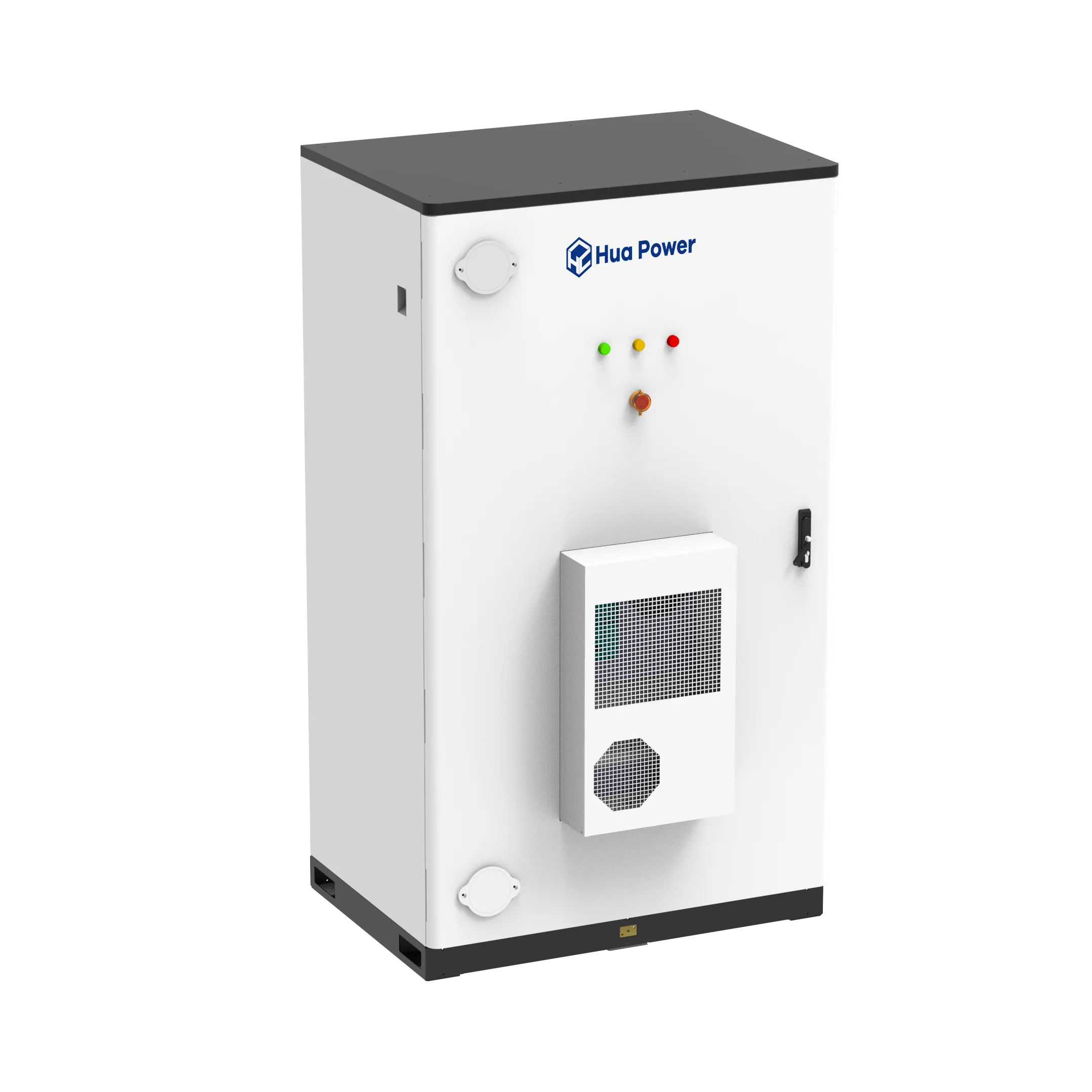
The compact 100 kWh class — sized for a single load or a short peak window.
Who it fits: convenience stores and supermarkets, EV-charging sites smoothing a few fast chargers, small workshops, telecom and edge sites, and any facility whose peak is one identifiable load running for an hour or two.
At this tier you're typically covering 30–50 kW of power. Hua Power's match is the HC-UPSAP112 — a 50 kW / 112.5 kWh air-cooled all-in-one cabinet with built-in PV coupling, IP54-rated for outdoor install, built from seven battery packs per cluster. Tighter on space or installing inside a plant room? The HC-UPSAP112I indoor variant drops to a compact IP21 enclosure so you skip outdoor civil works. Below it, the HC-UPSAP64 (30 kW / 64.4 kWh) covers genuinely small sites.
Watch for: the 100 kWh class is power-limited. If your demand spikes hard and briefly, you may need the power of a 200 kWh cabinet even if you don't need its energy — check Step 3 before defaulting here on price.
The 200 kWh class — the C&I workhorse
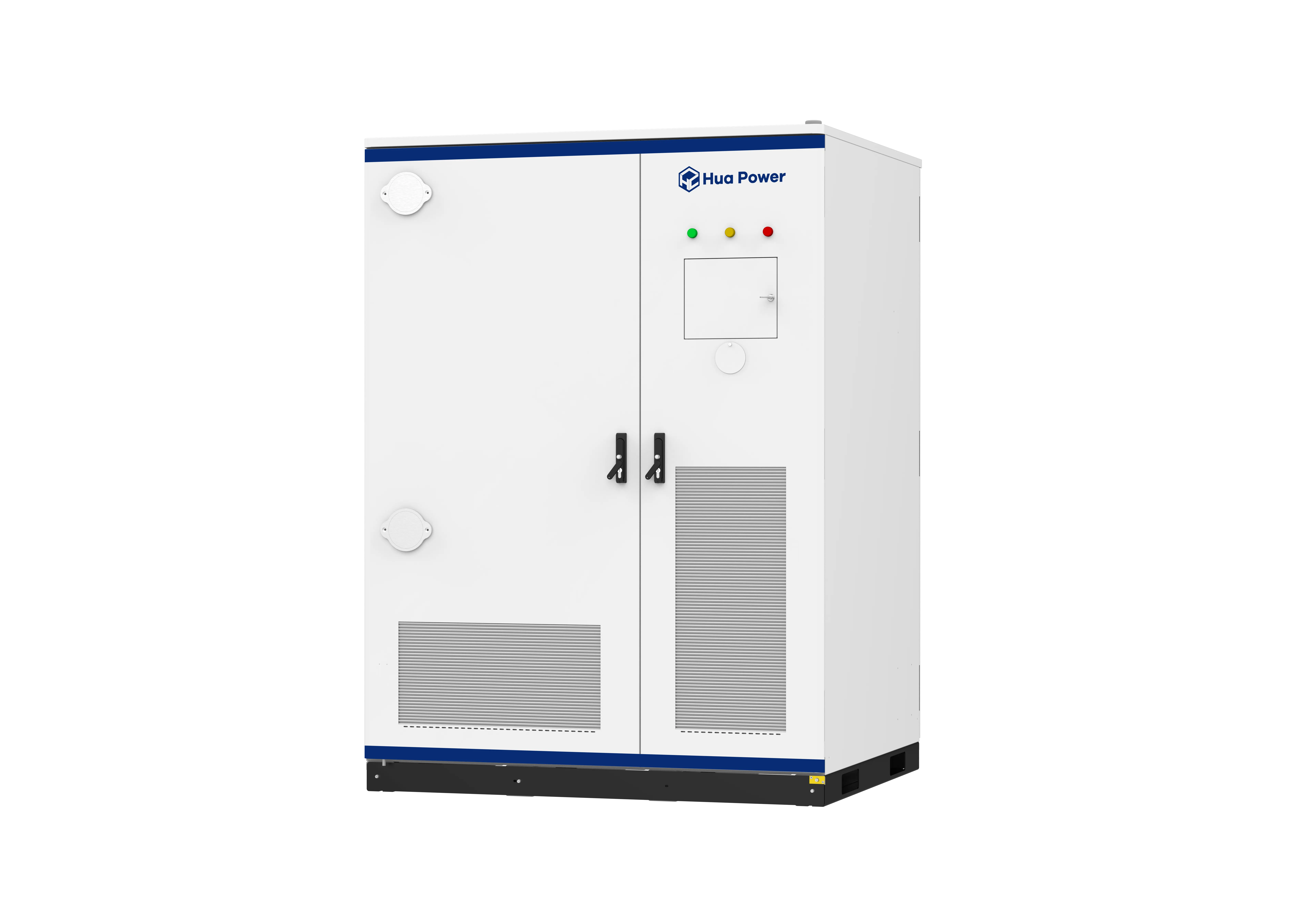
The 200 kWh class is where air-cooled vs liquid-cooled becomes a real decision — shown here, the liquid-cooled HC-UPSAP261L.
Who it fits: mid-size factories, hotels, cold storage, larger retail, and small industrial parks — facilities with a full multi-hour peak block or a real backup requirement for critical loads.
This is the most common C&I size, and it's where you face your first real engineering choice: air-cooled or liquid-cooled.
- HC-UPSAP241 — 105 kW / 241.2 kWh, air-cooled, IP54, 15 packs per cluster. The proven, cost-effective workhorse. There's also an HC-UPSA241 variant for sites that already have solar: it hangs off the AC bus with no DC redesign, so retrofitting an existing PV plant takes about a week instead of a month.
- HC-UPSAP261L — 125 kW / 261 kWh, liquid-cooled (Hua Power's newer generation). Liquid cooling holds cell-to-cell temperature within ±2 °C, which lifts round-trip efficiency by 3–5% and extends cell life 10–15% versus air. Over a 15-year project that's a lower levelized cost of storage (LCOS) — typically 8–12% — and more power in a smaller footprint.
If your system cycles hard every day, or sits in a hot climate, the liquid-cooled HC-UPSAP261L usually wins on lifetime cost even though it costs more up front. If it cycles lightly in a mild climate, the air-cooled HC-UPSAP241 is often the smarter spend. (We break this trade-off down fully in liquid-cooled vs air-cooled BESS.)
The 500 kWh class — large facility or microgrid anchor
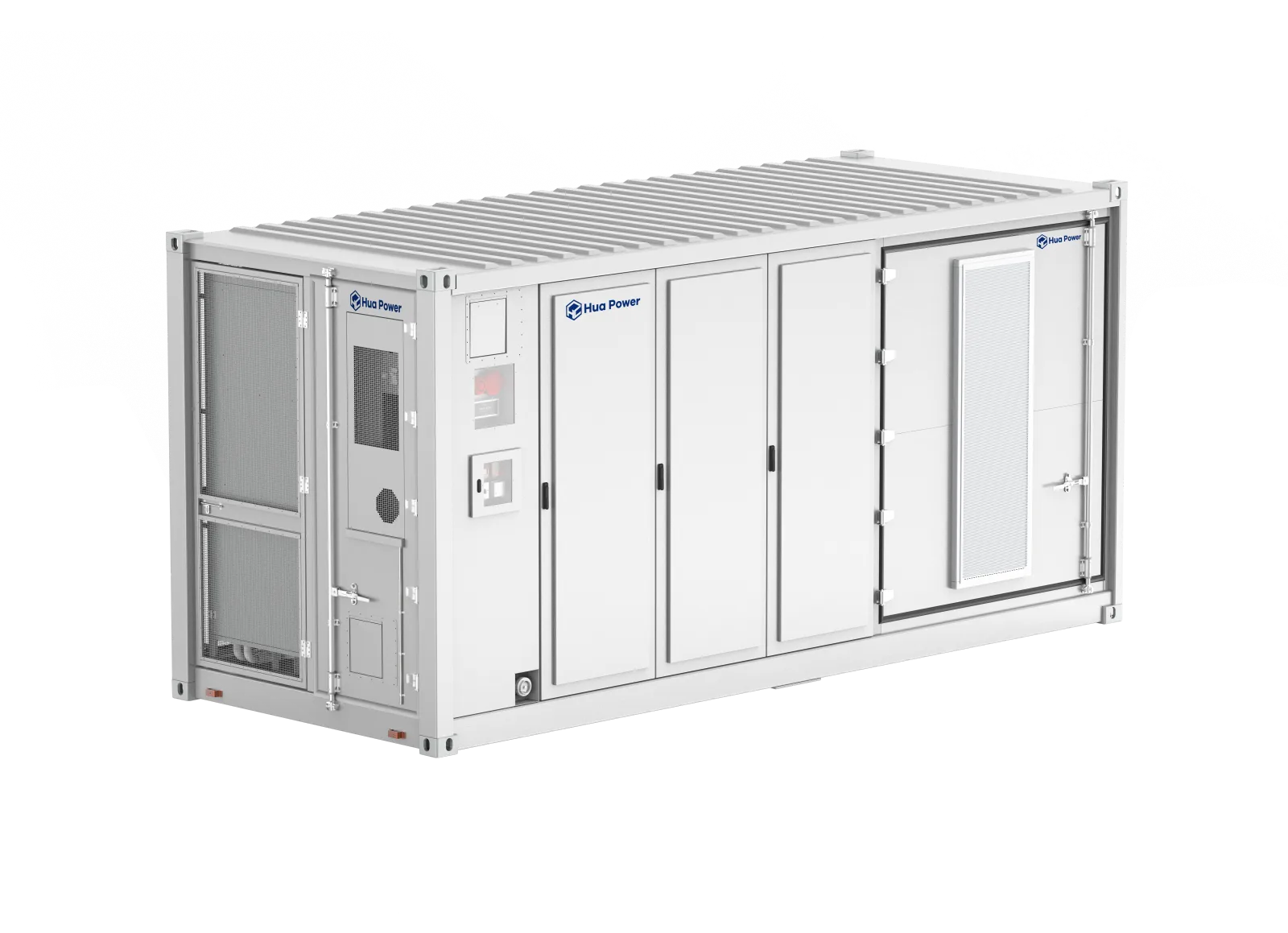
Beyond 500 kWh, the same platform steps up to 20-ft containerized BESS — no vendor or system change.
Who it fits: large factories, logistics and data-adjacent sites, multi-tenant commercial campuses, and the battery at the heart of a commercial microgrid.
The match here is the HC-UPSAP522L — 250 kW / 522 kWh, liquid-cooled, built as two clusters. At this scale liquid cooling is effectively standard: the energy density, the ±2 °C thermal control, and the LCOS advantage all matter more as the asset gets bigger and cycles harder. With a sub-20 ms response time, a system this size can also participate in grid services (fast frequency response, demand response) where your market allows, turning a cost center into a revenue line.
Need more than 500 kWh but not a full container? The ladder continues into standalone cabinets — HC-UPSSP723 (723 kWh), HC-UPSSP964 (964 kWh), HC-UPSSP1205 (1.2 MWh) — before stepping up to 20-ft containerized BESS for utility-scale projects. Same BMS, same EMS, no vendor change.
Side-by-side: the three tiers at a glance
100 kWh class | 200 kWh class | 500 kWh class | |
|---|---|---|---|
Representative model | HC-UPSAP112 | HC-UPSAP241 / HC-UPSAP261L | HC-UPSAP522L |
Power rating | ~50 kW | ~105–125 kW | ~250 kW |
Cooling | Air | Air or liquid | Liquid |
Typical C-rate | 0.5C | 0.5C | ~0.5C |
Best for | Single load, short peak | Full peak block, backup | Large site, microgrid |
Example facilities | Store, EV charging, small shop | Mid factory, hotel, cold storage | Large plant, campus, microgrid |
Footprint | Compact cabinet | Cabinet | Cabinet (2 clusters) |
Grid-service capable | Limited | Yes | Yes (<20 ms response) |
Use this to shortlist, not to finalize — Step 1–4 above is what sets your actual number.
Four things that change the answer (don't size in a vacuum)
1. Expandability. If there's any chance your load grows, size the platform for future expansion, not just today's demand. Because Hua Power's cabinets share one BMS/EMS architecture across the system, you can start at 112 kWh and add capacity later without replacing the entire installation or retraining staff. Start small and scale as your requirements grow.
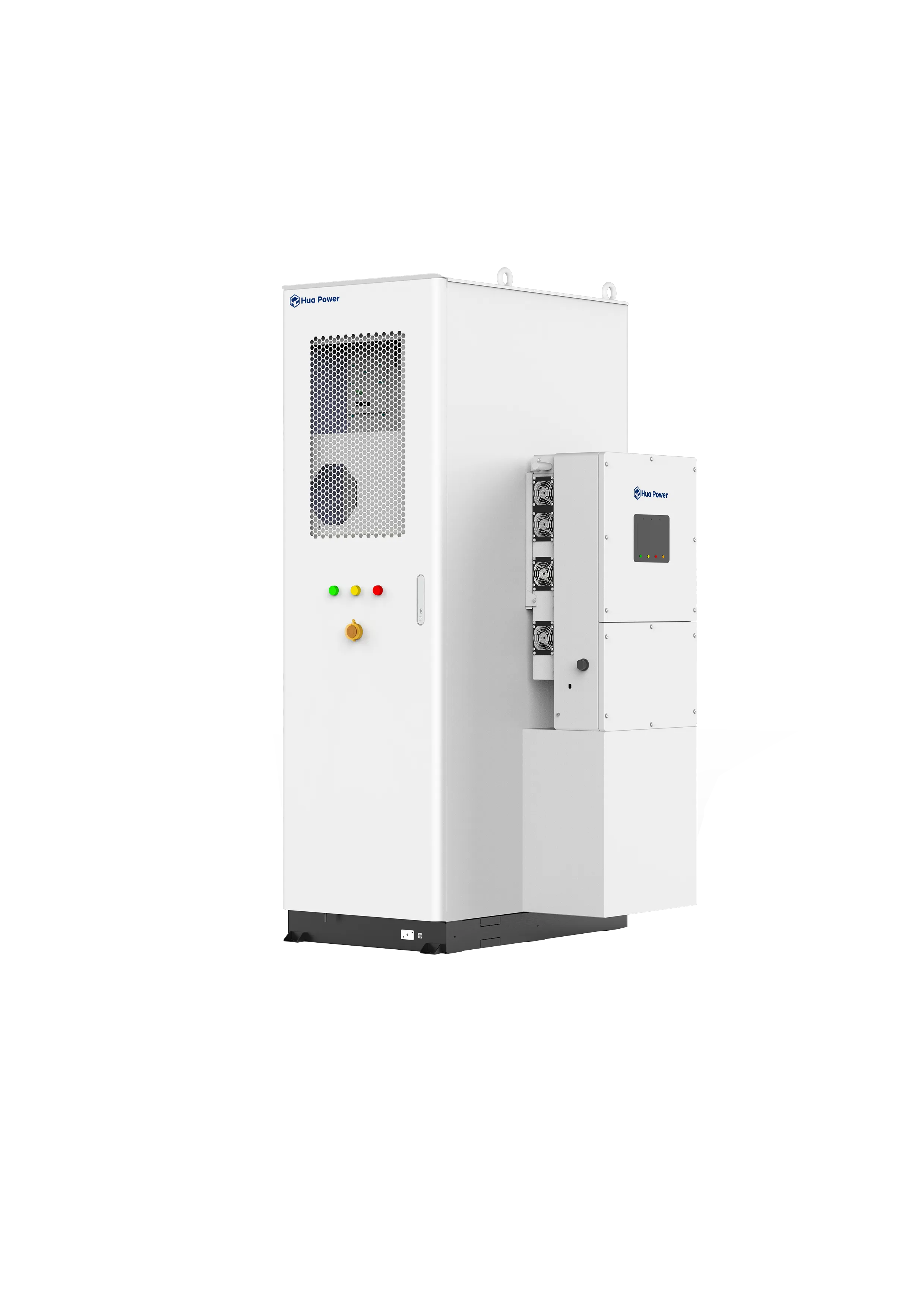
The battery and its power conversion system (PCS) work as a pair — the PCS has to match the battery's kW rating.
2. The inverter / PCS. Your battery's power rating only delivers if the power conversion system matches it. Get the PCS sizing wrong and you bottleneck an otherwise well-sized battery. See commercial battery inverter selection before you finalize. Hua Power systems are compatible with 20+ inverter brands (Deye, Growatt, Solis, Victron, SMA, GoodWe and more), so you're not locked into one supplier.
3. Indoor vs outdoor. IP54 outdoor cabinets handle the weather but need a pad and clearances; IP21 indoor variants are more compact but need a suitable room. This affects both cost and which model you choose — covered in outdoor vs indoor cabinet selection.
4. Certifications for your market. This is non-negotiable and market-specific. European projects need CE, IEC 62619 and related standards; the U.S. requires the full fire-and-electrical stack — UL 9540A, UL 9540, NFPA 855 and NEC 2023 — for an authority-having-jurisdiction (AHJ) to sign off. Hua Power runs CE/UN38.3/IEC 62619 across the line and a dedicated U.S.-certified product family, so the same capacity can be specified into either market without a redesign.
Common sizing mistakes to avoid
- Sizing on energy alone. "We need 200 kWh" with no kW target. Always pin down power first (Step 3).
- Buying the biggest "to be safe." Capacity you never cycle is dead money — it doesn't earn demand-charge savings, it just sits there depreciating. Right-sizing beats oversizing.
- Ignoring depth of discharge and fade. Sizing to usable and forgetting headroom leaves you short by year five (Step 4).
- Forgetting the PCS. A perfectly sized battery behind an undersized inverter delivers undersized power.
- Defaulting to air cooling on a hard-cycling site. If the system runs deep cycles daily or sits in heat, air cooling's lower upfront price can cost more over the life of the asset.
How to get an exact number for your site
The four-step method gets you to the right tier — 100, 200, or 500 kWh. Turning that into a precise nameplate, C-rate, and cooling choice means modeling your actual interval data against your utility tariff and your target applications.
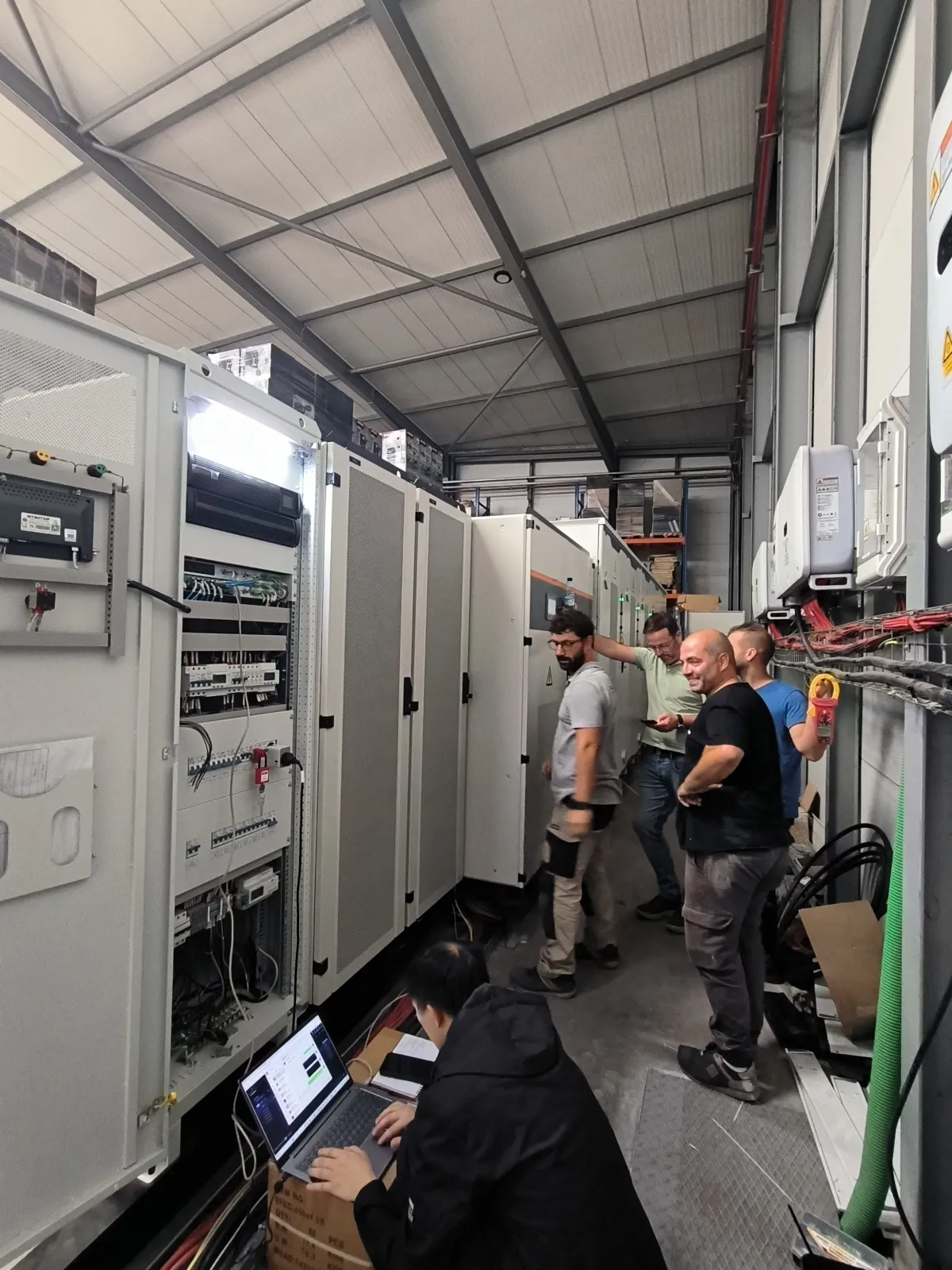
Sizing is modeled against your real load and tariff during commissioning — not guessed from a round capacity number.
That's where Hua Power's EMS Visual Platform comes in: feed in your load profile and it sizes the system against real revenue streams — demand-charge savings, self-consumption, and (where your market allows) grid services — before anything is ordered. As an energy-storage and microgrid integrator with 400+ projects across 30+ countries on a single modular platform, the goal is the same whether you land on 112 kWh or 1.2 MWh: a system matched to your load, not to a round number on a spec sheet.
Next step: export your last 12 months of interval data, run Steps 1–4 to fix your tier, then talk to our team to model the exact configuration — or start with the C&I energy storage overview if you're still scoping the project. When you're closer to a decision, our C&I BESS procurement framework walks through everything to lock down before you buy.
Frequently asked questions
What size battery storage do I need for a commercial building? Start with your peak demand (kW) from your utility bill and how long the peak lasts (hours). Multiply power-to-shave × duration to get usable energy, then divide by ~0.73 (depth of discharge × efficiency × headroom) to get nameplate kWh. Most commercial buildings land in the 100–500 kWh range; a mid-size facility shaving ~60 kW for two hours needs roughly 200 kWh.
Is a 100 kWh battery storage system enough for my business? For a single load or a short (one- to two-hour) peak — a convenience store, small workshop, or a couple of EV chargers — yes. If your demand spikes hard or your peak window runs longer, you likely need the power of a 200 kWh system even if you don't need all its energy. Run the four-step sizing check before defaulting to 100 kWh on price.
What's the difference between 100, 200, and 500 kWh systems besides size? Power rating and cooling. A 100 kWh class system delivers ~50 kW and is air-cooled; the 200 kWh class delivers ~105–125 kW and can be air- or liquid-cooled; the 500 kWh class delivers ~250 kW and is liquid-cooled with grid-service capability. They map to single-load, full-peak-block, and large-site/microgrid duties respectively.
Should I choose air-cooled or liquid-cooled at 200 kWh? If the system cycles hard daily or sits in a hot climate, liquid cooling (e.g. HC-UPSAP261L) usually wins on lifetime cost — it holds cells within ±2 °C, adds 3–5% efficiency and 10–15% cell life, and lowers LCOS 8–12%. For light cycling in a mild climate, air cooling (HC-UPSAP241) is often the better spend. See our dedicated liquid-vs-air comparison.
Can I start small and expand later? Yes — provided you choose a platform with a continuous capacity ladder on one BMS/EMS. Hua Power's cabinets span 64 kWh to 1.2 MWh on a single system, so you can start at, say, 112 kWh and add capacity as your load grows without replacing the system or retraining your team.
How long does a commercial battery storage system last? Quality LFP C&I systems are designed for 15–20 years, rated at 8,000+ cycles to 80% state of health (about one cycle per day for 20 years), giving a levelized cost of storage around $0.08–0.10/kWh. LFP chemistry is also far more thermally stable than NMC, which matters for fire-safety sign-off.