

Liquid-Cooled vs Air-Cooled BESS
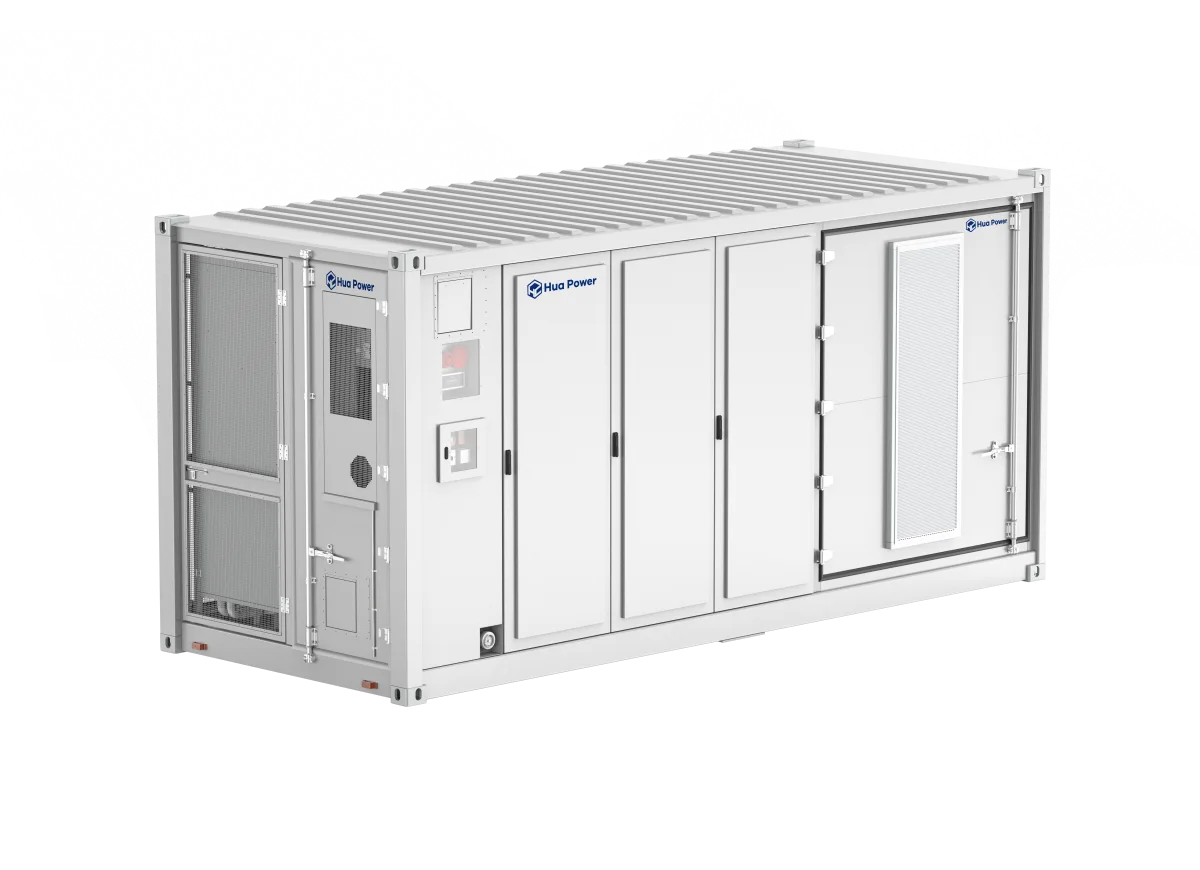
Cooling is a critical design factor that directly affects system performance, lifespan, and total cost of ownership — it sets your usable energy, your footprint, and how long the batteries last.
When you spec a battery energy storage system (BESS), the headline numbers — kW, kWh, price — get all the attention. The decision that quietly shapes all three is the one buyers skim past: how the system keeps its cells cool.
Lithium cells have a narrow happy place, roughly 20–35 °C. Run them hotter, or let some cells run hotter than others, and they age faster, deliver less, and edge closer to thermal trouble. The cooling system is what holds that line — and you have two mainstream choices: forced-air (air cooling) or liquid cooling. Pick the wrong one and you either overpay for thermal hardware you don't need, or you under-cool a hard-cycling system and watch its capacity and revenue bleed away years early.
This guide compares the two on the dimensions that actually decide the call — energy density, parasitic load, cycle life, fire safety, maintenance, climate, and total cost — and ends with a decision framework you can apply to your own project.
The short version: Air cooling uses fans and an HVAC unit to push conditioned air across the modules — simpler, cheaper upfront, and perfectly adequate for smaller, lower-duty C&I systems in mild climates. Liquid cooling circulates a water-glycol coolant mixture through cold plates against the modules — it holds cells at a tighter, more uniform temperature, so it packs far more energy into the same footprint, wastes less energy on cooling, and lasts longer under hard cycling. Choose liquid for high-density, high-throughput, hot-climate, or utility-scale projects; choose air when the system is small, the duty is light, and upfront cost rules.
At a glance | Air-cooled BESS | Liquid-cooled BESS |
|---|---|---|
How it cools | Fans + HVAC push air across modules | Pumped water-glycol through cold plates |
Cell temperature spread (ΔT) | Wider — gradients across the rack | Tight, uniform (industry: ≤~3 °C) |
Energy density | Lower — e.g. 1,205 kWh per 20-foot container | Higher — 2,089 kWh in the same 20-foot container |
Cooling energy (parasitic load) | Higher (big HVAC draw) | Lower (pumped loop) |
Cycle life under hard duty | Good; degrades faster if cells run hot | Longer — more uniform temps slow aging |
Upfront cost (CAPEX) | Lower | Higher (~10–20% typical) |
Maintenance | Simpler (filter changes) | Coolant service, leak checks |
Noise | Louder (fans) | Quieter |
Best fit | ≤ ~1–2 MWh, light duty, mild climate | High density, high C-rate, hot climate, utility scale |
Density figures are from Hua Power's own catalog (air-cooled HC-UPSAP1205 vs liquid-cooled HC-UPSA2089L, both 20-foot container). ΔT, parasitic, and CAPEX ranges are typical industry figures — your project numbers will vary.
Why thermal management decides BESS performance
Every dimension below traces back to one fact of physics: how fast you can carry heat away from a cell, and how evenly.
A battery loses a fraction of the energy it moves as heat, and that heat scales with how hard you cycle it (its C-rate). The cooling system's job is to remove that heat fast enough to keep every cell inside the safe window — and, just as importantly, to keep all the cells at the same temperature. A pack is only as healthy as its hottest module: if one corner of the rack runs 8–10 °C hotter than the rest, that module ages faster, its capacity drifts away from its neighbors, and the whole string is dragged down to match it.
The two cooling methods carry heat very differently:
- Air cooling blows conditioned air over the modules with fans, usually backed by an HVAC system inside the enclosure. Air is free and simple, but it's a poor heat carrier — its specific heat is roughly a quarter that of water by mass, and far less by volume — so it needs a lot of moving air, and it struggles to cool the cells in the middle of a dense rack as well as the ones near the vents.
- Liquid cooling pumps a coolant through cold plates that sit in direct thermal contact with the modules. Liquid has a much higher heat transfer capacity than air, enabling more effective thermal management, right at the source, so it holds cells in a tight, uniform band even when the system is packed densely and cycling hard.
That single difference — "blow air past the cells" vs "pull heat out of the cells with liquid" — is the whole comparison in miniature. Everything below is a consequence of it.
How air cooling works (and where it's the right call)
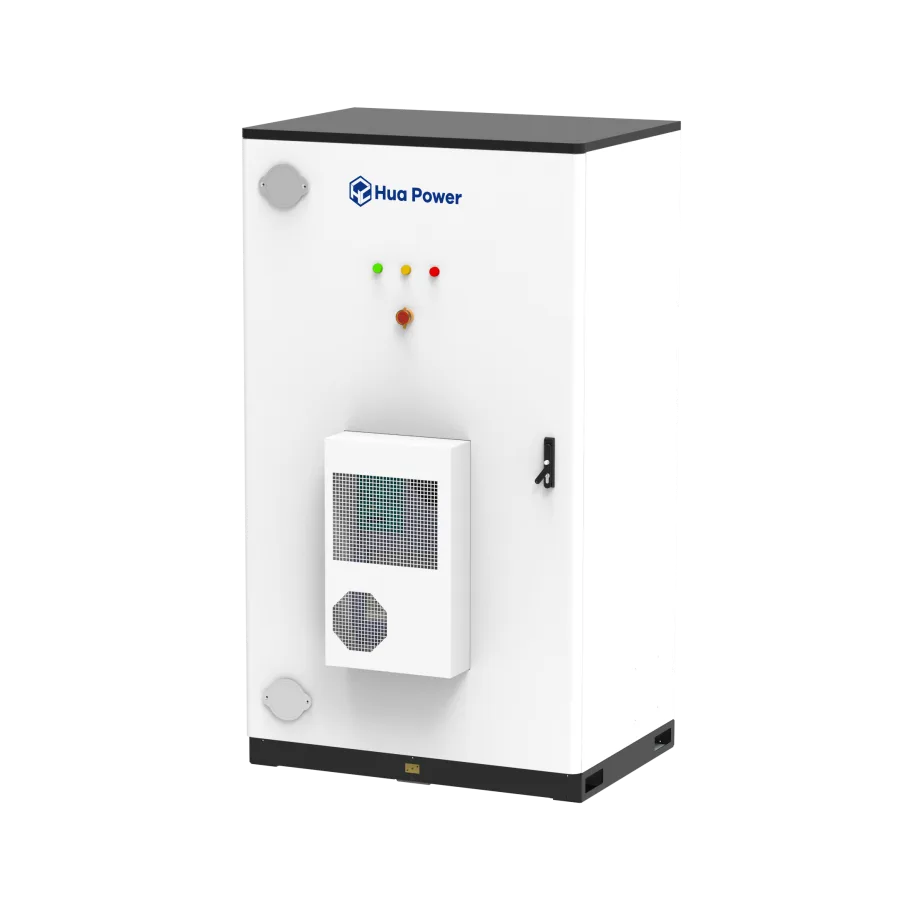
An air-cooled cabinet: an HVAC unit and fans condition and circulate air through the modules.
An air-cooled system is built around fans and an air-conditioning unit. The HVAC unit chills the air inside the enclosure; fans push it across the battery modules and back. It's the established, proven approach — what most of the industry shipped first — and for the right job it's exactly right.
Air cooling wins when:
- The system is small or moderate. For a 64–112 kWh cabinet or a sub-megawatt install, the heat load is low enough that air handles it comfortably. Hua Power's air-cooled C&I cabinets — the HC-UPSAP112 (50 kW / 112.5 kWh) and HC-UPSAP241 (105 kW / 241 kWh) — are built for exactly this, with a modest 2–3 kW conditioning unit doing the work.
- The duty cycle is light. A system that cycles slowly (low C-rate) — backup power, light Peak shaving (demand charge management) — generates less heat, so air is plenty.
- Upfront cost rules. Air cooling is cheaper to build and buy. If CAPEX is the binding constraint and the duty is gentle, it's the economical choice.
- Maintenance must stay dead simple. There's no coolant, no pump, no glycol to replace — just air filters to swap. For sites with minimal O&M capacity, that simplicity is worth a lot.
- The climate is mild. In a temperate location, air cooling never has to fight a 40 °C ambient, so its weaknesses barely show.
The costs you take on: wider temperature spread across the rack, a bigger cooling-energy bill (more on that below), audible fan noise, lower energy density, and a real high-temperature penalty in hot climates. For a small, gently-cycled system, none of that may matter. For a dense, hard-working one, all of it does.
How liquid cooling works (and where it pulls ahead)
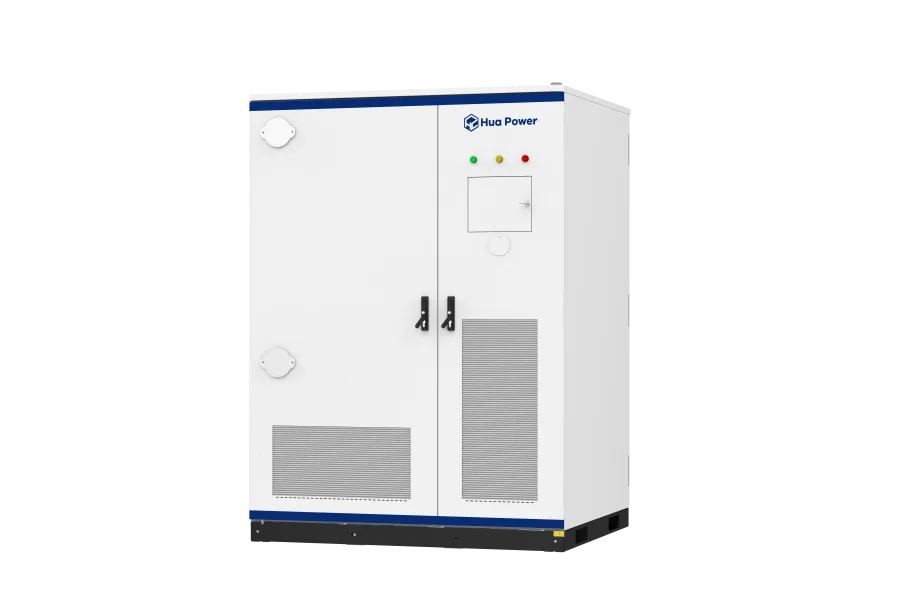
A liquid-cooled cabinet: cold plates and a pumped coolant loop pull heat straight out of the modules.
A liquid-cooled BESS replaces most of that moving air with a sealed coolant loop. A pump circulates water-glycol through cold plates pressed against the modules; a heat exchanger dumps the collected heat outside. Because the coolant touches the heat at the source and carries far more of it per pass, the system holds every cell in a tight temperature band — and that uniformity is where the advantages compound.
Liquid cooling wins when:
- You need energy density. This is the clearest, most measurable win, and Hua Power's own catalog shows it bluntly: in the same 20-foot container footprint, the air-cooled HC-UPSAP1205 holds 1,205 kWh, while the liquid-cooled HC-UPSA2089L holds 2,089 kWh — about 1.7× the energy on the same pad. When land or floor space is scarce, that ratio is decisive. (For sizing capacity against your site, see 100, 200 or 500 kWh capacity selection.)
- The system cycles hard. High C-rate duty — aggressive peak shaving, Grid frequency regulation, fast solar shifting — generates heat that air struggles to clear. Liquid keeps cells in-spec at duty cycles that would force an air-cooled system to derate.
- The climate is hot. Air cooling's cost balloons exactly when ambient temperatures climb; liquid cooling holds its efficiency. In desert, coastal, or tropical sites, that's the difference between full and reduced deliverable energy.
- You want maximum cycle life. Uniform cell temperatures slow degradation. Industry data puts the gain on the order of 20–30% more cycles for liquid over air under demanding duty — which, as we'll see, is where the total-cost argument turns.
The costs you take on: higher upfront price (typically 10–20%), a coolant loop that needs servicing and leak monitoring, and a more involved O&M profile. The question is whether the density, efficiency, and lifespan gains pay that back over the project — and for high-duty-cycle systems, they usually do.
The numbers that actually decide it
Marketing language ("efficient," "advanced") doesn't help you choose. Four measurable things do.
1. Parasitic load — the energy your cooling eats
Every watt spent on cooling is a watt you can't sell or use. This "parasitic" or auxiliary load is the single most decision-relevant number, and it's where air cooling quietly loses ground.
Compare like with like — Hua Power's two container-class products in the same 20-foot box: the air-cooled HC-UPSAP1205 is specified with a 25 kW HVAC unit; the liquid-cooled HC-UPSA2089L uses a pumped coolant loop instead. (At cabinet scale the air-cooled HC-UPSAP112/HC-UPSAP241 units carry a much smaller 2–3 kW conditioning unit, because they hold far less energy — but the ratio of cooling power to capacity tells the same story.) Across a year of operation, an air-cooled system typically spends on the order of 3–5% of throughput on cooling — and in a 40 °C ambient that can climb toward 8–12%, because the harder it is to reject heat to hot outside air, the harder the HVAC has to run. A liquid loop typically sits around 1–2% and barely moves with ambient temperature. (These percentages are typical industry figures, not Hua Power measurements; the 25 kW vs 2–3 kW HVAC ratings are from the catalog.)
That parasitic gap also shows up as delivered efficiency: both Hua Power lines carry a nameplate round-trip efficiency (RTE) of ≥85%, but the system that burns less energy on cooling delivers more of what it stored to the meter — so liquid's effective RTE runs higher in service, and the gap widens with ambient heat. For a system that cycles daily for a decade, that's thousands of MWh that either reach the meter (liquid) or get burned keeping the box cool (air).
2. Temperature uniformity → cycle life
Heat is the dominant driver of battery aging (it follows an Arrhenius relationship — aging accelerates with temperature), and uneven heat is worse than uniform heat: the hottest module ages fastest, its capacity drifts from its neighbors, and the whole string is dragged down to match. Air cooling typically leaves a temperature uniformity across the rack; liquid cooling holds cells within a few degrees of each other.
A fair point to make plainly: at standard rated test conditions, both of Hua Power's architectures reach ≥8,000 cycles at 80% state-of-health — the air-cooled cabinets and the liquid-cooled HC-UPSAP261L/HC-UPSAP522L. Liquid cooling's life advantage doesn't show up as a bigger lab number; it shows up in the field, by sustaining that rated life under hard, hot, high-C-rate duty where an air-cooled system would run cells hotter and age faster. Industry data puts that real-world gain on the order of 20–30% more delivered cycles under demanding duty — your mileage depends entirely on how hard and how hot you run the system.
Longer cycle life isn't just a warranty number — it pushes back the day you have to augment (add or replace capacity to offset degradation). Augmentation is one of the largest and most-ignored line items in a storage project's lifetime cost.
3. Energy density → footprint and land cost
We've already seen the headline: 2,089 kWh vs 1,205 kWh in the same 20-foot container. At cabinet scale the same logic holds — the liquid-cooled HC-UPSAP522L delivers 522 kWh (250 kW) from a single 2.5 m-wide enclosure. If your site is space-constrained — an urban C&I rooftop-adjacent pad, a data center yard, a crowded substation — density converts directly into either more capacity on the same land or a smaller, cheaper site. (Enclosure type — outdoor vs indoor — is a separate, upstream decision; settle that first in outdoor vs indoor energy storage cabinet.)
4. CAPEX vs TCO — a worked example
Air cooling wins on the sticker price; liquid often wins on the total cost of ownership (TCO) — the upfront price plus everything you spend keeping the system delivering over its life.
Here's a transparent, illustrative way to see it for a 500 kW / ~1 MWh C&I system doing daily peak shaving (numbers rounded for clarity — run your own with real tariffs):
Over 10 years | Air-cooled | Liquid-cooled |
|---|---|---|
Upfront system cost | Baseline | +~15% |
Cooling energy lost (parasitic) | ~4% of throughput | ~1.5% of throughput |
→ energy burned on cooling | Higher every year | Lower, and flat vs heat |
Capacity augmentation | Sooner (faster aging) | Later (longer life) |
Footprint / land | Larger | Smaller |
Put one number on it. Take that 500 kW / 1 MWh system cycling once a day, ~350 cycles a year — about 350 MWh of throughput annually. If air cooling burns ~4% of that on cooling and liquid burns ~1.5%, the 2.5-point gap is ~8.75 MWh/year lost to the air-cooled HVAC. At a $0.12/kWh commercial tariff that's ~$1,050/year, or ~$10,500 over a 10-year life — from parasitic load alone, before you count deferred augmentation or land. Modest at this scale; but the math scales roughly linearly with size, so the same calculation on a 100 MWh utility system lands in the seven figures over its life — which is why vendors quote "millions saved" for large projects. Plug in your own throughput and tariff and the verdict falls out.
The liquid system costs more on day one. Whether it wins depends on how hard and how often it cycles, how hot the site is, and how expensive your land and electricity are. A lightly-used backup system in a mild climate may never pay back the premium — buy air. A hard-cycling system in a hot, space-tight location recovers it through saved cooling energy, deferred augmentation, and smaller footprint — buy liquid.
This per-delivered-kWh lens has a name buyers use: LCOS (levelized cost of storage) — total lifetime cost (CAPEX + O&M + charging + augmentation) divided by total energy delivered over the life, in $/MWh. It's the metric that most often flips the verdict toward liquid, because it captures exactly the parasitic, lifespan, and augmentation effects that a sticker-price comparison misses.
Fire safety and standards
Thermal management and fire safety are linked: the better you control cell temperature, the less likely you are to reach thermal runaway propagation in the first place, and the cooling architecture shapes how a system is built to contain an event if one starts.
The two product families reflect this. Hua Power's air-cooled cabinets use aerosol or clean-agent (FK-5-1-12) suppression; the liquid-cooled HC-UPSAP261L/HC-UPSAP522L add compartment-level fire protection with a water-based suppression system — water being an effective heat sink for cooling a runaway cell and stopping cell-to-cell propagation. (For the engineering trade-offs between sprinkler, water-mist, and gaseous suppression, POWER magazine's overview is a good primer.)
Whatever you choose, the system should carry the right safety certifications for your market. In North America that increasingly means UL 9540A test data and NFPA 855 compliance — and note that the 2026 edition of NFPA 855 tightens large-scale fire-testing requirements, so confirm your supplier's documentation is current. Hua Power's liquid-cooled cabinets are certified to IEC 62619, IEC 63056, IEC 62477 and the IEC 61000-6-2/-4 EMC standards; for full market-by-market requirements see our EU grid-connection compliance guide.
Where immersion cooling fits
You may also see immersion cooling — submerging modules in a non-conductive dielectric fluid — described as the next step beyond liquid cooling. It offers even tighter temperature control and strong fire performance, and it's drawing real interest for data-center-adjacent storage. But it's still early, more expensive, and more complex to service. For the vast majority of C&I and utility projects today, the practical choice is between forced-air and cold-plate liquid cooling — immersion is worth watching, not yet the default.
The honest case for air cooling: maintenance, coolant, and noise
It's worth being straight about where liquid cooling costs you, because for the right project these are real reasons to stay with air:
- A coolant loop is one more system to maintain. Water-glycol needs the right freeze protection for cold climates, periodic replacement, and proper disposal at end of life. There's a pump and seals to inspect. An air-cooled cabinet has none of that — you change filters and you're done. For a site with thin O&M capacity, that simplicity has genuine value.
- Leak risk is liquid cooling's main counterargument. A coolant loop introduces a failure mode air cooling simply doesn't have, which is why well-designed liquid systems include leak detection and containment — but it's an honest mark against liquid that buyers should weigh.
- Noise is closer than you'd think. Air cooling's fans are the audible culprit, but on Hua Power's lineup the gap is small in absolute terms: the C&I cabinets — air and liquid — are both rated ≤75 dB, while the liquid-cooled container comes in a bit quieter at ≤70 dB. So liquid is equal-or-quieter, but for most sites neither is a dealbreaker; check it only where you have a strict boundary-noise limit.
None of this overturns liquid's density, parasitic, and lifespan advantages for hard-working systems — but if your system is small, gently cycled, and in a mild climate, these are exactly the reasons air remains the smart, lower-cost choice.
A simple decision framework
Answer these in order and the choice usually settles itself:
- Is the system small (≤ ~1–2 MWh) and lightly cycled? Yes → air cooling. No → keep going.
- Is the site hot (frequent 35 °C+ ambient) or space-constrained? Yes → liquid. No → keep going.
- Does the system cycle hard — aggressive peak shaving, frequency regulation, fast solar shifting? Yes → liquid. No → keep going.
- Is the project at or heading toward utility scale, or do you need the lowest cost per delivered kWh over its life? Yes → liquid. Mostly focused on the lowest upfront price for a modest, gentle system → air.
If you're still torn, default to air for small, low-duty systems in mild climates where CAPEX is king, and liquid for dense, hard-working, hot-climate, or large-scale projects where lifetime cost and footprint matter more than sticker price.
And remember these aren't either/or for a vendor: Hua Power builds both, from 64 kWh air-cooled cabinets to multi-MWh liquid-cooled containers, so the recommendation can follow your project instead of a single product line.
Matching cooling to the application
A quick map of common C&I and utility use cases to the cooling that usually fits:
- Backup / UPS, light peak shaving: low duty → air is usually enough.
- Daily commercial peak shaving / demand-charge management: moderate-to-high duty → liquid if the system is dense or the climate is hot; air for smaller mild-climate installs.
- Solar self-consumption with aggressive shifting: high throughput → leans liquid.
- Frequency regulation / grid services: high C-rate, continuous → liquid.
- Data-center backup and peak support: density + reliability + often hot equipment yards → liquid.
- Utility-scale storage: density, TCO, and land cost dominate → liquid containers.
How Hua Power implements both
Hua Power is an energy storage system integrator founded in 2015, with 400+ ESS projects deployed and particular depth in European grid-frequency regulation and 24/7 industrial power assurance. That matters here because the company ships both cooling architectures and will spec the one your project actually needs:
- Air-cooled line — from C&I cabinets like the HC-UPSAP112 (50 kW / 112.5 kWh) and HC-UPSAP241 (105 kW / 241 kWh) up to distributed and container-class systems (HC-UPSSP723–HC-UPSSP1205, and the HC-UPSAP1205 1,205 kWh container used in the density comparison above): LFP cells, IP54, ≥8,000 cycles, simple O&M. Built for smaller, lower-duty, cost-sensitive installs and mild climates.
- Liquid-cooled C&I cabinets (new) — HC-UPSAP261L (125 kW / 261 kWh) and HC-UPSAP522L (250 kW / 522 kWh): high-voltage architecture (728–936 V), IP54/C4, ≥8,000 cycles, water-based compartment fire protection, and the density and parasitic-load advantages above. Built for dense, hard-cycling, hot-climate projects.
- Liquid-cooled containers — from the HC-UPSA2089L (2.089 MWh in a 20-foot container) up to the HC-UPSB4180L/HC-UPSB5010L (4.18–5.01 MWh): for utility-scale and large C&I where density and lifetime cost rule. Real deployments include a 6 MW / 10.32 MWh liquid-cooled project in the Czech Republic.
Because the platform spans both, the cooling decision doesn't lock you out of any capacity, voltage, or enclosure option.
How to get a site-specific recommendation
The framework above gets you to air or liquid. Turning that into a final spec — exact model, capacity, enclosure, and fire/compliance package — depends on your duty cycle, climate, available space, and local code.
That's where talking to an integrator helps: Hua Power has deployed 400+ ESS projects across both cooling types, so the recommendation is grounded in what actually survives the duty and passes inspection. Start with the C&I energy storage overview to scope the project, or talk to our team with your load profile, climate, and site constraints for a specific cooling-and-capacity recommendation. When you're ready to buy, the C&I BESS procurement framework lists everything to lock down first.
Frequently asked questions
What is the difference between air cooling and liquid cooling in a BESS? Air cooling uses fans and an HVAC unit to push conditioned air across the battery modules. Liquid cooling pumps a coolant through cold plates in direct contact with the modules. Liquid carries far more heat at the source, so it holds cells at a tighter, more uniform temperature — which translates into higher energy density, lower cooling-energy consumption, and longer life. Air is simpler and cheaper upfront and is well suited to smaller, lower-duty systems.
Is liquid cooling worth it for a BESS? For dense, hard-cycling, hot-climate, or utility-scale systems, usually yes — the higher upfront cost is repaid through lower parasitic load, longer cycle life (deferred augmentation), and a smaller footprint. For small, lightly-cycled systems in mild climates, air cooling is often the better economic choice. The deciding factors are duty cycle, climate, scale, and land/electricity cost.
Does liquid cooling extend battery life? Generally, yes. Temperature is the dominant driver of lithium battery aging, and uneven cell temperatures accelerate it. Because liquid cooling keeps cells within a few degrees of each other, it slows degradation — industry figures put the gain on the order of 20–30% more cycles under demanding duty.
Which is cheaper, air-cooled or liquid-cooled — upfront vs over the project life? Air-cooled is cheaper upfront (typically 10–20% less). Liquid-cooled often wins on total cost of ownership because it wastes less energy on cooling, lasts longer before needing augmentation, and uses less land. Whether the lifetime savings outweigh the higher CAPEX depends on how hard the system cycles and how hot and space-constrained the site is.
How much more energy-dense is a liquid-cooled system? Significantly. In Hua Power's own lineup, the air-cooled HC-UPSAP1205 holds 1,205 kWh in a 20-foot container, while the liquid-cooled HC-UPSA2089L holds 2,089 kWh in the same footprint — about 1.7× the energy on the same pad.
How much parasitic (cooling) energy does each type use? An air-cooled system typically spends about 3–5% of its throughput running cooling, rising toward 8–12% in very hot (≈40 °C) ambient conditions. A liquid-cooled system typically sits around 1–2% and changes little with ambient temperature.
Is liquid cooling safer for thermal runaway? Better temperature control reduces the chance of reaching thermal runaway, and many liquid-cooled systems pair the coolant loop with water-based suppression that can cool a failing cell and limit propagation. Whatever the cooling type, look for system-level fire certification (e.g. UL 9540A test data, NFPA 855 compliance) appropriate to your market.
Does liquid cooling improve RTE? Indirectly, yes. Nameplate RTE can look similar — both of Hua Power's lines are rated ≥85% — but RTE depends on where it's measured (DC battery terminals vs the AC grid connection), and a system that spends less energy on cooling delivers more of what it stored. Because liquid cooling's parasitic load is lower and barely rises with ambient heat, its effective, delivered efficiency runs higher in service, and the gap grows in hot climates.
What is LCOS, and why does it favor liquid cooling? LCOS (levelized cost of storage) is the total lifetime cost of a system — CAPEX plus O&M, charging energy, and mid-life augmentation — divided by the total energy it delivers over its life, expressed in $/MWh. Unlike a sticker-price comparison, it captures parasitic load, cycle life, and augmentation timing — the exact areas where liquid cooling pulls ahead — which is why liquid often wins on LCOS even when it loses on upfront price.
When should I still choose air cooling? When the system is small (≤ ~1–2 MWh), the duty cycle is light, the climate is mild, upfront cost is the binding constraint, and you want the simplest possible maintenance (no coolant, no pump — just filters). For those jobs, air cooling does everything you need at a lower price.