

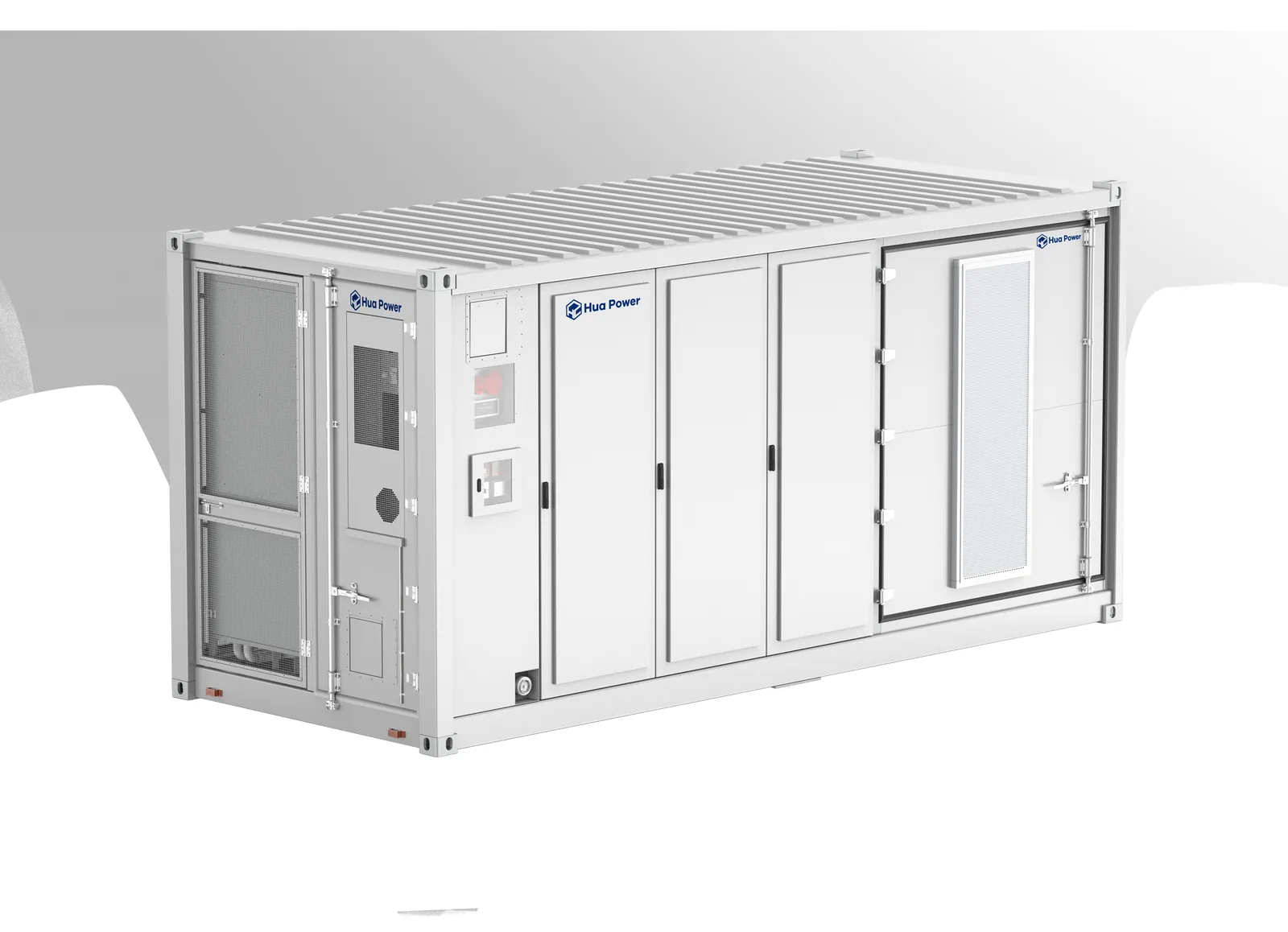
A 20-ft battery container may look identical from the outside, but a 1 MWh, 2 MWh, and 5 MWh BESS are fundamentally different systems in cooling, power architecture, certification scope, and installation cost.
When a project needs storage, the first number everyone argues about is capacity: is this a 1 MWh, a 2 MWh, or a 5 MWh job? It sounds like a simple sizing question — pick the megawatt-hours you need and buy that container. It isn't.
Move from a 1 MWh battery container up to a 5 MWh one and you don't just get more of the same. The cooling changes from air to liquid. The architecture changes from a plug-and-play all-in-one to a DC battery block that needs an external inverter. The certifications change from "CE for Europe" to "UL 9540A and NFPA 855 for a US utility." And the price per kilowatt-hour drops — sometimes enough to change which tier you should have bought in the first place.
This guide puts the three tiers side by side using real, shipping products — Hua power's HC-UPS containers, all built into the same 20-ft ISO box — so you can see exactly what changes as you scale, and match the right tier to your project.
The short version. A 1 MWh container (e.g. HC-UPSAP1205, 1.21 MWh) is an air-cooled, all-in-one unit with the inverter built in — the simplest, fastest way to put behind-the-meter storage on a commercial site. A 2 MWh container (HC-UPSA2089L, 2.09 MWh) packs the same footprint with liquid cooling and a 1 MW built-in PCS — more energy and power per pad for dense C&I or solar-smoothing. A 5 MWh container (HC-UPSB5010L, 5.02 MWh) is a liquid-cooled DC battery block that pairs with an external utility PCS and ships with UL 9540A / NFPA 855 fire compliance — the building block for utility-scale and IPP projects. Choose by use case and market, not by megawatt-hours alone.
The three tiers at a glance
All three units below are the same external size: a 20-ft high-cube ISO container, 6058 × 2438 × 2896 mm. What changes is what's packed inside.
1 MWh tier | 2 MWh tier | 5 MWh tier | |
|---|---|---|---|
Example model | HC-UPSAP1205 | HC-UPSA2089L | HC-UPSB5010L |
Rated capacity | 1,205 kWh (1.21 MWh) | 2,089 kWh (2.09 MWh) | 5,016 kWh (5.02 MWh) |
Cell | LFP 3.2 V / 314 Ah | LFP 3.2 V / 314 Ah | LFP 3.2 V / 314 Ah |
Cooling | Air (HVAC) | Liquid | Liquid |
Power / PCS | 500 kW, built-in (AC all-in-one) | 1 MW, built-in (AC all-in-one) | External PCS (DC battery block) |
Also does solar | Yes — built-in PV MPPT | No (storage only) | No (battery only) |
Weight | ~15 t | ≤30 t | ≤44 t |
Round-trip efficiency | ≥85% | ≥85% | ≥87% |
Cycle life (cell) | ≥8,000 (80% SOH) | ≥8,000 (80% SOH) | ≥8,000 (80% SOH) |
Key certifications | CE, UN 38.3 | CE, UN 38.3 | UL 1973, UL 9540, UL 9540A, UN 38.3, NFPA 855, NEC 2023 |
Best-fit market | C&I, Europe/general export | Dense C&I, small utility | Utility / IPP, North America |
Live product page |
Figures are from Hua power's HC-UPS product specifications. C-rate, efficiency and warranty are standard-condition values; your project numbers will vary with duty cycle and climate.
The rest of this guide walks through the five things that actually change across these tiers — density, cooling, architecture, certification, and cost — and ends with a decision tree.
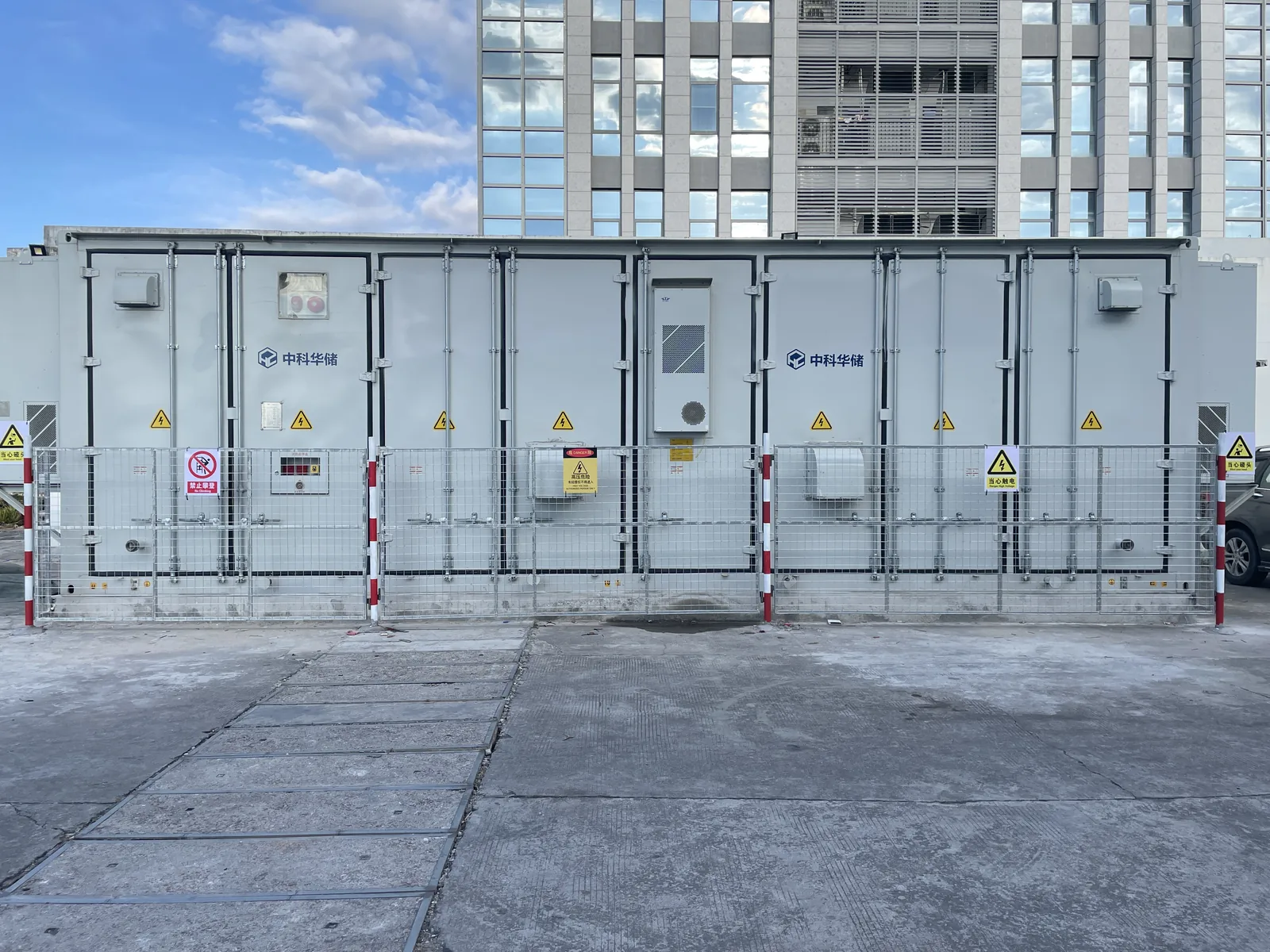
A 1 MWh-class Hua power container in service at a commercial site — HVAC vents and fire-rated access doors visible on the long side.
First, the vocabulary: MW vs MWh, and what "1 MWh container" contains
A battery container is defined by two numbers: energy (MWh), which determines how much electricity it can store, and power (MW), which determines how fast it can charge or discharge. Choosing the right container means matching both values to the application.
Two numbers describe every battery container, and mixing them up is the most common sizing mistake.
- MWh (megawatt-hours) is energy — how much the container can store. A 1 MWh container holds 1,000 kWh, enough to run a 250 kW load for about four hours, or a 500 kW load for about two.
- MW (megawatts) is power — how fast it can charge or discharge. That's set by the PCS (power conversion system), not the cells.
The ratio between them is the C-rate. A 1 MWh battery paired with a 500 kW inverter is a ~0.5C, two-hour system. The same 1 MWh of cells behind a 250 kW inverter is a 0.25C, four-hour system. When you ask for "1 MWh," always say for how many hours — it decides the inverter, the cooling load, and the price.
Whatever the tier, a containerized BESS integrates the same building blocks into one pre-assembled, plug-and-play box:
- LFP cells (lithium iron phosphate) — the industry-standard chemistry for stationary storage, chosen for its thermal stability and long cycle life. Hua power uses 3.2 V / 314 Ah cells across all three tiers, the current-generation cell that replaced the older 280 Ah format.
- BMS (battery management system) — a three-level hierarchy (cell → module → rack) that balances cells and tracks state of charge (SOC) and state of health (SOH).
- PCS — the bidirectional inverter that converts DC battery power to AC grid power. It can be built into the container or sit outside as a separate skid; that single choice defines the two architectures we compare below. (The US DOE has a good primer on inverters and grid services.)
- EMS (energy management system) — the "brain" that schedules charge/discharge against tariffs, solar, or grid signals.
- Thermal management — air (HVAC) or liquid cooling, covered in its own section.
- Fire protection — detection plus a suppression agent (aerosol, FM-200, or FK-5-1-12), covered under certifications.
Every tier has all of these. What differs is how much energy is packed around them, and how the heat and power are handled.
Energy density: same 20-ft box, 1.2 → 2.1 → 5.0 MWh
Here is the fact that reframes the whole decision. All three containers occupy the same 14.8 m² of ground (6.058 m × 2.438 m). Yet the energy inside more than quadruples:
1 MWh tier | 2 MWh tier | 5 MWh tier | |
|---|---|---|---|
Capacity in one 20-ft box | 1.21 MWh | 2.09 MWh | 5.02 MWh |
Energy per m² of footprint | ~82 kWh/m² | ~141 kWh/m² | ~340 kWh/m² |
Containers to reach 5 MWh | ~4 boxes | ~2–3 boxes | 1 box |
Relative land + civil works | Highest | Medium | Lowest |
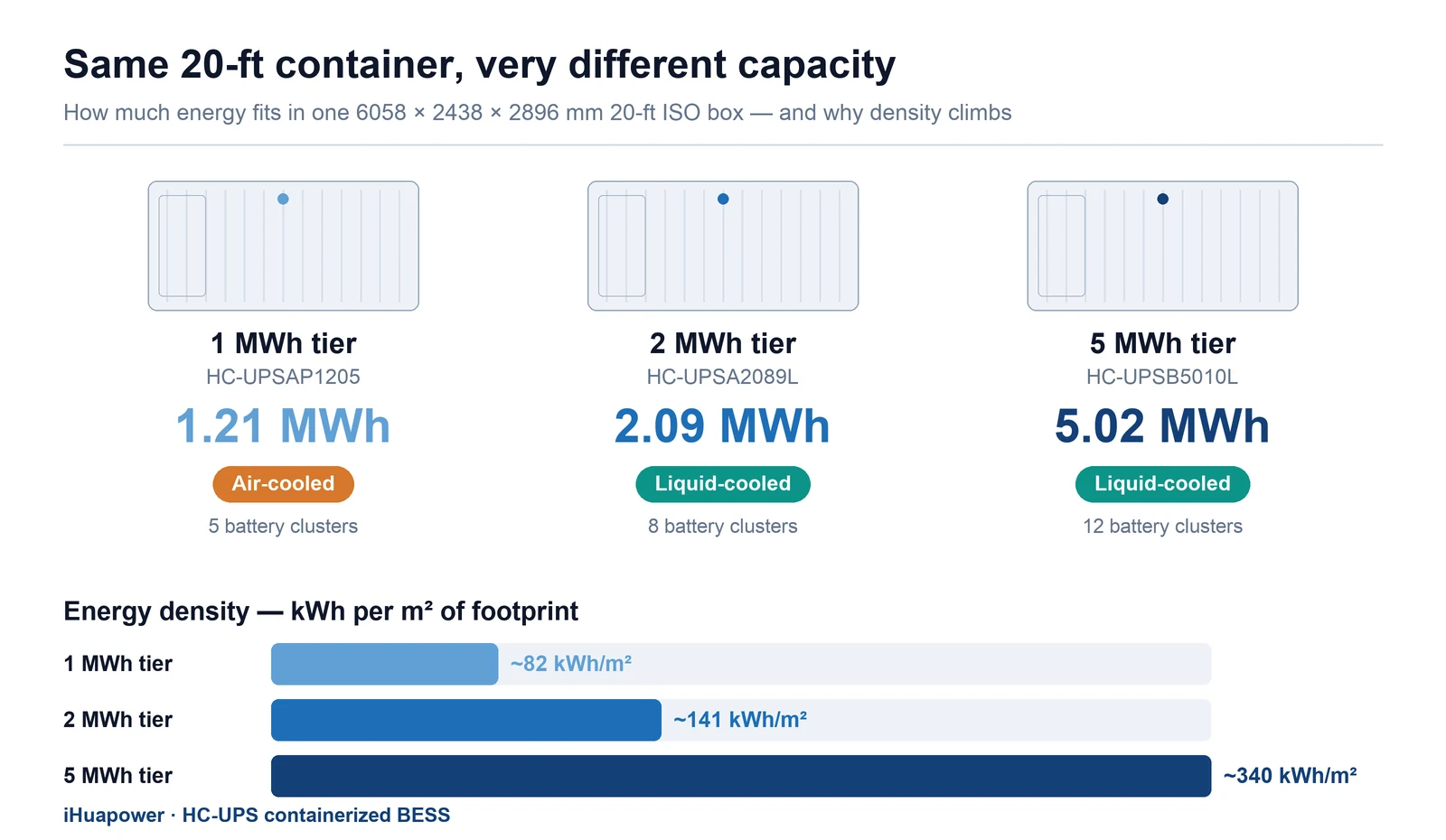
To build 5 MWh out of the 1 MWh tier, you'd stand up roughly four containers — four foundations, four grid connections, four sets of cabling, and four times the fenced land. The 5 MWh tier does it in one. That's why, above roughly 2–3 MWh on a single site, the denser tiers almost always win on total installed cost even though the box itself costs more.
What makes the density climb? Two things: a higher cell count enabled by liquid cooling (which we'll get to), and packing more clusters into the same volume. The 1 MWh air-cooled unit runs 5 battery clusters; the 5 MWh liquid-cooled block runs 12. Air cooling simply can't move heat out of a densely packed rack fast enough — so past a point, density and liquid cooling are the same decision.
Rule of thumb. If land or roof space is tight, or you'll expand later on the same pad, buy density (the 2 or 5 MWh tier). If you have room and want the simplest possible install, the 1 MWh tier is fine.
Cooling: when air is enough, and when you need liquid
Cooling isn't a spec-sheet footnote — it sets how much energy fits in the box, how hard you can cycle it, and how long the cells last. There are two mainstream approaches, and in practice the tier chooses the cooling for you.
- Air cooling (HVAC). Fans and an industrial air conditioner push conditioned air across the modules. It's simpler, cheaper, and easy to service (filter changes). It's perfectly adequate for lower-density, lower-duty systems — which is exactly the 1 MWh tier. Hua power's HC-UPSAP1205 uses a 25 kW cooling / 9 kW heating HVAC unit and holds cells across a −20 to +50 °C ambient range. Its limitation: air is a poor heat carrier, so cells in the middle of a dense rack run hotter than those near the vents, and that temperature spread ages the pack unevenly.
- Liquid cooling. A water-glycol coolant is pumped through cold plates in direct contact with the modules. Liquid carries far more heat per unit volume, right at the source, so it holds every cell in a tight, uniform band — even when the box is packed dense and cycling hard. That's why both the 2 MWh and 5 MWh tiers are liquid-cooled. It's what makes 2.09 MWh and 5.02 MWh fit in a footprint where air cooling tops out near 1.2 MWh.
The practical mapping is clean:
Tier | Typical duty | Cooling | Why |
|---|---|---|---|
1 MWh | ≤~0.5C, mild-to-warm climate, lighter cycling | Air is sufficient | Lower density, HVAC keeps up, lowest cost & maintenance |
2 MWh | ~0.5C, dense C&I, daily cycling | Liquid | Density + tighter ΔT for even aging |
5 MWh | 0.25–0.5C, utility duty, hot climates | Liquid | Only way to cool a 5 MWh pack in a 20-ft box |
If you want the full engineering trade-off — parasitic load, ΔT, cycle-life impact and TCO — see our deep dive on liquid-cooled vs air-cooled BESS. The short version for a sizing decision: at 1 MWh you have a real choice; at 2 MWh and above, liquid is effectively mandatory.
Architecture: all-in-one vs DC battery block (and who owns the PCS)
This is the least-understood difference between the tiers, and it has the biggest impact on how your project gets built — because it decides who is responsible for the inverter and the grid connection.
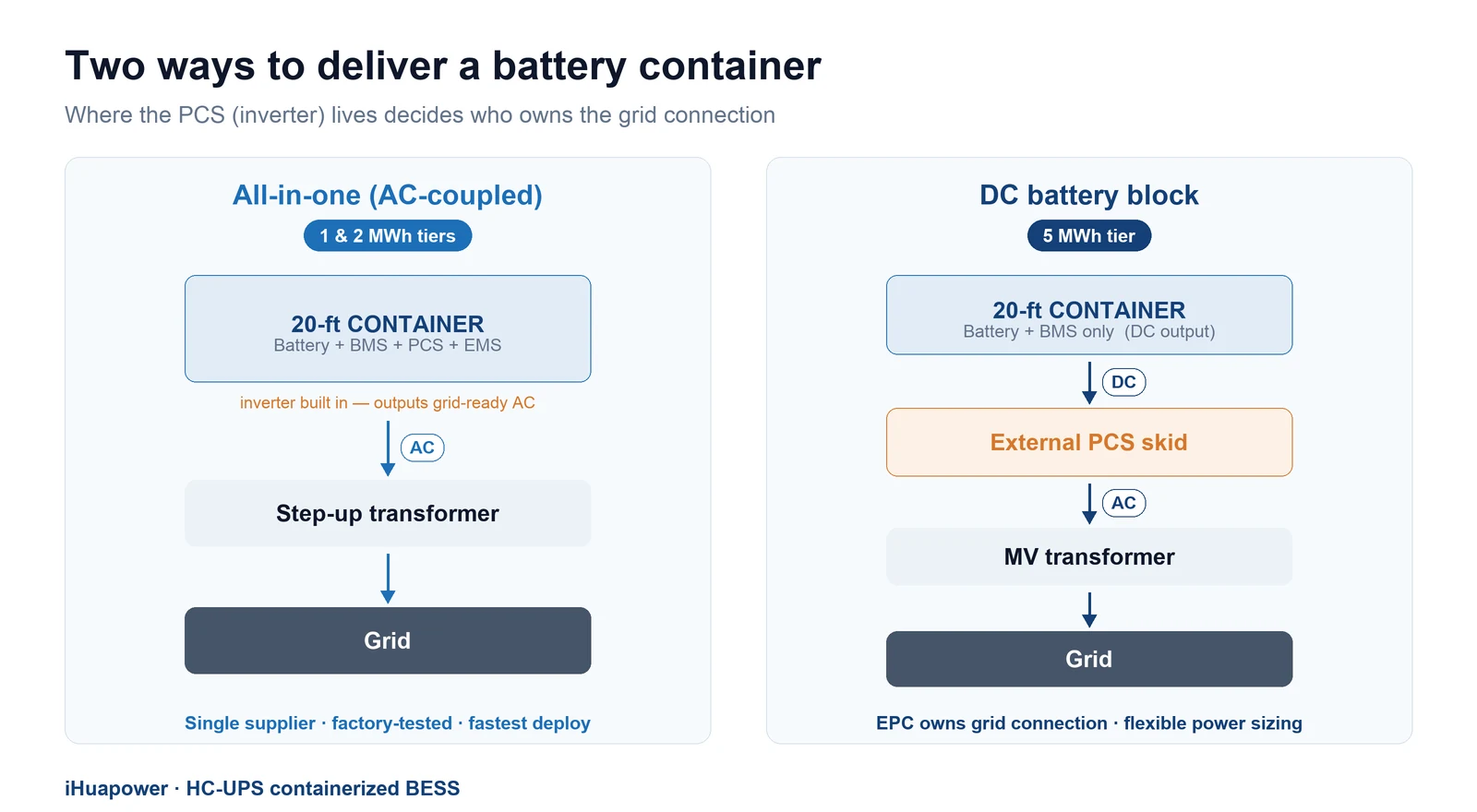
All-in-one (AC-coupled) — the 1 and 2 MWh tiers. The PCS is built inside the container. The box has an AC output that connects (through a transformer) straight to the grid. You buy one thing, it arrives pre-integrated and factory-tested, and it produces grid-ready AC power on day one.
- The 1 MWh HC-UPSAP1205 goes further: it's a PV-plus-storage all-in-one with built-in solar MPPT inputs, so it can charge directly from a solar array as well as the grid — ideal for behind-the-meter commercial solar-plus-storage.
- The 2 MWh HC-UPSA2089L is a storage-focused all-in-one with a 1 MW built-in PCS — same plug-and-play delivery, more power and energy.
- Best for: commercial and industrial (C&I) sites, faster deployment, buyers who want a single supplier accountable for the whole box.
DC battery block — the 5 MWh tier. The HC-UPSB5010L is a battery-only container. It outputs DC and has no built-in inverter; it connects to an external, ground-mounted PCS skid (and usually a medium-voltage transformer) that the project integrator supplies and sizes.
- This is the standard architecture for utility-scale and IPP projects, because it lets the developer choose the PCS independently, size power and energy separately, and centralize inverters across many battery blocks.
- It also means the EPC owns the DC-to-AC boundary: they're responsible for the PCS, the MV interconnection, and the grid-code compliance. The battery vendor is responsible for the DC block.
- Best for: utility, IPP and large front-of-meter projects where an EPC is already integrating a PCS and wants to size power flexibly.
All-in-one (1 & 2 MWh) | DC battery block (5 MWh) | |
|---|---|---|
PCS location | Built into the container | External skid (integrator supplies) |
Output | Grid-ready AC | DC (needs external inverter) |
Power sizing | Fixed (500 kW / 1 MW) | Flexible — size the external PCS to duty |
Who owns grid connection | Largely the box | The EPC / integrator |
Deployment | Fastest, single supplier | More integration, more flexibility |
Typical buyer | C&I owner, small developer | Utility, IPP, large EPC |
For a fuller treatment of the DC-coupled interconnection and grid-code side, see our EU grid-connection compliance guide.
Certifications by market: CE/IEC for Europe, UL 9540A / NFPA 855 for the US
Certification is where a lot of "cheap container" deals fall apart at the border — and it's tightly correlated with tier, because the bigger tiers target the markets with the strictest fire codes. Buy the wrong certification and your container either can't be permitted or can't be insured on site.
There are two broad regimes:
- Europe & general export — CE + IEC. The 1 MWh and 2 MWh all-in-one units ship with CE and UN 38.3 (the transport safety test every lithium battery must pass). Higher-tier IEC marks — IEC 62619 (cell safety), IEC 62933 (system safety), IEC 63056 — apply to systems built for European utility procurement.
- North America — UL + NFPA. A US utility site typically requires the system to be tested to UL 9540 (the energy storage system standard) and UL 9540A (the fire-propagation test that determines required unit spacing), and compliance with NFPA 855, NEC 2023, and NFPA 70E. Hua power's 5 MWh HC-UPSB5010L is certified to UL 1973, UL 9540, UL 9540A, UN 38.3, and is compliant with NFPA 855 and NEC 2023 — which is exactly what unlocks the North American utility market.
Cert / standard | What it covers | 1 MWh | 2 MWh | 5 MWh | Needed for |
|---|---|---|---|---|---|
UN 38.3 | Transport safety | ✓ | ✓ | ✓ | Any shipment |
CE | EU market conformity | ✓ | ✓ | — | Europe / general export |
IEC 62619 / 62933 | Cell & system safety | opt. | opt. | opt. | EU utility procurement |
UL 1973 | Battery for stationary use | — | — | ✓ | North America |
UL 9540 / 9540A | ESS + fire propagation test | — | — | ✓ | US permitting & siting |
NFPA 855 / NEC 2023 | Fire install standard / code | — | — | ✓ | US install & insurance |
Why UL 9540A matters beyond a checkbox: the test measures how a fire propagates between modules and units. Its results feed directly into the spacing, siting, and deflagration requirements in NFPA 855 — meaning it affects how much land you need and whether the local fire marshal signs off. A container without it isn't just missing a sticker; it can't be legally sited on many US projects.
Export note. For overseas B2B delivery, confirm three things before you sign: (1) the destination-market certification above, (2) UN 38.3 / UN 3536 transport classification and documentation, and (3) a factory acceptance test (FAT) before the container ships. A reputable supplier will provide all three as standard.
Cost: what you actually pay, and why bigger is cheaper per kWh
Price is where the tiers separate most — and where the "just buy 1 MWh" instinct often costs money.
The $/kWh benchmark. At the cell-pack level, lithium-ion prices have fallen sharply — BloombergNEF put 2024 pack prices around $115/kWh (BNEF). A full containerized system costs more than the bare packs, because you're also paying for the BMS, PCS, enclosure, thermal management, fire suppression, and integration. As an indicative 2026 range, complete containerized BESS runs roughly $195–235/kWh ex-works and $255–295/kWh installed — but treat these as directional; your real number depends on duty, PCS sizing, certification market, and volume. For a current, project-specific quotation, contact Hua Power with the required capacity, power rating, destination market, and certification requirements.
Why $/kWh falls as the tier grows. The enclosure, controls, fire system, and integration labor are largely fixed per container. Spreading them over 5,016 kWh instead of 1,205 kWh drops the cost per kilowatt-hour. Add fewer foundations, fewer grid connections, and less land per MWh, and the denser tiers pull further ahead on installed cost. That's the core reason utility projects standardize on 5 MWh blocks.
Two lifetime numbers that matter more than sticker price:
- LCOS (levelized cost of storage) — the all-in cost per MWh cycled over the system's life, including efficiency losses and O&M. A tier with higher round-trip efficiency (the 5 MWh block is ≥87% vs ≥85%) quietly returns more of every kWh you put in, lowering LCOS across thousands of cycles.
- Augmentation. Batteries fade; a system sized for 5 MWh on day one may deliver 80% of that after years of cycling. Augmentation — adding capacity later to hold the guaranteed output — is standard practice on utility projects and almost never discussed on spec sheets. The DC-block architecture of the 5 MWh tier makes augmentation far easier (add battery blocks behind the same PCS), which is another reason large projects favor it. Ask any supplier how their warranty ties capacity retention to an augmentation plan before you compare prices.
For a structured way to compare bids beyond the headline number, see our C&I BESS procurement guide.
How to choose: a decision tree
Work through these in order — each answer narrows the tier.
- What's the site and who runs it?
- Commercial/industrial site, behind the meter, single owner → lean 1 or 2 MWh (all-in-one).
- Utility, IPP, or front-of-meter with an EPC integrating a PCS → 5 MWh (DC block).
- How much energy on one pad, and will you expand?
- ≤~1.5 MWh, plenty of space → 1 MWh.
- 2–4 MWh, or tight space, or future expansion → 2 MWh (denser, still plug-and-play).
- ≥5 MWh, or many blocks → 5 MWh (best $/kWh and land use).
- Do you also want to charge from solar directly?
- Yes, behind-the-meter PV → 1 MWh HC-UPSAP1205 (built-in PV MPPT).
- No, storage only → 2 or 5 MWh.
- Which market are you permitting in?
- Europe / general export → CE + IEC (1, 2, or 5 MWh as sized).
- United States utility → you need UL 9540A + NFPA 855 → 5 MWh HC-UPSB5010L.
- How hard will it cycle, and how hot is the site?
- Light duty, mild climate → air-cooled 1 MWh is fine.
- Daily cycling, dense, or hot climate → liquid-cooled 2 or 5 MWh.
Typical outcomes:
- A factory doing peak shaving and demand-charge reduction, with rooftop solar → 1 MWh HC-UPSAP1205. Air-cooled, solar-integrated, plug-and-play. (See our guides to commercial peak shaving and C&I capacity sizing.)
- A dense logistics park or a C&I solar-smoothing site short on land → 2 MWh HC-UPSA2089L. Twice the energy and power per pad, liquid-cooled.
- A utility or IPP building a multi-MWh front-of-meter project in North America → 5 MWh HC-UPSB5010L blocks with a central PCS, sized for augmentation.
Browse the full container range on the energy storage container page, or the broader commercial & industrial storage solutions and utility-scale storage overviews.
FAQ
How many kWh fit in a 20-ft battery container? Today, a 20-ft high-cube ISO container (6058 × 2438 × 2896 mm) holds anywhere from about 1.2 MWh air-cooled to about 5 MWh liquid-cooled, using current 314 Ah LFP cells. The difference is cooling and cell packing, not container size.
How much does a 1 MWh battery container cost in 2026? As a directional figure, a complete containerized BESS runs roughly $195–235/kWh ex-works and $255–295/kWh installed, so a 1 MWh (≈1.2 MWh) unit is on the order of a few hundred thousand US dollars depending on PCS, duty, and certification market. Larger tiers cost less per kWh. Get a project-specific quote rather than relying on a range.
How long can a 1 MWh container power a load? It depends on the load and the inverter, not just the battery. 1 MWh runs a 250 kW load for ~4 hours or a 500 kW load for ~2 hours. Always specify the discharge duration (the C-rate) when you size it.
Should I choose air or liquid cooling? At the 1 MWh tier with light-to-moderate duty in a mild climate, air cooling is sufficient and cheaper. For higher density (2 MWh+), daily hard cycling, or hot climates, liquid cooling holds cells at a tighter temperature and lasts longer — and it's effectively required to reach 2 MWh and 5 MWh in a 20-ft box.
Is a 20-ft or 40-ft container better? With current cells you can now reach ~5 MWh in a single 20-ft liquid-cooled box, so most new projects standardize on 20-ft blocks for easier logistics and siting. 40-ft containers exist but are less common now that 20-ft density has caught up.
What certifications do I need to sell into the US vs Europe? For Europe / general export: CE and UN 38.3, plus IEC 62619/62933 for utility procurement. For a US utility site: UL 1973, UL 9540, UL 9540A, compliance with NFPA 855 and NEC 2023, and UN 38.3 for transport. The 5 MWh HC-UPSB5010L carries the full US set.
What is augmentation, and why does it matter? Augmentation is adding battery capacity to a system after it has been in service, to offset degradation and keep it delivering its guaranteed output. It's standard on utility projects and easiest with DC-block architectures (the 5 MWh tier). Confirm how any warranty ties capacity retention to augmentation before comparing prices.
Specifications in this guide are from Hua power's HC-UPS series product documentation (HC-UPSAP1205, HC-UPSA2089L, HC-UPSB5010L). Pricing ranges are indicative 2026 market figures for directional comparison, not quotes. For a project-specific configuration and certification pathway, talk to our engineering team.
References
- UL 9540
- UL 9540A
- NFPA 855
- IEC 62619
- IEC 62933
- UN 38.3
- BloombergNEF Battery Price Survey 2024
- U.S. Department of Energy – Energy Storage Handbook