

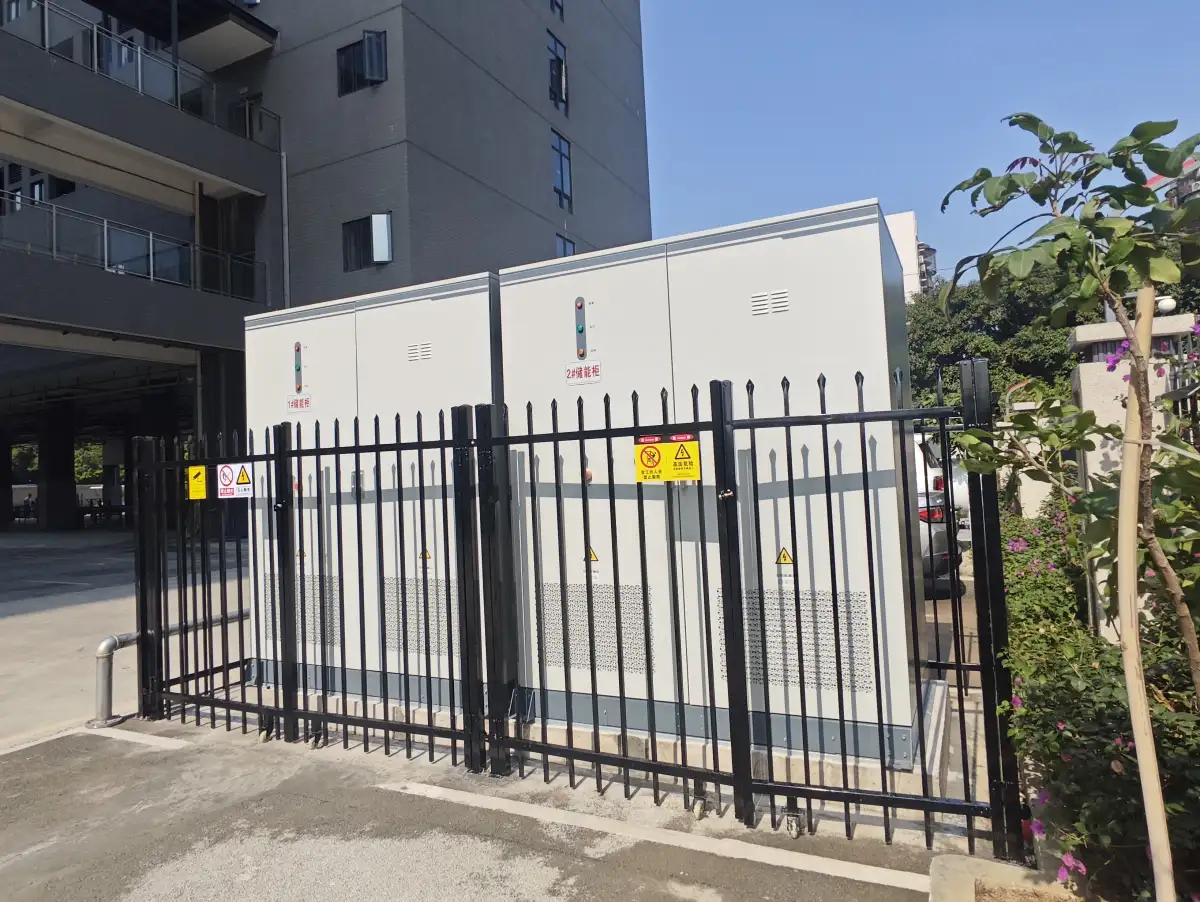
A demand response program doesn't pay you for storing energy — it pays you for answering when the grid calls.
If you've already looked into batteries for your facility, you've probably run into peak shaving — using a battery to flatten your own demand charge. Demand response is a different program entirely, and conflating the two is the single most common mistake we see in C&I storage proposals.
Demand response (DR) pays you to reduce or shift load when your utility, grid operator, or an aggregator asks you to — not on your own schedule, on theirs. The trigger is external: a grid-stress event, a wholesale price spike, a reliability call. The battery discharges (or your load curtails) for that specific window, you get paid for the verified reduction, and the relationship runs on a contract with its own rules, not your own tariff.
This guide is for the people who have to evaluate whether that revenue is real: energy and facility managers, EPCs, and procurement engineers looking at a battery quote that mentions "DR-ready" and want to know what that actually means. It covers what DR is (and isn't), who the players are, what a DR-ready system needs, what programs actually pay, and how to enroll.
The short version: Demand response pays for verified, event-based load reduction on a grid signal — a different revenue stream from peak shaving's monthly, self-directed demand-charge avoidance. The two can stack on the same battery, but they compete for the same discharge window on event days. A DR-ready system needs remote telemetry and a fast, reliable EMS more than it needs raw capacity — and because most C&I sites are too small to enroll directly, an aggregator is usually the actual counterparty, not the utility.
Demand response isn't peak shaving — know the difference first
Both use a battery to cut load at the right moment, which is why the two get blurred together. But they're triggered by different parties, paid on different mechanics, and put different demands on the system design:
Dimension | Demand response | Peak shaving |
|---|---|---|
Who sets the trigger | Utility, Independent System Operator (ISO), Regional Transmission Organization (RTO), or aggregator — an external signal | Your own tariff and your own load data |
What it's paid on | Verified load reduction from a baseline, per event | The demand charge you avoid, every billing cycle |
Frequency | A handful to a few dozen events a year, often seasonal | Every billing cycle — potentially daily |
Commitment | Contractual enrollment, with performance penalties for under-delivering | No external contract; you set and control your own ceiling |
Revenue driver | Capacity/incentive payments from the utility, ISO, or aggregator | A smaller number on your own electricity bill |
System design priority | Remote telemetry the program can verify, and a response-time requirement (SLA) | An EMS that predicts and holds your demand ceiling |
If your goal is cutting your own demand charge, that's peak shaving — a self-directed, monthly mechanic with its own sizing method. DR is what you layer on top: a second, external revenue stream from the same hardware, paid by someone else, on their schedule.
What actually triggers a DR event
Not all DR events are the same, and the distinction changes how a program pays and how urgent a response has to be:
- Emergency (reliability) DR. Called when the grid operator needs load reduction now to avoid a blackout — extreme heat or cold, a generation shortfall, a transmission fault. These events are rare, short-notice, and usually the highest-paying because they're the most valuable to the grid.
- Economic (price-based) DR. Called when wholesale energy prices spike. You're not saving the grid from failure — you're capturing the same price signal a merchant battery would, just packaged as a DR product with a contract attached.
- Capacity-based DR. You commit ahead of the season to be available during a defined window (e.g., weekday summer afternoons). You get paid for the commitment whether or not an event is called, plus a performance payment if one is.
- Explicit vs. implicit DR. Explicit DR means you're paid directly for a measurable, verified reduction — this is what most C&I battery programs are. Implicit DR just means you're exposed to a time-varying rate (like a TOU tariff) and choose to shift load — no enrollment, no verification, no direct payment; it's closer to load shifting than a DR program.
- Automated Demand Response (ADR) is the delivery mechanism, not a program type: the utility or aggregator sends a machine-readable signal (commonly over the OpenADR protocol) straight to your EMS, which dispatches the battery without a human in the loop. Nearly every serious C&I DR program today expects ADR — manual, phone-call-based DR is legacy and increasingly rare.
The players and the rulebook
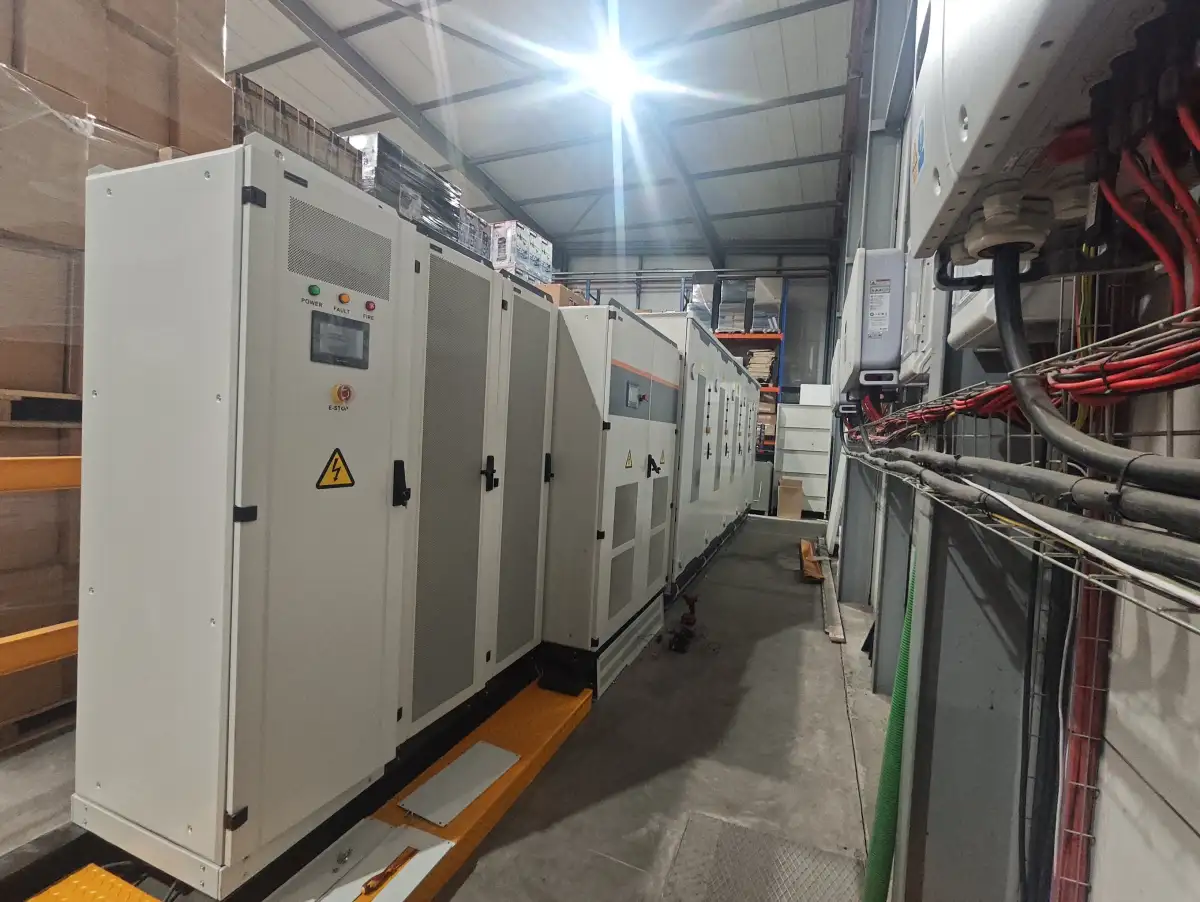
The signal — and the payment — usually passes through an aggregator before it ever reaches this panel.
A DR transaction usually has more parties in it than a peak-shaving one, and knowing who's who changes how you shop for a program:
- Utility or grid operator (ISO/RTO). The entity that ultimately needs the load reduction and funds the incentive — think PJM, CAISO, ERCOT, or a vertically integrated utility running its own program. PJM's demand response program is a useful public reference for how a wholesale-market DR program is structured.
- Aggregator (Curtailment Service Provider). Most individual C&I sites are too small to enroll directly in a wholesale-market program. An aggregator bundles many sites' capacity into a single tradable block, handles the market paperwork, and pays you your share. For most readers of this guide, the aggregator is the actual counterparty, not the utility.
- Virtual Power Plant (VPP). Functionally similar to an aggregator's role but usually describes a software platform that orchestrates many distributed batteries (and sometimes EVs, smart thermostats) as one coordinated resource. If your program is marketed as a "VPP," you're participating in an aggregated DR product under a different name.
- The regulatory backbone. In the US, FERC Order No. 2222 is the rule that opened wholesale capacity, energy, and ancillary services markets to aggregations of small distributed resources like C&I batteries — FERC's own fact sheet explains it plainly: aggregations must meet a 100 kW minimum size requirement, and the grid operator handles metering, telemetry, and coordination requirements through the aggregator. That 100 kW threshold is exactly why aggregation exists — it's the bridge between what one C&I site can offer and what a wholesale market will transact.
- OpenADR is the open standard most utilities and aggregators use to send DR signals machine-to-machine — worth asking any program or equipment vendor whether their dispatch path is OpenADR-compatible, since it's what lets your EMS respond automatically instead of relying on a phone call. OpenADR Alliance maintains the specification and a list of certified products.
- Programs by name. You'll encounter DR under different regional brand names — National Grid's ConnectedSolutions in the US Northeast is a widely cited example of a utility-run C&I battery DR program, and the DOE's overview of demand response and time-variable pricing programs profiles programs across the country if you want to check what's available in your territory.
What a DR-ready battery system actually needs
A battery that's great at peak shaving isn't automatically DR-ready. The requirements shift:
- Remote telemetry the program can verify. DR payments are based on measured performance against a baseline — the program needs to see your state of charge, discharge rate, and delivered kW in near-real time, not just your monthly bill. This is a metering and communications requirement as much as a battery spec.
- A response-time SLA, not just power. Programs specify how fast you must respond after a signal — commonly 10 minutes for standard economic/emergency DR, tighter for fast-response products. Hua Power's control platform traces back to millisecond-level grid frequency regulation, so a system capable of millisecond-level response easily satisfies the response-time requirements of typical DR programs — meeting the SLA is rarely the constraining factor; the telemetry integration usually is.
- Automated dispatch (ADR), not a manual process. If your EMS can't receive and act on an OpenADR (or program-specific API) signal without a person clicking a button, you'll miss fast-notice events. Confirm this with any EMS vendor before enrolling, not after.
- Enough State of Charge (SoC) reserve to guarantee performance. DR events can land on a day you already partially discharged the battery for peak shaving. A DR-aware EMS reserves capacity ahead of a committed event window so you don't under-deliver and trigger a penalty.
- Cycle life is rarely the constraint. DR events are infrequent — a handful to a few dozen a year for most programs — which barely registers against a modern LFP cabinet's cycle rating. EIA's own analysis of how US battery storage is actually used shows most capacity is already stacking multiple applications on the same hardware; DR is typically the least cycle-intensive application in a value-stacking strategy, not the one that ages your battery.
Hua Power's C&I cabinets — including the HC-UPSAP112, HC-UPSAP241, HC-UPSAP261L, and HC-UPSAP522L — are LFP systems rated for ≥8,000 cycles at 80% state-of-health, run on the same Visual Energy Management Platform used for peak shaving and load shifting, and support remote monitoring and dispatch. What determines whether a given deployment is truly "DR-ready" is less the cabinet spec sheet and more whether the EMS is integrated with your chosen aggregator's signal path — confirm that specifically before you buy.
Matching enrolled capacity to a program
DR programs generally have a minimum enrollment size (often 50–100 kW, sometimes lower through an aggregator that pools smaller sites). Your C&I cabinet's rated power is your starting point for how much you can credibly commit — if you haven't settled on a capacity yet, 100/200/500 kWh capacity selection walks through the basic sizing questions before you layer DR on top:
Model | Power (kW) | Capacity (kWh) | Cooling | Typical DR fit |
|---|---|---|---|---|
HC-UPSAP112 | 50 | 112.5 | Air | At or near typical minimum enrollment on its own; often pooled by an aggregator |
HC-UPSAP241 | 125 | 241 | Air | Clears most direct minimum-enrollment thresholds |
HC-UPSAP261L | 125 | 261 | Suitable for standalone DR participation, dense footprint | |
HC-UPSAP522L | 250 | 522 | Liquid | Strong capacity for combined peak-shaving + DR enrollment |
HC-UPSSP723–HC-UPSSP1205 | 300–500 | 723–1,205 | Air | Multi-site or aggregator-anchor scale |
Don't over-commit your enrolled capacity relative to what you can reliably deliver — under-performance penalties in most programs are more costly than the upside of a slightly larger commitment. It's standard practice to enroll a conservative share of a cabinet's rated power (leaving headroom for other duties and SoC) rather than the full nameplate figure.
What DR programs actually pay — a worked example
Public rate cards vary widely by region and program, so treat this as a planning illustration, not a quote — confirm the actual program terms for your utility territory.
The facility: the same manufacturing site from our peak-shaving worked example — it already installed an HC-UPSAP522L (250 kW / 522 kWh) to shave its own demand charge. Instead of buying a second asset, it enrolls a 200 kW slice of that same battery (maintaining sufficient power and SoC reserve for peak shaving) in a ConnectedSolutions-style critical-peak DR program.
Step 1 — Capacity payment. At an illustrative $250/kW-summer — in the range ConnectedSolutions-style Northeast US critical-peak programs have publicly cited — 200 kW × $250 = $50,000 for the season.
Step 2 — Performance discount. Programs pay on verified delivery, not committed capacity. Assume a realistic 90% average performance factor across the season's events: $50,000 × 0.9 ≈ $45,000 realized.
Step 3 — Stack it against peak shaving, carefully. The sibling worked example put this same battery's peak-shaving-plus-arbitrage benefit at roughly $59,000/year. Adding ~$45,000 of DR revenue looks like $104,000/year combined — but the two streams compete for the same discharge window on the days a DR event coincides with your own demand peak, and not every market allows the same enrolled capacity to count toward both a retail demand-charge program and a wholesale/utility DR program simultaneously (this is part of what FERC Order 2222's aggregation rules exist to sort out). Model DR as incremental revenue on hardware you'd likely buy anyway for peak shaving — not as a second, fully independent $45,000, and confirm your utility's stacking rules before you count on the combined figure.
Step 4 — Payback impact. Even a conservative reading — say DR adds $25,000–35,000/year net of stacking conflicts — meaningfully shortens the payback on a system that was already penciling out on peak shaving alone.
What changes the answer most: which program you're eligible for, your utility's stacking rules, your aggregator's fee (aggregators typically take a share of the payment), and how many events actually get called in a given season — event counts are weather-dependent and vary year to year.
Which facilities are the best DR candidates
DR pays best where you have real, verifiable flexibility to offer and load large enough to matter to a program or aggregator:
- Manufacturing and industrial sites with a battery already sized for other duties — DR is close to free incremental revenue on existing hardware.
- Cold storage and refrigeration — thermal mass gives you flexibility to shift load during an event without disrupting operations.
- Data centers — high, steady baseline load with backup power already in place; DR is often a natural extension of the resilience investment.
- Multi-site portfolios — even where individual sites are below a direct enrollment threshold, an aggregator can pool several sites into one qualifying block.
- Sites in ISO/RTO territories with active wholesale markets (PJM, CAISO, ERCOT, NYISO, and similar) generally have more mature, better-paying DR products than areas without organized wholesale markets.
If your site has a flat, inflexible load or sits in a territory with no active DR program, this revenue stream may not be available yet — check program availability before building it into your business case.
How to enroll: the practical path
- Confirm your battery (or planned battery) has automated dispatch. Ask your EMS vendor directly whether it supports OpenADR or your target aggregator's API — don't assume "smart" means "DR-ready."
- Find your options. Check your utility's DR program page and search for aggregators/CSPs active in your ISO/RTO territory — several operate nationally in the US.
- Compare program terms, not just headline rates. Look at minimum enrollment size, event frequency and notice time, performance penalties, contract length, and the aggregator's fee share.
- Confirm metering and telemetry requirements with the program before signing — this is usually the actual integration work, more than anything on the battery side.
- Enroll conservatively on committed capacity for your first season, then scale up once you've seen real event frequency and performance data for your site.
Notes for EPCs and procurement
- Ask specifically about DR integration, not just "smart EMS." "Smart" is marketing language; OpenADR compatibility and confirmed aggregator API integrations are the concrete requirement.
- Separate the DR business case from the peak-shaving one. DR revenue is real but typically smaller, less predictable (event counts vary by year), and dependent on a program staying open — model it as an upside case on top of a peak-shaving or self-consumption base case, not as the primary justification for the purchase.
- Confirm stacking rules with your utility or ISO before you count combined revenue — this is the detail generic guides skip and the one that most affects your actual return.
- Check the contract, not just the rate card, for performance-penalty terms and minimum-commitment length before enrolling.
For the procurement checklist that covers the rest of a C&I battery purchase — interconnection, warranty, cooling, and enclosure choice — see the C&I BESS procurement framework, and for how DR fits alongside a system's other duties, the C&I energy storage overview puts it in context of the full application stack.
How to get a site-specific recommendation
The mechanics above tell you whether DR is worth pursuing in principle. Whether it's worth pursuing for your site — which program, what enrollment size, whether it's worth stacking on a peak-shaving purchase — depends on your utility territory, your load profile, and which aggregators are active where you are.
Hua Power has deployed 400+ ESS projects across 30+ countries — including a 500 kW / 1 MWh PV+ESS site in Portugal and a 500 kW / 1.044 MWh on-grid system in Guangzhou — with C&I systems built on the same real-time EMS platform this guide describes. Send your site details and target market and the recommendation will be grounded in what's actually available to you — talk to our team to start.
Frequently asked questions
What is demand response in energy storage? Demand response is a program where a battery discharges (or a facility curtails load) in response to a signal from a utility, grid operator, or aggregator — not on the facility's own schedule. You're paid for verified load reduction during specific called events, which is different from peak shaving, where you set and control your own demand ceiling every billing cycle.
Is demand response the same as peak shaving? No. Peak shaving cuts your own demand charge on your own tariff, every month, with no external contract. Demand response is triggered externally by a utility, ISO, or aggregator, happens on a handful to a few dozen event days a year, and pays through incentive or capacity payments rather than a smaller bill. The same battery can often do both, but they compete for the same discharge capacity on days they overlap.
How much do demand response programs pay? It varies widely by region and program structure. Some US Northeast utility programs have publicly cited capacity payments in the range of a couple hundred dollars per kW for the summer season, paid on verified performance rather than committed capacity. Confirm actual rates for your utility territory and program — public averages aren't a substitute for your local rate card.
What is an aggregator in demand response? An aggregator (sometimes called a Curtailment Service Provider) bundles the flexible capacity of many smaller sites into one block large enough to participate in a utility or wholesale-market DR program. Most individual C&I sites are too small to enroll directly, so the aggregator—not the utility—is typically your contractual counterparty.
What is automated demand response (ADR)? ADR is machine-to-machine DR dispatch: the utility or aggregator sends a signal (commonly over the OpenADR protocol) directly to a facility's EMS, which responds automatically without a phone call or manual action. Most modern C&I DR programs expect ADR capability.
Does participating in demand response wear out my battery faster? Rarely a real concern. DR events are infrequent compared to daily peak shaving — typically a handful to a few dozen events a year — which is light duty against a modern LFP cabinet's cycle rating of several thousand cycles. Calendar aging, not DR cycling, is usually the binding constraint.
Can I combine demand response with peak shaving on the same battery? Yes, and it's a common way to add incremental revenue to a battery you'd already be buying for peak shaving. The two programs compete for the same discharge window on days they overlap, and not every utility or ISO allows the same enrolled capacity to count toward both simultaneously — confirm your market's stacking rules before you count on the combined revenue.
What is FERC Order 2222 and why does it matter for C&I batteries? FERC Order 2222 is the US federal rule that opened wholesale energy, capacity, and ancillary services markets to aggregations of distributed resources like C&I batteries, with a 100 kW minimum size requirement for aggregations. It's the regulatory reason aggregators exist: it lets many smaller sites combine into one block that can transact in markets no single C&I site could access alone.