

Almost every article about battery C-rate stops at the definition: “C-rate is the speed a battery charges or discharges.” The real procurement question is different: if two quotes offer the same 5 MWh BESS — one at 0.25C and one at 0.5C — which configuration delivers the better return for your application?
This guide is about the decision, not the definition. It's for the people who have to make the call: energy and facility managers, EPCs, and procurement engineers sizing a commercial, industrial, or grid-tied battery who've hit the C-rate line on the datasheet and realized it's not a throwaway number — it changes the system's power, its cost, its cycle life, and even its cooling. We'll compare 0.25C and 0.5C head-to-head, because that's the band where most stationary storage decisions actually live, and give you a framework that ties the choice back to what you're getting paid to do.
The short version: C-rate is the inverse of discharge duration at rated power — 0.5C is a 2-hour system, 0.25C is a 4-hour system. Choose the C-rate by your revenue driver, not by instinct: pick 0.5C when you're paid for power — short, sharp peaks, fast cycling, capacity that's measured in kW. Pick 0.25C when you're paid for energy — long arbitrage windows, solar shifting, 4-hour capacity markets, and maximum throughput per cycle at the lowest degradation. Lower C-rate runs cooler, stresses cells less, and generally lasts longer; higher C-rate packs more power behind every kWh you buy. Neither is "better" — they're tuned for different jobs.
What C-rate actually is (the 30-second version)
Battery C-rate is the charge or discharge current expressed as a multiple of the battery's rated capacity. A 1C battery can discharge its full capacity in one hour, a 0.5C battery in two hours, and a 0.25C battery in four hours. C-rate expresses charge or discharge current relative to the battery's rated capacity. A 1C rate empties (or fills) the battery in one hour. Halve the rate and you double the time:
- 1C → 1-hour discharge
- 0.5C → 2-hour discharge
- 0.25C → 4-hour discharge
The single most useful way to hold this in your head is as an identity:
Continuous power (kW) = C-rate × energy capacity (kWh). Duration (hours) = 1 ÷ C-rate.
So for a fixed battery energy, the C-rate is just a dial that trades power against duration. That's the whole mechanism — and it's why C-rate selection isn't a specs footnote. It's the same "how fast versus how long" question that runs through capacity sizing and inverter/PCS sizing, viewed from the cell side.
Same battery, different C-rate: what actually changes
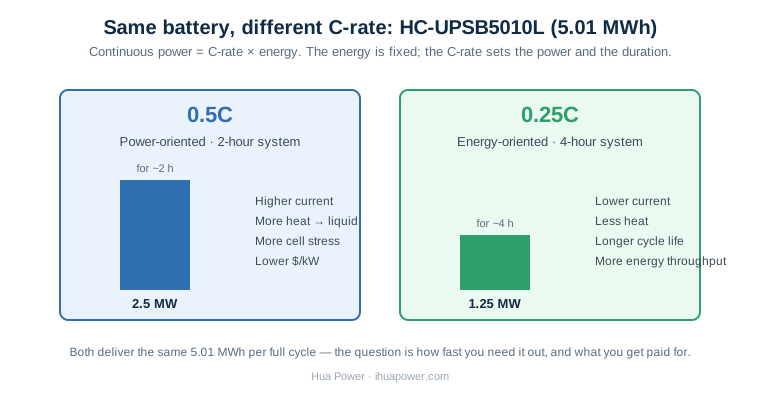
Here's the trade-off made concrete, using a real dual-configuration container from Hua Power's own lineup — the HC-UPSB5010L (5.01 MWh), which ships in both 0.5C and 0.25C configurations:
0.5C configuration | 0.25C configuration | |
|---|---|---|
Continuous power | ~2.5 MW | ~1.25 MW |
Discharge duration | ~2 hours | ~4 hours |
Continuous current | Higher | Roughly half |
Heat generated | More — pushes toward liquid cooling | Less — often air-cooling is enough |
Cell stress / degradation | Higher per cycle | Lower per cycle |
Cost profile | More kW per kWh of cells (but larger PCS + cooling) | Lower effective $/kWh for energy shifting |
Earns its keep from | Power — short peaks, fast response | Energy — long windows, deep daily cycling |
Same 5.01 MWh of stored energy in both columns. The C-rate doesn't change how much energy you have — it changes how fast you're allowed to move it, and everything downstream of that: the power electronics, the thermal design, and how hard the cells work every cycle. That's why the same energy nameplate can front two genuinely different products.
The decision: match C-rate to your revenue driver
The mistake is choosing C-rate by "more is better" instinct. Higher C-rate isn't better — it's more power-dense, which is only valuable if you're paid for power. The clean way to decide is to ask what your battery is actually being paid to do. As the U.S. Energy Information Administration puts it, the duration of a utility-scale battery depends on how it's used — short-duration systems serve grid-power services, longer-duration systems shift energy. C-rate is the design parameter that sets which camp you're in.
Your primary application | What you're paid for | Recommended C-rate | Why |
|---|---|---|---|
Frequency regulation / fast response | Power & speed (kW, ms response) | 0.5C or higher | Short, intense bursts; duration barely matters, power density does |
Peak shaving — short, sharp peaks | Power (demand-charge kW cut) | 0.5C | 1–2 hour peaks; you need high kW briefly, not hours of energy |
Peak shaving — broad, long peaks | Energy over a window | 0.25C–0.5C | If the peak window runs 3–4 hours, you need duration, not just power |
Energy arbitrage / load shifting | Energy (kWh moved cheap→expensive) | 0.25C | Goal is to shift the most energy per cycle at the lowest cost and least wear |
Solar / wind self-consumption shifting | Energy (store midday, use evening) | 0.25C | Evening discharge spans hours; long duration is the point |
4-hour capacity-market participation | Guaranteed energy for 4 h | 0.25C | Many capacity markets require sustained 4-hour output to qualify |
Demand response events | Power for a called window | 0.5C (check window length) | Size C-rate to the program's required response duration |
Notice the pattern: short duration and power payments push you up to 0.5C; long duration and energy payments pull you down to 0.25C. This is also why grid-scale fleets skew toward longer durations where the money is in energy shifting — in California's market, most batteries are configured for four hours to meet resource-adequacy rules, i.e. a ~0.25C design point.
If your site has two revenue streams — say, demand-charge management plus evening arbitrage — you size C-rate to the more demanding duration and accept that you're paying a little for headroom on the other. That's a real, defensible trade; picking a C-rate that serves neither is not.
The four things C-rate quietly changes
Beyond power and duration, C-rate selection ripples into four areas that don't show up in the headline number but absolutely show up in your total cost of ownership.
1. Cost — but read $/kW against $/kWh
There's no single "cheaper" answer, because C-rate shifts cost between two different denominators:
- A 0.5C system gives you cheaper power ($/kW). You get more kW out of every (expensive) kWh of cells you buy, plus the power electronics are more fully utilized. If your value is in kW, 0.5C stretches your dollar.
- A 0.25C system gives you cheaper energy-shifting. For the same energy, it needs a smaller PCS and lighter cooling, and it wears the cells more slowly — so each kWh you cycle over the system's life costs less. If your value is in kWh moved, 0.25C stretches your dollar.
The trap is comparing two quotes on price alone without noticing they're priced against different jobs. A 0.5C quote and a 0.25C quote for "the same MWh" are not the same product, and the cheaper sticker isn't automatically the better buy.
2. Cycle life and degradation
Higher C-rate means higher current, which means more internal heat and more mechanical/chemical stress on the cells every cycle. Lower C-rate operation is gentler and generally preserves capacity longer. Hua Power's C&I LFP cells are rated ≥8,000 cycles to 80% state of health at the standard 0.5C test condition under IEC 62619. Operating the same cells at 0.25C reduces current and heat generation per cycle, conditions generally associated with slower capacity fade and lower augmentation requirements over the system life.(Ask your supplier for the cycle figure at your actual operating C-rate if it's a decision input.) For a system that deep-cycles daily for 10–20 years, that gentler duty helps reduce how much capacity you have to augment (add later to offset fade) — a real line item procurement teams routinely underweight.
0.5C vs 1C: Cycle Life & Cooling Comparison
Although most stationary BESS projects operate closer to the 0.25C–0.5C range, comparing 0.5C with 1C makes the relationship between C-rate, cycle life, and cooling much easier to see. At 1C, a battery is asked to deliver its rated energy in roughly one hour; at 0.5C, it delivers the same energy over roughly two hours. That doubling of discharge current has consequences beyond power output.
The first is heat. Resistive losses inside a cell increase rapidly as current rises, so a 1C system generally produces substantially more heat during sustained charging or discharging than the same battery operated at 0.5C. More heat means the thermal-management system has to work harder to keep cell temperatures — and, just as importantly, temperature differences between cells — within the range targeted by the battery manufacturer. If that heat is not controlled, elevated temperature can accelerate side reactions, increase resistance growth, and contribute to faster capacity fade.
That is where liquid cooling becomes especially relevant. In a dense commercial or utility-scale enclosure, liquid cooling can remove heat closer to the cell or module level and maintain tighter temperature uniformity than conventional forced-air designs. This does not mean every 1C battery must be liquid-cooled, or that every 0.5C system requires it. Enclosure density, ambient temperature, duty cycle, cell chemistry, and HVAC design all matter. But as sustained C-rate and packaging density increase, the engineering case for liquid cooling becomes stronger.
Cycle life follows the same general direction. Holding other conditions equal, a battery cycled continuously at 1C experiences higher electrical and thermal stress than one cycled at 0.5C. The exact difference in usable cycle life cannot be estimated from C-rate alone — depth of discharge, average state of charge, temperature, charging profile, and cell design can matter just as much — so procurement teams should avoid applying a generic percentage penalty to 1C operation.
Instead, ask the supplier for cycle-life curves at the actual planned C-rate and temperature, together with the cooling system's guaranteed operating range and cell-to-cell temperature spread. A 1C design can be the right choice when one-hour power capability creates enough additional revenue, but that extra power should be evaluated together with cooling energy, thermal-system cost, warranty conditions, and expected degradation. For applications that do not need one-hour discharge, 0.5C usually provides a more forgiving balance between power capability, thermal load, and long-term cell life.
3. Thermal management — and the cooling decision
Higher continuous current generates more heat, and heat is what pushes a system from air cooling toward liquid cooling. The higher your C-rate and energy density, the stronger the case for liquid cooling to keep cells in their safe, long-life temperature band. It's not a hard rule — a lower-density 0.5C cabinet can still be air-cooled — but the trend is real: sustained high-C-rate duty and dense packaging are exactly where liquid cooling earns its cost. Fold the cooling decision into C-rate selection, not after it.
4. Round-trip efficiency at your real operating point
Datasheets quote round-trip efficiency (Hua Power's C&I cabinets are ≥85% RTE), but efficiency sags as current rises. A system run hard at the top of its C-rate loses a bit more to internal resistance than the same system loafing at a quarter of its rating. If your duty cycle sits near the rated C-rate most of the time, ask for efficiency at that operating point, not just the best-case number.
Where each one clearly wins
Stripping away the nuance, here's the honest bottom line on each.
0.5C wins when:
- Your peaks are short and sharp (under ~2 hours) and you're paying demand charges on kW.
- You're providing fast grid services — frequency regulation, fast frequency response — where power density and speed are the product.
- Floor space or footprint is tight and you want maximum power from the smallest, densest enclosure.
- You cycle infrequently enough that the higher per-cycle stress never becomes the binding constraint.
0.25C wins when:
- You're shifting energy across long windows — arbitrage, solar-to-evening, load leveling over 3–4+ hours.
- You need to qualify for a 4-hour capacity market or resource-adequacy requirement.
- You deep-cycle daily and want the longest usable life and the least augmentation over 10–20 years.
- You want to keep the system air-cooled and mechanically simple where site conditions allow.
If you genuinely can't tell which side you're on, that's a signal your load and revenue analysis isn't finished yet — and it's cheaper to finish it now than to discover the mismatch after commissioning.
A worked example: what the C-rate choice costs and returns
Take a site weighing the two configurations of that HC-UPSB5010L (5.01 MWh) container. Same energy, same cells, same footprint class — only the C-rate differs.
Scenario A — the site's value is demand-charge reduction. Its peak is a 90-minute midday spike where it needs to shave 2 MW. The 0.5C configuration delivers 2.5 MW continuous — comfortably covers the 2 MW peak with margin, and the 2-hour duration more than spans a 90-minute event. The 0.25C configuration tops out at ~1.25 MW: it physically cannot shave a 2 MW peak, no matter how much energy is behind it. Here the C-rate isn't a preference — 0.25C simply fails the requirement. 0.5C is the only correct answer.
Scenario B — the site's value is overnight-to-peak arbitrage. It charges on cheap overnight power and discharges across a 4-hour evening peak, cycling once daily. The 0.25C configuration delivers 1.25 MW for ~4 hours — exactly the duration the arbitrage window needs, run at gentle current that maximizes cycle life over a 15–20 year book. The 0.5C configuration would dump the same energy in 2 hours and sit idle for the back half of the window, while cycling its cells harder for no additional revenue. Here 0.25C is the better buy — it matches the duration, and its lower per-cycle stress compounds into more usable throughput over the system's life.
The point isn't that one number wins. It's that the same 5.01 MWh is the right product in both scenarios only because its C-rate was matched to the job. Get the energy right and the C-rate wrong, and you've either bought power you can't sell (Scenario B at 0.5C) or a peak you can't shave (Scenario A at 0.25C).
What changes the answer: your real peak duration (measured from your load data, not assumed), which revenue streams you're stacking, your cycling frequency, and your local capacity-market duration rule. Pull the interval data before you pick a C-rate — it's the input that settles the question.
Mapping C-rate to the Hua Power lineup
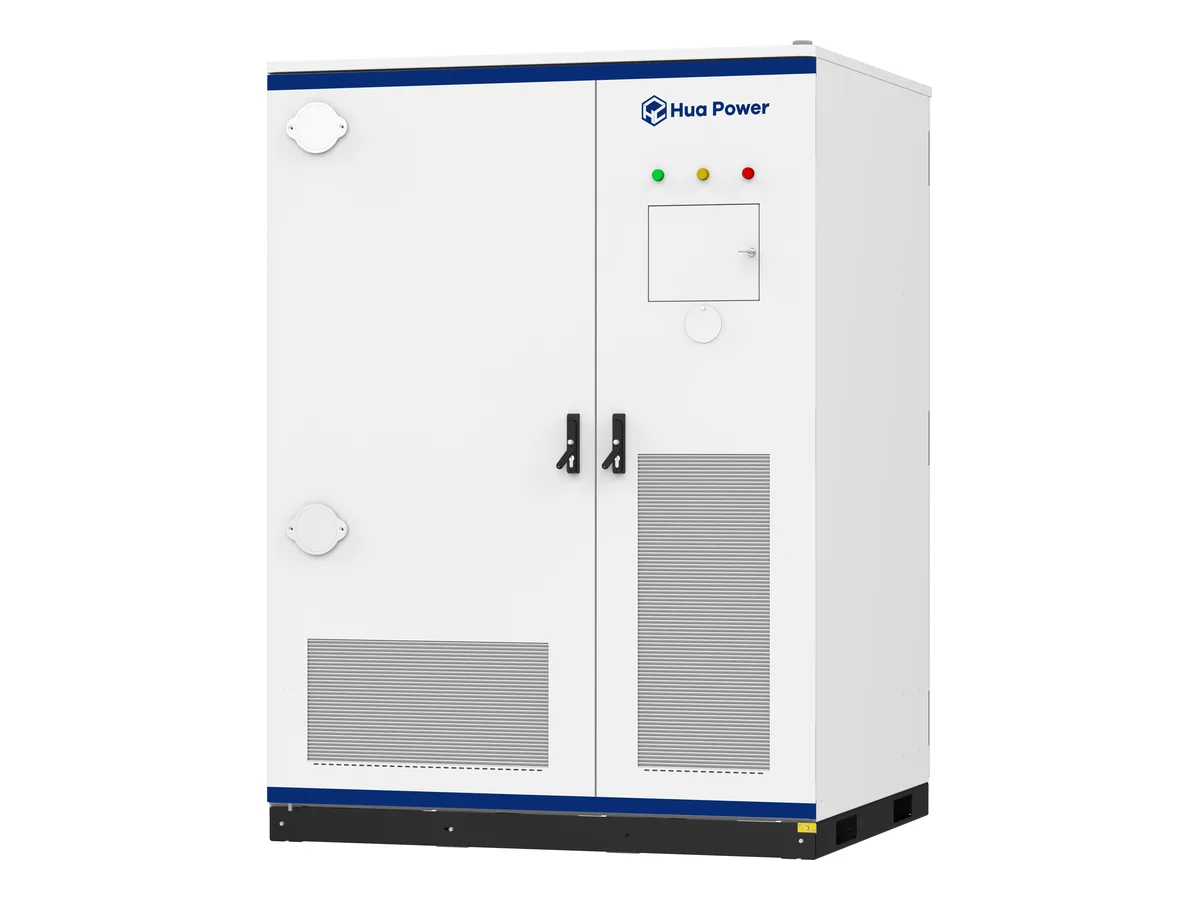
A liquid-cooled C&I cabinet. Sustained 0.5C duty is exactly where liquid cooling starts earning its cost.
Once you know whether you're buying power or energy, here's how it maps to Hua Power's C&I and grid-scale range:
Model | Energy | Rated C-rate | Cooling | Best-fit job |
|---|---|---|---|---|
HC-UPSB241 | 241 kWh | 0.5C | Air | Power-oriented C&I, short peaks |
HC-UPSB261L | 261 kWh | 0.5C | Dense, hard-cycling C&I duty | |
HC-UPSB522L | 522 kWh | 0.5C | Liquid | Larger C&I, combined power applications |
HC-UPSB4180L | 4.18 MWh | 0.5C | Liquid | Grid/large-C&I, power-oriented |
HC-UPSA2089L | ~2.09 MWh | 0.25C | Liquid | Energy-shifting, long-duration container |
HC-UPSB5010L | 5.01 MWh | 0.5C / 0.25C | Liquid | Either job — configured to your duration |
All run on Hua Power's Visual Energy Management Platform and LFP (LiFePO₄) cells certified to IEC 62619 and UN 38.3. The HC-UPSB5010L is the one to know when the C-rate decision is genuinely open — the same container is offered in both 0.5C and 0.25C, so the platform choice doesn't lock you out of either duty. For the capacity (kWh) sizing that pairs with this C-rate (power) decision, see 100/200/500 kWh capacity selection; for the PCS power rating the C-rate implies, see commercial battery inverter selection.
Notes for EPCs and procurement
- Never compare two C-rate quotes on price alone. A 0.5C and a 0.25C quote for "the same MWh" are different products. Compare them against the job — $/kW if you're buying power, $/kWh-cycled-over-life if you're buying energy shifting.
- Derive the required C-rate from interval data, not assumptions. Your actual peak duration and shape settle the question; a guessed duration is how sites end up with a power-limited system that can't shave the peak.
- Check the capacity-market duration rule before you spec. If your market requires sustained 4-hour output, a 0.5C (2-hour) system won't qualify regardless of its energy nameplate.
- Fold cooling into the C-rate decision. Higher C-rate and higher density push toward liquid cooling; decide them together, not sequentially.
- Ask for cycle life and efficiency at your operating C-rate, not just the standard 0.5C rating — the numbers that matter are the ones at the current you'll actually run.
For the full pre-purchase checklist — interconnection, warranty, augmentation, and total cost of ownership — see the C&I BESS procurement framework, and for where C-rate fits in the wider system design, the C&I energy storage overview puts it in context.
How to get a site-specific recommendation
The framework above gets you to a C-rate band and a shortlist. Turning that into an exact configuration depends on your load profile, your revenue stack, and your local market's duration rules — the inputs a datasheet can't guess.
Hua Power has deployed 400+ ESS projects across 30+ countries, spanning short-duration power systems and 4-hour energy-shifting installations — including a 500 kW / 1 MWh PV+ESS site in Portugal and a 500 kW / 1.044 MWh on-grid system in Guangzhou. Send your interval data and target application, and the recommendation will be grounded in the C-rate your revenue actually needs — talk to our team to start.
Frequently asked questions
What does C-rate mean for a battery storage system? C-rate is the charge or discharge current relative to the battery's rated capacity. A 1C rate fully discharges the battery in one hour, 0.5C in two hours, and 0.25C in four hours. In practical terms, continuous power equals C-rate multiplied by energy capacity — so C-rate is the dial that trades power against duration for a fixed amount of stored energy.
Is 0.25C or 0.5C better for a BESS? Neither is universally better — they're tuned for different jobs. Choose 0.5C (a 2-hour system) when you're paid for power: short peaks, fast grid response, demand-charge reduction. Choose 0.25C (a 4-hour system) when you're paid for energy: long arbitrage windows, solar shifting, 4-hour capacity markets, and maximum cycle life. Match the C-rate to your revenue driver, not to "more is better."
Does a lower C-rate make a battery last longer? Generally yes. Lower C-rate means lower current, less internal heat, and less stress on the cells per cycle, which helps preserve capacity over time. The same cells rated for a set number of cycles at 0.5C will typically cycle more gently — with life headroom to spare — at 0.25C, which matters most for systems that deep-cycle daily over 10–20 years.
How do I calculate the C-rate I need? Start from your required continuous power and your required duration. Required C-rate ≈ required power (kW) ÷ battery energy (kWh), and duration ≈ 1 ÷ C-rate. Pull your interval/load data to get the real peak power and how long it lasts — those two numbers determine whether you need a 0.5C, 0.25C, or in-between design.
Why do most grid-scale batteries use a low C-rate like 0.25C? Because much of the revenue in stationary storage comes from shifting energy across multi-hour windows — arbitrage, solar-to-evening, and capacity markets that require sustained 4-hour output. A 0.25C (4-hour) design maximizes energy throughput per cycle at the lowest cell stress and cooling cost, which is why fleets in energy-driven markets skew toward four-hour durations.
Does C-rate affect whether I need liquid cooling? It's a major factor. Higher C-rate means higher continuous current and more heat, which pushes a system from air cooling toward liquid cooling to keep cells in their safe, long-life temperature range. The higher your C-rate and packaging density, the stronger the case for liquid cooling — so the cooling method should be decided together with the C-rate, not after it.
Can the same battery capacity be configured at different C-rates? Yes. Because power equals C-rate times energy, the same energy capacity can front different power ratings. Hua Power's HC-UPSB5010L (5.01 MWh) container, for example, is offered in both 0.5C (~2.5 MW, 2-hour) and 0.25C (~1.25 MW, 4-hour) configurations — same energy, different power and duration, tuned to the application.