

If you are comparing LiFePO4 vs lithium-ion batteries for a project, here is the answer in one sentence: LiFePO4 (LFP) is one chemistry inside the lithium-ion family, and for stationary energy storage it usually wins on safety and cycle life, while conventional lithium-ion (NMC/NCA) still wins wherever weight and volume matter most. The useful comparison is not "LiFePO4 vs lithium-ion" but LFP against the high-energy cathode chemistries people usually mean when they say lithium-ion. This guide walks through the differences dimension by dimension, with the datasheet context most comparison articles leave out.
A note on where we sit: Hua Power engineers and manufactures residential, commercial and utility energy-storage systems, so we live on the stationary side of this comparison. Where NMC genuinely beats LFP — and it does, in several places — we will say so plainly.
What "lithium-ion" really means — and where LiFePO4 fits
The naming is the root of most confusion. "Lithium-ion" is not one battery; it is a family of rechargeable chemistries that all move lithium ions between a cathode and an anode. What distinguishes one lithium-ion battery from another is the cathode material, and that choice drives almost every performance difference you will see on a spec sheet:
- LiFePO4 (LFP) — lithium iron phosphate cathode. One branch of the lithium-ion family.
- NMC / NCA — nickel-manganese-cobalt and nickel-cobalt-aluminum cathodes. The high-energy branch most people picture when they hear "lithium-ion."
- LCO / LMO — cobalt- or manganese-oxide cathodes, mostly found in phones and older designs.
So when someone contrasts "LiFePO4 vs lithium-ion," they are really comparing LFP against the NMC/NCA branch — not against the whole family. That framing matters because it changes the question from "which type of battery is better?" to "which cathode chemistry suits this job?" If you need a refresher on how these cells store energy, our guide to how lithium-ion batteries work covers the mechanics.
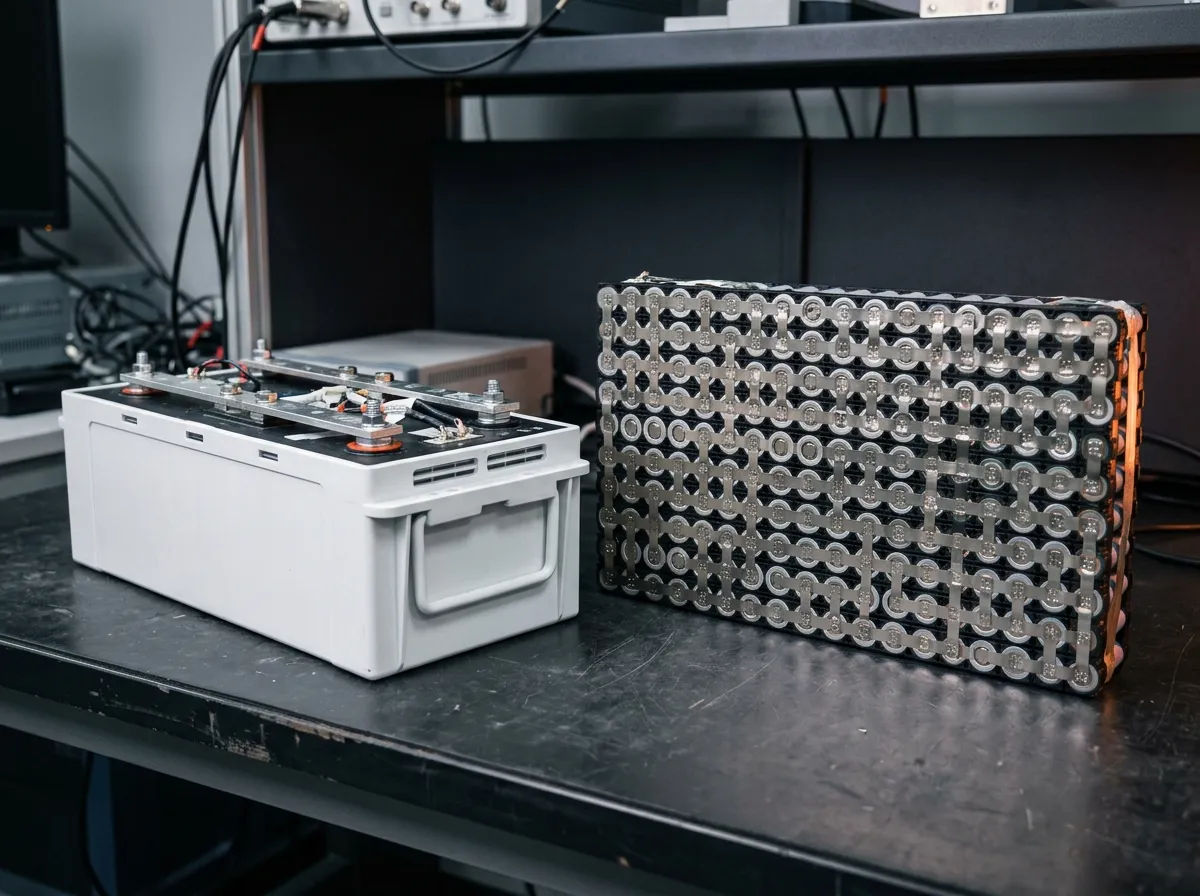
The physical form usually follows the chemistry: LFP cells are mostly prismatic (aluminum-cased blocks), while NMC packs lean on cylindrical cells like the 18650 and 21700. That is a habit of the industry, not a law — both chemistries exist in every format — but it is why the two technologies look different on a workbench.
LiFePO4 vs lithium-ion at a glance
Parameter | LiFePO4 (LFP) | Lithium-ion (NMC/NCA) |
|---|---|---|
Nominal cell voltage | 3.20–3.30 V | 3.60–3.70 V |
Charge voltage (cell) | ~3.65 V | 4.20 V (some to 4.30 V) |
Typical energy density | 90–120 Wh/kg | 150–220 Wh/kg |
Typical cycle life | 2,000+ (ESS cells often rated 4,000–6,000 at 80% DoD) | 1,000–2,000 typical |
Thermal-runaway onset | ~270°C (cell test) | ~210°C (cell test) |
Cobalt in cathode | No | Yes (NMC) |
Sweet spot | Stationary storage, solar, backup, marine/RV, commercial EVs | Phones/laptops, power tools, most passenger EVs, portable power |
Cell-level figures above follow Battery University's BU-205 reference on lithium-ion chemistries; system-level numbers vary by manufacturer, so always compare datasheets at the same depth of discharge and temperature.
Safety: the honest version
Safety is where LFP built its reputation, and the reputation is mostly earned. The LFP crystal structure holds its oxygen tightly: the phosphate bond does not break down and release oxygen the way NMC oxide cathodes do, and oxygen release is the fuel that turns a failing cell into a fire. That is why LFP cells pass nail-penetration and overcharge tests that NMC cells fail, why LFP has become the default chemistry for indoor residential storage today, and why the thermal-runaway onset temperature in cell tests is higher for LFP than for NMC.
Here is the part most articles skip: "LFP is safer" is not the same as "LFP cannot burn." A review of thermal-runaway off-gas from UK researchers, covered by pv magazine in 2024, found the picture is two-sided: NMC cells generate larger total off-gas volumes, while LFP off-gas can be more flammable — and more toxic — at some states of charge. Cell-level stability reduces the chance of an incident starting; it does not remove the consequences when one happens. That is why every serious stationary installation, whatever the chemistry, still depends on a competent battery management system (BMS), thermal management and correct enclosure design.
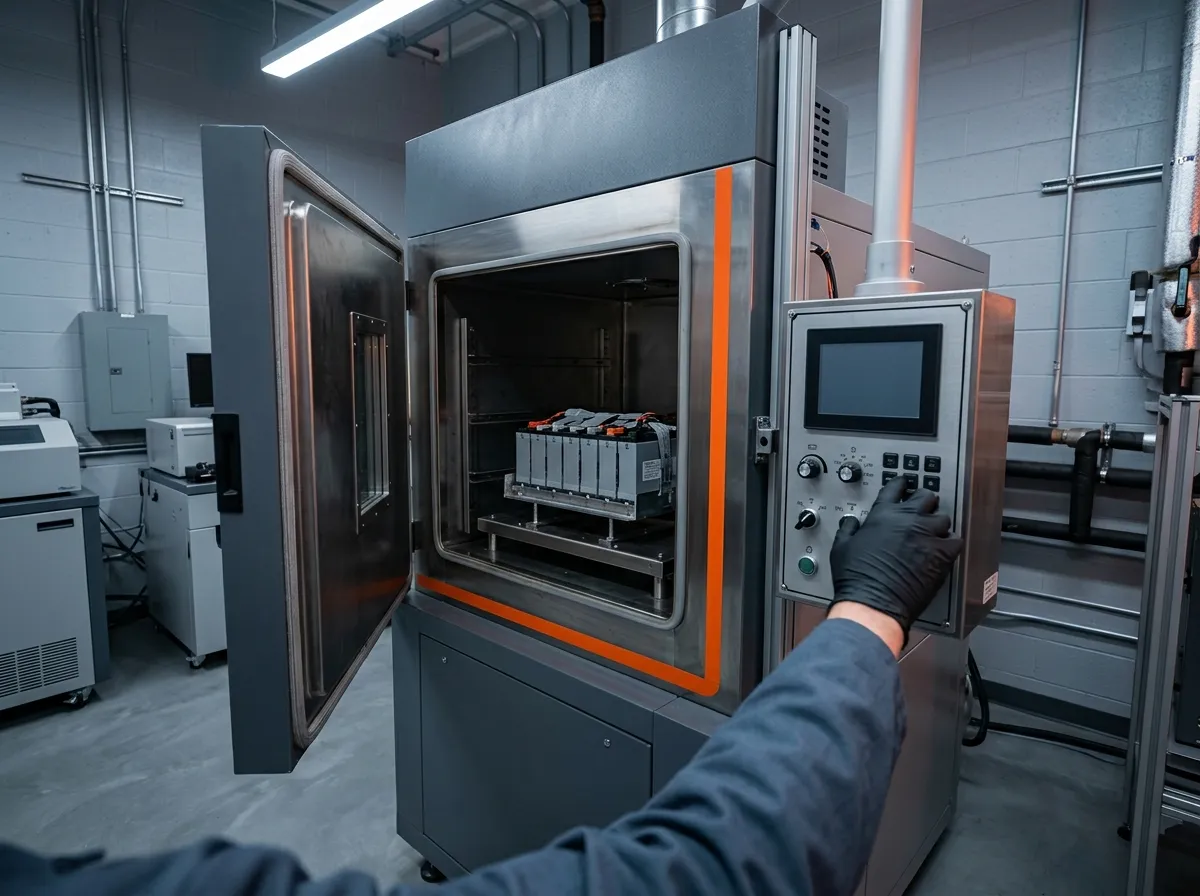
For a project buyer the practical read is: choose LFP when the battery sits near people — homes, offices, containers on a factory floor — and treat "cell is safe" as one input, not as permission to skip system-level protection. Our deep dive on LiFePO4 batteries explains the cell-testing and quality checks that separate good cells from risky ones.
Cycle life and what it costs per year
Cycle life is the number of full charge-discharge cycles a cell delivers before its capacity falls to 80% of rated — the threshold most warranties use. Two numbers on the same datasheet line will mislead you if you do not check the conditions: cycle life is quoted at a specific depth of discharge (DoD) and temperature.
LFP is the long-life chemistry here. ESS-grade LFP cells are commonly rated 4,000–6,000 cycles at 80% DoD, and a system cycled once a day can serve 10–15 years. Battery University's conservative baseline is "2,000 and higher" for LFP versus 1,000–2,000 for NMC; some ESS-grade NMC datasheets rate 2,000–4,000 cycles under lighter daily cycling, so compare at the same DoD and temperature — the order of difference still holds.
That gap rewrites the cost math. A battery is priced per kWh, but you buy it per kWh cycled over its life. Suppose an LFP pack costs more upfront: at 5,000 cycles versus 2,500, the LFP pack can still cost less than half as much per cycle — and it avoids the labor, downtime and disposal cost of an early replacement. When you evaluate quotes, ask for price per kWh and rated cycles at a stated DoD, then divide: lifetime cost per kWh cycled is the number that matters, not the sticker.
LFP also ages more gracefully in storage. Calendar aging (degradation while sitting idle) is slower for LFP at partial state of charge, which suits seasonal backup systems that sit for months. If datasheet terms like cycle life and depth of discharge are new to you, the knowledge-base entry on cycle life defines them with examples.
Energy density and voltage: where lithium-ion keeps the crown
The honest concession: on energy density, NMC/NCA wins outright. At 150–220 Wh/kg against LFP's 90–120 Wh/kg, an NMC pack stores roughly 50–80% more energy per kilogram and per liter. In a phone, a power tool, or a laptop, that difference is the whole game. In a passenger EV, it is the reason most long-range models still use NMC, and the reason LFP cars usually appear first in standard-range versions.
Voltage is the second structural difference. An LFP cell sits at 3.20–3.30 V nominal and charges to about 3.65 V; an NMC cell sits at 3.60–3.70 V and charges to 4.20 V. Those few tenths of a volt are why you cannot treat the chemistries as drop-in equivalents:
- A charger or inverter programmed for NMC voltage limits will overcharge an LFP pack.
- A system designed around an NMC pack's nominal voltage may sit outside the operating window of an LFP replacement — and vice versa.
- Protection setpoints, BMS parameters and even state-of-charge algorithms differ between the two.
In practice, this means "can I swap my lithium-ion battery for a LiFePO4 one?" is answered "sometimes, with a new BMS/charger configuration — never by just connecting it." It also means the right comparison happens at system design time, not at replacement time.
For stationary storage, the energy-density penalty barely registers: a 10 kWh LFP cabinet is bigger and heavier than an NMC one would be, but neither is going inside a pocket, and floor space in a garage, basement or container is cheap. Weight and volume are the two axes where lithium-ion keeps the crown, and every project that does not constrain those two should weigh them accordingly.
Which chemistry wins in your application
Battery storage is the fastest-growing clean-energy technology on the market, serving everything from utility-scale projects to behind-the-meter systems — that market context comes from the IEA's Batteries and Secure Energy Transitions report (April 2024). Inside that growth, the chemistry split follows a clear pattern:
Choose LiFePO4 when:
- The battery is stationary: home solar storage, commercial peak shaving, microgrids, telecom and data-center backup, marine and RV.
- The battery cycles daily (solar self-consumption) — cycle life compounds into dollars.
- The battery sits indoors or near people, where thermal stability matters most.
- Your project horizon is 10+ years and you want one replacement cycle, not two.
Choose NMC/NCA lithium-ion when:
- Weight or volume is the binding constraint: portable power stations, drones, power tools, laptops.
- You need the highest energy in the smallest space and accept a shorter service life.
- Cold performance is critical: NMC holds up better at sub-zero temperatures than LFP, which loses capacity in the cold and must not be charged below 0°C unless the BMS supports low-temperature charging.
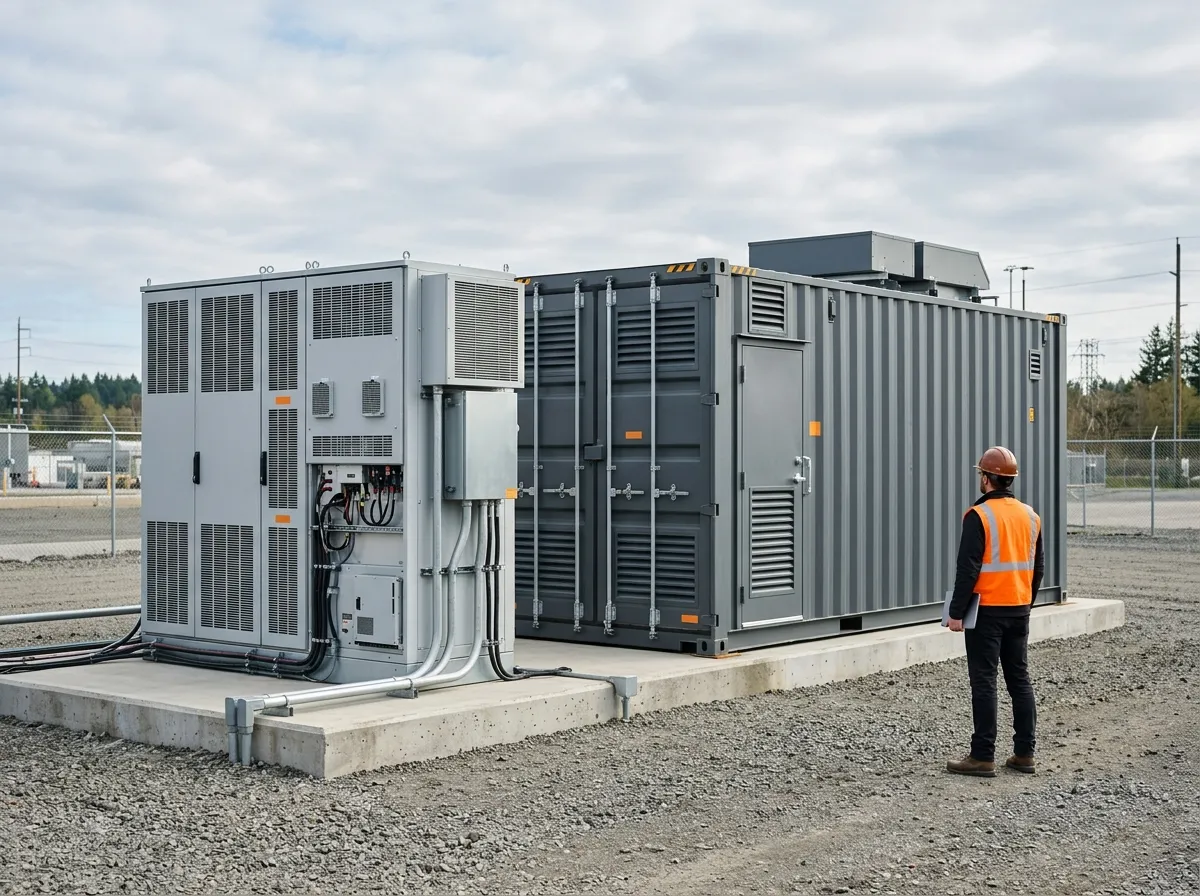
This is why you will see LFP dominating modern energy-storage products at every scale — from wall-mounted home batteries to containerized utility systems — while NMC stays in mobility and portable devices. It is a division of labor, not a verdict on one chemistry. If lead-acid is also on your shortlist, our LiFePO4 vs lead-acid comparison covers that older rivalry. For the wider picture of how battery storage fits a project, the Battery Energy Storage Basics hub collects our fundamentals guides for buyers.
How to choose: a short decision checklist
Strip the marketing away, and the decision comes down to three questions:
- Where does the battery live? Fixed installation near a building → LFP. Carried, flown or worn → high-energy lithium-ion.
- How often will it cycle? Daily cycling for 10+ years → LFP wins on lifetime cost per kWh. Occasional backup only → the cycle-life gap matters less.
- What does the datasheet say at the same conditions? Compare both chemistries at identical DoD and temperature: cycles, energy density, operating range, and charge/discharge limits. If the vendor cannot state the numbers with their conditions, that is a red flag on the vendor, not on the chemistry.
One more thing worth checking before you commit: transport and compliance paperwork. Both chemistries ship as Class 9 dangerous goods under UN38.3 testing, and stationary packs typically need a product standard such as IEC 62619 or UL 1973 for the target market. These follow the system, not the chemistry, but they add lead time and cost — ask for them up front.
The honest bottom line: if you need a fixed battery that cycles daily for a decade, LiFePO4 is very likely the right call. If you need energy density in a portable or cold environment, choose lithium-ion and do not apologize for it. The wrong choice is not LFP or NMC — it is choosing either one without reading the conditions behind the numbers.
FAQ
What are the disadvantages of LiFePO4? Lower energy density (90–120 Wh/kg), so it is heavier and bulkier than NMC at the same capacity; weaker cold-weather performance; and a nominal voltage (3.2 V/cell) that differs from other lithium chemistries, so chargers and BMS settings are not interchangeable.
Which is better, lithium-ion or LiFePO4? For stationary energy storage, LiFePO4 is usually better: longer cycle life, higher thermal stability and no cobalt. For portable devices, tools and most passenger EVs where weight and volume decide, NMC/NCA lithium-ion is better. There is no universal winner — there is only the right chemistry for the job.
What happens if you charge a LiFePO4 battery with a regular charger? "Regular" depends on what the charger expects. A charger set for NMC/LCO lithium-ion (4.2 V per cell) will overcharge an LFP pack (3.65 V maximum), which can damage cells and create a safety hazard. Use a charger with an LFP profile, or a LiFePO4-specific charge curve.
Is Tesla using LiFePO4? Yes — Tesla has used LFP cells in standard-range models since late 2021, reserving NMC for long-range versions. LFP's adoption in EVs grew quickly because it cuts cost and cobalt use; energy density is the trade-off.
Can I replace a lithium-ion battery with LiFePO4? Only with careful engineering. Voltage, charge limits and BMS logic all differ, so a direct swap is not safe. A LiFePO4 replacement usually needs a compatible charger/inverter, updated protection setpoints and, ideally, an application engineer's review of the whole system.
If you are weighing chemistries for a specific project — a solar retrofit, a commercial peak-shaving install or an off-grid site — brief our engineering team with the application, capacity and market, and we will give you a first-pass recommendation within one business day. If you are still building the fundamentals first, the rest of the Battery Energy Storage Basics hub is there for you to work through at your own pace.