
A battery storage warranty is a supplier's contractual promise that an energy storage system will do what was specified — usually split into separate guarantees for manufacturing defects, for retained usable energy over a period of time or throughput, and for availability when dispatched — each holding only while the system runs inside a stated envelope of temperature, charge rate, depth of discharge, state of charge and cumulative energy throughput.
Read it as a trade rather than a certificate. The supplier takes on the risk of a cell or control board failing; the owner gives up the right to run the asset however the market rewards on any given day. Most disputes are that trade being renegotiated after the fact — which is why the clauses that decide the outcome define measurement, envelope and remedy, not the years on the cover.
What a Battery Storage Warranty Is — and What It Is Not
Four boundaries, and a buyer who cannot state them is negotiating blind.
It is not insurance. Insurance pays for a loss whoever caused it; a battery warranty is recourse against one named party for non-conformance with a specification, so it is only as good as that party's balance sheet two decades later.
It is not an O&M contract. Maintenance buys labour, response time and spares; the warranty buys a standard of performance. They interlock — a Sandia National Laboratories report on storage financing notes that an O&M contract "maintains the unit in a good working order and many times is required for warranty contracts" (Sandia, 2022) — but they fail in different ways.
It is not an offtake performance guarantee. That promise runs to a revenue counterparty, is often stricter than the equipment warranty, and is not the manufacturer's paper.
And it is not the data sheet. Here buyers get surprised, because the document titled "warranty" is not the whole warranty. §2-313 of the Uniform Commercial Code — the model commercial code enacted in almost every US state — makes the rule explicit: "any affirmation of fact or promise made by the seller to the buyer which relates to the goods and becomes part of the basis of the bargain creates an express warranty that the goods shall conform to the affirmation or promise", and it is "not necessary … that the seller use formal words such as 'warrant' or 'guarantee'" (UCC §2-313). A capacity figure in a proposal, a cycle count on a data sheet and a sentence in a sales email can all become terms. Other jurisdictions reach comparable results under their own contract rules; the US code states it most plainly. Keep the file, not just the signed annex.
Three Promises in One Document: Defect, Performance, Availability
A BESS warranty is usually one contract carrying three promises, with three subjects, three proof tests and three remedies. The pattern is standard enough that the Sandia report describes coverage as "typically focused on three areas: manufacturing defect, performance, and availability".
Promise | What it covers | What it does not settle | The question that decides it |
|---|---|---|---|
Manufacturing defect | Cells, modules, boards, wiring — non-conformance with design and workmanship | Whether the system still delivers energy; a defect can exist at full capacity, and capacity can fade with no defect at all | Which components sit inside this schedule, and for how long? |
Performance | Retained usable energy at stated points in time or throughput, sometimes a minimum round-trip efficiency | Faults, downtime, or anything outside the operating envelope | Measured at which boundary, under which duty, against which baseline? |
Availability | The share of time the system can respond when dispatched | The energy shortfall while it is running | How are outages, curtailment and scheduled maintenance counted? |
A minimum round-trip efficiency is only checkable at a stated boundary. A DC figure taken at the battery terminals leaves the inverter out, an AC figure at the grid connection includes it and the auxiliaries, and the two differ by several points — so which terminals it is measured at, and at which C-rate and temperature, is part of the term.
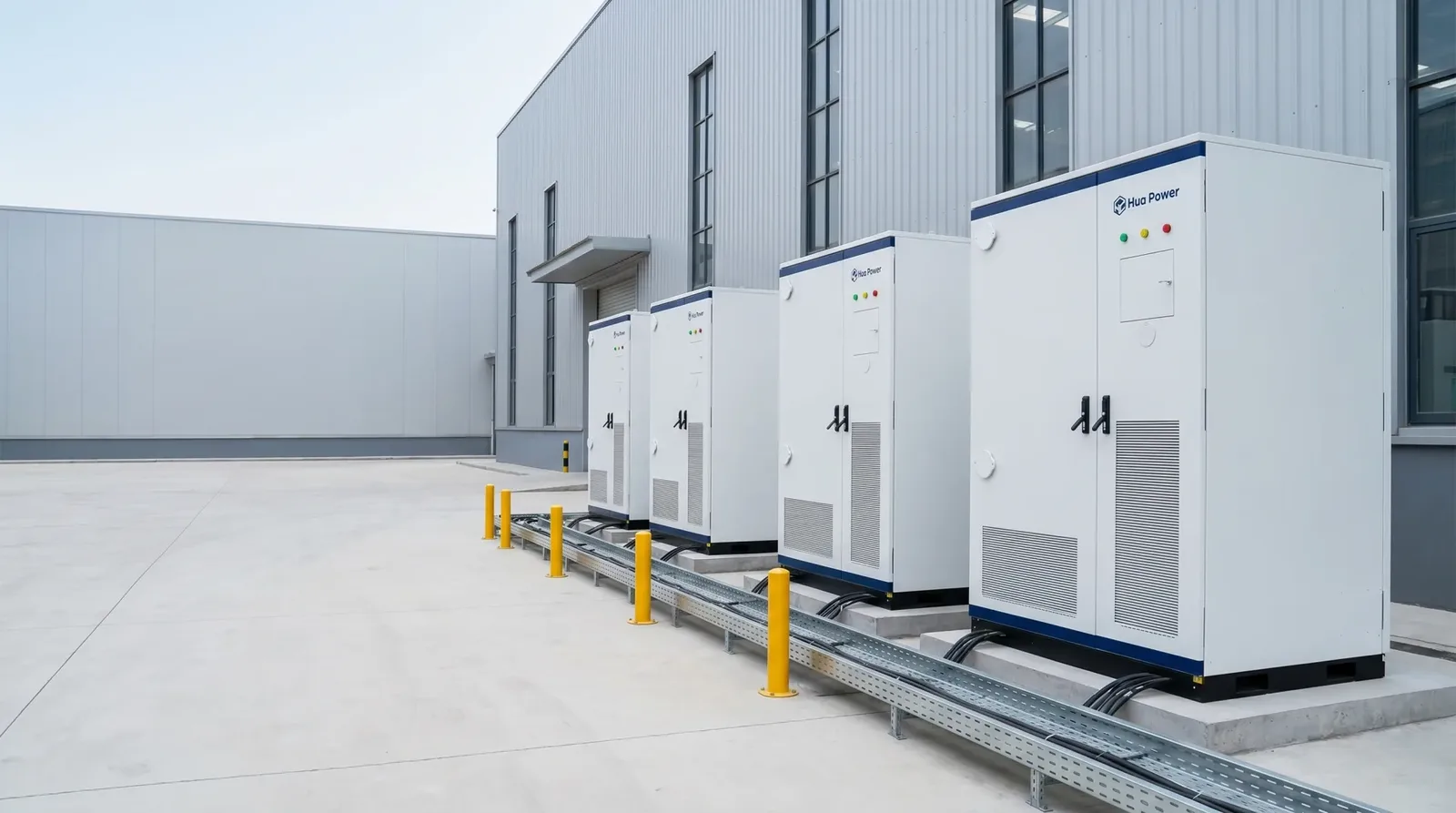
The common structural gap is not inside any one promise; it is between them. A performance warranty is often written around the battery cells — the part whose degradation can be modelled — while the power conversion system, thermal management, controls and fire equipment ride on separate schedules of their own length and remedy. A stack of component warranties can look complete and still leave the installed system uncovered at the point of connection.
System-level treatment exists as a contrast: UL 9540 covers "an energy storage system (ESS) that is intended to receive and store energy in some form", constructed "either as one unitary complete piece of equipment or as matched assemblies". Certification is not a warranty — but if a standard can address the system as a system, a warranty can be written at that level.
The Envelope Is the Real Warranty
The headline number is a conditional statement, and the conditions are short. The same report puts each coverage area as "typically subject to a specific usage profile: Temperature, C-Rate, cycle count, energy throughput, and state of charge requirements". Five limits, each a place where a warranty can be valid and unpayable.
- Temperature. A cell or ambient band, sometimes with separate limits by direction. The breach is rarely dramatic — a cabinet in a hot yard drifting a few degrees above the band for a few hours a day accumulates an out-of-envelope record.
- C-rate. Charging or discharging faster than the schedule assumes. This is the limit a change of duty breaks: a system specified for two-hour peak shaving and later asked to follow a fast response signal is outside its terms.
- Depth of discharge. Guarantees are written at a stated depth, and cycling deeper than that depth does not change the guaranteed number; it changes the aging the number was modelled on, and spends a budget the contract did not sell.
- State of charge. Resting at full or empty ages cells faster than cycling. Some schedules restrict it explicitly; all assume the battery is not parked there.
- Cycle and throughput caps. The budget itself, and the subject of the next section.
None of these is unreasonable: together they describe what the product was tested and priced for. The test is mechanical — put the envelope next to the dispatch plan, line by line, before signing. If the intended duty sits outside one limit, the warranty is not shortened; cover does not apply to the resulting loss, and the failure is later characterised as an owner-caused event.
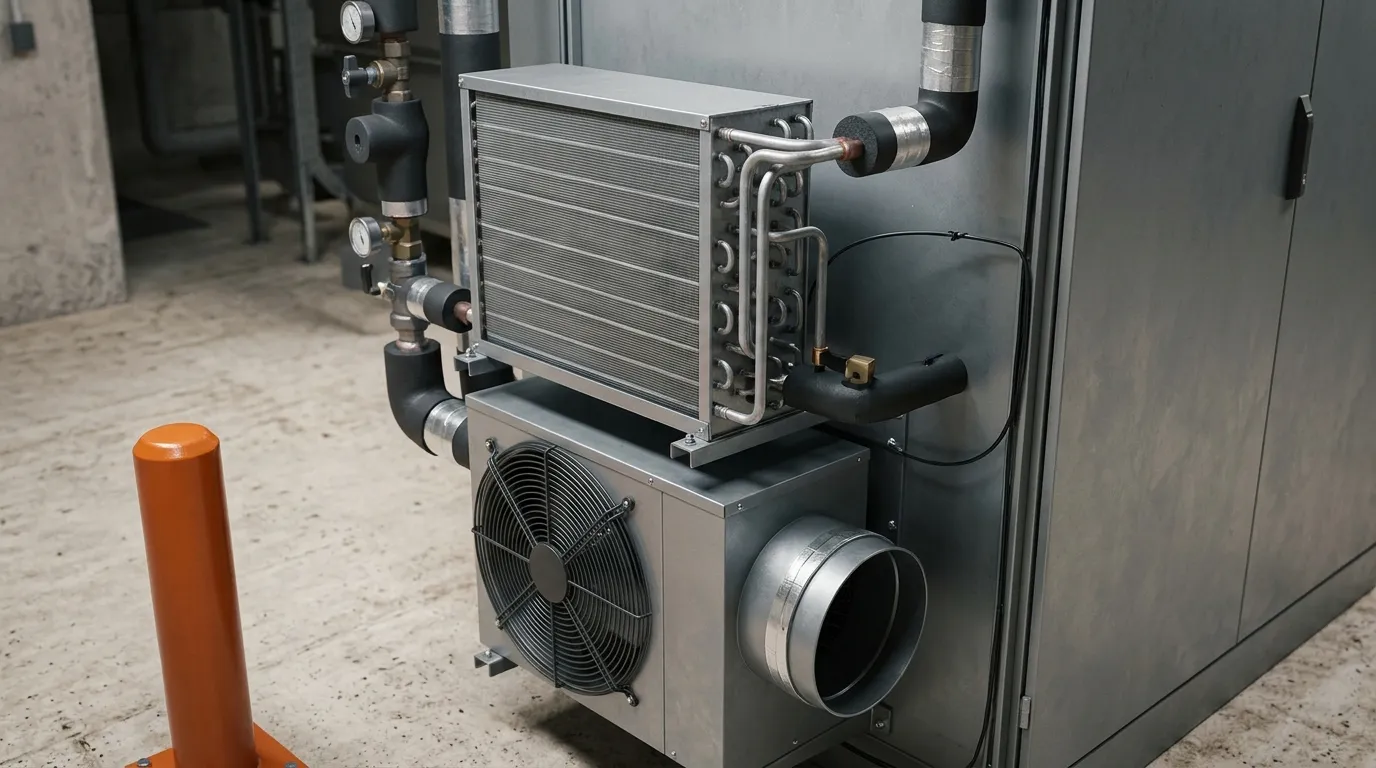
Temperature is why the envelope is an engineering problem before it is a legal one: the cooling system is what keeps a warranty inside its band on the hottest afternoon of the year.
Reading the Capacity-Retention Table
Performance warranties are almost always a table of guaranteed values by year or throughput — a capacity retention schedule, in effect. Four things decide whether the number means anything.
The baseline. A retention percentage is a percentage of something. If beginning-of-life and end-of-life figures were measured at different temperatures, rates or boundaries, the comparison is not like for like — and installed capacity is rarely the guaranteed number anyway, since nameplate and usable capacity differ.
The measurement boundary. Energy at the DC terminals, at the inverter's AC output and at the point of interconnection are three quantities, with conversion losses and auxiliary load between them. A schedule guaranteeing 70% at the DC bus and a site measuring at the meter can disagree by several points while both are honest.
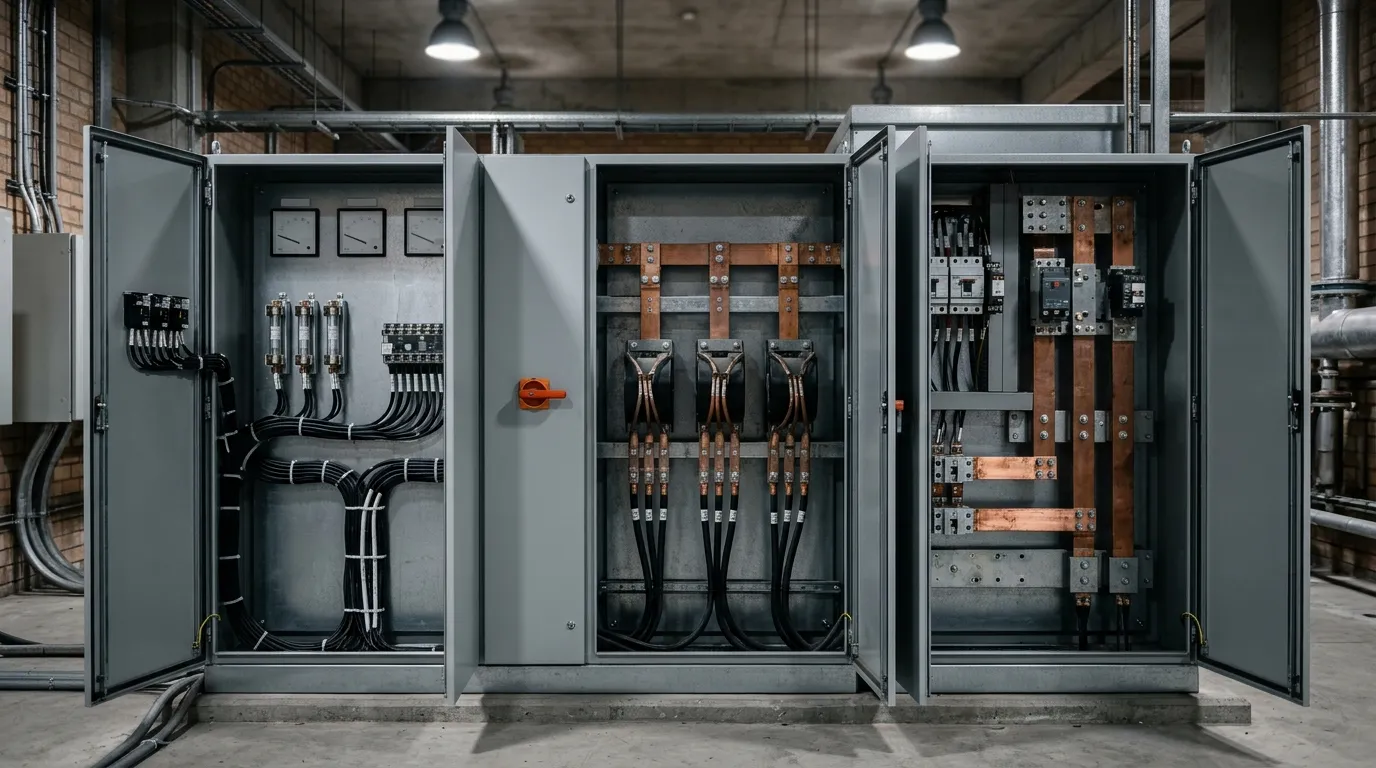
The shape. A schedule can step down yearly, fade linearly, or front-load a first-year drop. The end point may be identical and the middle years are not — which matters if the asset is refinanced or sold at year six.
The floor against the need. This is the one buyers skip. Illustrative, numbers chosen for the arithmetic: a 500 kWh system warranted to 70% at year ten guarantees 350 kWh then. If the critical load needs 400 kWh to ride a four-hour outage in year nine, the warranty can be satisfied in full and the project still fail its own purpose. Compare the floor with the duty at end of life, not at commissioning — and since degradation is not always a straight line, find the knee of the fade curve before signing.
Cycles, Years, and the Third Limit
Nearly every warranty is bounded twice — years and cycles, "whichever comes first" — because either can end the guarantee. Two systems with identical terms can reach their limit a decade apart depending on duty.
A cycle is not a universal unit. An equivalent full cycle is a count of energy divided by a reference capacity, and both the convention and the denominator are negotiable, which is why a cycle count is the specification most often gamed and why two "6,000 cycle" claims can describe very different amounts of wear.
The unit that survives comparison is energy. A throughput warranty is stated in cumulative megawatt-hours however the energy was sliced into cycles, so it converts into a duty the site recognises. Illustrative again: 1 MWh of usable energy warranted for 6,000 equivalent full cycles is roughly 6,000 MWh of discharge. A commercial site discharging 4 MWh a day reaches that in about four years and the ten-year term never binds; at 1 MWh a day it takes about sixteen years and the calendar ends it. Convert with the counting rule in hand — discharge only or both directions, and are auxiliary loads inside it.
What Actually Voids a Claim
Claims are rarely refused because the battery was bad. They are refused because the record does not show the conditions were met.
- Operating outside the envelope — and the supplier's own monitoring is usually the evidence.
- Spending the cycle or throughput budget early, which a volatile market can do unnoticed until the capacity test.
- Maintenance skipped, deferred, or performed outside the approved scope.
- Modification, relocation, or an EMS and firmware configuration outside the supported set.
- A registration or connectivity condition unmet, where cover depends on it.
- Missing data at the moment it is needed.
That last one is the practical centre of the subject. Sandia's data guidelines put it directly: operators "need to monitor SOH levels and check if the SOH is eroding per specifications. If not, warranty or augmentation to refresh capacity actions may need to be taken", state of health "can be verified independently through staging of frequent Reference Performance Tests according to strict test protocols", and "warranty enforcement may require in-depth access to battery subcomponent data if deviations are noted" (Sandia, 2023).
The duty cuts both ways, which is the point. The logs that let a supplier refuse a claim are the logs that let an owner prove one — so settle before commissioning who owns the data, how often it is sampled, how long it is kept, and who may run the reference test. An O&M arrangement that reports monthly is not the same instrument as one that leaves you a raw historian; only the second is evidence.

The Remedy Is Where the Money Is
An energy storage warranty that covers replacement parts but not the cost of getting them to site — or excludes revenue lost while the system was down — can be worth a fraction of the shortfall it appears to cover. Read the remedy before the term.
Four shapes: repair of the failed item; replacement, which may mean refurbished equipment; augmentation, where the supplier adds modules to hold usable energy as cells fade — the strongest promise, since it makes capacity a supply obligation rather than an arithmetic outcome; and payment, usually liquidated damages per missed unit of energy or availability.
What rarely comes with them is the loss the owner actually suffers. Under §2-719 of the Uniform Commercial Code the parties may limit the measure of damages "as by limiting the buyer's remedies to return of the goods and repayment of the price or to repair and replacement of non-conforming goods or parts", and consequential damages "may be limited or excluded unless the limitation or exclusion is unconscionable" (UCC §2-719). The warranty caps the supplier's exposure; the buyer's downtime sits outside it unless a separate clause puts it back in.
Two structural questions follow, neither on a data sheet. Duration against financing: the Sandia report notes "many lenders require all of the equipment to stay under warranty during the loan period", so modules reaching the end of cover get replaced "for contractual, rather than a purely technical choice". If the debt runs longer than the warranty, the project has bought a scheduled cost it may not have modelled. And who stands behind the paper over that horizon — practitioners quoted in the same report ask not just what is in the warranty "but what and who is backing the agreement". A parent guarantee, an insurance wrap or an escrow is a different instrument from a promise, and priced differently.
What to Ask For in Writing
Short enough to send before signing, specific enough that a vague answer is visible.
- Three schedules, separately — defect, performance, availability — each with its own term.
- The start event. Shipment, energisation or commercial operation? The gaps can be a year of uncovered calendar fade.
- The baseline and boundary. Beginning-of-life capacity, measured how, at which terminals.
- The capacity retention warranty, year by year — not one end point.
- The throughput cap in MWh, with the counting rule and whether auxiliary loads sit inside it.
- The envelope in numbers. Temperature band, C-rate, state-of-charge window, permitted depth of discharge, cycles per year.
- Availability defined, exclusions named, measurement interval stated.
- The remedy in detail. What is replaced, who pays freight, labour and cranage, response time, the damages formula.
- The data duties. Who logs, at what interval, for how long, who may test, under which protocol.
- What backs it. Transferability on a sale, governing law, dispute route, and the guarantee or escrow behind the promise.
One line belongs outside the warranty: the system-level safety certification. It substitutes for none of the ten, but a certification file and a warranty schedule are the two documents a lender or insurer asks for first.
How Hua Power Handles Warranty on a Project
The method above is close to how the application work runs: compare the intended duty with the envelope and the guaranteed curve first, then quote a term. The cycle-life entry in this knowledge base publishes the position taken here — a 5–10 year warranty depending on duty cycle, written as cycles or years, whichever comes first — which is the shape argued for in the cycles-and-throughput section above rather than one headline number applied to every site.
Warranty packages and service level agreements are configurable to project requirements, and the capability a claim depends on is stated rather than implied: 24/7 remote diagnostics through the EMS platform, on-site field engineering, regional spare-parts logistics and over-the-air firmware updates (technical support and after-sales). The envelope is a design decision too — the liquid-cooled cabinets in the commercial and industrial range hold cells near 25 °C so a rated cycle count survives contact with a hot summer.
If you have a draft warranty schedule and the site's intended dispatch, send both: the useful review is a line-by-line comparison against your duty, not a summary of terms. Send the site details and the engineering team will map the envelope, the guaranteed curve and the likely binding limit for that dispatch.