
A wholesale energy market is where electricity is bought and sold before it reaches a meter — generators, batteries and demand-side resources selling to the utilities, retailers and marketers that resell it. It is not one market with one price. Every trade carries three coordinates: a product (megawatt-hours of energy, megawatts of capacity, or megawatts of a grid service), a location (a node in the United States, a bidding zone in Europe) and a delivery period (an hour, a quarter-hour, or a commitment three years out).
Most confused questions about wholesale prices drop one of those coordinates. A battery owner asking what the wholesale price is today is asking an unanswerable question; a revenue case built on a headline price rests on a number that appears nowhere on the settlement statement.
What the Wholesale Energy Market Sells
The first split is between the market and the tariff. Wholesale is where a generator sells to an entity that resells; retail is where that entity sells to you. PJM, which runs one of the largest of these markets, describes the wholesale side as trading between generators and resellers — utilities, competitive power providers and electricity marketers (PJM). In the United States, roughly two thirds of demand is served through competitive wholesale electricity markets rather than vertically integrated utilities (ELCON). In Europe the same layer is also called the wholesale power market, and the wholesale energy prices quoted there feed every retail offer.
Inside that layer, three products are traded, and they are not interchangeable.
Product | What is bought | Unit | Typical seller |
|---|---|---|---|
Energy | Electricity delivered in a named period | MWh | Any resource that can inject |
Capacity | A promise to be available in a future period | MW, priced per kW-month | Resources that can commit ahead |
Ancillary services | Response speed and precision | MW, with a response requirement | Fast, controllable resources |
A battery can sell into all three, but through different doors — and a market without a capacity product has no third door. Capacity is a design choice: New England runs a Forward Capacity Market while many European markets pay only for energy and balancing.
The retail end is a separate machine: a commercial bill carries network charges, policy costs and a supplier margin on top of the wholesale component, which is why time-of-use tariffs can move a battery's revenue even when wholesale prices are flat.
Who Is in the Room, and Who Runs the Auction
The auction is not run by a government agency. Non-profit Regional Transmission Organizations and Independent System Operators operate the markets and the transmission system, while the Federal Energy Regulatory Commission oversees the interstate wholesale sales and the market rules those organisations apply. Europe splits the roles differently: transmission system operators publish cross-border capacity, power exchanges run the auctions, and national regulators police conduct under a common transparency regime.
The participants are the same four types on both sides of the Atlantic. France's energy regulator lists producers selling plant output, suppliers buying to resell, traders buying to sell again, and demand-response operators monetising avoided consumption (CRE). A storage owner can appear as any of them, depending on whether the asset is merchant, contracted or aggregated.
The gate in front of all of it is physical: a resource cannot bid for megawatts it has no interconnection capacity to deliver, so the grid connection, not the trading account, sets the maximum MW a project can offer.
How a Price Is Made: Merit Order to Clearing Price
Every organised market runs the same auction. Sellers submit offers stating how many megawatts they will provide and at what price. The operator sorts those offers from cheapest to dearest, creating a supply stack, and accepts them in order until demand is met. The last offer needed is the marginal one, and it sets a single price paid to every resource that cleared — not the price each resource asked for (ISO New England).
ISO New England repeats that dispatch every five minutes of every day. The consequence is worth stating plainly: revenue is set by somebody else's cost. A battery with a low running cost clears easily and is then paid the marginal generator's price, which may be several times its own offer.

Nothing in the auction rewards a resource for being cheap on average. It rewards being available when the stack is steep — the summer evening, the windless week, the hour after a large unit trips.
Day-Ahead, Real-Time, and the Spread Between Them
The auction runs twice, at two horizons. The day-ahead market produces financially binding schedules for each hour of the next day, letting buyers and sellers lock a position before delivery. The real-time market then balances what actually happens, dispatching in short intervals and settling the difference between the two at the real-time price.
That two-settlement structure creates the object most storage revenue is built on: wholesale energy prices exist twice for the same hour, and the battery trades the spread between them and the shape between hours. A battery that charges in a low-priced hour and discharges into a high-priced one trades the same spread a gas plant trades, with a far smaller energy budget and a far faster ramp.
Wholesale prices can also go negative when supply must run and demand cannot absorb it — a condition the market clears rather than avoids, and one that pays a battery to consume. Negative hours are a feature a duration-limited asset can sell into only with charge headroom at the right hour.
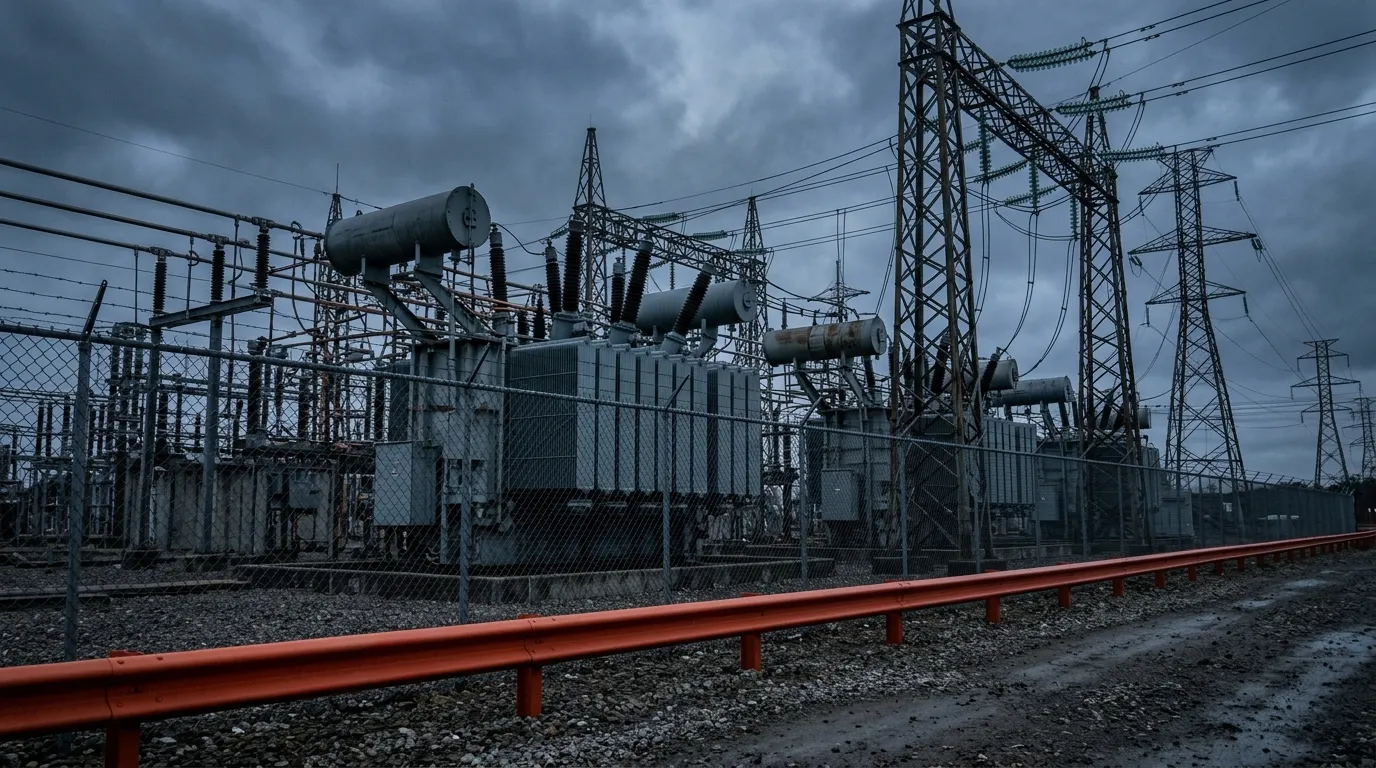
Why There Is No Single Wholesale Price: Nodes and Zones
In the United States the price is set per location. A locational marginal price (LMP) is the incremental cost of serving one more unit of demand at a specific node, load zone or hub, built from components — energy, congestion on the way there, transmission losses and, in some markets, a carbon charge. Day-ahead and real-time LMPs both exist (EIA). Markets are subdivided into hundreds of nodes.
Europe solves the same physics with fewer prices. Instead of a node-level price, the continent is divided into bidding zones, and the day-ahead auction matches orders to maximise social welfare within the network constraints the transmission operators publish. Where a zone boundary is congested, the two zones clear at different prices; where it is not, one price covers both.
Either way the practical rule is the same: a wholesale price is a quotation with a location attached. A quote without a node or zone, and without a delivery period, is not a price. It is a headline.
Capacity and Ancillary: Paying for Availability
Capacity pays a resource to exist. ISO New England held annual Forward Capacity Market auctions three years ahead of each commitment period, with resources that cleared receiving monthly payments through the capacity year in exchange for a commitment to be available (ISO New England). Prices are quoted per kilowatt-month and move with supply and demand like any auction: the 2015 auction cleared system-wide at $9.551/kW-month, the 2016 auction came in more than 25% below it, the 2017 auction settled at $5.297/kW-month across all three capacity zones, and the 2024 auction for the 2027/2028 commitment period cleared at $3.580/kW-month.
Ancillary services pay for a third thing: the ability to move fast and precisely. A battery suits frequency regulation because it can reverse output within a control cycle, but the product is measured in megawatts of response with a speed requirement — not in megawatt-hours delivered. That is why a 20 MW / 40 MWh system earns from ancillary services against its inverter rating and from arbitrage against its stored energy: neither number alone tells you what the asset can sell.
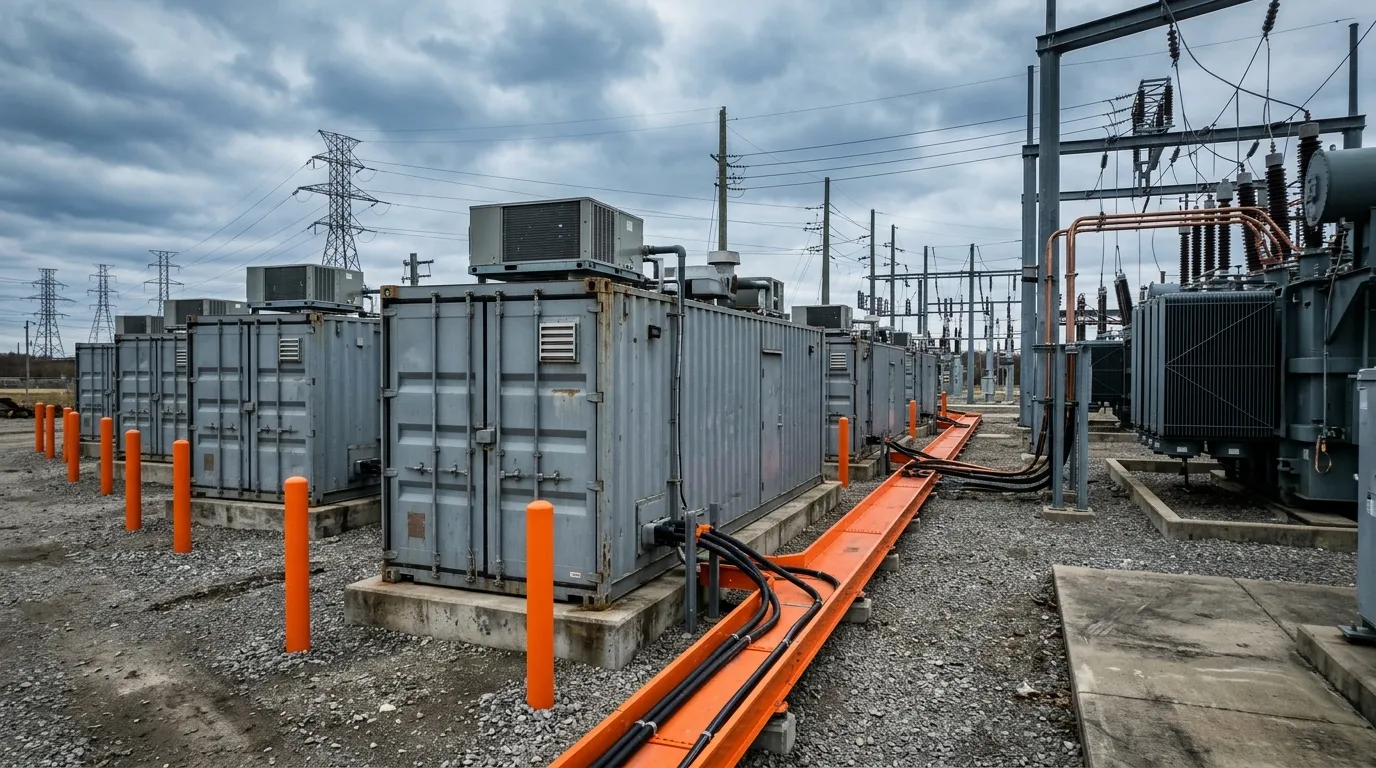
Europe Runs the Same Trade Through a Different Auction
For projects in Europe, auction mechanics matter more than the American node structure. The day-ahead market is a single closed auction: orders are matched to maximise social welfare subject to network constraints, transmission operators publish available cross-border capacity at 10:00 CET, and participants have until 12:00 CET to submit final bids for delivery the next day (Nord Pool). Nord Pool reports trading in 15 countries across 21 bidding zones, with around 500 TWh a year passing through.
Two details separate the European design from the American one in practice. Gate closure is a hard deadline for forecasting: it fixes the hourly position a battery is committed to for the next delivery day, so the forecast that matters is the one made before 12:00 CET. What happens after that — intraday trades at intraday prices, any deviation from that position settled at imbalance prices, the state of charge the asset carries into the delivery day — is not decided at the auction. Products keep shrinking too: France's regulator records 15-minute products on the day-ahead market since 1 October 2025, alongside intraday trading and forward contracts.
Where a Battery Sells: Four Levers and Three Constraints
Put the mechanics together and a storage asset has four places to earn.
Lever | What the asset sells | What sizes it |
|---|---|---|
Energy arbitrage | MWh bought low and sold high | Spread between periods, cycles available |
Ancillary services | MW of fast, accurate response | Inverter rating, telemetry, control speed |
Capacity | MW available in a future period | Duration at the required availability |
Retail or behind-the-meter | Avoided or shifted consumption | Load shape, tariff structure |
Three constraints cap all four at once. The first is the MW / MWh split: the inverter sets the megawatts a market can see, while energy capacity sets how many hours those megawatts can be sustained. A two-hour system that sells four hours of energy has sold something it cannot deliver, and the settlement will find out.
The second is state of charge. A market commitment is symmetric — the asset may be asked to charge as well as discharge — so headroom must be reserved in both directions, and that reserve cannot be sold twice.
The third is degradation. Every cycle sold costs some life, and the cost has to be set against the revenue it earns per megawatt-hour, which is what a levelized cost of storage calculation does. A spread that looks profitable at the market price can destroy value once cycle cost is charged against it.
Where the revenue lands is a contract question. A fully contracted asset sells its output at a fixed price; a fully merchant asset sells into the stack and carries the price risk. The spectrum between the two, and how to underwrite it, is what merchant storage is about.

How Hua Power Turns Market Rules Into System Parameters
Hua Power is a battery energy storage system integrator founded in 2015 and headquartered in Shenzhen, with more than 400 projects deployed and annual production capacity above 2.4 GWh. Market rules decide a surprising share of the specification before any cell is chosen: the product mix sets the duration, the ancillary requirement sets the inverter rating and telemetry, the capacity obligation sets the availability window, and the state-of-charge reserve sets how much of the nameplate energy is genuinely sellable.
That is the order we work in: the market the project will trade in is read first — product, node or zone, gate closure, settlement — and the system is sized against those parameters, not a headline price. The control layer then holds the reserve the commitment requires, so delivered megawatts match what was offered.
If you are sizing a system against a specific market's rules, send the project details: the market, the products you intend to sell, the connection capacity and the target duration are enough to start.