
Frequency regulation is the ancillary service that holds an interconnection's frequency inside a narrow band — 50 Hz across most of the world, 60 Hz in North America — by paying resources to raise or lower output within seconds, following a dispatch signal. It is paid for as available megawatts and scored on tracking accuracy, not on the energy delivered: the kilowatt-hours mostly cancel out, and the movement is what costs money.
The size of the problem is easy to underestimate. NERC puts the Eastern Interconnection's frequency response at −2,103 MW per 0.1 Hz, citing its 2018 State of Reliability report, which means a 1,000 MW loss moves frequency by about 0.048 Hz — wider than the 36 mHz deadband governor practice treats as normal. Two such losses in quick succession put an operator into reserve deployment and, if it continues, load shedding.
What Frequency Regulation Buys
Every generator on a synchronous grid turns at the same speed, and that speed is the frequency. Add load without adding generation and the machines slow; add generation without load and they speed up. Frequency is therefore a system-wide measurement of an energy imbalance, and the only one every device on the grid sees at once.
Four services get confused with regulation, and only one is paid to follow a signal:
- Inertia is physical: rotating mass releases energy the instant frequency moves. In most US ISOs nobody is paid for it directly; some systems, GB among them, now buy inertia or fast frequency response as a service.
- Primary frequency response is autonomous governor or inverter action that arrests a deviation within seconds.
- Frequency regulation — the secondary loop, dispatched as regulation up and regulation down — is a continuous correction that restores frequency and returns interchange to schedule.
- Operating reserves are event-driven capacity, held for a contingency rather than the second-to-second wobble.
Regulation is a power product, not an energy product: a resource is paid for the megawatts it holds ready and for the accuracy with which it moves them. That is why it competes for the same inverter and interconnection capacity as peak shaving, while using a fraction of the energy. How fast frequency moves — the rate of change of frequency (RoCoF) — is set by inertia; how far it falls is set by frequency response.
Three Loops, Three Clocks
Frequency control is layered by timescale, and each layer has a different buyer, measurement and physics. NERC's reference document on balancing and frequency control sets out the split: inertial and primary response act in the first seconds, autonomously, and arrest a deviation without returning frequency to nominal; secondary control, run through the balancing authority's AGC, restores it over minutes. That second loop is scored on telemetry — the instruction goes out, the response comes back, and both have to be recorded, which on a storage site is the job of an energy management system.
Loop | Acts within | Trigger | Who measures it |
|---|---|---|---|
Primary frequency response | seconds to ~30 s | local frequency deviation, governor or droop curve | balancing authority, MW/0.1 Hz |
Frequency regulation (secondary) | seconds to minutes | dispatch signal from the control room | market operator, per-interval accuracy |
Tertiary reserve / redispatch | minutes to hours | contingency or economic instruction | market operator, availability |
The distinction matters commercially: a battery can serve all four — inertia only in emulated form — but is contracted for one at a time, and regulation is not contingency reserve.
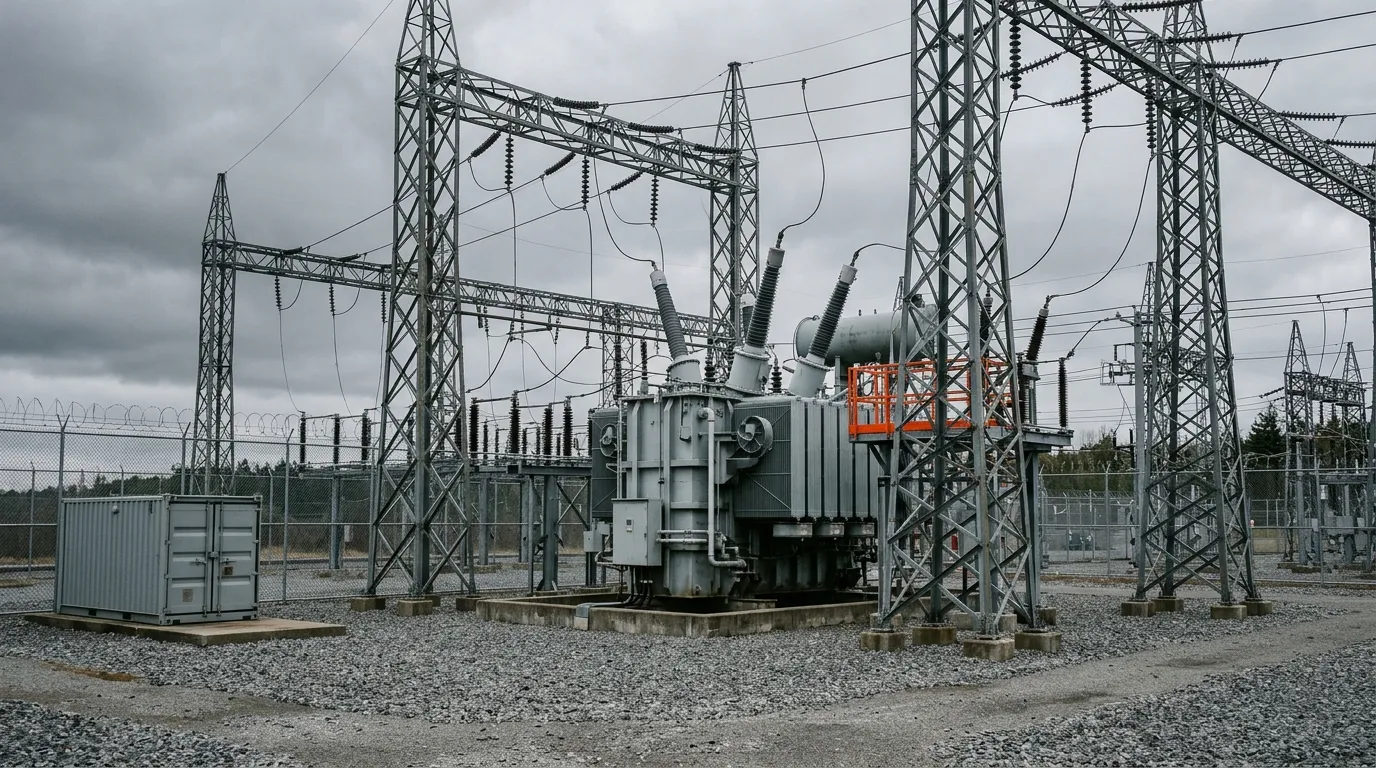
Where the Response Sits: Deadband and Droop
Two settings decide how much a resource actually delivers when frequency moves, and both are routinely mis-set on storage projects.
Deadband is the band around nominal frequency inside which the resource does nothing. North American governor practice uses 0.036 Hz, or 36 mHz — six hundredths of one percent of a 60 Hz system. Inside that band the machine ignores the deviation, on the reasonable grounds that chasing every flicker wears equipment for no system benefit.
Droop is the gain that converts a frequency error into a power change. A 5% droop means a 5% frequency deviation commands 100% of rated output. Inverted, it sets sensitivity: on a 60 Hz system a 0.1 Hz deviation calls for about 3.3% of rated megawatts; on a 50 Hz system the same 0.1 Hz is a larger relative deviation and calls for 4%. The same droop setting therefore makes a European unit more responsive than an American one to an identical hertz error.
Storage inverts the constraint. A turbine cannot move below its minimum stable load and pays a heat-rate penalty for every swing, so its droop curve is softened deliberately. An inverter has neither limit, which is why frequency-droop functions are set aggressively — and why an over-aggressive setting makes a resource hunt and score badly. Voltage has its own droop logic, covered under reactive power support; the two should not share a tuning exercise.
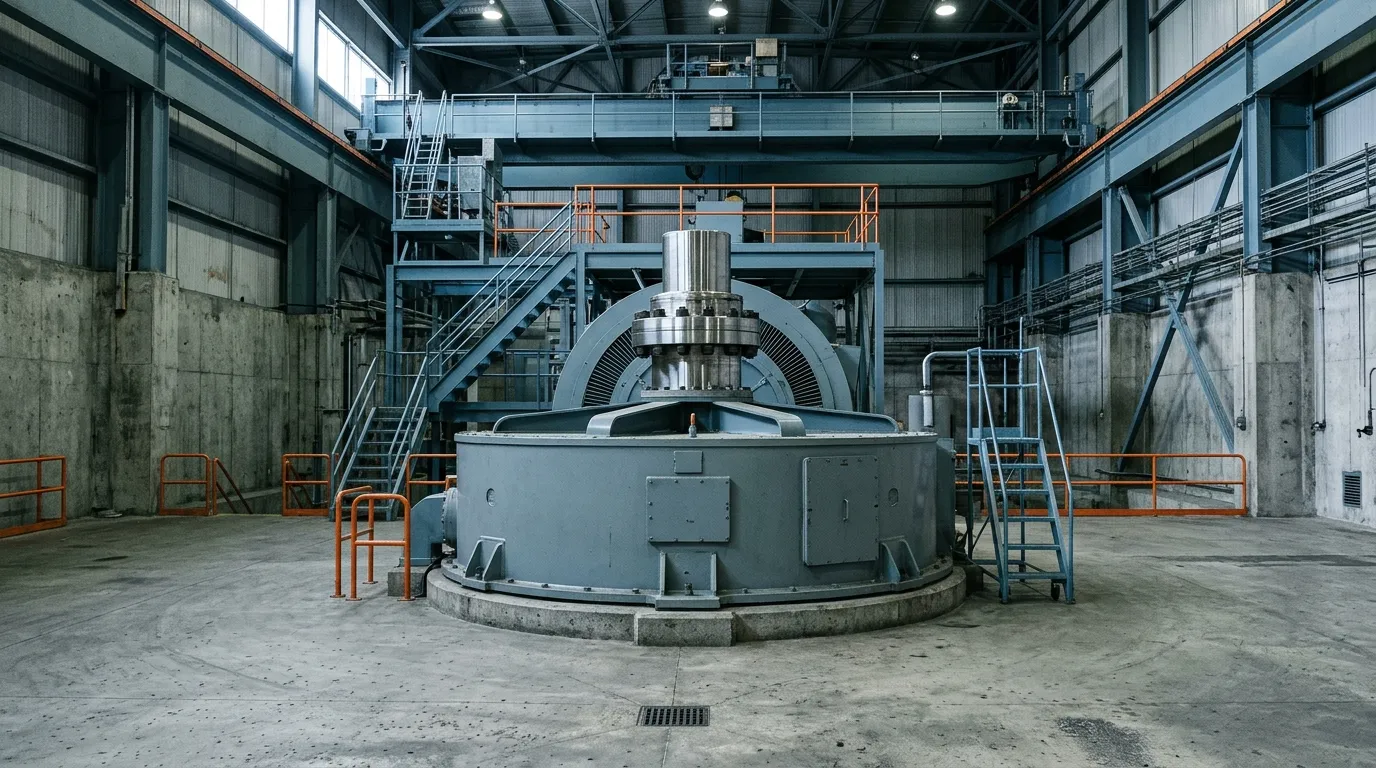
Why a Battery Tracks the Signal Better Than a Turbine
A turbine responds through fuel, steam or water: valves move, pressure recovers, output follows, and the chain takes tens of seconds. A battery responds through a static converter in well under a cycle, with no minimum load, no start-up cost and no fuel penalty for reversing, so it can follow a signal that changes sign every few seconds.
That capability is why market design split the product in the first place, and why it has since changed shape. Until 2025, PJM ran two signals: RegA for slower, sustained-output resources such as steam and combustion units, and RegD for faster, dynamic resources such as battery storage — a distinction the Commission restated in its 2018 order rejecting PJM's proposed regulation-market changes. The same order records how that design moved: PJM built RegD to be unconditionally energy neutral over 15 minutes, and after the January 2017 signal redesign it was only conditionally neutral, over 30 minutes. Since 1 October 2025 that split is gone: PJM's Regulation Redesign Phase 1 consolidated RegA and RegD into one bidirectional signal that every resource assigned regulation follows, RegD participation ended on that date, and clearing and commitment moved from hourly to 30-minute intervals. The new signal is faster than the old RegA and slower than RegD — a change in the duty cycle a battery follows, not in the size of the obligation it takes on.
Energy-neutral is not the same as free. Every reversal moves current through the cells and through the converter, and round-trip losses mean the battery ends the hour where it started in charge but not in wear. PJM's market manual accounts for that directly: the mileage portion of a cost-based regulation offer includes energy storage unit losses, which is the mechanism that stops a battery from being paid as if movement cost nothing.
How the Service Is Measured and Paid
Measurement is where regulation stops being physics and becomes a contract: the resource is told to move, and the operator scores the error between instruction and response.
PJM's scoring is a precision score, and the arithmetic runs in the opposite direction to the error it measures: the lower of two absolute errors — signal at the interval start against the response at the start, and signal at the interval start against the response at ten seconds — divided by the average of the awarded megawatts and the average absolute interval signal gives an error ratio, and the published score is one minus that ratio, so a resource that tracks perfectly scores 100%. A resource whose historic score falls below 40% is disqualified from the regulation market until it requalifies, as Manual 11 sets out. Since the October 2025 redesign the score is computed on 30-minute commitment intervals and the historic score averages 200 of them rather than 100 hourly intervals. Payment follows the same logic: an offer has a capability price in dollars per megawatt and a mileage price in dollars per megawatt of movement, and the clearing price separates into capability and performance components.
Three markets, three sets of terms:
Market | Products | Response requirement | What the payment covers |
|---|---|---|---|
PJM (US) | one bidirectional regulation signal since 1 Oct 2025 (RegA and RegD consolidated; RegD retired) | new signal faster than RegA, slower than RegD; 30-minute commitment | capability ($/MW) plus mileage ($/ΔMW), performance-weighted, with lost opportunity cost |
Dynamic Containment, Moderation, Regulation | 1 s for containment and moderation, 10 s for regulation | availability per MW per hour, with duration limits of 15, 30 and 60 minutes | |
frequency containment reserve | automatic, local, symmetric | capacity per MW per four-hour block, bought in a daily auction by 12 TSOs in 9 countries |
Two cautions. These are auction markets: the clearing price is set by the marginal bid, so a market with few qualified batteries clears higher than one where a fleet has arrived. And the rules move — PJM's manual is at revision 137, effective July 2026, and its revision history is a list of redesigns. The version that governs a project is the one in force on its commissioning date, not the one in a 2020 vendor deck.
Who ends up paying is set in settlement, not in the auction. In PJM, Manual 11 §3.10 states that the cost of regulation service is charged to the load-serving entity's real-time load ratio share: the resource is paid for performance, and the bill is spread across load rather than absorbed by the market operator.
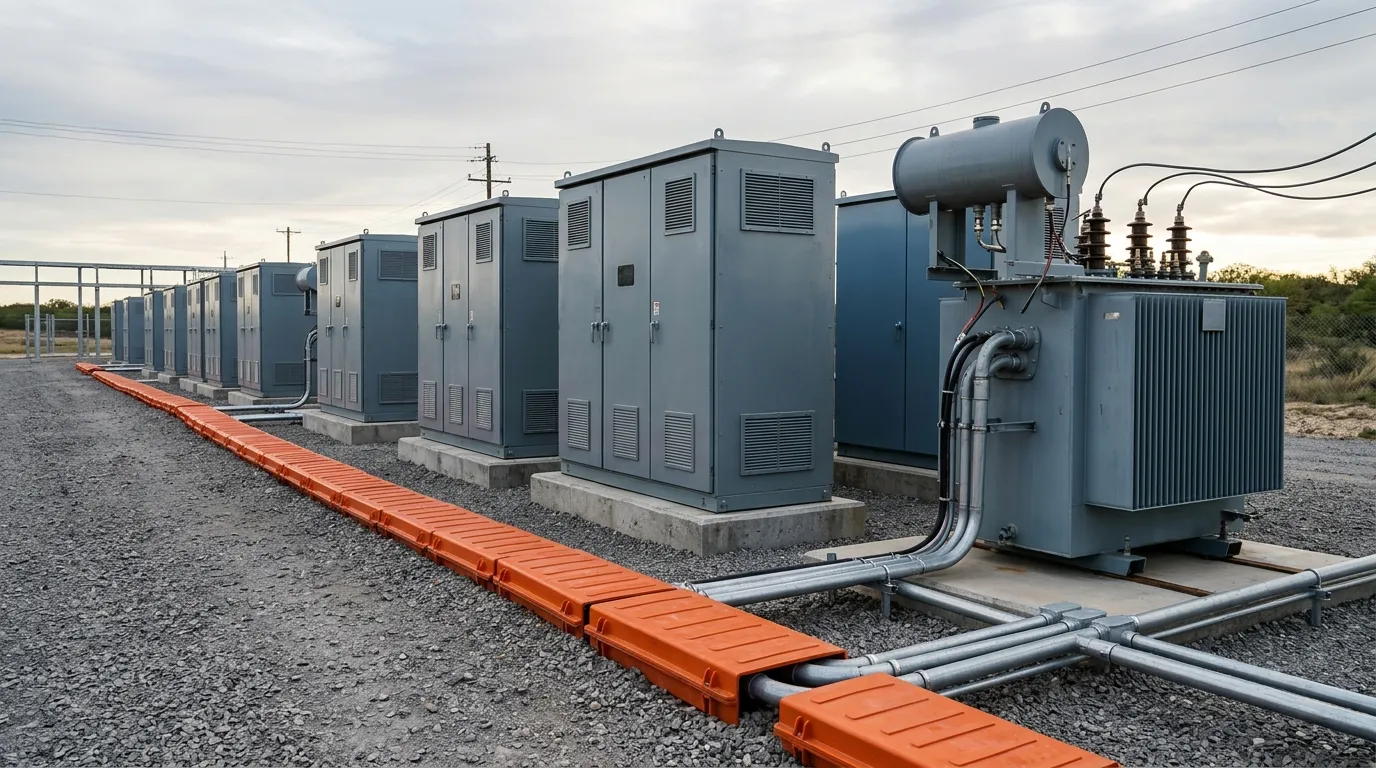
What Sets the Revenue: MW First, MWh Second
A regulation contract is bought in megawatts and constrained in megawatt-hours: the first is the product, the second the fuel, and it is usually smaller than developers expect.
Energy neutrality means net energy over the settlement window is close to zero. It began as a design property of the RegD signal — unconditionally neutral over 15 minutes, then only conditionally neutral over 30 minutes after the January 2017 redesign — and what outlasted it is a pricing consequence rather than a design goal: the award is a power obligation, not an energy one, which is why a one-hour system can hold a large regulation award. It says nothing about throughput. Take a 10 MW resource following a signal with an average absolute duty cycle of 15% of its range: that is 1.5 MW of average movement, or 36 MWh through the cells every day, about 13 GWh a year. Whether that is acceptable is not a market question but a warranty question — the throughput allowance in a battery storage warranty decides whether the revenue survives year five.
Duration sets which products are open. A 15-minute containment product fits a half-hour system; a 60-minute regulation product does not, and stacking a 30-minute award behind a one-hour battery leaves nothing for the reserve obligation it also carries. The same arithmetic governs ramp rate compliance, and it is why a project sold on megawatts alone tends to be undersized on energy.
What Erodes the Revenue
Four forces compress a frequency regulation business case.
Market saturation. Regulation is procured by auction everywhere above. When a wave of batteries qualifies in the same year, the marginal bid sets the price and the launch premium disappears.
Performance penalties. Accuracy is scored per interval. A resource that is late, or clips at the top of its range, loses twice: in the performance multiplier and in the qualification test that follows.
Opportunity cost. Capacity committed to regulation cannot also sell energy or count toward a capacity obligation. PJM compensates the foregone energy; not every market does.
Degradation. Every MWh of movement is throughput, so the goal is maximum accuracy per unit of wear, not peak accuracy.
How to Read a Frequency Regulation Offer
Five questions turn a headline revenue figure into something a board can underwrite.
- Which product, which signal, what response time is scored? One-second containment and ten-second regulation need different control tuning.
- How many MW, for how many minutes? Check sustained duration against usable energy, not nameplate.
- What is the scoring formula and the disqualification floor? In PJM, a 40% historic performance score.
- What throughput will the signal put through the cells? Average absolute duty times rated MW times 24, compared with the warranty allowance.
- What is excluded from the stack? Energy, capacity and lost opportunity cost are separate lines in some markets and bundled in others.
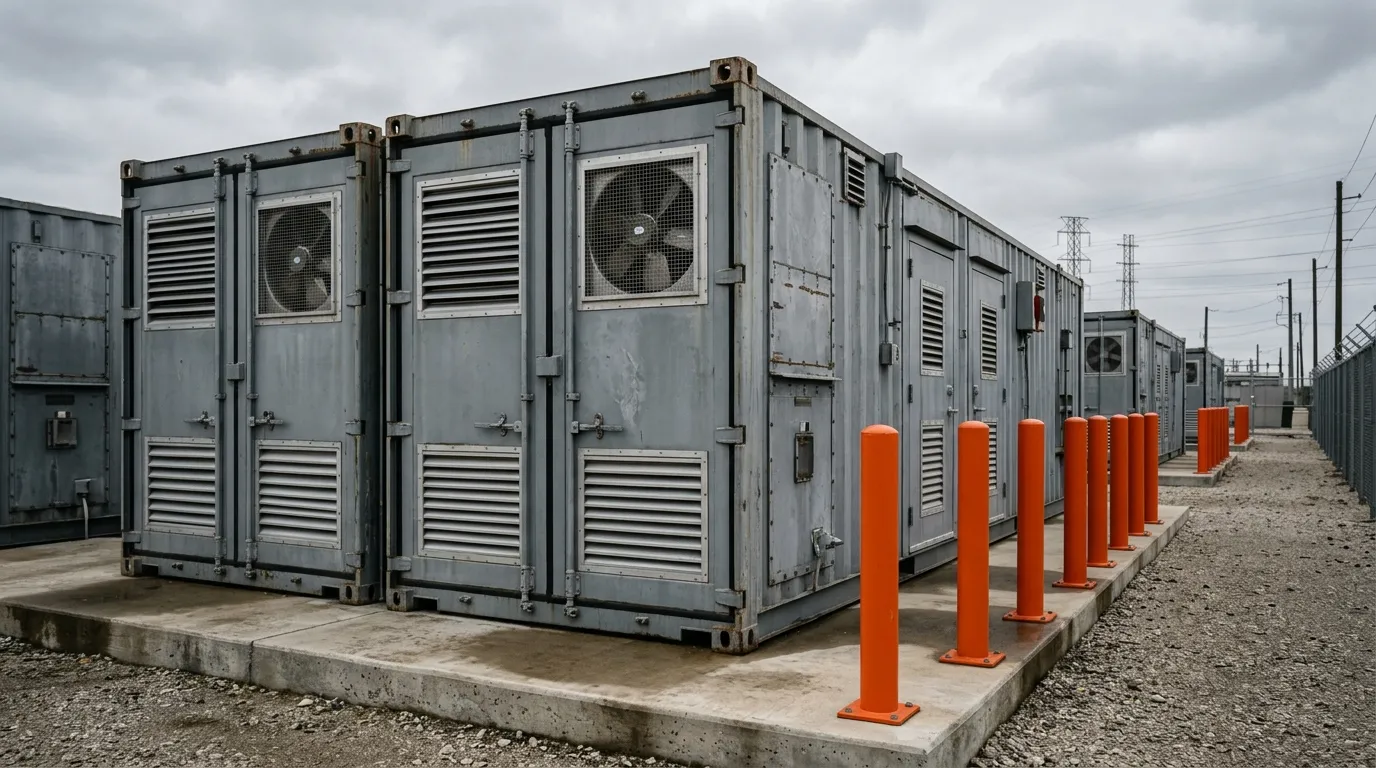
How Hua Power Engineers Frequency Response Into a BESS
Hua Power is a battery energy storage system integrator founded in 2015 and headquartered in Shenzhen, with more than 400 projects deployed and annual production capacity above 2.4 GWh. Frequency response is a controls and warranty problem before it is a cell problem, so the work starts with the settings that decide whether a site will be paid or penalized.
On the grid frequency regulation side, the power conversion system is configured with an explicit droop curve, deadband and response time per market, and the inverter platform — including grid-forming modes for weak networks — is specified against the scoring formula, not a generic fast-response claim. Instructions and responses are logged at the settlement interval so the performance score stays auditable, and the same records feed the throughput accounting behind the warranty. For utility-scale awards, the containerized platform carries the duration the product requires, sized from the signal duty cycle rather than a round nameplate number.
If you are evaluating a regulation award and want the control settings, duration and warranty throughput checked against it, send the project details — market, product, MW and MWh, and scoring rules are enough to start.