
Baseload power is the minimum level of electrical demand a grid must serve continuously — the slice of load that is present around the clock, before the daily peaks are added on top. It is a property of the load, not a class of power plant. Meeting it takes steady, dispatchable supply, and on modern grids an increasing share of that supply comes from storage rather than from large always-on thermal units.
The term carries two ideas that are often collapsed into one. The first is a measured quantity: a floor under demand that never falls to zero. The second is a category of equipment — the coal, nuclear and combined-cycle plants built to sit on that floor. Confusing the two produces statements that sound technical but are not, such as "baseload is dead," when what is changing is which resources serve the load, not whether the load exists. This entry untangles the word, maps it against the neighbouring terms it is mixed up with, and shows why storage now enters the picture.
What Baseload Power Actually Measures
Baseload is a demand figure: the lowest level of electricity consumption on a grid across a representative window — a day, a week, a season (Wikipedia, Base load). It can be read off a load duration curve. The U.S. Energy Information Administration defines it as "the minimum amount of electric power delivered or required over a given period of time at a steady rate" (EIA glossary, base load).
Two things follow. First, baseload is a line on a chart, not a fuel: it says nothing about which resource produced the electrons, only that some resource held its output steady enough to sit beneath the daily swing. Second, its size is set by the demand side — homes, industry, commerce, data centres — so it tracks how much power a society draws around the clock, not the weather.
Baseload, Intermediate and Peaking: How a Grid Is Layered
Once baseload is understood as a demand floor, the rest of the grid falls into place as a stack. Demand rises above the floor through the day, peaks in the morning and evening, and falls back overnight. Each band is served by resources chosen for how well they follow it.
Load band | What it is | What usually serves it |
|---|---|---|
Baseload | The continuous minimum, present ~24/7 | Resources held at steady output: nuclear, large coal, combined-cycle gas, run-of-river hydro, geothermal, and increasingly storage |
Intermediate | The regular daily rise above the floor | Load-following plants that ramp up and down through the day |
Peaking | The short, sharp highs on the system | Fast-start units — open-cycle gas turbines, hydro peaking, and batteries |
The dividing lines are not fixed. A plant that sits at baseload on a winter weekday may cycle into the intermediate band by spring as demand shifts, and the same battery can shave a peak in one season and firm a plateau in another — the mechanics of the first are covered in our note on peak shaving.
One metric runs through all three bands: the capacity factor, the ratio of energy actually produced to the energy a plant could have produced running flat out. Nuclear and combined-cycle baseload plants historically ran at the highest capacity factors because they were built to stay on; peakers run low ones because they are called only for the extremes.
What Counts as a "Baseload Power Plant"
The plants the industry calls baseload plants share a design premise: high fixed cost, low marginal cost, and an operating point that is expensive to move. Coal and nuclear stations are the classic examples (energyeducation.ca, Baseload power); combined-cycle gas, large hydro, geothermal and biomass have filled the same role where the resource allows.
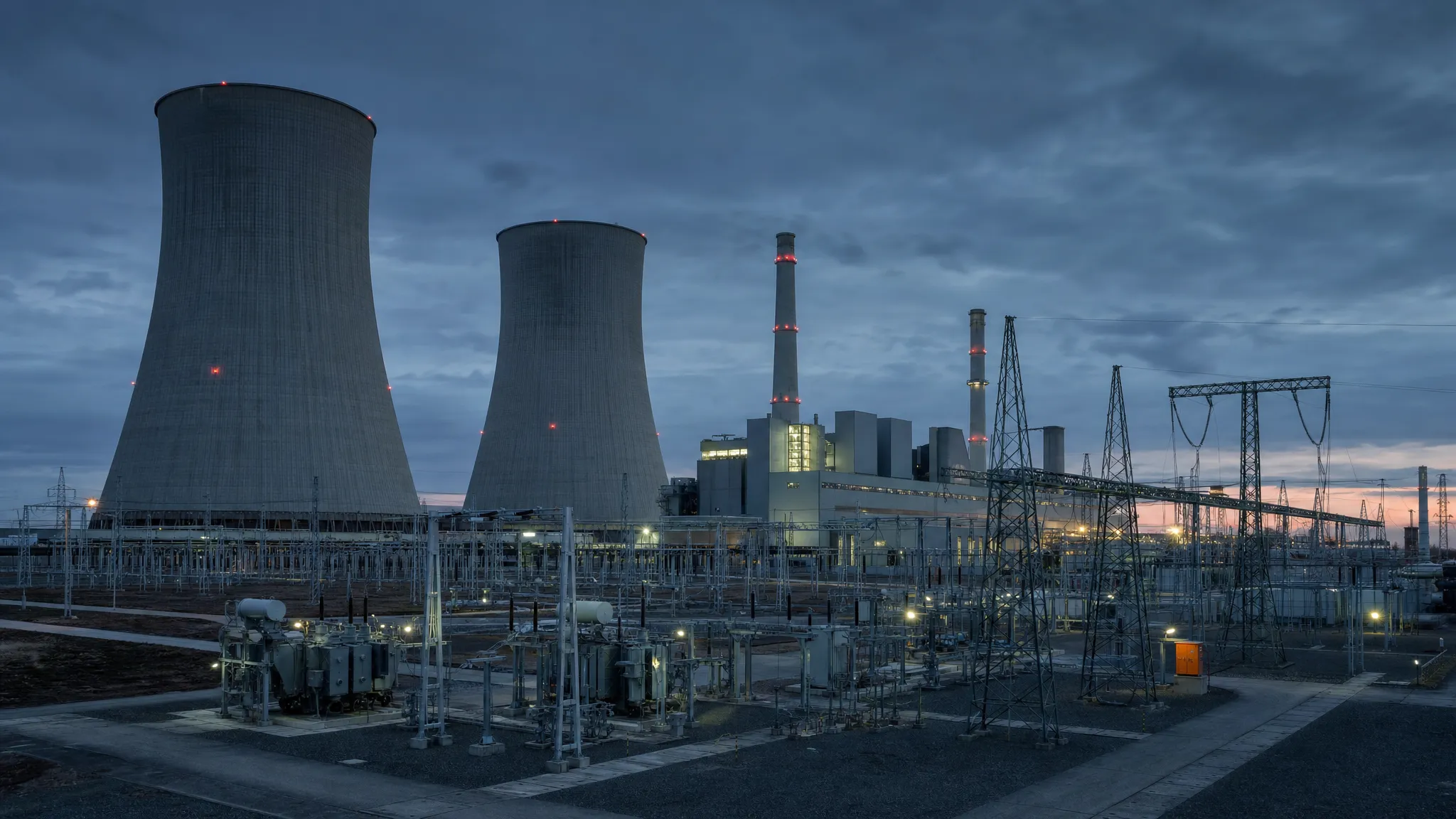
"Always on" is not the same as "unable to move." Some nuclear stations in France are operated as load-following plants and do adjust output to track demand; modern combined-cycle units can cycle far more than their predecessors. What makes a plant a baseload plant in practice is not a physical inability to vary, but an economic preference to avoid varying — the fixed costs are already sunk, so running flat out is usually the cheapest way to recover them.
That logic is also why the category is eroding. When variable renewables push midday wholesale prices toward zero, a plant that must keep running to stay economic finds fewer hours in which its model holds.
Why the Word "Baseload" Is Contested
A reader searching for "baseload power" will quickly meet articles declaring that baseload is a myth, outdated, or functionally extinct. The dispute turns almost entirely on the conflation described above.
The load is not going anywhere: every grid still has a demand floor, and it still has to be met. What has changed is the set of resources able to meet it economically. Critiques from think tanks and advocates target the plant type, not the load: they argue that "baseload resource" has been used loosely to imply that a particular plant is uniquely reliable, when reliability in a modern grid is a property of the portfolio rather than of any one generator (Institute for Policy Integrity, The Myth of "Baseload" Power).
Read carefully, both sides agree on the underlying physics. There is a floor under demand; it has to be served continuously; and no single resource type is the only way to serve it. The useful takeaway is a habit of speech: when someone calls a plant "baseload," ask whether they mean it is steady, cheap to run, or needed for reliability. Those are three different claims.
Firm Capacity: The Property Buyers Actually Pay For
The word that has largely taken over from "baseload" in planning and procurement is firm capacity — the output a resource can be counted on to deliver when the system is stressed, not merely on average. It is the property an offtaker, a utility or a capacity market is really buying when it commits to a plant.
Firm capacity is measured differently from energy. A resource earns capacity credit in proportion to how reliably it can show up during the tightest hours of the year, and for storage that credit depends heavily on duration: a two-hour battery covers a two-hour gap, not an eight-hour one (NREL, Grid-Scale Battery Storage). A buyer asking "what provides baseload?" is, in a market designed around firm capacity, really asking "what can I count on, for how long, with what confidence?"
That reframing is what puts storage on the table. A battery does not generate energy — it moves it in time — but a correctly sized one can convert a variable output into a firm, scheduled one, a service described as firming.
Why Storage and Renewables Change the Baseload Picture
Variable renewables change the shape of the load the grid must serve, not just the supply that serves it.
Solar output follows a single daily arc and collapses into the evening, while wind blows on its own schedule. On a system with a large solar fleet, midday net demand — total demand minus renewable output — falls steeply, then ramps hard in the late afternoon. That reshaped curve is why batteries on many grids are sized for around four hours: long enough to discharge into the evening peak when the sun is gone and the load is high.
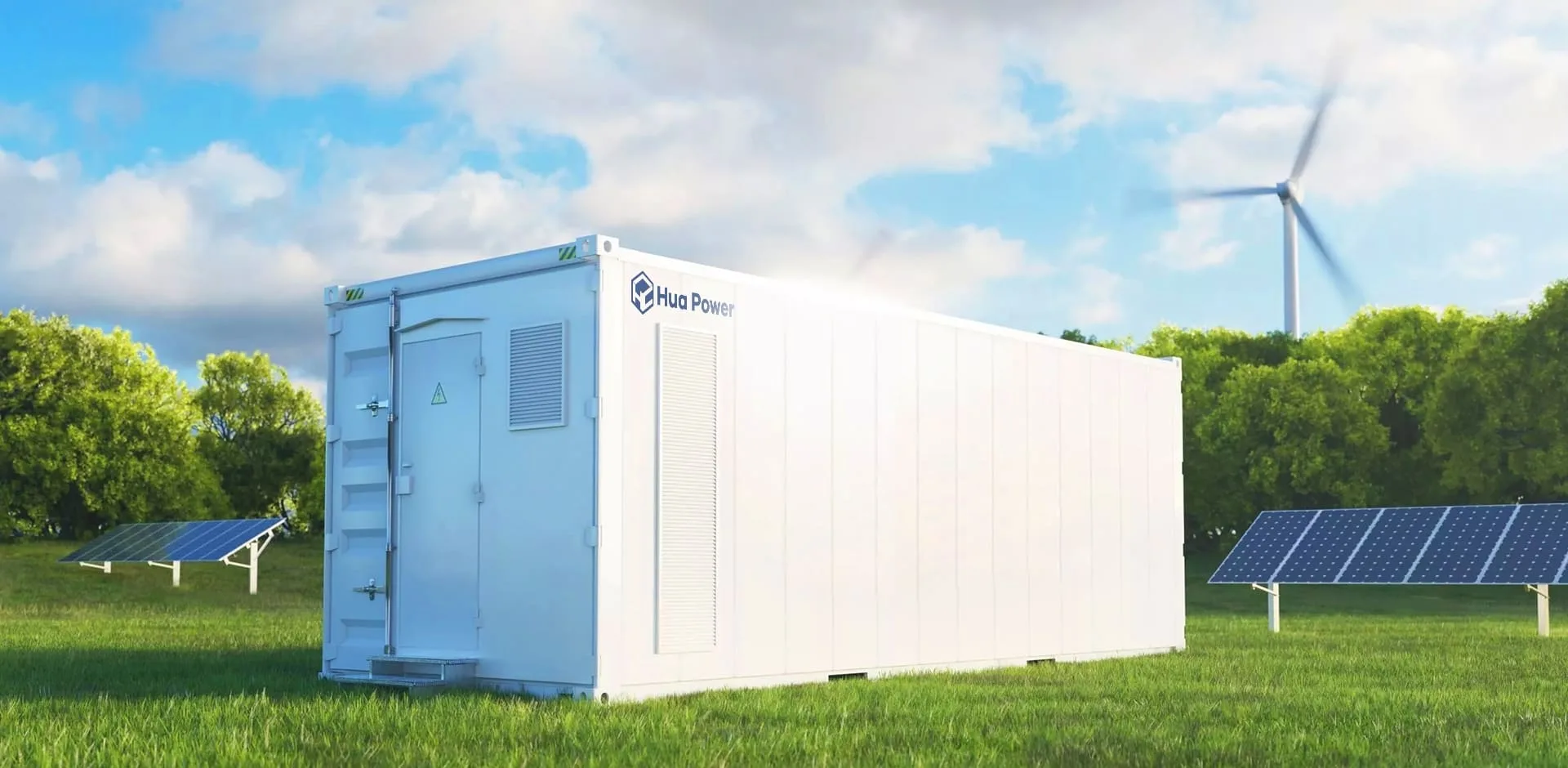
Two effects follow. Curtailment rises: when the local grid cannot absorb what a plant is producing, output is spilled, and that spilled energy becomes the cheapest charge a battery will ever take. And flexibility becomes the scarce commodity — the ability to move supply up and down quickly — where baseload plants were built to do the opposite. Demand response cuts the other way, moving consumption out of the peak rather than adding supply, which lowers the height of the curve the firm resources must cover. As variable renewable penetration rises, systems need more flexible resources, not more baseload generation (IEA, Integrating Solar and Wind).
Dispatchable vs Intermittent: A Spectrum, Not Two Camps
It is tempting to sort resources into "dispatchable generation" (you can turn it up) and "intermittent supply" (you cannot). The useful view is a spectrum of how quickly and how predictably a resource can follow an instruction.
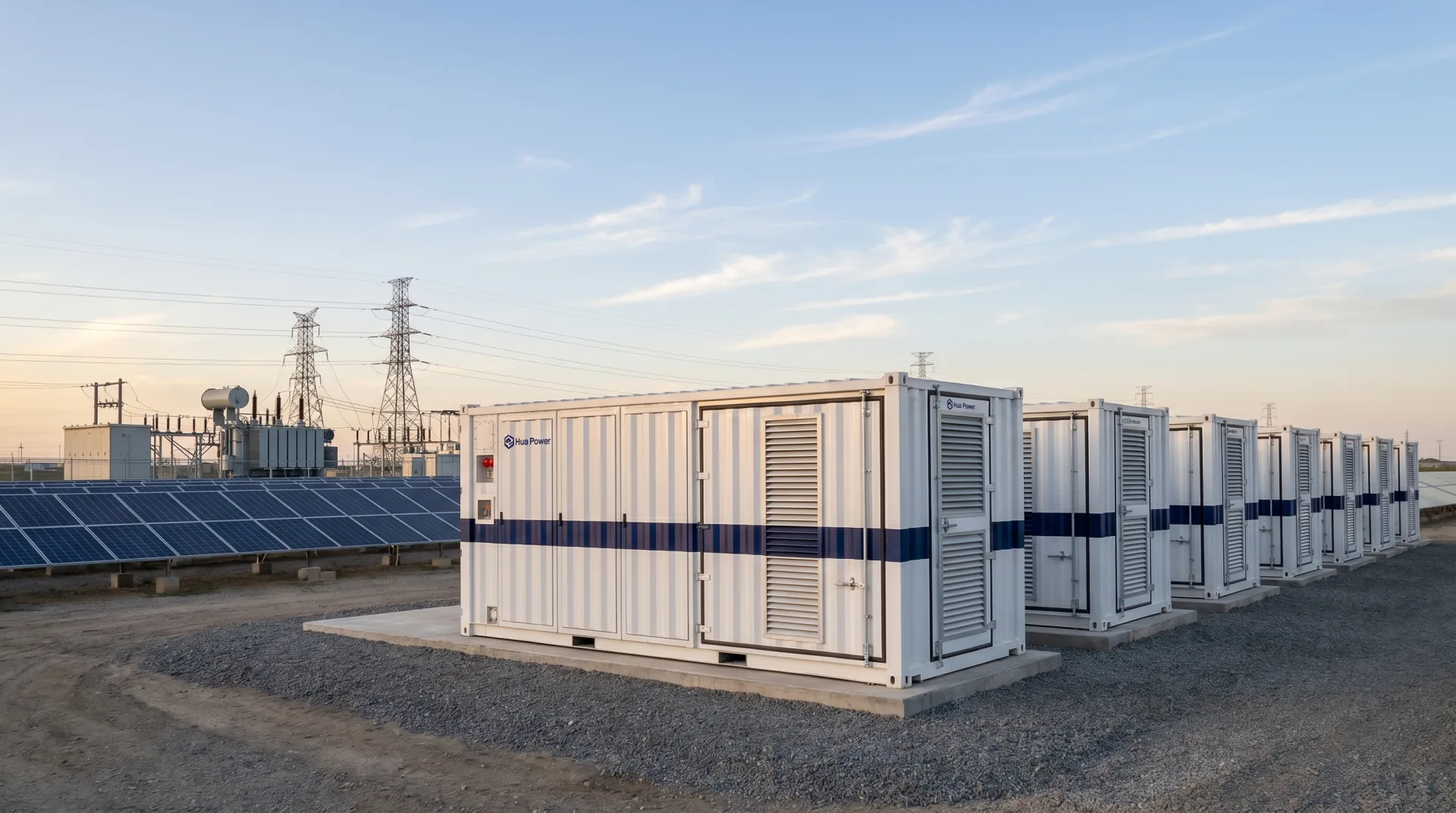
At one end sit the fast responders — a battery discharging in milliseconds, a hydro unit at full gate. In the middle sit combined-cycle and large thermal plants that ramp over minutes to hours. At the other end sit wind and solar, whose output follows the weather rather than a signal. Storage is unusual in that its power and energy ratings are independent: the converter fixes how fast it responds, the installed cells fix how long it sustains that response, and duration is a design choice rather than a fuel constraint.
The EIA reported that utility-scale battery storage capacity in the United States grew at an average of about 70% a year over the three years to 2025 (EIA, Today in Energy). That growth reflects the value the grid places on fast, dispatchable response rather than on bulk energy sales. Where a converter is specified for grid-forming control rather than simple grid-following, it can also help hold voltage and frequency on a weak network, a capability increasingly written into interconnection rules.
What to Check When a Project Is Called "Baseload" or "Firm"
Because the vocabulary is loose, the safest habit is to convert every claim into a measurable one. Four questions resolve most of the ambiguity:
The claim | The question that tests it |
|---|---|
"It's a baseload resource" | Steady output, or simply cheap to run? Both are legitimate — they are not the same thing |
"It's firm" | Firm to what level, over what window, at what confidence? A 95% guarantee costs far more storage than an 80% one |
"The battery covers it" | For how many hours, at what state of charge, on a low-generation day? Duration, not nameplate power, is usually the binding number |
"It's reliable" | Demonstrated how, and under whose test? An untested setting cannot be defended to an offtaker or a regulator |
Two lessons stand out. First, no single number proves firmness — a plant can have a high capacity factor and still fail during the one week the system needs it most. Second, the numbers that decide whether a storage system can deliver its promised profile are usable energy, round-trip efficiency, cycle life and the power margin left free for fast services. A container that meets its nameplate capacity but has no headroom left after the site's own duty will not firm a schedule when the weather turns.
How Hua Power Approaches Firm, Baseload-Class Supply
Hua Power is a battery energy storage system integrator founded in 2015 and headquartered in Shenzhen, with more than 400 projects deployed and production capacity above 2.4 GWh. On a project that needs a firm or baseload-class supply profile, our role is deliberately narrow: supply the storage, the power conversion and the control layer that decide whether the site can hold that profile, and make the interface to the grid-side obligation explicit.
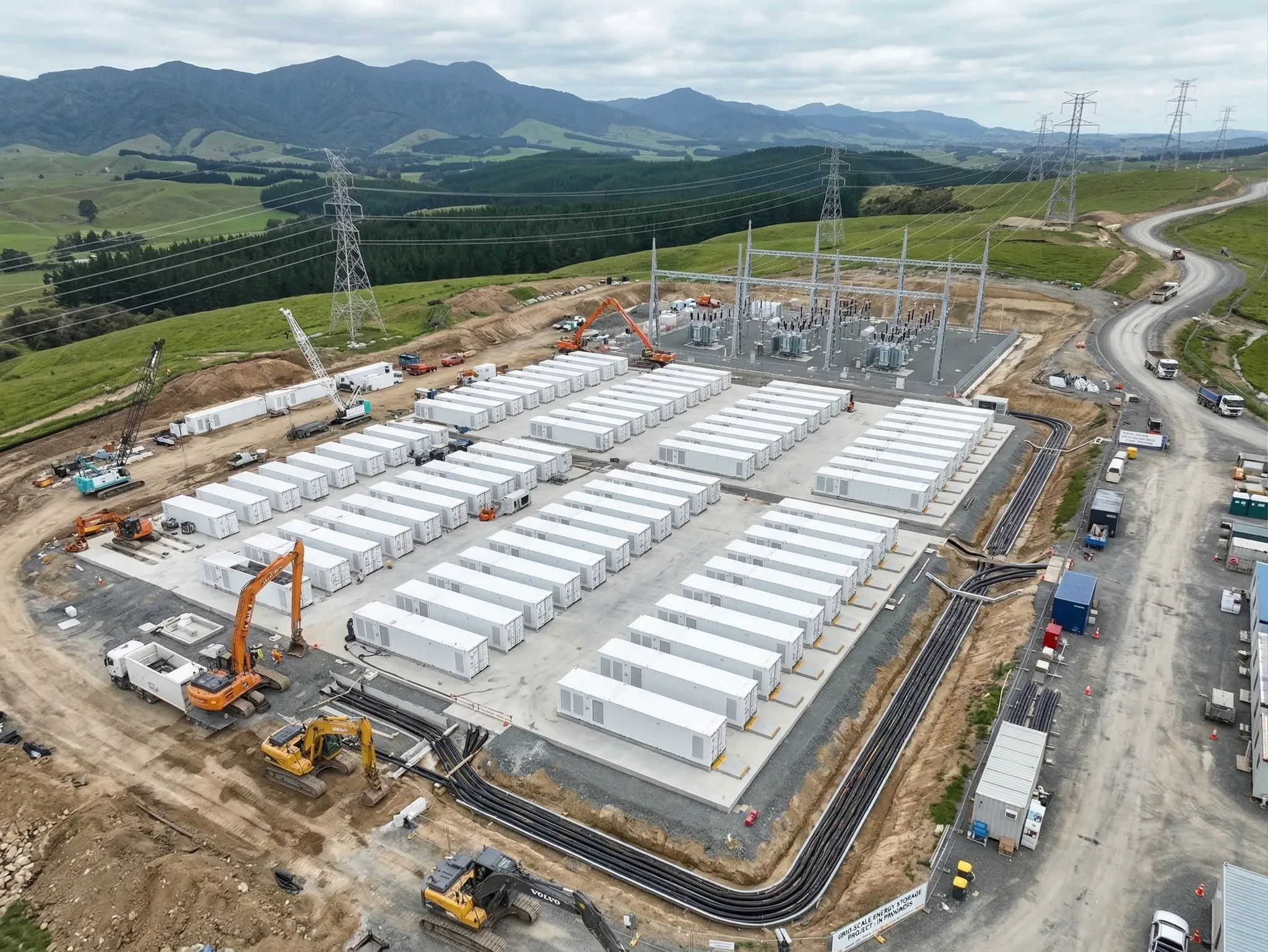
Our liquid-cooled container range is specified by usable energy, round-trip efficiency, cycle life and available power margin — the four numbers described above that decide whether the reserved power and reserved charge window exist at all.
The device that turns those numbers into a dependable profile is the site controller: an energy management system that reads the requirement and commands the battery to meet it, staying inside the safe operating limits reported by the battery management system.
Not every site carries the same duty. A utility-scale project contracted to a firm block is engineered against its own interconnection requirements and may also sell frequency regulation from the same converter, while a commercial site may care only about shaving its own peak. Where several duties land on one battery they compete for the same headroom, so they have to be coordinated in the control layer rather than sold as independent features. The chemistry underneath sets the ceiling: nearly all grid-scale storage today uses lithium-ion battery cells, and whether they are LFP or nickel-based changes the cycle life and thermal headroom a duty budget can draw on.
Talk to us before the requirement is frozen. The earlier the firmness definition — what level, over what window, at what confidence — is fixed, the more precisely the battery can be sized without overbuilding. Contact us and we will tell you which parts of the requirement sit with your site design and which with the storage system.