
A kilowatt (kW) is a unit of power — the rate at which energy is transferred at a given instant — and a kilowatt-hour (kWh) is a unit of energy, the quantity of energy moved over a period of time, where one kilowatt-hour equals one kilowatt sustained for one hour. Power in kW sizes the equipment that has to carry the flow at any moment; energy in kWh sizes the store that holds it. A battery rated 100 kW / 200 kWh can discharge at up to 100 kW, holds 200 kWh of energy in total, and therefore runs for two hours at full power.
That is the whole distinction, and it fits in three sentences. What makes it worth going a level deeper is that the two numbers are not two spellings of one figure: they answer different questions, they size different pieces of equipment, and their ratio — the one number a buyer is rarely quoted — is usually what decides whether a system fits the job. Most explanations stop at "kW is power, kWh is energy"; this entry stays with a single 100 kW / 200 kWh system long enough to let the two numbers behave differently from each other.
This is written for the buyers, specifiers and integrators who meet both units on a datasheet or a utility bill: what each one measures, what each one sizes, and how to read the pair together before a system is ordered.
What Power and Energy Actually Measure
Power is a rate. The watt, its unit, is one joule per second — the SI unit for the rate at which energy is transferred, which NIST defines within the International System of Units (NIST, SI Units). A kilowatt is simply 1,000 watts. Power says how fast energy is moving right now: an inverter rated 100 kW can move energy at a rate of 100 kW at this instant.
Energy is a quantity. The kilowatt-hour is not part of the SI system proper — it is a non-SI unit of energy accepted for use with it — but it is the unit utilities bill and battery datasheets quote. The International Electrotechnical Vocabulary defines the watt hour as 1 Wh = 3,600 J, and records that the multiple kWh is the one commonly shown on electricity meters (IEC 60050, Electropedia). A kilowatt-hour is an amount: how much energy was moved, in total.
The water analogy makes the split intuitive. A kilowatt is the flow rate through a pipe — litres per second. A kilowatt-hour is the total volume that passed — litres. A wide pipe and a narrow pipe can both deliver a thousand litres; one does it in minutes, the other in hours. Power is the width of the pipe; energy is the size of the tank.
It is worth asking why the kilowatt-hour exists at all, when the joule is the SI unit of energy. The answer is scale: one joule is the energy of a one-watt device running for one second — a rounding error next to what a building uses. Ten kilowatt-hours, a plausible household day, is 36 million joules. Utilities bill and datasheets quote in kWh because the unit fits the quantities people actually handle.
The failure mode is treating the two as interchangeable. "A 200 kWh battery" says nothing about whether it can run a 200 kW load — it generally cannot, unless its power rating allows it — and "a 100 kW system" says nothing about how long it runs once the grid goes away and the sun is down.
The One Equation That Connects Them
Everything else follows from one relationship: energy = power × time, or, in the units this field uses, kWh = kW × h.
It is worth reading in all three directions. A 1 kW load held for one hour consumes 1 kWh. The U.S. Energy Information Administration states the relationship from the measurement side and gives a household example: a 40-watt (0.04 kW) light bulb running for five hours uses 0.2 kWh (EIA, Measuring electricity). Rearranged, the third version is the one buyers use most:
duration (hours) = energy (kWh) ÷ power (kW)
Know any two of power, energy and time, and the third is fixed. That is why a storage system cannot be specified by one number: choosing 200 kWh and 100 kW is choosing a two-hour system, whether or not anyone said so out loud.
The same relationship scales without changing shape. A 1 MW source running at full output for one hour delivers 1 MWh — 1,000 kWh. A 2 MW load held for three hours uses 6 MWh. The units scale by factors of a thousand; the arithmetic in the middle never does.
A Worked Example: What a 100 kW / 200 kWh System Can and Cannot Do
Take the system its rating names: 100 kW of power, 200 kWh of energy. The two numbers do different jobs.
- At full power, it runs for two hours. 200 kWh ÷ 100 kW = 2 hours. Discharging at the rated 100 kW empties 200 kWh in two hours.
- At half power, it runs for four hours. Draw only 50 kW and the same 200 kWh stretches to four hours. The energy did not change; the rate did.
- It cannot discharge at 200 kW. The 200 kWh is a store, not a permit. The power conversion equipment is rated to 100 kW, so 200 kW is out of reach — the cells may hold the energy, but nothing can move it that fast. This is the single most common way the pair is misread.
Scaling the example does not change the logic, only the numbers. Double the energy to 400 kWh at the same 100 kW and the system becomes a four-hour machine. Double the power to 200 kW at the same 200 kWh and it becomes a one-hour machine — more costly on the power side, cheaper on the energy side. The two dials turn independently.
Two refinements matter at the edges. First, 200 kWh is usually a nameplate figure; the energy actually available in a cycle is smaller, because a depth-of-discharge limit protects the cells and a reserve may be held back for other duties — the depth of discharge entry sets out where that window comes from. Second, energy is lost on the way in and out: the round-trip efficiency of a system means more than 200 kWh has to be put in to get 200 kWh back out. Neither refinement changes the distinction between power and energy; both change the numbers on either side of it.
The Two Numbers Size Different Equipment
This is where the confusion starts to cost money. In a storage project, kW and kWh do not describe the same hardware — they size two separate chains of equipment, and both have to be bought.
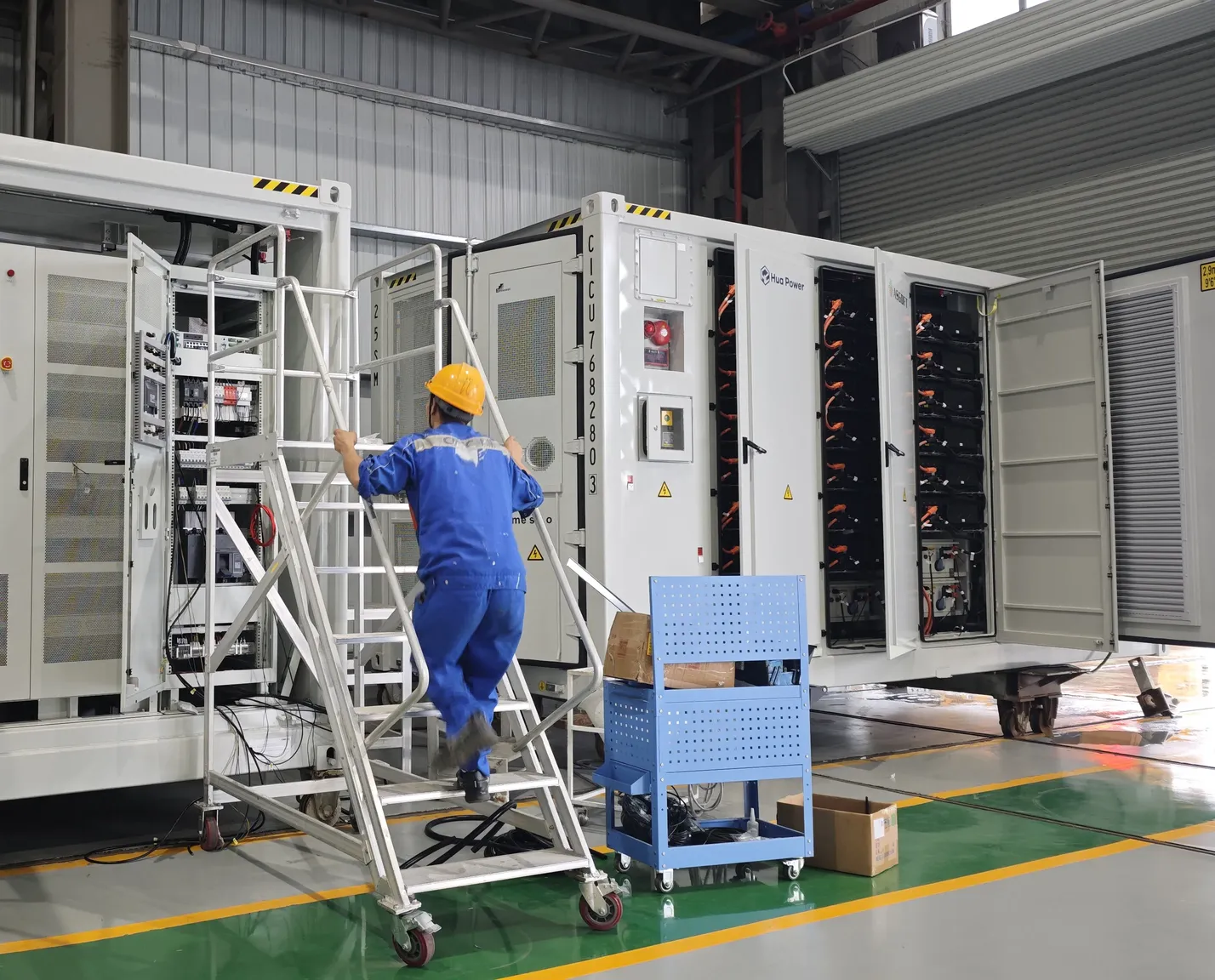
Power (kW) sizes everything that carries the flow at an instant: the power conversion system, the cables and busbars, the transformer, the switchgear, the breaker, and the protection that has to interrupt a fault. A project that needs more power buys more of this equipment even if its energy requirement stays the same.
Energy (kWh) sizes everything that stores the quantity: the cell count, the modules, the racks, the number of cabinets or containers, and — with them — the floor area, the weight and the cooling duty. A project that needs more energy adds cells, not conductors.
The two costs move independently, which is why energy and power are quoted and priced separately: energy per kWh, and the plant that carries power per kW. Two facilities can hold the same 200 kWh and still need completely different hardware — one a high-power, short-duration system built to answer a demand spike, the other a low-power system built to ride through an evening. Same tank, different pipe.
Consider two briefs. A site with a sharp demand spike lasting twenty minutes wants high power and little energy — a small tank and a wide pipe. A site supplying a steady overnight load wants the opposite: modest power and a large tank. Quoted only in kWh, both briefs can land on the same number, and a supplier working from it alone will size the wrong machine.
On a commercial and industrial site, the power requirement is usually set by the largest load or the sharpest peak, and the energy requirement by how long that peak has to be covered; the two are specified side by side, as the sizing logic on our C&I energy storage page describes.
Duration Is the Ratio Buyers Should Ask For
Divide energy by power and the result is a duration in hours — and that ratio is a design choice, not a property of the battery:
Energy | Power | Duration |
|---|---|---|
100 kWh | 100 kW | 1 hour |
200 kWh | 100 kW | 2 hours |
400 kWh | 100 kW | 4 hours |
200 kWh | 50 kW | 4 hours |
Duration ties a system to a duty. Grid services are typically fast and shallow, which suits a short duration; shifting load from an expensive peak to a cheap trough needs hours, which suits a longer one. The common two-to-four-hour band is not a technical limit of lithium cells — it is where the economics of most commercial peak-shifting work currently sit.
Two systems with the same energy and different power, or the same power and different energy, are built for different duties. The ratio has a name in cell terms as well: power divided by capacity is the C-rate, the figure that tells a battery how hard it is being worked — and working it harder consumes more of its cycle life than the same energy cycled slowly.
So "how big is the battery?" is an incomplete question. "100 kW and 200 kWh" is a two-hour system; change either number and the machine has changed with it.
Where kW and kWh Land on the Bill
Many commercial and industrial tariffs charge for both, on different lines. Consumption is billed in kWh — the total energy used over the month. Peak demand is billed in kW — the highest rate at which power was drawn, held over a defined interval, whether or not it was drawn for long. The EIA separates the two concepts directly: capacity is the maximum power a source can supply at a moment, while generation is the energy it produces over time, and for a given power rating the energy delivered depends entirely on how long it runs (EIA, generation and capacity, and its FAQ on the difference).
That split is why a storage system can lower a bill two different ways. Shaving the peak kW reduces the demand charge; shifting kWh from an expensive period to a cheap one reduces the energy charge. The two are driven by different parts of the control logic, and a system sized for one is not automatically sized for the other. Holding both in view at once is the job of the energy management system, which decides when the battery charges, when it discharges, and how much power it commits at a peak.
A tariff that bills demand separately makes the distinction concrete: a site can draw very few kWh over a month and still pay a large demand charge if, on one afternoon, it pulled a high power for fifteen minutes. Storage lowers that peak — a power-side effect — even when the energy it moves is small.
kW, kWh and Their Neighbours: kWp, kVA, MWh and the Wrong Way to Write It
Three neighbours cause most of the remaining confusion, and one error is common enough to name.
kWp (kilowatt-peak) is a solar rating, not an output. It is the direct-current power a module or array would produce under a fixed set of test conditions. A 100 kWp array does not produce 100 kW for most of the day; it produces up to that figure, and usually less.
kVA (kilovolt-ampere) is apparent power, the vector sum of real power (kW) and reactive power. It matters because cables, transformers and generators are rated in kVA while the useful work is rated in kW; the ratio between them is the power factor. On storage and inverter equipment both figures usually appear, and they are not the same number. A load drawing 100 kW at a power factor of 0.9 also draws about 111 kVA, and it is the 111 kVA that the cable and transformer have to carry — sizing them from the 100 kW alone leaves them undersized.
MWh (megawatt-hour) is simply 1,000 kWh — the scale at which utility-scale storage is counted. A 200 kWh cabinet is 0.2 MWh, and the same unit family continues upward to GWh. How these units and their symbols should be written is set out in the international style guide for them, NIST Special Publication 811 (NIST SP 811).
And the error: kW/h is wrong. A kilowatt-hour already contains the time — it is power multiplied by a duration — so writing kW/h multiplies by time once more and then divides by it. The correct form is kWh. It is worth being strict about this: the mistake is common enough to appear in search queries, and on a datasheet it signals that the numbers around it deserve a second look.
Unit | Symbol | What it measures |
|---|---|---|
kilowatt | kW | power — the rate energy is moving right now |
kilowatt-hour | kWh | energy — the amount moved over a period of time |
kilowatt-peak | kWp | a solar array's direct-current rating under fixed test conditions |
kilovolt-ampere | kVA | apparent power — real power plus reactive power |
megawatt-hour | MWh | energy at utility scale, equal to 1,000 kWh |
How Hua Power Approaches Storage Sizing
Hua Power is a battery energy storage system integrator founded in 2015 and headquartered in Shenzhen, with more than 400 projects deployed and production capacity above 2.4 GWh, according to the company profile. In the terms this entry has set out, the work is to satisfy both constraints at once: the power rating the site's peak demands, and the energy capacity its duration demands, without over-specifying either.
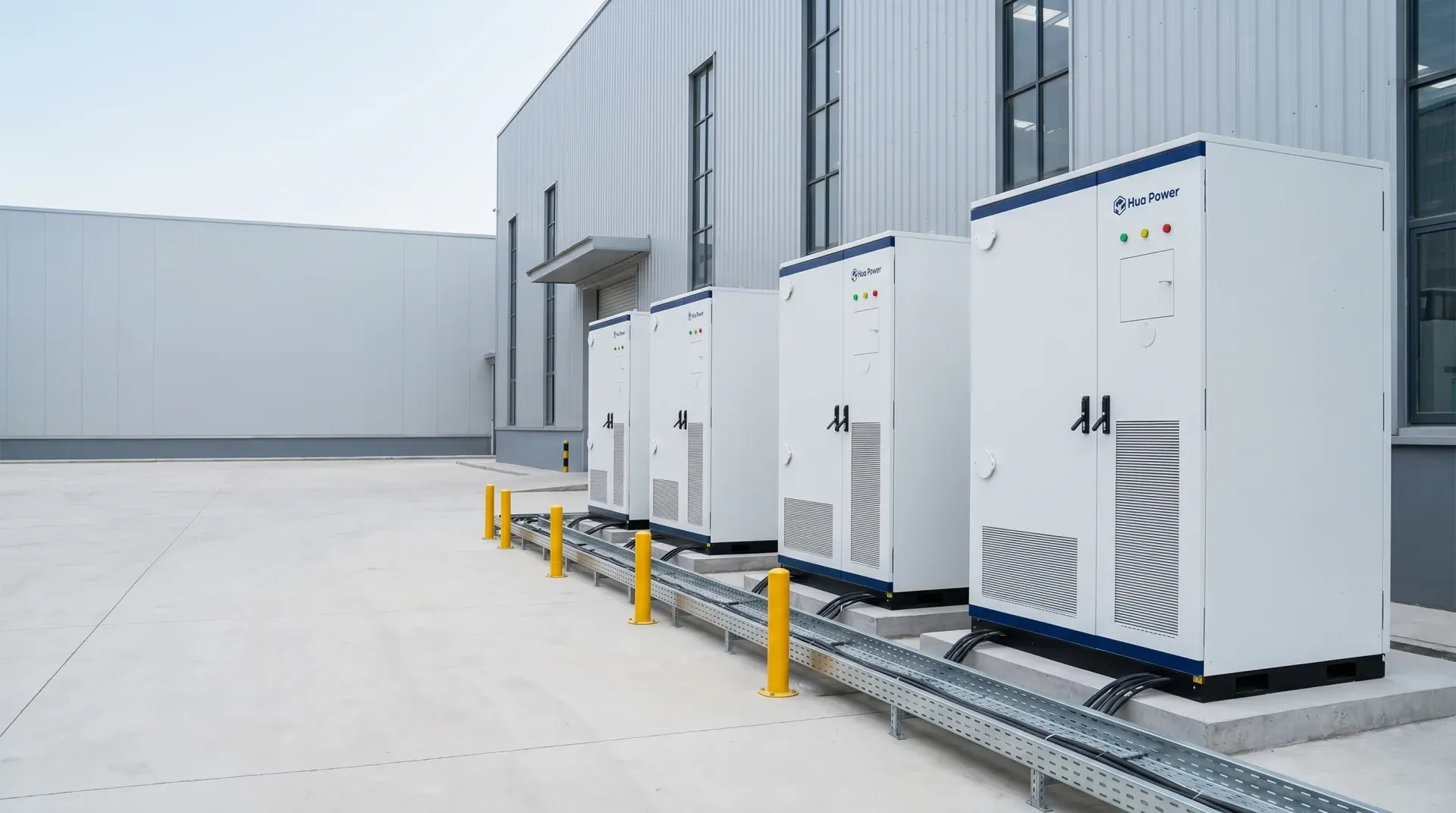
Our liquid-cooled container range carries both figures on the datasheet for exactly that reason — a power rating for the conversion equipment and an energy rating for the cells — and a site that needs one without the other is specified differently rather than simply up-sized on both. The distinction also fixes the question a buyer should ask before comparing quotes: not "how many kWh?", but "how many kW, and how many kWh, and therefore how many hours?" That single question, asked early, is what keeps a two-hour requirement from being bought as a four-hour system — or the reverse.
If you are working through a sizing question on a specific site, get in touch with the load profile and the required duration rather than a single number, and the two ratings can be matched to the job.